How Golf Cart Bags Improve Course Efficiency for Players
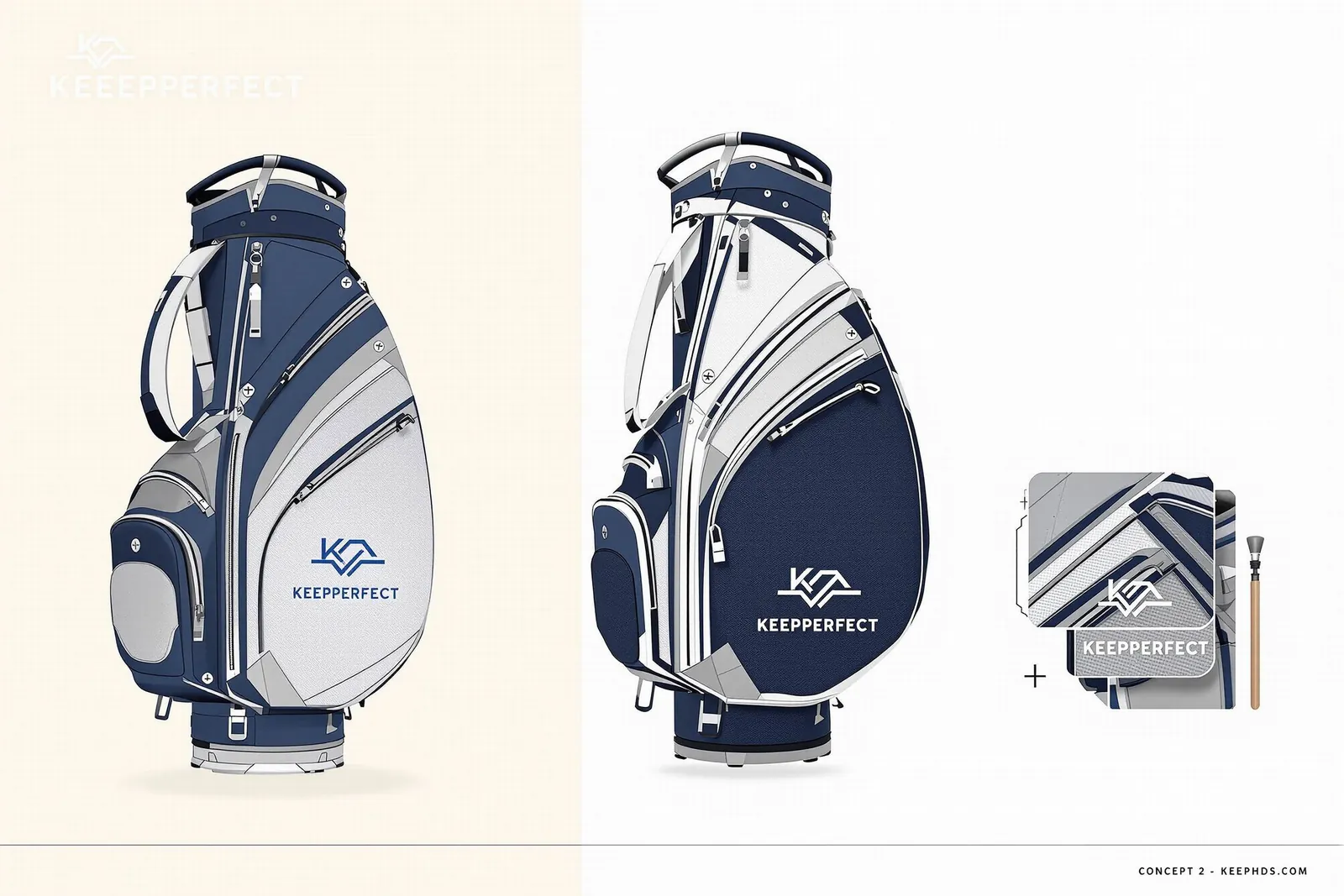
A golf cart bag improves course efficiency by keeping every club in order, every essential within reach, and the bag stable enough to grab-and-go at the cart — which together shave meaningful seconds per shot, cut needless walks back to the cart, and help a group keep pace of play. That is the concrete payoff of a well-designed cart bag, and it explains why QUANZHOU JUNYUAN BAGS (founded 2014, founder in the trade since 2004) engineers cart bags specifically for speed, order and access for more than 200 brand partners across 100+ countries. This guide breaks down exactly how a cart bag moves you around the course faster, and which design details do the real work.
Pace of play is not just a courtesy — it is increasingly measured by courses and tracked digitally, and slow groups are the most common source of complaint and of lost tee-time revenue for operators. Much of the time lost on a course is wasted at the cart: digging for the right club, untangling grips, fumbling for a ball through an unorganized pocket, or walking back because something was left behind. A cart bag is, at its core, an organization device, and when it is designed around how players actually move, those little losses disappear. This article maps each efficiency win to a specific design feature, so players can choose better and buyers can specify better.
Ready Golf Starts With Divided Clubs
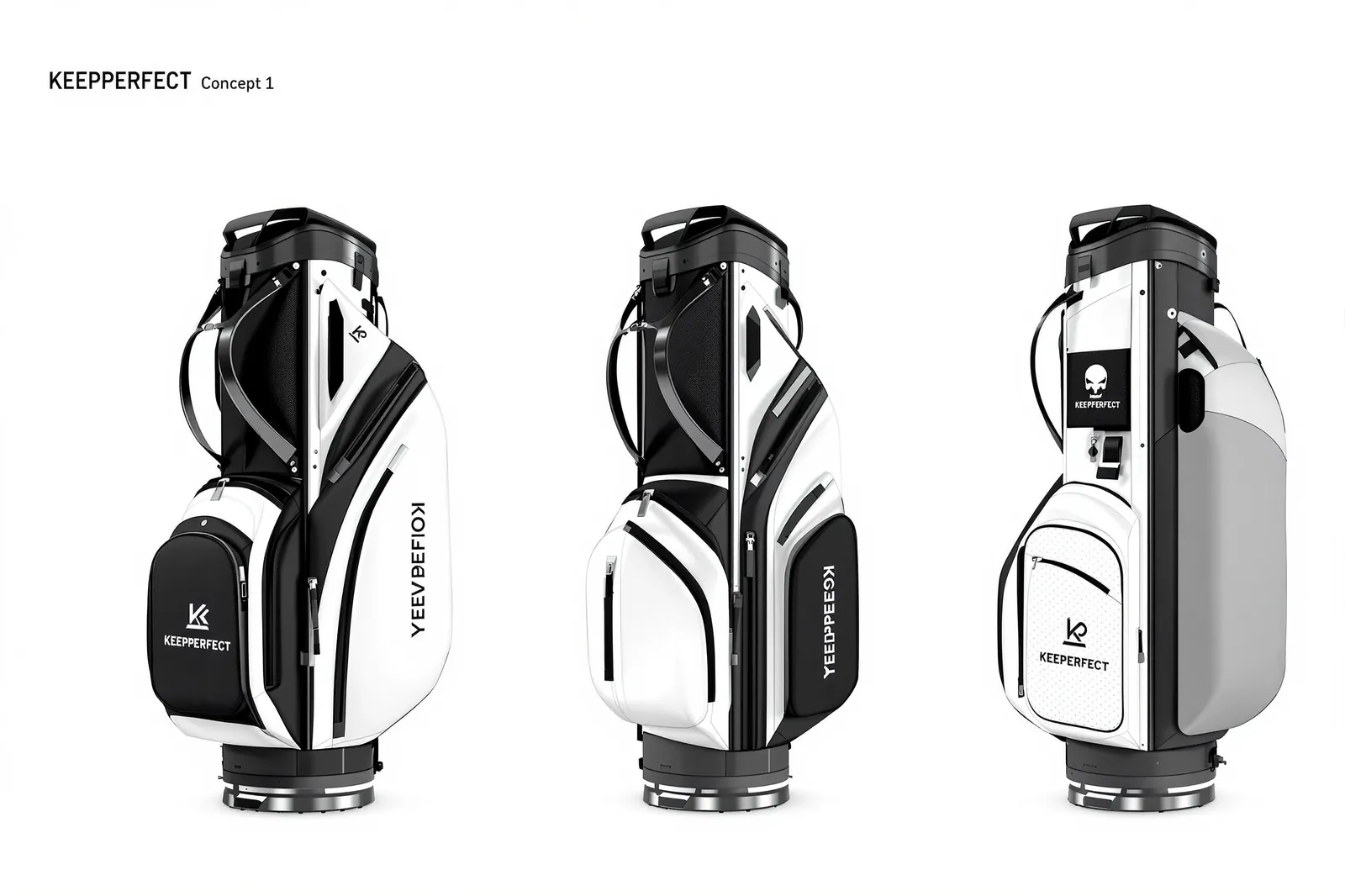
The single biggest accelerator in a cart bag is the divider system. Full-length dividers keep each club in its own channel from the top ring down to the bottom, so grips stay separated and oriented. When you reach across the cart for your driver or your wedge, the right grip is exactly where you expect it, and it slides out cleanly instead of catching on neighboring shafts. That removes the most common delay in golf — standing at the cart, searching for a club — and turns every approach to the cart into a one-move transaction.
Divider count matters in practice, not just in advertising. A 14-way top gives every club a home and is the gold standard for order, while smaller divider layouts trade some separation. The key is full-length separation: partial dividers that stop partway still let shafts tangle lower down. When specifying a custom bag, ask for full-length dividers sized to the club count you actually carry, and confirm the divider channels are roomy enough that grips do not jam. For a broader view of how bag architecture serves different play styles, our golf bag types guide compares cart, stand and staff bag divider systems.
Stability Means No Time Lost to the Bag
An efficient round depends on a bag that stays where you put it. If a bag lists, slides or its clubs shift every time the cart moves, you spend seconds — and sometimes a frustrated minute — repositioning instead of preparing your shot. A rigid base, a low center of gravity and a clean strap path hold the bag planted on slopes and turns, so the clubs stay organized and accessible. Efficiency and stability are the same design objective viewed from different angles: both remove friction between the player and the next shot.
This is most visible on the course's steepest and most uneven terrain. A bag that holds its position on a side slope means a player can grab a club and step off without straightening the bag first; a bag that slides sends the player back to adjust straps. Combine a stable base with a correct mid-body strap position, and the bag behaves like part of the cart rather than cargo that needs babysitting. Our quality standards guide details the base and strap specs behind a grip-and-go stable mount.
Pocket Planning Saves the Search
A cart bag's pockets are a speed feature hiding in plain sight. Efficiency comes not from the total number of pockets but from putting the right storage where the player's hand already goes. A dedicated ball pocket that opens toward the player without moving the bag, a valuables pocket with a secure liner, a rain hood pocket that is easy to reach when the weather turns, and a cooler sleeve for hydration are the features that stop the fumbling. Every time a player knows exactly where something lives, a second is saved and a search is avoided.
For buyers designing a custom bag, the pocket plan is the moment to think like a player, not like a spec sheet. Map the round: clubs out, ball, tee, rangefinder, glove change, snack, rain. Then place each pocket where the cart-side hand reaches naturally, avoiding hidden or under-flap pockets that require moving the bag. A bag that has one thoughtfully placed pocket beats a bag with eight awkward ones, because the thoughtful bag actually gets used as designed — which is what converts organization into saved time on the course.
Fewer Trips, Fewer Returns
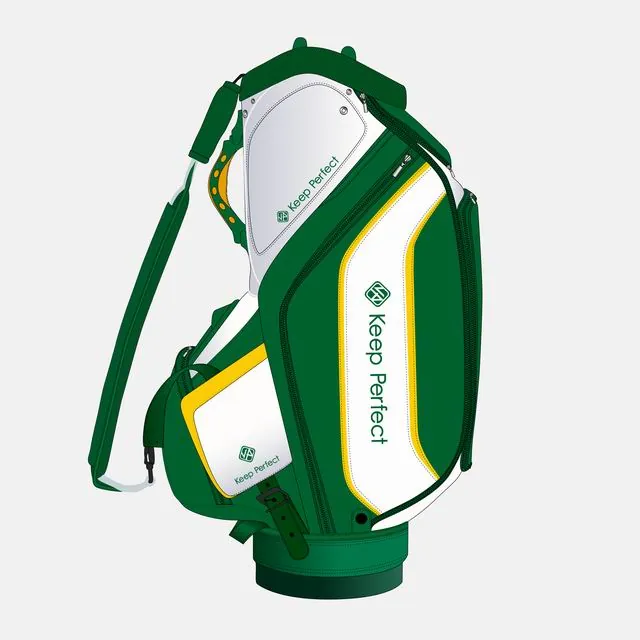
Nothing loses time like going back to the cart, or worse, back toward a previous tee, for something left behind. A well-organized cart bag is a memory backup: when rain, a rangefinder or a GPS are in the pocket through the strap path, the chance of leaving them behind drops. Riders who keep the same items in the same pockets develop the muscle-memory of where everything lives, and spend zero time hunting. This is a quiet but consistent efficiency gain that shows up in smoother, faster rounds for players and more predictable pace for the group.
The same logic applies to groups and to course operations. When a whole set of members each use an organized cart bag, the group's collective lost time drops sharply, which directly supports the pace-of-play targets that many courses now enforce. For clubs providing rental or fleet equipment, outfitting carts with organized, stable cart bags is one of the cheapest workload reductions available — it cuts member frustration, reduces re-positioning and lost-item calls to the shop, and makes the course feel faster without a single extra marshal on the ground.
Club Protection Adds Runway for the Next Shot
Efficiency is also about arriving at every shot with gear ready to play. A cart bag that cushions clubs — through full-length dividers, reinforced side walls and a stable mount — prevents the rattling and tangling that dislodge club sleeves, bend grips or chip shafts. A player who reaches for a club and finds it ready plays immediately; a player who finds a shifted grip or a wedged shaft spends a moment fixing it. Protecting the bag's contents through the transport phase is a direct prerequisite for ready golf on the next hole.
Damage prevention also protects the course's bottom line indirectly. A course that sees fewer club-damage complaints and fewer member requests for shaft or grip repairs built a reputation for care, which improves retention. The structural choices — divider layout, reinforced walls, rigid ring — that keep clubs safe ride after ride are covered in our golf bag materials guide, and the golf cart bag range shows these features in finished product form.
Design Details That Move Play Faster
Beyond the headline features, small design choices decide how fast a bag is in daily use. A spectacle-top handle or wide carry handle makes lifting the bag off the cart easy. A glove or tee loop is a tiny convenience that saves fumbling before a chip. A rangefinder pocket positioned to open front-side toward the player removes the awkward reach. Each of these is a second per event, but a round is dozens of events, and a golf season is dozens of rounds — the accumulated time is real, and the accumulated frustration is realer.
These details also matter at the fleet and OEM level because they are measurable in design review and sample testing. When we mark up a new cart bag pattern, we explicitly check each "speed detail" — strap path, reach angles, front-opening storage, divider ergonomics — the way a player would, running a mock round against the pattern. A factory that reviews for play speed catches problems before they become on-course delays, and that is exactly the scrutiny a course or brander should expect from a manufacturing partner.
| Efficiency Feature | What It Saves | Design Detail |
|---|---|---|
| Full-length dividers | Seconds per club grab | Separated, oriented grips |
| Stable base | No repositioning on slopes | Rigid molded base, low center of gravity |
| Planned pockets | No searching for essentials | Front-open ball/valuables/rangefinder |
| Clean strap path | Fast, secure mounting | Strap guides, mid-body position |
| Club cushioning | Ready gear every hole | Reinforced walls, rigid ring |
| Convenience loops | No fumbling | Glove/tee/rangefinder access |
Walking Rounds Get Faster Too
The efficiency case is not limited to riding carts. On a push or electric trolley, a stable, balanced cart bag with organized clubs keeps the same ready-access benefits, and it adds the benefit of walking at a steady rhythm. A bag that stays put on the trolley, with clubs arranged by order, means a walker reaches for a club while standing beside the bag and moves on without pausing. The balance features that make a bag ride well on a motor cart translate directly to a smooth trolley experience.
For the growing number of players who carry or push, this overlap is important when buying: a cart bag built with genuine stability and clear dividers is efficient in both worlds, which is why many golfers own one bag that does double duty on riding carts and trolleys. The efficiency gains are the same — ready clubs, known pocket geography, no lost motion — whether the bag is ridden on a cart or pushed down the fairway, and that consistency is itself a reason to invest in a properly engineered bag.
What to Check in the Bag and the Sample
When evaluating a cart bag for efficiency, run a simulated round rather than a glance. Load the bag, mount it on a cart, and time yourself grabbing clubs in order; then reach for the ball pocket, the valuables pocket and a rangefinder, noting how much you have to reposition. A genuinely efficient bag lets you complete each movement almost without thought. If you find yourself lifting, rotating or fishing, that is lost time you will repeat every round, and it should decide against that design.
The same check belongs in an OEM sample stage. We make a point of encouraging partners to take the physical sample out for a real round and return with notes before bulk production. In a 10-20 day sampling window and a 45-60 day bulk cycle, that field feedback is the difference between shipping a bag that reads well and shipping one that plays fast.
Ready golf is officially encouraged across the game: the governing approach is to play in a way that keeps pace, including being ready to play when it is your turn, rather than waiting until your turn arrives to begin preparing.
The bigger point is that a good bag makes ready golf effortless. When the bag is organized, prepared and stable, there is no reason to delay — the player simply walks up, takes the right club, and plays. Courses and pros alike point to ready golf as one of the most effective ways to speed play without changing any rules, and a cart bag that supports it is quietly doing pace-management work for the whole group. Players who pair an organized bag with a ready routine often find they not only play faster but enjoy the round more, because the mechanical busywork shrinks and the game itself comes to the front.
Divider Count and Club Order
Divider count directly shapes how quickly you can find a club. A 14-way full-length divider matches a full 14-club set, giving every club a fixed home; learn where the wedges live and your hand goes straight there all season. A 6- or 8-way divider groups clubs in slots, which is faster to load but slightly slower to isolate the exact club mid-round. Both are efficient, but the 14-way rewards a committed club order the most, which is why serious players and many touring setups prefer it.
Club order is the other half of the equation. Whatever the divider, arranging clubs by type — woods in one channel, irons long-to-short, wedges together — creates a mental map you can use under pressure. Some players order left-to-right by loft; some group by "driver / mid / wedge." The efficiency comes from consistency, not from any single arrangement, and a clean full-length divider keeps that order intact even on rough cart paths. This is a small, free efficiency gain every player can adopt regardless of bag, but the bag must have the divider clarity to support it.
The Cart as a Caddie: Access Without Repositioning
Think of the bag mounted on the cart as a second caddie. Efficiency means opening a pocket, taking a club or reaching a rangefinder without lifting, rotating or unstrapping the bag. That flows from a base that holds position and a pocket map aligned to the player's hand side. A bag that needs steadied before every reach is a bag that costs you time on every hole; one that sits solid and opens to the correct side costs you nothing and quietly speeds the group.
Players who notice their own habits find they reach for clubs and balls most often on the same side every round. Designing a bag so those frequent-touch pockets face that hand — rather than burying them under a flap or on the far side — is a small change with an outsized effect on flow. At the OEM stage this is exactly the kind of reach-angle review we do before sampling, because a pocket that opens the wrong way is a design flaw found only once a player tries to use it mid-round, and fixing it in pattern is far cheaper than fixing it in post.
Clubs Secure Means Clubs Ready
Efficiency and protection converge in a simple truth: a bag that lets its clubs rattle, shift and tangle forces the player to sort gear instead of play. Full-length dividers, a rigid top ring and reinforced side walls keep the set packed and oriented, so between shots the clubs are exactly where they were left. The result is a player who reaches, grips and swings without a preparatory tidying step.
This is why durability features are efficiency features in disguise. A bag that loses its ring rigidity or whose dividers sag after a season starts producing tangles and searches that it never caused when new. Buyers who choose a structurally sound bag — rather than the cheapest or the most eye-catching — are investing in multi-year efficiency, which is a better value proposition than saving a few dollars on day one. For the structural standards that hold up season after season, review the tolerances in our quality standards guide.
Fleet Equipment as a Pace Investment
For clubs and resorts, cart bags are not just merchandise — they are operational equipment. A consistent fleet of stable, organized cart bags reduces marshal call-outs, member complaints and lost-item traffic at the shop, and helps operators hold their advertised pace-of-play target, which is increasingly a selling point and a review factor. Outfitting carts thoughtfully is a modest capital cost with recurring operational savings through the season.
Choosing that fleet means planning for variety in player height, hand-dominance and club counts, and for the durability that survives daily rental use. A fleet bag must take more abuse than a personal bag, so base rigidity, reinforced wear points and clean strap paths matter even more. A factory that engineers for rental duty can extend the replacement cycle and keep the fleet looking consistent — two things that save money and preserve the club's presentation. Let's discuss fleet sourcing if you are re-equipping your course.
Engineer a Faster Round With Us
QUANZHOU JUNYUAN BAGS designs cart bags for course efficiency and play speed, backed by a 4,950 m² main factory with 7 production lines, 126 sewing machines and 137 staff, verified by SGS in March 2026, and supporting more than 200 brands across 100+ countries. We spec efficiency features — divider layout, pocket planning, strap path — into every pattern, within an MOQ of 200 pcs (test order 100 pcs), sampling in 10-20 days and bulk in 45-60 days. To brief a bag built for speed, start with custom solutions or email service@junyuanbags.com / call +86 17750020688.
Frequently Asked Questions
- How does a golf cart bag improve pace of play?
- A stable bag with clear dividers and full-length stays keeps clubs accessible in order, so reaching the right club at the cart takes seconds instead of a rummage.
- Do full-length dividers really save time?
- Yes. Full-length dividers keep grips separated and oriented, so shafts do not catch and you pull the intended club without hesitation.
- What makes a cart bag efficient on the cart?
- A clean strap path, a stable base, well-organized pockets aligned to how you play, and secure flight/valuables storage.
- Is a cart bag faster for walkers too?
- On a push or electric trolley, a stable, balanced cart bag keeps clubs organized and within reach, speeding walking rounds as well.
- How many pockets do I need for efficiency?
- Six to eight is typical for a full cart bag; the arrangement matters more than the count, with dedicated spots for balls, valuables, rainwear and a cooler.
- Can a factory improve course efficiency features?
- Yes, through divider layout, pocket planning and strap design. MOQ 200 (test 100), sampling 10-20 days, bulk 45-60 days.
Sources
- USGA – Pace of Play Management Resources
- Golf Digest – Pace of Play and Ready Golf Guidance
- Golf Monthly – Golf Bag Organization and Reviews
- PGA – Player and Course Management Guidance
Content director: QUANZHOU JUNYUAN BAGS. For efficiency-engineered cart bags, email service@junyuanbags.com or call +86 17750020688.