How to Design a Branded Golf Cart Bag for Corporate Events
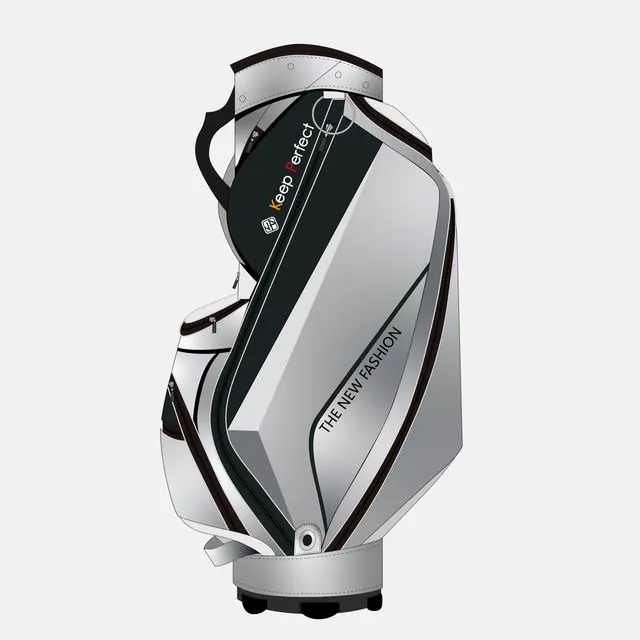
Design a branded cart bag for a corporate event by placing your art in the high-visibility zones a mounted cart exposes, sending vector artwork with exact color codes, and letting a factory with dye, embroidery and woven-label capability execute it — with a 200-piece MOQ (100 for a test order), 10-20 day sampling and 45-60 day bulk production. That is the winning formula QUANZHOU JUNYUAN BAGS (founded 2014, founder in the trade since 2004) applies for more than 200 brands across 100+ countries, several of them using branded cart bags as tournament and incentive giveaways. This guide walks you through the design decisions that make a corporate-event cart bag work, from logo placement to lead time.
A branded cart bag is one of the highest-visibility corporate gifts in golf because it sits front-of-house all day: strapped to a cart at the event, parked at a sponsor tee, carried through the clubhouse. Every attendee sees it, and every photo of the round carries the brand. But that visibility is wasted if the placement is wrong, the color drifts from your identity, or the execution looks cheap. The design choices here — where the logo goes, how the brand color prints on fabric, which branding method suits your image — convert a useful gift into a moving billboard for your company.
Choose the High-Visibility Branding Zones
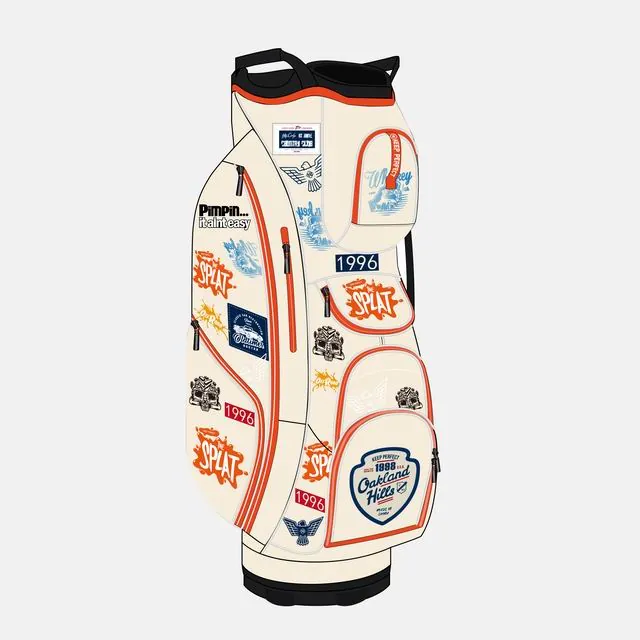
Think about where the bag is seen, not just where it has space. When a cart bag is mounted, the ball pocket face and the upper front shell are the two surfaces most visible to the group walking and riding ahead — they follow the bag all round. These are your primary logo zones, and they deserve your highest-resource branding: woven labels, embroidered patches or a clean debossed mark. A backdrop panel in brand color behind the logo increases contrast and recall, turning a small mark into a memorable field of brand.
A common branding mistake is treating the bag like a poster and scattering the logo. Clarity beats volume — one strong, consistent mark in the right place reads as premium, while a bag covered in small repeated logos reads as corporate clutter. Reserve secondary zones (the cuff, the side panel, the top handle) for a smaller mark or a monogram, and keep the primary face clean. Every photo, live shot and cart-to-cart chat tends to show the front face, so that single surface carries most of the value of your investment and deserves the strongest treatment you can afford.
Send Vector Artwork and Exact Colors
The single most important upload you can make is a vector AI or PDF outline of your logo, not a low-resolution photograph or a screenshot. Vector artwork scales to any production size, stays crisp in embroidery or on a woven label, and lets the factory isolate colors cleanly. Provide PMS or hex codes for each color, and a high-res mock or photograph showing the logo in its approved form. If you have full artwork but a simpler "event keyline," send both and say which is primary.
Fabric is not paper, and brand color care is where corporate identities most often get let down. Dye on a polyester or nylon shell can read differently from a screen, and a cyan or a deep navy that looks right digitally may look dull on fabric. The fix is a physical pre-production sample matched against your artwork under daylight, which is exactly why our 10-20 day sampling phase exists. Never approve a fabric color on a photo alone; insist on the physical swatch or sample, then sign off the match before bulk production begins.
Pick the Branding Method for Your Image
The production method shapes how the logo feels and lasts. A woven or embroidered label is the most durable and the most "premium gift" feel, holding color and edges through seasons of use — ideal for a gift meant to last. A debossed or silicone-branded trim gives a modern, minimal look and sits tone-on-tone, which suits technology, finance and lifestyle brands. Printed or heat-transferred marks are the budget option and are best for bold, flat color on large areas rather than fine detail.
Consider how the bag will actually be used when choosing. A corporate event bag that becomes a player's primary carry receives heavy handling, so an embroidered or woven mark that stays sharp is worth the premium. A once-a-season tournament prop can carry a printed mark without issue. Best practice is to request a small branding swatch alongside the product sample so you can feel and see the logo execution at true size before committing to the full run — a small step that prevents a whole batch of disappointing logos.
There is also a sequencing point worth making: decide the finish of the logo before you lock the base material, because embroidery on a padded shell and embroidery on a thin shell behave differently, and a debossed mark needs a shell thick enough to take it cleanly. Changing the method late in the process almost always slows sampling, and for a calendar-locked corporate event that is time you do not have. Treat branding method as a design decision made with the fabric, not on top of it later.
Design a Cart Bag That Earns Daily Use
A branded bag only does its marketing job if it is actually used, and it is used only if it works as a bag. Design the branding on a genuinely good cart bag — full-length dividers to keep clubs in order, a stable base that stays put on a tilted cart, organized pockets, a clean strap path — and people will keep the bag in their rotation and keep your brand in front of their foursome for years. Brand a flimsy bag and the gift is admired once, then shelved; the exposure dies on the first weak strap.
Brand a flimsy bag and the gift is admired once, then shelved; the exposure dies on the first weak strap.This is the core reason to source from a real manufacturer rather than a print-on-demand accessory: the branding and the bag are engineered together. A factory can place custom hardware, a branded zipper pull, a tonal cuff mark or a custom embroidered badge exactly where it belongs without weakening structure, because it controls the pattern. The result is a gift that rides the course with the structure to survive, and your mark riding right on top of that engineered product.
For most corporate uses a standard cart-bag silhouette is the right base, but don't overlook confirming the base's usability before branding it: divider count for the expected users, left- or right-accessible pockets, and whether the bag will mostly ride on carts or also on trolleys. A branded bag that fits the user's real routine stays in play, and an in-play bag keeps your logo visible. Locking these usability basics early means the branding effort is spent on a bag people actually want to carry, which is the whole point.
Plan the Event Timeline Backward
Corporate events are calendar-locked, so timeline planning is everything. Work backward from the event date: bulk production takes 45-60 days, sampling takes 10-20 days, and transit adds weeks depending on destination. Design freeze and artwork approval should happen comfortably before sampling, so a realistic pre-flight is 2-3 months. Cut it closer and you pay rush premiums or risk missing the event entirely; there is no substitute for starting early, because samples are iterative and each round of comments takes days.
Build in one buffer that most teams skip: a mid-production quality check and a small sample of the finished product shipped ahead of the bulk. If the finished logo execution or color match on the real run differs from the approved sample, you want to know before the container departs, not at the event site. A reputable factory will confirm the production sample and keep you updated; agreeing on this checkpoint in writing is standard practice for a smooth corporate programme.
| Project Step | What Happens | Typical Duration |
|---|---|---|
| Design & artwork | Vector logo, colors, placement finalize | 1-2 weeks |
| Sampling | Physical sample + branding swatch | 10-20 days |
| Approval | Color & logo sign-off under daylight | 3-7 days |
| Bulk production | Full run with mid-check | 45-60 days |
| Transit & QC | Shipment and pre-event inspection | 2-6 weeks |
Colors, Duotones and Event Variations
Corporate events often need more than one look — a sponsor set, a staff set, a player gift set, or a scheme that changes from a spring event to an autumn one. Design a flexible color system on the same base bag: keep the shell a neutral or signature color, and vary the accent cuff, the pocket facing or the logo ground for different event tiers. This keeps one approved pattern, one tooled build and predictable cost, while giving each event its own identity. It also simplifies replacement orders and keeps the fleet visually coherent.
If your event runs annually, consider making the cart bag a repeatable platform — same construction and logo position, a new accent or a dated event badge each year. Attendees recognize the series, collectors hold onto it, and your sourcing simplifies because the pattern is already approved and tested. Several of our brand partners work this way, refreshing one accent and one panel per season rather than redesigning from scratch, which cuts lead time, cost and risk while keeping the giveaways feeling owned and consistent.
Coordinate the bag's color arrangement with the rest of the event identity — the tee markers, the pin flags, the lanyards, the scoreboards — so the branded bag reads as part of one coherent visual system rather than a one-off. When attendees see the same brand color carried across the bag and the venue, recall and cohesion both rise, and photography from the day looks intentional. A common palette with one bold accent field is the simplest way to achieve this on a bag while staying flexible for future events.
Branding Legalities and Trademark Basics
Before artwork goes into production, it is worth a fast administrative check. If the logos include any third-party marks, trademarks or athlete/name images, confirm you hold the rights to reproduce them on merchandise, and keep a written record. For most corporate events the company uses its own logos, but tournaments with sponsor logos, green-fee sponsors or event names sometimes involve shared or licensed marks — a quick legal sign-off avoids a whole batch of unusable bags.
Also plan the paper side: confirm the exact final dimensions, fabric and branding method in a signed spec, agree the QC checkpoint and the inspection standard, and set the packing and marking. Clean specifications protect both sides and, critically, protect your event from a surprise. When we produce branded cart bags, the contract detail around artwork approvals, color tolerance and inspection is exactly what makes the difference between an event that sells the brand and one that apologizes for it.
Avoid the common pitfall of approving a single digital mock and skipping the physical sample. Screen colors cannot show how embroidery lays on a curved pocket or how a woven label stiffens its panel, and they certainly cannot show how a logo looks next to the true hardware finish. The physical pre-production sample is the moment a corporate logo either lands exactly or reveals its problems, so budget a day to review the real thing — the handful of days it costs is trivial next to a full run of off-brand bags at your event.
Cart Bag Anatomy: Where Your Brand Lives
To place a logo well you need to know the parts of a cart bag and which surfaces face traffic. Walking the anatomy in order: the top ring and divider crown (seen from above), the large ball pocket face (the biggest flat canvas, facing the group ahead), the upper front shell and cuff, the side panels, the top handle, and the base plate. Of these, the ball pocket face and the upper shell dominate photographs and on-course visibility because they sit parallel to oncoming eyes all round.
Because each region is made from a different pattern and possibly a different panel material, logo size and method are constrained per zone. A large embroidery suits the ball pocket face; a debossed mark or woven label sits better on the cuff or handle; hardware and zipper pulls carry a mark in a subtle, premium way. When you know which zone takes which method, you avoid the classic error of asking a method to cover an area it was never intended to fill. For a side-by-side view of how the major bag styles and their branding surfaces differ, our golf bag types guide is a useful companion.
Fabrics and Finishes That Carry a Logo Well
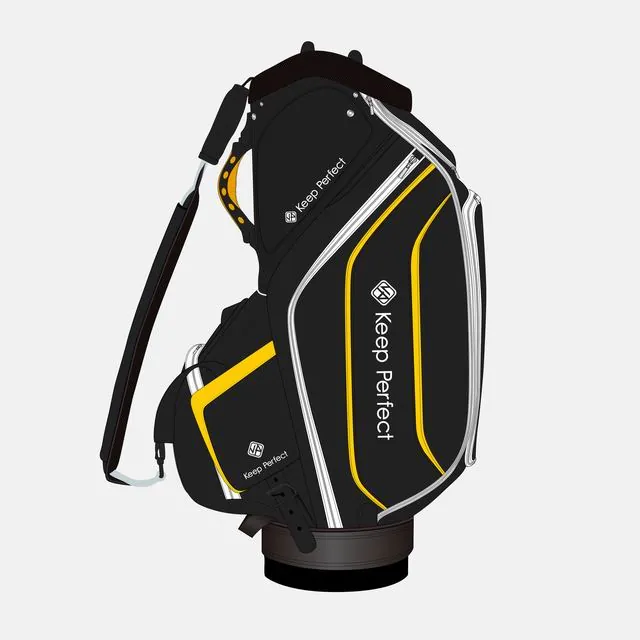
The fabric you choose decides how cleanly a logo reads and how long it lasts. A tightly woven polyester or a structured nylon shell takes embroidery and woven labels crisply and holds color, whereas a loose, heavily textured or ultra-soft fabric can swallow fine detail and soften edges. For a high-contrast emblem, a matte shell in a neutral tone with a colored logo panel gives the best viewing surface. If you want a tone-on-tone premium look, a debossed logo on a structured shell reads elegantly with your brand color barely differing from the ground.
Weight and durability also matter because the bag will be used, not framed. A heavier, coated shell shrugs off rain, road dust and the knocks of a season, protecting the logo along with the clubs; a thin shell fades and scuffs and takes the logo down with it. Spec the fabric to survive real use and your brand stays mint for years, which is why this decision deserves as much attention as the artwork itself. The grades and reinforcement standards that keep a shell and its embroidery looking new are detailed in the quality standards guide.
Order Volumes and Budget Drivers
Cost for a branded cart bag breaks into a few predictable drivers: shell fabric and weight, hardware and zippers, the divider count, the branding method, and the volume that spreads fixed setup cost. Volume is the biggest lever — per-piece price falls as you spread pattern, embroidery and packaging setup over more units, which is why our MOQ is set at 200 pcs for full custom and 100 pcs for a test order. Ordering the event quantity thoughtfully at one time is cheaper than several small runs.
Branding method is the second lever. Woven and embroidered marks add more than a printed mark because each logo is stitched and each patch finished. If budget is fixed, choose a smaller but cleaner logo on a higher quality shell rather than a cheaper shell with maximum branding — the finished product reads premium and the fewest attachments fail. A skilled factory can help right-size the spec, and there is always room to move cost by trimming low-visibility trims before touching the shell grade or the logo. In practice the spread between a basics spec and a premium spec can be significant, so budget transparency at the start of the design process prevents a late and unwelcome surprise at quotation time.
The Bottom Line on Branded Cart Bags
Get the four essentials right — high-visibility placement, vector artwork with exact colors, a branding method that matches your image, and a timeline planned backward from the event — and a branded cart bag becomes one of the most effective, longest-lived pieces of corporate golf merchandise you can produce. The exposure continues for years, in play after play, in online photos, and in the bag's daily presence beside serious golfers. It is an investment in visibility that keeps working long after the event week is over and the course has gone quiet again.
QUANZHOU JUNYUAN BAGS produces branded cart bags for corporate programmes on a 4,950 m² main factory with 7 production lines, 126 sewing machines and 137 staff, verified by SGS in March 2026. We work within an MOQ of 200 pcs (test order 100 pcs), sampling in 10-20 days and bulk in 45-60 days. If your next corporate event needs a cart bag that carries your brand all season, begin with custom solutions or review our materials guide for finish options, and write to service@junyuanbags.com or call +86 17750020688.
Because a corporate cart bag is a long-lived, high-visibility asset, the same discipline that governs the logo applies to the foundations underneath it. A bag that carries a crisp brand but wobbles on the cart or lets its clubs rattle undercuts the premium impression the branding is meant to build. That is why the strongest corporate briefs specify protection and balance as deliberately as they specify artwork: our cart bag protection guide names the divider, wall and ring specs that keep a set safe, while the weight and balance guide keeps that protected set riding level on the cart. Write all three together and the branded bag you hand to an executive not only looks right in photographs but performs like a serious piece of golf equipment every round.
Timing also rewards the deliberate planner. Many corporate golf programmes run in spring and early summer, so the sampling window of 10-20 days and bulk production of 45-60 days should be scheduled backward from the tee-off date with real margin, in case a sample needs revisions. Add a testing round before the event so any tweak to pocket placement or strap path is caught while there is still time to adjust the pattern. A finished, approved sample in hand a full cycle before the event is the difference between a promotional programme that feels effortless and one that arrives late and apologetic. Planning the whole branded bag cycle backward, from the day it must be in guests' hands to the pattern approval that makes it possible, is how a corporate golf giveaway turns into a professional, repeatable success.
Frequently Asked Questions
- Where should a logo go on a branded golf cart bag?
- The ball pocket face and the upper front shell are the highest-visibility zones when the bag is mounted on a cart; place your primary mark there.
- How should I produce the logo file?
- Send a vector AI/PDF outline with PMS or hex color codes and a high-res mock. Vector artwork keeps embroidery or patches crisp at production size.
- What is the best branding method for a cart bag?
- A woven label or embroidered patch is most durable; debossed or silicone trims suit a modern look. Choose by finish and usage.
- What is the minimum order for a custom branded cart bag?
- MOQ is 200 pcs for full custom production and 100 pcs for a test order, with sampling in 10-20 days and bulk in 45-60 days.
- Can colors match my brand exactly?
- Yes. Provide PMS or hex codes and approve a physical sample, because fabric dye can shift between batches.
- What lead time do I need for a corporate event?
- Plan 2-3 months from design freeze: 10-20 days sampling, 45-60 days bulk, plus transit. Begin artwork early.
Sources
- Golf.com – Golf Bag Design and Branding Guidance
- Golf Digest – Golf Bag Reviews and Features
- Entrepreneur – Corporate Gifting and Branded Merchandise Best Practices
- ASI (Advertising Specialty Institute) – Promotional Products Industry Data
Content director: QUANZHOU JUNYUAN BAGS. For branded cart bag programmes, email service@junyuanbags.com or call +86 17750020688.