How to Pick a Golf Cart Bag for Maximum Club Protection
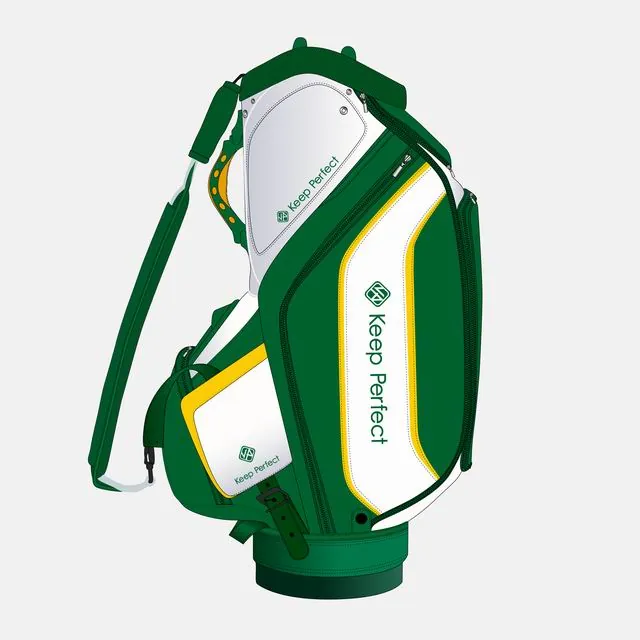
You maximize club protection by choosing a cart bag with full-length dividers (ideally 14-way) so no two shafts rub, a rigid top ring that holds its shape under a full set, reinforced side walls, and a stable base that keeps the bag planted on the cart — because tangling and rocking, not sudden impact, are what actually damage clubs ride after ride. That is the engineering answer QUANZHOU JUNYUAN BAGS (founded 2014, founder in the trade since 2004) applies to every protective cart bag it builds for more than 200 brands across 100+ countries. This guide turns "protects my clubs" from a marketing phrase into a concrete spec you can see and check.
When most golfers talk about club damage, they picture a dropped bag or a head slammed in the car. In truth, the routine damage comes from the vehicle in your own hand: clubs clacking together when the bag is carried and strapped, grips tangling as shafts catch in a partial divider, and the whole set rocking and rattling down a cart path because the bag is unstable. Every one of those is preventable by design. Learn the three protection zones of a cart bag — the top ring, the dividers, and the shell-and-base — and you can judge any bag's protection in under a minute.
Below we walk those three zones in detail, then add the two supporting layers — weather resistance and stable mounting — that complete real-world protection. Throughout, the aim is a checklist, not a lecture: by the end you should be able to walk into any pro shop or review a sample and know, in a few careful checks, whether a bag will genuinely shield your clubs or merely carry them. That knowledge also becomes your strongest lever when you commission a custom bag, because every protective feature here is something a factory either builds or skips.
Full-Length Dividers: The First Line of Defense
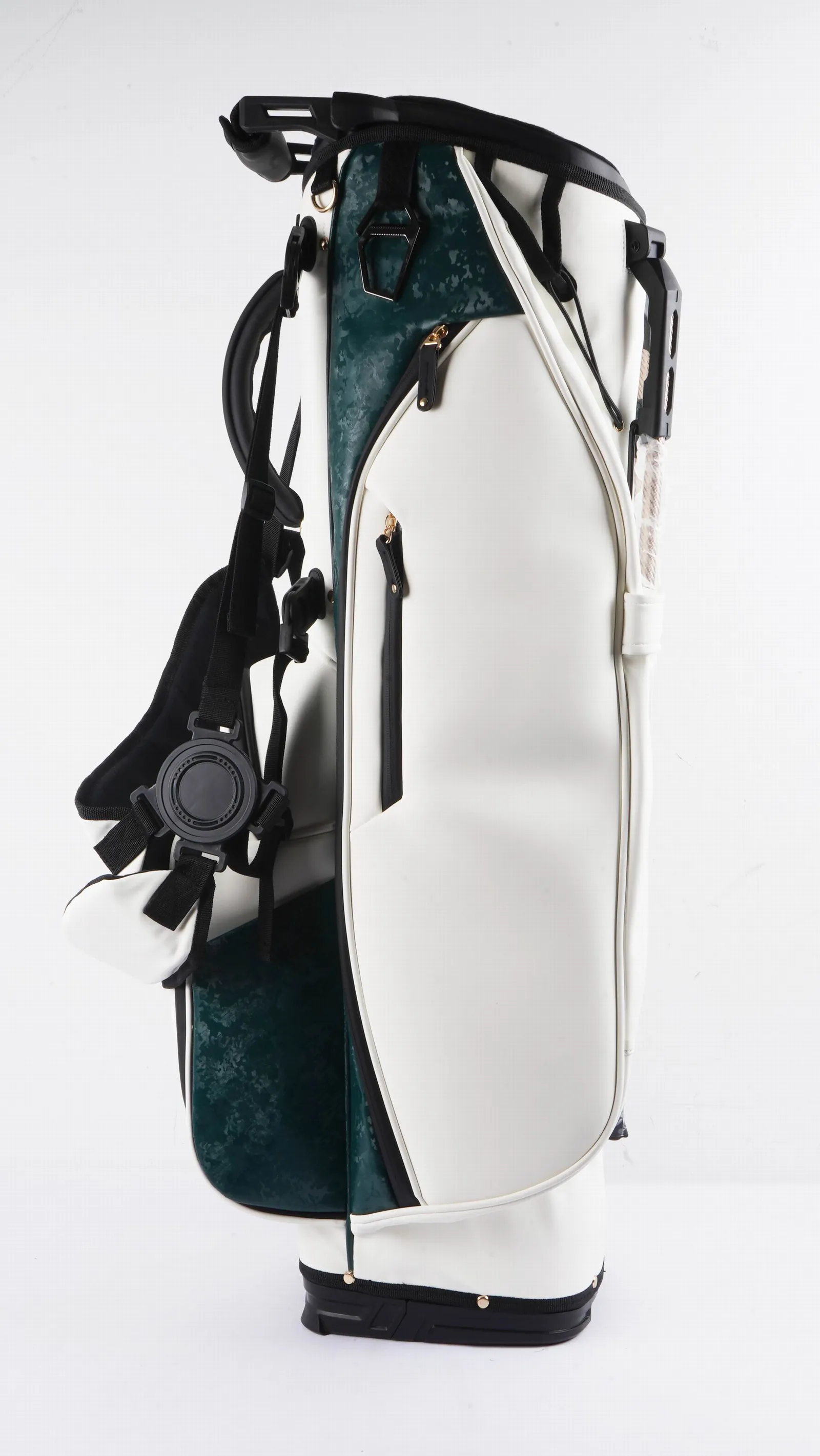
A divider separates clubs inside the bag, and its length is the whole story. A full-length divider runs from the top ring down the full interior to the base, giving each club its own channel so grips and shafts stay separated along their entire length. A partial divider stops partway down, which means that lower down the bag the shafts can lean together and clack against each other on every bump. For protection, full-length separation is non-negotiable, because that is where most of the contact happens.
Divider count scales the protection. A 14-way full-length divider gives every one of your 14 clubs its own tube; a 6- or 8-way groups several clubs per slot, which reduces but does not eliminate contact. If protection is the priority, choose 14-way and adopt a fixed club order so each grip settles into its slot without fighting its neighbors. Full-length construction with a full set is the arrangement most likely to keep your shafts isolated and your grips free of in-bag wear — the practical definition of a protective club bag.
The Top Ring Holds the Whole Set in Place
The top ring is the frame that keeps the divider geometry true, and its rigidity determines whether divider spacing actually stays separated under load. A ring that flexes under the weight of a full set lets the divider channels distort, grips drift together and clubs lean and tangle even on a walk to the cart. A rigid, reinforced ring holds its channels exactly apart whether the bag is empty or full, which is what keeps the divider's protection working all round rather than only at the shop.
Checking a ring is immediate: press firmly on its wall with one hand. A protective ring barely flexes; a soft one deforms alarmingly and will only get worse with age. The note is to look for a ring made rigid enough to hold 14 shaft ends in fixed positions through the jolts of a season — a detail that costs little at manufacture but is precisely what separates a protective bag from one that lets its dividers go soft. When buying or spec'ing, ask for the ring's construction and confirm it on the physical sample before committing.
Reinforced Walls Absorb the Knocks
The shell is the shield between the clubs and the outside world, and its construction decides how much shock and abrasion reaches the set. A protective cart bag uses a thick, padded shell — often structured panels with internal cushioning around the sides and enough rigidity that a knock at the outside does not transfer straight to a shaft coressing the inner wall. Thin shells pass more of each impact through, which is why two bags can look similar outside yet protect very differently.
Fabric grade matters on top of padding. A heavier, abrasion-resistant, water-repellent shell shrugs off the scuffs of parking, cart racks and trunks, and keeps moisture from soaking toward divided shafts and grips. A thin or heavily textured shell scuffs faster and lets damp in. When comparing bags, press the side wall — a protective bag has give with substance — and check the shell weight, coating and reinforcement. The deeper look at shell grades and impact-absorbing materials is in our golf bag materials guide.
Stability Is a Protection Feature
Protection doesn't stop at the bag — it continues onto the cart. A bag that slides, rocks or lists on a tilted tray punishes its clubs on every bump and turn, rattling shafts against walls and letting grips and heads knock. A stable bag with a rigid base and a low center of gravity holds its contents steady through a round, and stability in transport is therefore one of the strongest protection measures you can add. It works immediately, every hole, with no extra equipment.
Combine a stable bag with a correctly positioned strap — one that seats the bag low on the tray rather than letting it ride high and pendulum — and the set receives almost no chafing. The base's rigidity and grip do the work of absorbing and dispersing the shock of the cart path, what remains of the vibration reaching the shell is damped by the padded walls before it reaches the shafts. For the full stability design, our quality standards guide details the base and strap tolerances that keep a bag planted.
| Protection Zone | What Protects the Clubs | How to Verify |
|---|---|---|
| Dividers | Full-length, 14-way separation | Reach inside; confirm channels run full depth |
| Top ring | Rigid frame keeps geometry true | Press ring wall; confirm minimal flex |
| Shell walls | Padded, thick, shock-absorbing | Press wall; note padded give & shell weight |
| Fabric | Abrasion & water-resistant | Check shell grade and coating |
| Base | Rigid, grippy, low center of gravity | Real cart test on a slope |
| Straps | Clean path seats bag low | Thread strap; check base holds |
Water and Weather Protection
Beyond shock, weather is the other great club enemy, and the bag is the outer wall. A water-repellent shell with sealed, quality zippers keeps rain from finding its way onto shafts and grips, and a well-made rain hood covers the opening when the weather turns, protecting the club heads and grips at the top and stopping water from dripping down the dividers. Ensure the hood deploys and stows easily, because a hood you struggle to use on a rainy tee is a hood that stays in the pocket, and a cover that stays in its pocket is no protection at all.
Also consider condensation and humidity over the long term. Moisture that gets trapped in the base of a bag around shaft ends can encourage corrosion and rust on steel shafts and bridge the grips' comfort. Choosing a bag with a breathable, absorbent inner and good air movement, and storing it dry after wet rounds, preserves the clubs as much as the bag. Weather protection is the quiet half of "maximum protection," active in every damp early-morning round across a season of play.
Protect the Shafts by Fitting the Dividers
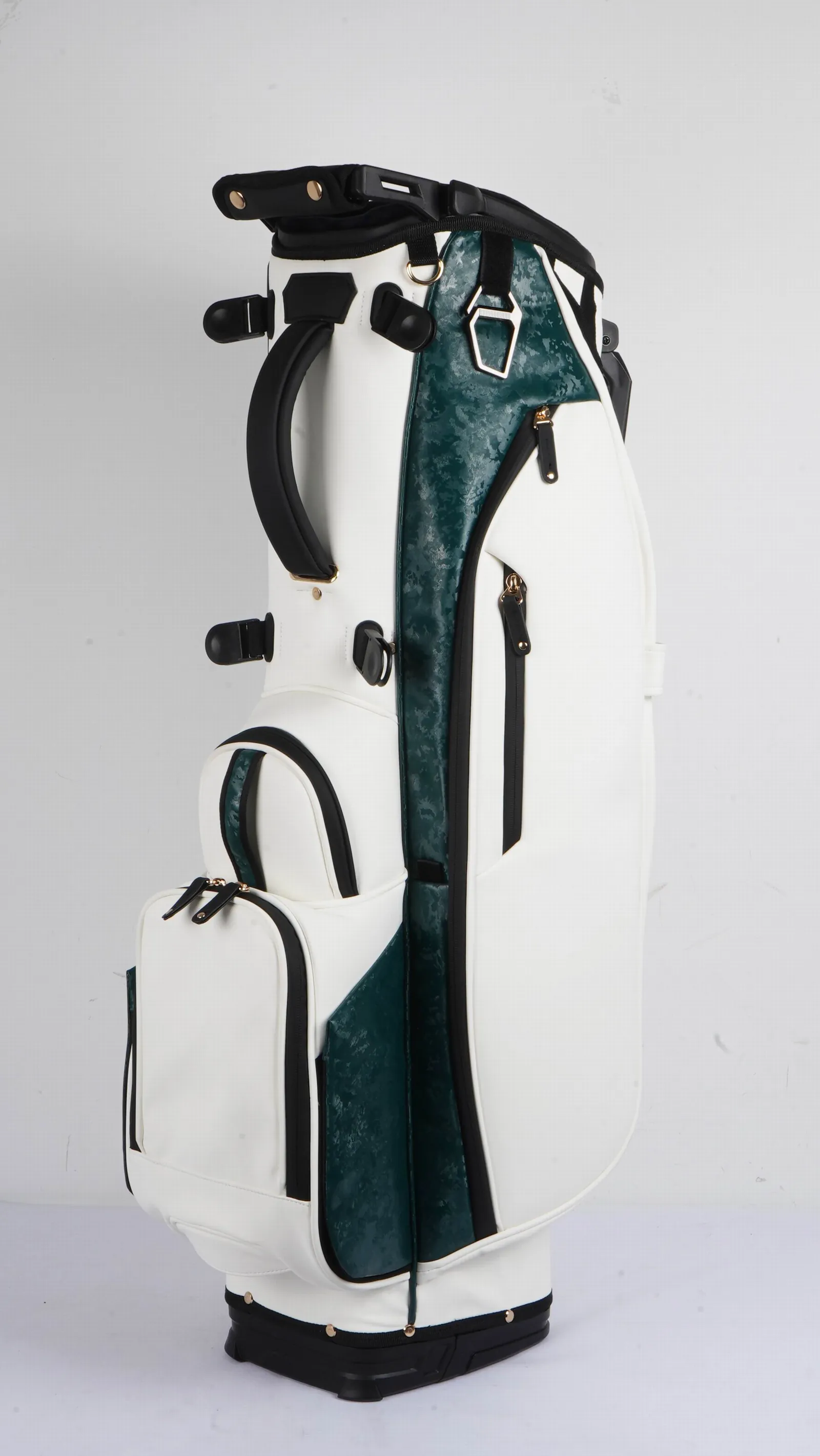
Divider size must suit your actual clubs, and the fit varies more than people expect. A driver is longer and a wedge is shorter, and different shaft thicknesses and grip diameters mean not every slot fits every club equally. When a divider channel is too narrow, the grip jams and you pull neighbors with it; when it is too wide, the club rattles and leans. A protective bag spaces its channels to accommodate the full range of your set, sized for the grips you actually use rather than an idealized average.
If you play oversized or jumbo grips, or carry a mix of woods and wedges whose shaft ends sit at very different depths, confirm the divider layout has room for them before you buy. A walk of the hand over the top ring — mentally placing your driver, your mid-irons, your wedge into the channels — is a useful proxy, but the confident test is loading the actual set and shaking out the excess. Fitting the dividers to your clubs is the difference between protection-on-paper and protection you feel every round, and it costs nothing to check, and it is the step most likely to reveal whether a clever-looking layout actually suits your set or was designed around a different one.
Grip Protection Is Half the Story
Grips are the part of the clubs your hands touch all day, and they are also the most vulnerable to in-bag wear. Grips scrape against other grips and divider edges when clubs tangle, and they absorb the pressure of a crammed bag. Full-length dividers that separate grips entirely — rather than letting the top ends touch — keep the grip surfaces clean and free of nicks, preserving their tackiness and feel. Partial dividers, by contrast, often let grips kiss above the divider's end, which is precisely where the daily rubbing happens.
This is an argument many players do not fully register until it is too late: a set of good grips wears out at the bag before it wears out on the course. Grip replacement is also one of the more frequent equipment expenses, so a bag that spares the grips pays for itself. Choosing full-length, full-separation dividers and never overfilling the bag protects that tacky, comfortable feel — and it keeps your hands in good contact with the club from the first hole to the last. Check the top of a worn bag and you will often see grip-rub where dividers let shafts meet; that mark is the whole thesis of this section.
Between Rounds: Travel and Storage Decide Longevity
How a bag is handled between rounds shapes how much wear it inflicts on its clubs. A bag that is repeatedly crammed into a tight car boot, stacked under other gear, or left open and rain-swollen puts constant strain on the ring and shell and lets shafts knock. Instead, give the bag room to stand on its base, keep it dry, and close it up fully so the shell keeps its shape. Small travel habits—seating the bag upright, not treating it as a bag of laundry — preserve both bag and contents.
If you travel with clubs, remember that the cart bag's padded structure does double duty right up to the point you switch to a travel cover; until that cover goes on, the bag is the sole wall between your shafts and the outside. Choosing an abrasion-resistant, water-repellent shell slows the scuffs every car boot and shuttle adds, and standing the bag on its base rather than laying it flat prevents the ring from flattening. Three minutes of consideration each round keeps protection working season after season.
The Real Damage Is Wear, Not Crashes
It is worth stating plainly: most club damage is accumulated wear, not a single catastrophe. The clack of two shafts on every path, the scrape of a grip against a divider, the shift of a loose set on every turn — these micro-events add up across a season to chips, scuffs and grip wear that no protective cover can prevent once the habit is set. That is precisely why the design features in this guide matter: they remove the routine contact that manufactures the damage in small, invisible increments.
Understanding that flips the buying logic. Instead of chasing the single most padded bag, look for the bag that eliminates the routine contacts — full-length dividers, a rigid ring, substantial walls, a stable base — because eliminating contacts is what cuts the bulk of real-world damage. Protection is a design discipline that strips away opportunities for wear, and every feature that removes a point of contact is a feature that extends the life and the looks of your clubs. It is an inexpensive engineering choice that protects an expensive set, and one you can verify in a minute.
A Quick Field Test Before You Commit
All the specs in this guide condense into a field test you can run anywhere in minutes. Load the bag with a full 14-club set, deliberately stir the bag as if walking to a green, then listen and feel for club clack and slide; a protected arrangement stays quiet. Mount it on a cart, drive a couple of bumpy stretches, and check that clubs stay oriented and the bag stays planted. And press the ring and the walls: firm ring, padded walls, no give where there should be structure. If a bag fails any of these checks in the shop, it will fail them on the course too.
Run the same checks stretch over months, not just at the shop counter. The real test of protection is whether it holds after a season of daily use — a ring that was firm in the store and soft in a year was never truly protective, and that is a manufacturing-standards question, not a purchase luck question. A bag from a factory that engineers and tests these protection details will prove it in the sample, which is why we put our own cart bags through load, rock and weather checks before they ever reach a partner's order, and encourage every buyer to do the same with their shortlist.
Common Mistakes That Undermine Protection
Several habits quietly defeat even a good bag's protection. Overfilling the bag so dividers bulge and grips jam undermines the 14-way layout; sticking to a full set with room to spare protects better than cramming. Leaving the bag in the car boot or sun between rounds stresses the ring and shell far beyond on-course use. And strapping the bag loose so it rocks invites the damage the design was meant to prevent. Defense is both engineering and respect for the engineering.
There is also the mistaken belief that the most padded bag is automatically the most protective. Padding that becomes so soft it lets the bag slump, or a cheap shell with a thick-looking liner that compresses to nothing, can under-perform a well-structured firmer bag. The honest test is structural integrity — full-length dividers, a rigid ring, substantial walls, a stable base — verified in the field, not a headline about "maximum padding." Structure, used properly, is what shields a beautiful set of clubs for years, and it is the part most worth your attention when you shop.
Spec'ing Maximum Protection at the Factory
For brands and clubs that want protection engineered in, these features are all specifications: divider count and full-length construction, ring reinforcement, padded wall panels, fabric grade and coating, base rigidity, and strap path. Handing a factory a spec that names each protection zone forces the pattern to deliver it, and makes the protection measurable in the physical sample rather than promised in marketing. A factory that can state how it achieves shock absorption and ring rigidity is one that has actually engineered it, and a spec that names each zone is how you tell one from the other before the sample ever ships.
QUANZHOU JUNYUAN BAGS engineers protective cart bags on a 4,950 m² main factory with 7 production lines, 126 sewing machines and 137 staff, verified by SGS in March 2026, supporting more than 200 brands across 100+ countries. We build to these protection specs within an MOQ of 200 pcs (test order 100 pcs), sampling in 10-20 days and bulk production in 45-60 days. To spec a bag that protects like it should, start with custom solutions or review our cart bag range, and write to service@junyuanbags.com or call +86 17750020688.
Protection, however, is only one half of a sound cart-bag spec; the other half is how that protected set rides. A bag packed with full-length dividers and reinforced walls can still let clubs rattle if its centre of gravity sits high and its base wobbles on the tray. That is why the strongest protection brief pairs the divider and padding choices in this guide with a balance specification, and our cart bag weight and balance guide sets out exactly how to keep the loaded weight low and the base planted. Read the two guides together and you can hand a factory one coherent spec that protects the shafts while keeping the whole bag rock-solid on the cart — the difference between a bag that merely looks padded and one that actually keeps an expensive set alive across a season.
Finally, consider how protection survives travel, because a bag that shields clubs on the course often lets them down in transit. The reinforced wall and rigid base that absorb cart knocks also need to cope with being stacked in a car boot or thrown around by baggage handlers on the rare flights a bag takes. Buyers who weigh the in-round protection here against the transfer risks covered in our travel and storage guidance end up with a bag that guards the set everywhere, not just on the fairway. Protection, balance and transit resilience are one continuous specification, and treating them as separate problems is the single most common cause of a cart bag that disappoints.
Frequently Asked Questions
- What most protects golf clubs in a cart bag?
- Full-length dividers plus a rigid top ring and reinforced walls. Separating each shaft and keeping the ring rigid stops tangling and clacking.
- Do I really need a 14-way divider?
- For maximum protection, yes — a 14-way full-length divider gives every club its own channel so grips and shafts never rub together.
- How do I know if the top ring is strong enough?
- Press on the ring's wall; a rigid ring barely flexes, while a soft one deforms and lets the whole set shift and rattle.
- What is the best cart bag fabric for protection?
- A thick, abrasion-resistant and water-repellent shell with padded internal walls protects clubs from both knocks and moisture.
- Does a stable bag protect clubs better?
- Yes. A bag that stays put on the cart stops the sliding and rocking that punish shafts, so stability is itself a protection feature.
- Can a manufacturer engineer higher club protection?
- Yes, through divider design, padded walls and ring reinforcement. MOQ 200 (test 100), sampling 10-20 days, bulk 45-60 days.
Sources
- Golf Digest – Golf Bag Reviews and Club Protection Guidance
- MyGolfSpy – Independent Golf Equipment Testing
- Golf Monthly – Golf Bag Features and Reviews
- USGA – Golf Equipment Conforming Standards
Content director: QUANZHOU JUNYUAN BAGS. For club-protection cart bags that pass real field tests, email service@junyuanbags.com or call +86 17750020688.