Impact Resistance Standards for Golf Travel Bags
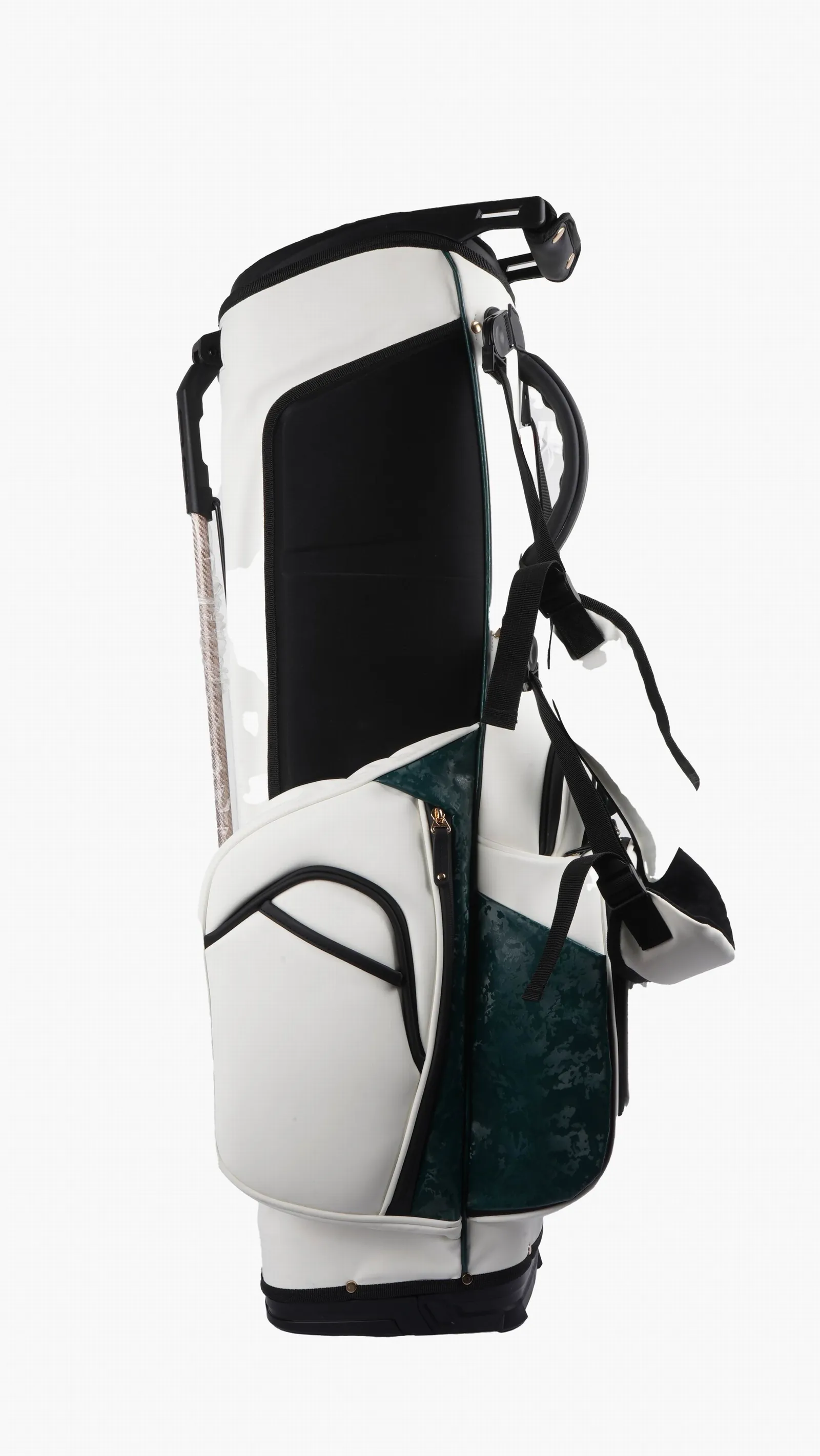
There is no single mandatory impact-resistance standard for golf travel bags - but a serious manufacturer tests against recognised material and impact methods and documents the results, so you should look for evidence of testing on fabric strength, abrasion resistance, zipper cycle and shell stiffness rather than an unverified claim. Because standards bodies such as ASTM International provide test methods for textile strength and impact, and independent verifiers such as SGS audit factories, a bag sold with real test evidence is one you can trust to protect clubs. This guide, from QUANZHOU JUNYUAN BAGS, explains what impact-resistance testing means in practice and how to judge a bag's protection. Our founder entered the trade in 2004 and the company was established in 2014."
What Impact-Resistance Actually Means for a Golf Bag
Impact resistance for a golf travel bag is the ability of its construction to absorb or deflect a blow so that the clubs inside are not damaged. It is not a single number or a universal pass/fail - it is a combination of properties: how tough the shell fabric is, how well the padding absorbs shock, how stiff the structure is against crushing, and how well the whole system holds together at the seams. Each of these is testable, and together they describe how a bag behaves under real handling.
The shape of the impact matters as much as its force. Club heads are most at risk from a head-on or corner impact when the bag is dropped or stacked; shafts are most at risk from a lateral crush across their length. A bag that is strong at the head but collapses at the side protects the heads but leaves the shafts exposed, so genuine impact resistance has to be balanced across the whole bag, not concentrated in one dramatic feature.
It is also important to be honest about protection limits. No travel bag makes a set of clubs indestructible against every possible abuse - an aircraft is a system that handles millions of bags, and a sufficiently violent or unlucky impact can defeat any design. What impact resistance reliably buys is a dramatic reduction in the frequency and severity of damage under normal handling. The goal is to turn routine, inevitable knocks into harmless ones.
QUANZHOU JUNYUAN BAGS builds golf travel bags on an affiliated 4,950-square-metre main factory that entered the industry when our founder started in 2004 and was established as a company in 2014. The facility runs seven production lines with 126 sewing machines and a team of 137 staff, supporting a monthly capacity of up to 200,000 units for more than 200 brands across 100+ countries. Sampling typically takes 10–20 days and bulk production 45–60 days, with a standard MOQ of 200 pieces and 100 for test orders. The factory was independently audited by SGS in March 2026. Contact service@junyuanbags.com or +86 17750020688.
What Test Methods and Standards Bodies Cover
Standards bodies provide the reproducible test methods that turn subjective claims into measurable data. ASTM International publishes test methods for fabric tensile strength and tearing strength, abrasion resistance, and puncture resistance, which quantify how a shell fabric performs. Similar textile standards across ISO and other national bodies cover seam strength, colour fastness and coating durability. Using these methods, a manufacturer can state a bag's shell withstands so many Newtons of tear force or so many abrasion cycles before wearing through.
For the cushioning and structure, tests cover the impact-absorbing performance of the padding and the stiffness of the shell and base. A foam layer's density and rebound, and a shell's deflection under a defined point load, are measurable and comparable. ZIP durability is often tested by cycle counts - how many open-close cycles a zip survives. When these individual properties meet expectations, the bag as a system has a defensible impact-resistance profile.
The limitation to understand is that many tests measure components rather than the assembled bag, and no single standard mandates a pass grade for golf travel bags. This is why the phrase ASTM-tested deserves a closer look: the value is in which specific methods were used, what was measured and what results were documented, not in the slogan itself. A manufacturer that names the standards and shares the numbers is more credible than one that merely cites an acronym.
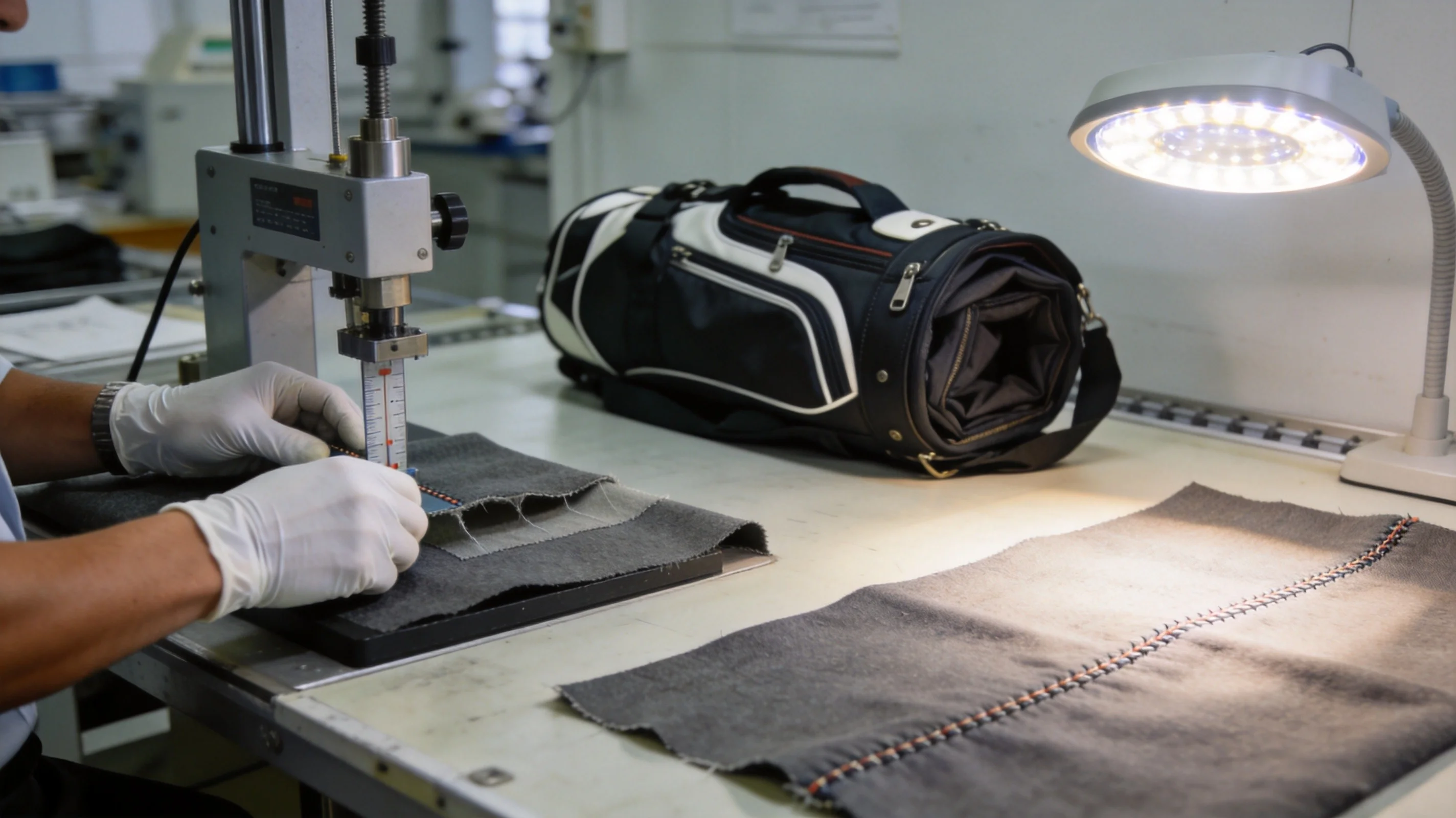
Measured Protection
Documented tests of fabric strength, padding and structure quantify impact resistance.
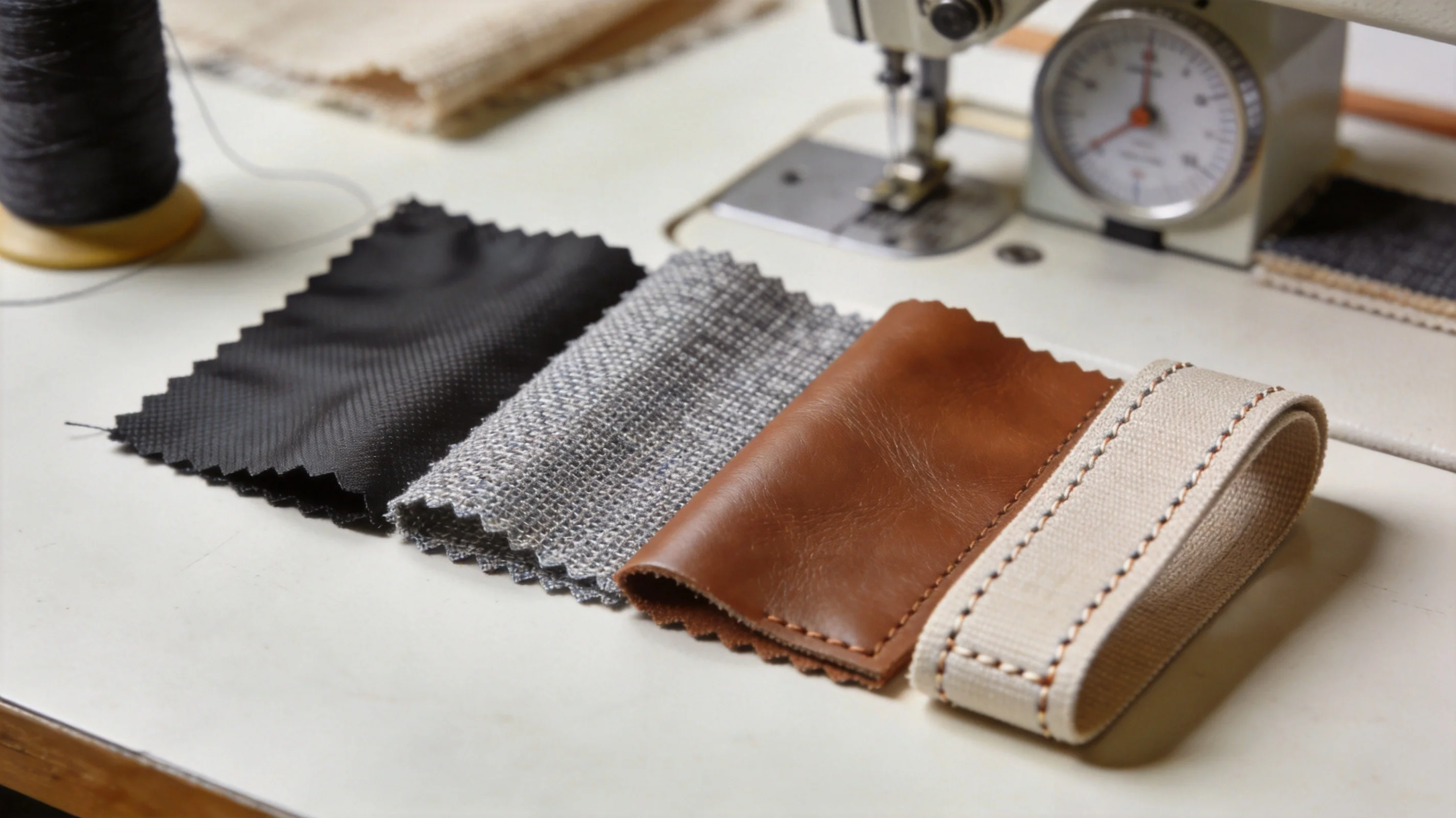
Verified Materials
Recognised test methods turn material toughness into comparable, defensible data.
Fabric Strength: Tear, Puncture and Abrasion
Fabric strength is the foundation of impact resistance because it decides how well the shell resists tearing and puncturing before any impact reaches the padding and clubs. Tear strength measures a fabric's ability to resist propagating a cut, puncture strength resists penetration by a sharp object, and abrasion resistance measures how the fabric survives repeated rubbing. A high-denier woven nylon or polyester with an abrasion-resistant finish typically scores well on all three.
The test values are comparable once you know the method. Tear and tensile strength are often reported in Newtons; abrasion resistance in cycles to failure under a defined load; puncture in Newtons of force. A bag whose shell publishes these numbers lets you compare it honestly with another and judge whether the fabric is appropriate for the punishment of frequent air travel. Where no numbers are published, ask - a serious manufacturer can produce them.
Reinforcement works alongside the base fabric. Double-layered or reinforced panels at the stress points - the head, base, corners and handle-anchor areas - raise effective strength exactly where the bag needs it, without thickening the whole shell. Seam strength matters as much as fabric strength, because many failures begin at a seam. Together, strong fabric, strong seams and targeted reinforcement define the shell's real toughness.
Padding and Structure: Absorbing the Blow
Rigidity and cushioning work as a team in impact resistance. The structure - a stiffened head, a perimeter frame, a rigid base - holds the bag's shape so it resists being crushed, while the padding absorbs and spreads the shock of a blow before it reaches the clubs. The interplay produces the bag's real protection: a blow that would concentrate on a club head is instead spread across a wide area and softened by the padding.
Padding quality is about density and resilience as much as thickness. Dense, energy-absorbing foam compresses to absorb an impact and rebounds to protect again, whereas a soft, cheap layer flattens on the first trip and stops protecting. The head pad, usually the densest part, sits over the club heads because they are most vulnerable. Ask about the padding's density and how it holds up over dozens of trips - resilience is a durability property, not just a comfort one.
The structure's stiffness is what converts a concentrated point load into a broad deflection. A rigid or semi-rigid head holds the padding in place so it cannot be pressed flat; a reinforced base and lower frame resist the impact of a drop on the end; and a perimeter stiffener protects the sides against lateral crush. The combination of stiffness to hold shape and padding to absorb shock is what a well-engineered bag delivers at every vulnerable point.

Strongest Structure
A rigid shell deflects the hardest impacts, with padding and structure working together throughout.
Zipper and Hardware Durability in Impact Testing
Impact resistance is only complete if the bag stays closed and functional under stress, which is why zips and hardware figure into any thorough testing regime. A zip that must survive hundreds of open-close cycles is tested by count; sliders and stops are checked for jamming and failure; and the seam around the zip opening is tested for pull strength. A durable, well-anchored closure keeps the bag sealed even when knocked and rolled.
Hardware is tested for the repeated mechanical wear of travel - zips, buckles, wheels, handles and feet all endure cycles that simulate real use. Wheel durability, handle lifting strength and base-foot abrasion are the parts that accumulate wear with every flight, and testing them catches failures before they reach the customer. Reinforced anchors at the handle and wheel mounts prevent the most common field failures of a travel bag.
The verifiable detail is the cycle counts and load values. When a manufacturer reports that a zip survived a defined number of cycles or a handle lifted a defined load, it is specifying the bag's real robustness rather than asserting it. Coupled with fabric and structure tests, hardware testing completes the impact-resistance picture - a bag that is tough, shock-absorbing and stays closed is a bag that protects.
How Independent Verification Builds Trust
Claims of impact resistance are most trustworthy when they are independently verified. Independent bodies such as SGS audit factories and can validate that a facility follows sound manufacturing, quality-control and social-compliance processes; they can also witness or conduct testing that backs product claims. A factory that has opened itself to independent audit has evidence a marketing claim alone cannot match. Our factory passed an SGS audit in March 2026 - the kind of verifiable proof we encourage buyers to seek.
Independent verification works alongside in-plant quality control rather than replacing it. Documented inspection at each production stage - materials, cutting, sewing, assembly, finish - is the internal discipline that turns a tested design into a reliably built product, and external audit confirms the system that produces it is sound. Both layers together give a buyer far more confidence than either alone.
When you evaluate a bag, ask directly for the evidence: which test methods were used, what was measured, what results were recorded, and what external verification the factory holds. A manufacturer that answers with specifics is demonstrating the transparency that genuine impact resistance deserves. Buy on evidence, and the protection you are paying for is the protection you get.
QUANZHOU JUNYUAN BAGS builds golf travel bags on an affiliated 4,950-square-metre main factory that entered the industry when our founder started in 2004 and was established as a company in 2014. The facility runs seven production lines with 126 sewing machines and a team of 137 staff, supporting a monthly capacity of up to 200,000 units for more than 200 brands across 100+ countries. Sampling typically takes 10–20 days and bulk production 45–60 days, with a standard MOQ of 200 pieces and 100 for test orders. The factory was independently audited by SGS in March 2026. Contact service@junyuanbags.com or +86 17750020688.
Matching Impact Resistance to Your Needs
Impact resistance should be matched to the value of the clubs and the route, not bought as an absolute maximum. For a standard set on routine domestic flights, a well-built soft or wheeled-soft bag with documented fabric, padding and structure quality delivers strong protection at a sensible weight and price. For expensive clubs on high-touch or long-haul routes, a hard case with the strongest reported rigidity and head protection is justified even with the extra weight.
The trade-offs mirror the durability discussion. More stiffness and padding generally mean more weight, which pushes bag-and-clubs closer to airline weight limits, and more structure means higher cost. A frequent traveller with a mid-value set is best served by a balanced bag - strong shell, resilient padding, reinforced weak points - that protects well without overweighting the journey. Matching protection to real need avoids both under- and over-buying.
Our hard-shell versus soft comparison and the durability guide cover the trade-offs in detail. The principle is consistent: judge impact resistance by documented test evidence, match it to club value and travel reality, and protect the bag with good packing and care. A bag chosen this way delivers the protection you actually need, at the weight and price your travel can support.
Questions to Ask a Manufacturer About Impact Resistance
The questions that reveal a bag's real impact resistance are specific and answerable. Ask which shell fabric and denier are used and what tear, puncture and abrasion test results it records; what the padding's density and rebound behaviour are; how the head, base and sides are stiffened and reinforced; and how many zip cycles and which handle loads the hardware survived in testing. The specificity of the answers tells you instantly whether the manufacturer tests or merely claims.
Ask for the quality-control process: what is inspected at each production stage, who inspects, and what independent verification the factory holds - an audit report from a body such as SGS is ideal. Ask about the empty weight and dimensions, because protection that pushes a bag overweight is a different trade-off. And ask to see a sample or documented example of the actual bag, so you can judge the padding resilience and hardware feel yourself.
Ask also about the limits - a responsible manufacturer will tell you what impact resistance cannot protect against and what fails first under abuse. That honesty is itself a sign of quality. A manufacturer that answers all of these with documents, numbers and a willingness to be inspected is one you can trust to build a bag that genuinely resists impact.
The Bottom Line on Impact-Resistant Golf Travel Bags
Impact resistance is not one feature but a documented system of fabric strength, padding, structure, hardware and verification. For most golfers, a bag that scores well across these - with tested fabric, resilient padding, reinforced weak points and robust closures - reliably protects clubs under normal airline handling. For the highest-value clubs and hardest routes, a rigid hard case adds the maximum deflection against crushing.
Judge a bag by evidence, not slogans. Look for the specific test methods and results, independent verification such as an SGS audit, honest weight and material data, and a quality-control process you can inspect. Then match the protection to your club value and travel pattern, and pair the bag with careful packing and routine care.
Done that way, a bag's impact resistance becomes something you can rely on - clubs that cross the miles intact, trip after trip. That reliable protection is exactly what a golf travel bag is for, and it is what separates a well-tested, honestly specified bag from an empty claim.
Reading a Manufacturer's Test Evidence Correctly
The value of test evidence lies in how you read it, and a few questions separate a credible report from a marketing sheet. Ask which specific standard or method was used for each property - for example which fabric tear or abrasion method, or which cycle count for the zip - and what the measured result was in comparable units. Numbers against named methods are reproducible; a vague reference to being tested is not. Naming both the method and the result is the strongest honest signal a manufacturer can give.
Understand what each result implies for real travel rather than the lab. A fabric that resists a high tear force protects better against the nicks of handling, and a zip that survives many cycles stays reliable for years of frequent use, but no component score removes every risk from unpredictable baggage systems. The evidence is best read as a reliable reduction in the frequency and severity of damage, which is exactly the kind of protection a well-tested bag is designed to deliver.
Then place the evidence in context with independent verification. Our affiliated factory passed an SGS audit in March 2026 and documents inspection at each stage, so the tested component values are backed by a process able to produce them consistently. Read the numbers, trust the verification, question the vague claims - and the research behind an impact-resistant bag becomes a dependable part of choosing one.
How Impact-Resistance Properties Are Judged
This table maps the properties behind impact resistance to the test approach and what each one protects.
| Property | Test Approach | What It Protects |
|---|---|---|
| Fabric strength | Tear / puncture / abrasion tests | Shell from tearing and wearing through |
| Padding density | Compression / rebound tests | Club heads from a transmitted blow |
| Structure stiffness | Deflection / point-load test | Shape from being crushed |
| Hardware durability | Zip cycle / handle load tests | The bag staying closed and controllable |
| Seam strength | Seam pull tests | Stress points from separating |
| Independent audit | SGS / third-party factory audit | Confidence the process is sound |
Together these verified properties describe a bag's genuine impact resistance - and a manufacturer that documents them earns your trust.
Choose a Travel Bag With Tested Impact Resistance.
Specify impact-resistance with documented fabric, padding, structure and hardware testing - and hard cases for maximum deflection. Explore our travel protection range.
See Impact-Resistant Travel Options →Frequently Asked Questions
- Is there a standard impact-resistance grade for golf travel bags?
- No single mandatory grade exists; instead manufacturers apply recognised material and impact test methods and document the results.
- How do I know a bag is impact-resistant?
- Ask for the specific test methods, measured results, a quality-control process and independent verification such as an SGS audit.
- What is the strongest shell for impact?
- A rigid hard case offers the highest deflection against crushing, at the cost of weight, bulk and price.
- Which part of the bag protects the heads?
- The padded or stiffened top with dense, resilient foam absorbs and spreads impact around the club heads.
- Can a soft bag be impact-resistant?
- Yes - a well-built soft bag with a stiffened head, dense padding and reinforced base and sides protects well on normal handling.
- Do test results really guarantee protection?
- They greatly reduce the frequency and severity of damage under normal handling; no bag makes clubs indestructible against every extreme abuse.
Sources
- ASTM International — recognised material and impact test methods for fabric, structure and hardware.
- SGS — independent factory verification and auditing of manufacturing and quality systems.
- USGA — golf equipment references supporting protection and construction guidance.
- IATA Baggage — checked-baggage handling context informing impact-resistance needs.
Related Reading
Explore more of our expert guidance on golf travel bags and manufacturing to plan the right product for your next trip or program:
- Hard case travel protection — the highest-deflection option for impact resistance.
- Travel covers for golf clubs and equipment — soft and wheeled protection tested for normal handling.
- Golf bag quality standards guide — the QC and independent verification behind protection claims.
- How travel bags protect clubs — how the protective layers deliver impact resistance in use.
- Golf bag materials guide — which materials and structures test strongest.
- Factory-direct wholesale — ordering verified impact-resistant travel bags.