Importing Golf Bags to EU: Regulations and Compliance
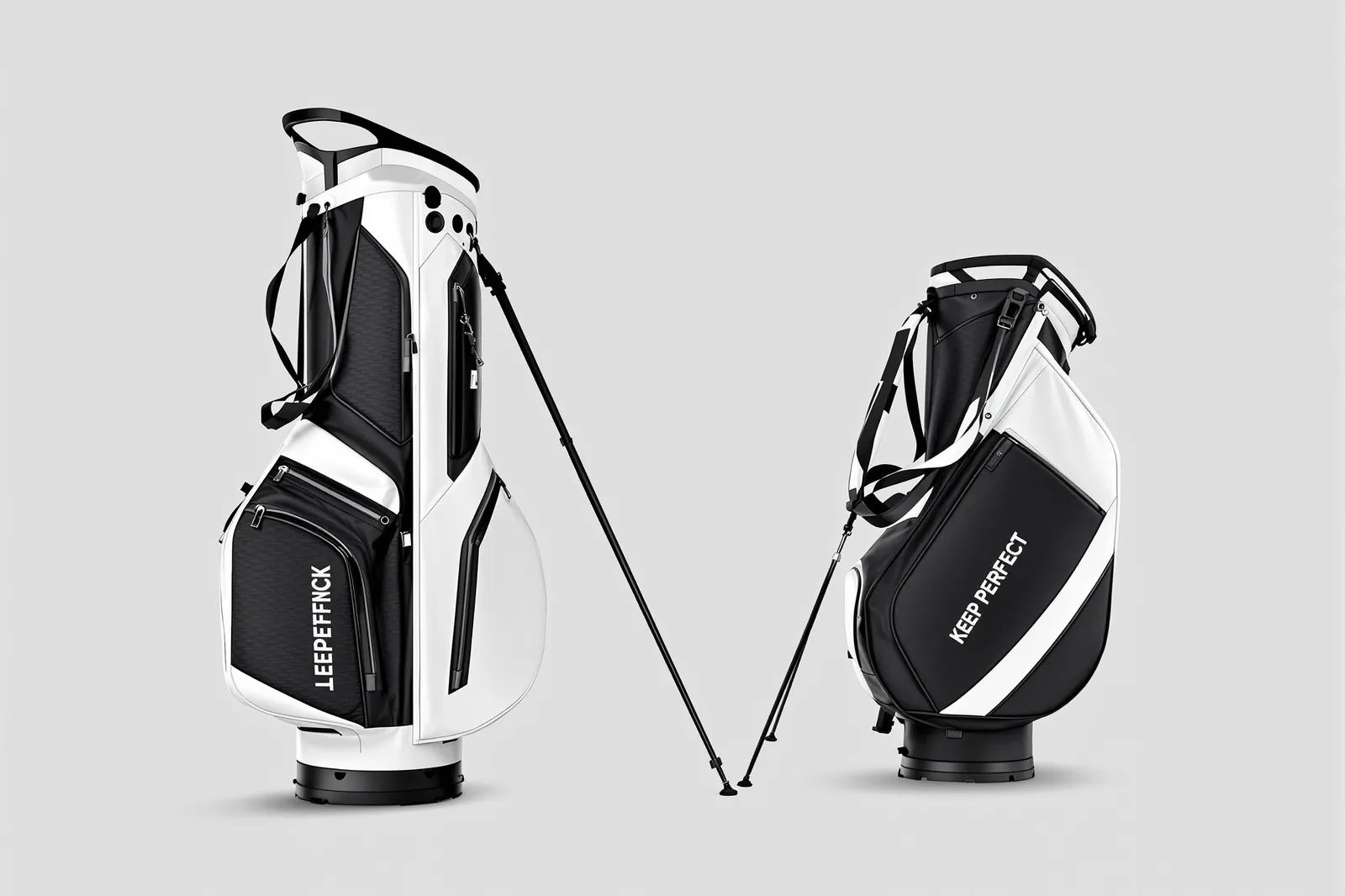
Importing golf bags into the European Union is a compliance-governed process you can de-risk from day one: golf bags enter as CN code 4202 at the current EU autonomous customs duty, must meet REACH restricted-substance limits in materials and dyes, carry accurate origin and labelling, and, when sold to consumers, satisfy the EU General Product Safety Regulation’s (GPSR) traceability expectations — all of which a manufacturer that ships to 100+ countries and holds an SGS on-site audit can support in one document package. This guide is written for importers, distributors and brand teams bringing staff bags, cart bags, stand bags and travel covers into the EU. We assemble the requirements from official EU sources and from the operating experience of our affiliated manufacturing network in Quanzhou, Fujian (main plant 4,950 m², founded 2014, founder in the trade since 2004), and every legal and tariff reference is verifiable in the Sources below.
Looking across the full journey — from the CN 4202 classification and current duty, through REACH restricted substances and GPSR traceability, to fibre labelling, right-sized packaging and a pre-shipment inspection — the unifying message is that EU compliance stops being expensive the moment it becomes systematic. Confirm each requirement at the stage where it already fits the workflow: classification at booking, substances at sampling, traceability at label design, packaging before production. Done this way, an EU-bound golf bag programme imports as smoothly as any domestic programme, because every gate was checked at the moment it was cheap and easy to fix.
Regulation (EU) 2023/988 brings with it a practical duty to assess safety on an ongoing basis. A responsible importer keeps the safety dossier alive: the manufacturer’s evidence of safe construction, any relevant test reports, and a process for acting on consumer or surveillance feedback. In a low-acuity product like a textile golf bag, the realistic exposure is not catastrophic risk but the financial and reputational cost of a customer injury claim or a market-surveillance query with no documentation to answer it. Maintaining the dossier is far cheaper than reconstructing it under pressure, and it is precisely the kind of discipline that turns an EU import programme from a one-season gamble into a dependable annual operation.
Why EU Compliance Decides Whether Your Container Clears
The EU treats imported consumer goods through a layered framework: customs law sets the import and duty mechanics, product-safety law sets what may be placed on the market, and environmental law constrains materials and packaging. Golf bags are not a heavily regulated hard-goods category compared to toys or electronics, but they are absolutely caught by the general rules — restricted substances in dyes and coatings, safe construction, accurate labelling and traceability. Compliance is not a paper exercise; a container that fails a random customs inspection or a downstream retailer’s safety check becomes a commercially expensive event far beyond the value of the goods.
The practical way to stay ahead is to treat the compliance requirement list as an input to the specification, not an afterthought. A buyer who confirms the restricted-substance position, the origin paperwork and the labelling format at the sampling stage imports cleanly the first time. The buyer who discovers REACH limits after a container lands faces a very different conversation.
Customs Classification and the CN 4202 Duty
Classification is the first rule of the EU import game. Golf bags are classified under Combined Nomenclature (CN) heading 4202 — trunks, suitcases, vanity cases and similar containers — which covers luggage and similar containers used to carry equipment. The applicable duty is an autonomous customs duty published by the European Commission; the precise rate for the current year is documented in the EU’s Access2Markets tool, where you can look up the code, the duty and the import formalities for the originating country together.
Two clarifications matter for golf bags specifically. The duty is based on the declared customs value (the transaction value), so an accurate, defensible valuation on the invoice is important for getting the duty correct and avoiding customs queries. And origin matters: the rules of origin determine whether preferential duty treatment applies under any trade arrangement in force. China-origin golf bags generally pay the standard EU autonomous duty under most-favoured-nation (MFN) status, and a buyer should verify the figure at booking time because the EU revises its tariff schedule annually and occasionally applies changes mid-year.
REACH and Restricted Substances in Materials and Dyes
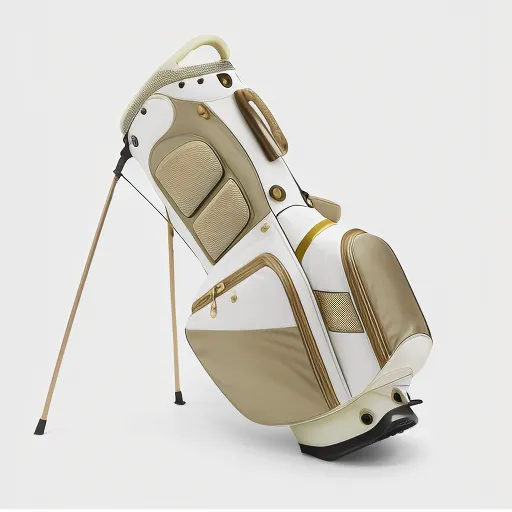
The EU’s REACH regulation (Registration, Evaluation, Authorisation and Restriction of Chemicals) is the most consequential substance rule for textiles and dyed goods entering the EU. REACH restricts the concentration of certain substances in articles as they are placed on the EU market — including heavy metals and specific phthalates and azo dyes in some contexts — and those restrictions apply to the finished golf bag as sold, not just to its raw materials. For a fabric-and-hardware product, that means the dyes used on the polyester and nylon face fabrics, the coatings on buckles and hardware, and any printing or embroidery inks all fall under scrutiny.
The professional way to handle REACH is to require substance declarations and, where appropriate, test reports from the factory against the restricted-substance lists, and to keep those documents with the batch. A manufacturer that exports widely and carries an SGS on-site audit can typically produce the evidence chain a buyer’s EU import needs. Because restricted-substance rules are updated, a responsible buyer reviews the current REACH annexes at the start of each season rather than assuming last year’s position still holds.
One of the most practical advantages of facing an EU market is that a well-prepared importer can move first-time and repeat shipments through the same corridor with little friction once the template is built. The forwarder learns your lane, the customs broker keeps your tariff data on file, and the receiving warehouse develops a routine for reconciling your carton marks. Repeat EU lanes are cheaper to run and faster to clear than one-off routes, which is why the most successful importers deliberately repeat a validated product-and-port combination rather than chasing the lowest freight quote on a new route every season. Predictability on the compliance side is what makes that repetition safe and profitable.
A second practical lever is to keep a single, current compliance dossier per product line rather than assembling documents for each shipment from scratch. That dossier holds the current CN code and duty position, the latest REACH restricted-substance declarations and test reports, the GPSR traceability details, the fibre-content label text and the packaging/EPR position for the member states you serve. Updated once per season and reused across every shipment, it turns an apparently heavy compliance burden into a routine checklist — and it is exactly the file a customs or market-surveillance authority wants to see when they ask a question.
CE Marking: When It Applies to Golf Bags
The CE mark is a common point of confusion, so it is worth stating clearly: CE marking is required for products covered by a specific EU directive or regulation that mandates it — such as toys, electronics, personal protective equipment and certain machinery. A conventional carry golf bag is not a CE-marked product; it falls under the EU General Product Safety Regulation instead, which is not a CE regime. That means a golf bag should not carry a CE mark, and no buyer should demand one from a bag factory for a standard bag.
The useful parallel is that the absence of CE marking does not mean the bag is unregulated — it simply moves compliance to the general safety and traceability framework described below. If a buyer is adding any motorised or battery-powered feature to a bag (a smart bag with electronics), then the applicable electrical and EMC directives would bring CE into scope, but that is a different product decision from the textile bag itself.
The EU General Product Safety Regulation (GPSR)
The EU General Product Safety Regulation (Regulation 2023/988, applying from 2024) sets the baseline for any non-food consumer product placed on the EU market, and golf bags fall squarely under it. The GPSR requires that products placed on the market be safe, that there be an EU-based economic operator who can be identified, and that products carry traceability information — typically a manufacturer code, an importer name and address or the responsible operator, and batch or type identification so a recall can be acted on.
For a buyer this means the practical homework is: (1) confirm the factory can supply a durable marking on the bag or its label with the model/batch and, where needed, the responsible economic operator; (2) keep an EU-based contact (an importer of record, authorised representative or the distributor) who can be identified on the product; and (3) retain enough documentation to support a safety assessment if challenged. These are the traceability pieces a customs or market-surveillance authority will ask for, and they are exactly what a serious manufacturer’s document package should already contain.
Origin, Labelling and Textile Content Rules
Beyond customs value and classification, the EU applies labelling expectations that a golf bag must meet when offered to consumers. Textile products sold in the EU must generally indicate their fibre composition on a label, in line with the EU Textile Regulation. For a golf bag that is a textile article, this fibre content information supports both compliance and consumer transparency, and it travels on the label or swing tag attached at the factory. Origin indication — where the product was made — is also standard on goods destined for retail.
A well-prepped golf bag label therefore carries: the fibre content, the country of origin, a model or batch identifier, and, where GPSR applies, the responsible economic operator in the EU. All of this is settled at the branding-and-packaging design stage, so it should be part of the sampled approval rather than solved during container loading. Getting the label right in the sample is orders of magnitude cheaper than retrofitting markings onto production.
Packaging, Waste and the EU’s Environmental Rules
The EU’s packaging rules and extended-producer-responsibility (EPR) schemes are a growing compliance theme for importers. Packaging put on the EU market must meet the essential requirements (safe, reusable or recyclable, appropriately sized to the product), and in many EU member states the importer or producer is subject to packaging EPR registration and reporting — effectively a fee linked to the packaging placed on a given market. Golf bag master cartons, poly bags and any individual packaging all sit within this framework.
Two practical implications follow. First, design packaging to be appropriately sized — oversized cartons attract both EPR attention and higher freight charges on dimensional weight. Second, confirm with a local distributor or compliance adviser whether the destination member state requires packaging EPR registration, and factor that cost into the landed-cost model. A buyer who plans packaging at the design stage turns a compliance burden into a freight-saving and sustainability asset.
Finally, it is worth remembering that EU consumers and EU retail buyers increasingly reward the things compliance is already pushing toward: recyclable, minimised packaging; durable, well-labelled products; and a supply chain that can evidence responsible sourcing. A golf bag programme designed for EU compliance — right-sized cartons that cut dimensional freight, proper fibre labelling, batch traceability and a social-audit document trail — is a programme that is simultaneously cheaper to trade, easier to defend and more attractive to the green-minded retail buyer. In practice the compliance list and the sustainability story reinforce each other, and the buyers who treat them as one agenda consistently outperform those who treat safety as a box to tick.
Import Documentation for a Clean Clearance
A clean EU import runs on documents that agree. The core set is the commercial invoice, the packing list, the bill of lading or airway bill, and any certificate of origin. The invoice must carry an accurate customs value and a description consistent with CN code 4202; the packing list must match the invoice quantities and the master-carton marks; and the bill of lading must match the booking. A single mismatch between the invoice and the packing list is enough to suspend a declaration and trigger a storage-and-clearing bill that dwarfs the error that caused it.
The most reliable habit is to digitize the packing data at the moment goods are packed — carton marks, piece counts, weights and the CN code on every master carton — so that by the time the container loads, the buyer’s customs broker has a machine-readable packing list that reconciles instantly. Importers who do this clear faster, dispute less and keep their seasonal calendar intact.
Choosing an EU Import Route: FOB, CIF and DDP
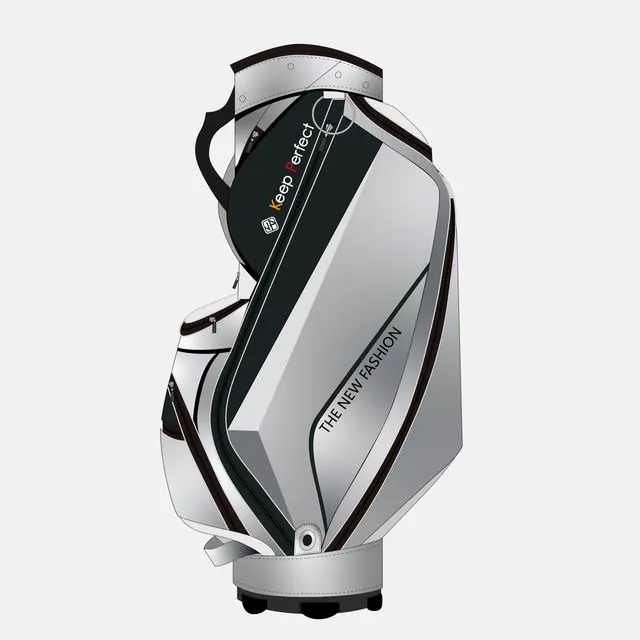
For a US-based or other non-EU buyer, the incoterm choice shapes the compliance workload. FOB at a Chinese port leaves freight and all EU import-side tasks — customs, duty, inspection — with the buyer. DDP to an EU address puts the responsibility for delivery, customs and duty on the seller, which is attractive for price certainty but concentrates risk on the seller’s side. Most serious EU-bound importers use their own forwarder and customs broker under FOB or CIF to keep control of the documentation and to see every cost line in the landed-cost model.
Whether you import FOB or buy DDP, the mandatory documents stay the same — invoice, packing list, transport document, origin and any safety evidence — and the most expensive mistake is to let the duty rate be assumed rather than verified. Look the current CN 4202 duty up on the EU’s Access2Markets tool at booking time and build it into the model; a “probably the same as last year” assumption is how landed-cost variance quietly ruins a seasonal margin.

Quality, Inspection and the Manufacturer Evidence Chain
EU market surveillance and retail buyers increasingly ask for evidence, not promises. The evidence chain that makes an EU import smooth includes: an ISO-based quality management system, a social-compliance audit, a pre-shipment inspection report, restricted-substance declarations and, where requested, lab test reports against the current REACH position. Our affiliated network in Quanzhou runs 7 production lines and 126 sewing machines with 137 staff, sustains about 200,000 bags a month, ships to 100+ countries for 200+ brands, and passed an SGS on-site audit in March 2026 — the kind of third-party document an EU importer presents to retail buyers and to customs when asked.
The inspection gate is the same as for any export: a pre-shipment inspection (AQL statistical check) on the packed goods before the container seals, plus a receiving inspection on arrival. For EU imports, pack the inspection with an eye on the product label — fibre content, origin, batch marking — because a labelling defect is a compliance defect that travels with every unit even when the sewing is perfect.
EU Compliance Checklist for a Golf Bag Programme
| Requirement | What It Demands | When to Confirm |
|---|---|---|
| Customs classification & duty | CN 4202, verify current duty via Access2Markets | At booking |
| REACH restricted substances | Substance limits in dyes, coatings, hardware | Sampling |
| GPSR traceability | EU economic operator + product/batch marking | Label design |
| Textile content label | Fibre composition and origin on label | Sample approval |
| Packaging / EPR | Sized, recyclable; member-state EPR if applicable | Pre-production |
| Safety evidence | Test reports, inspection, social audit | Ongoing |
Frequently Asked Questions
- Which customs code applies to golf bags imported into the EU?
- Golf bags fall under CN heading 4202, the luggage-and-containers heading, with a duty and formalities published in the EU’s Access2Markets tool.
- Do golf bags need CE marking for the EU?
- No — a conventional carry bag is not a CE-marked product. It falls under the EU General Product Safety Regulation, which is not a CE regime. Only features covered by specific directives (for example electronics) bring CE into scope.
- Does REACH apply to golf bags?
- Yes. REACH restricts the concentration of certain substances in articles as sold in the EU, so the dyes, coatings and hardware on a finished golf bag are in scope. Confirm with substance declarations and test reports.
- What traceability does the EU GPSR require?
- The General Product Safety Regulation requires an identifiable EU-based economic operator and product or batch traceability so a safety issue can be acted on. Keep an EU contact and durable product marking.
- Can I place a small test order for the EU market?
- Yes. Test orders are accepted from 100 pieces to validate product, packaging, freight and compliance; the standard custom MOQ is 200 pieces, with samples in 10–20 days and production in 45–60 days.
- How do I confirm the current EU duty on golf bags?
- Look up CN 4202 and the originating country in the EU’s Access2Markets tool at booking time; do not rely on last year’s figure because the EU revises its tariff schedule annually.
And because the EU reviews its tariff schedule and its safety rules on an ongoing cycle, the durable advantage goes to the importer who re-verifies once per season — a thirty-minute look at the same Sources below — rather than the one who assumes last year’s rulebook still governs this year’s container.
Confirm your classification, hold your evidence chain and ship with the confidence that every gate was checked at the moment it was cheapest to fix.
Sources
The regulations and tariffs referenced in this guide can be verified against these official sources:
- European Commission Taxation & Customs Union — EU customs duty and combined nomenclature.
- EU Access2Markets — current CN duties, origin and import formalities for CN 4202.
- European Chemicals Agency (ECHA) — REACH restricted-substance list and guidance.
- European Commission Product Safety — the EU General Product Safety Regulation (GPSR).
- US International Trade Administration — market and compliance intelligence for exporting into the EU.
Plan an EU-compliant range with our wholesale team, review wholesale pricing, or start factory-direct. For customs-ready private-label work, see OEM/ODM services and custom solutions. Contact service@junyuanbags.com or +86 17750020688.