OEM Golf Ice Bag Manufacturing Standards
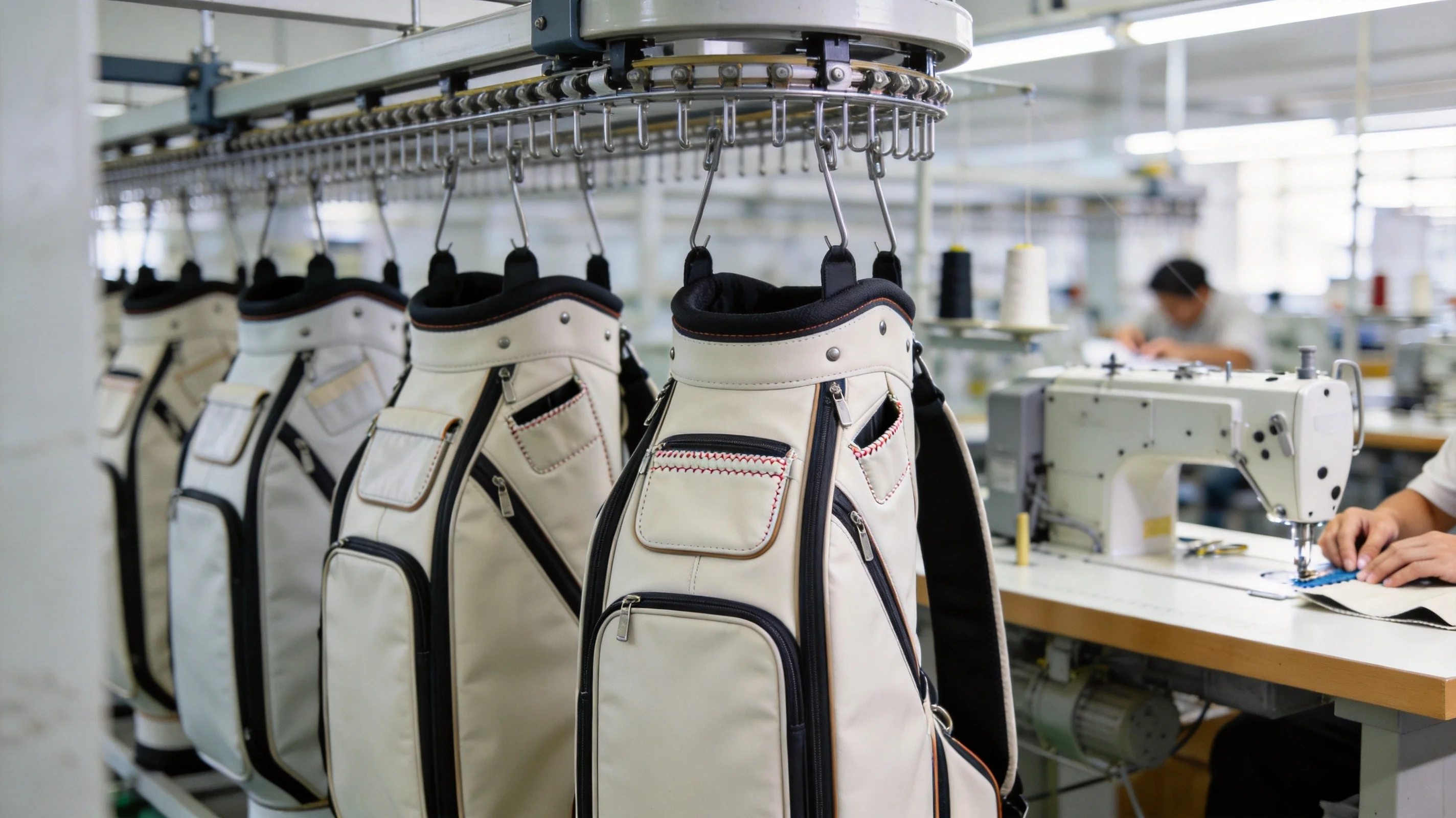
OEM golf ice bags are manufactured to a documented standard covering closed-cell insulation, leak-proof sealed interiors, stitch and zipper integrity, and export-grade quality control, with a standard 200-piece MOQ (100-piece test orders), 10-20 day sampling, and 45-60 day bulk production. These are the working numbers a brand or course owner can build a sourcing plan around, and they are only trustworthy if the partner behind them can demonstrate them in a real facility rather than on a marketing page.
Why Manufacturing Standards Matter for Ice Bags
A golf ice bag lives or dies on construction quality that the buyer never sees. The insulation liner, the seam sealing, the zipper and the reinforcement at the handles all sit beneath the outer fabric, and any of them can fail silently after a handful of rounds. Because the product is judged by measured cold retention and by whether it leaks, the manufacturing standard is not a paperwork formality — it is the specification that determines whether the product works.
For OEM buyers the stakes are higher. You are putting your brand on the bag, so every unit that underperforms carries your logo into the market. A defined manufacturing standard protects your margin and your reputation, because it gives you a measurable agreement about materials, tolerances and verification rather than an open-ended promise.
Material Specifications at the Factory
The starting point of any OEM ice bag standard is the material bill. The outer fabric must be durable, weather- and moisture-resistant, and compatible with the logo and printing methods you choose. The insulation layer should be closed-cell foam for real cold retention, ideally with a reflective layer that blocks radiant heat. The interior needs a sealed, easy-clean liner that contains condensation and meltwater rather than letting it reach the rest of the bag.
Every material should be documented with a spec sheet covering fabric weight, weave, coating and test results. A professional factory can provide these for each component — outer shell, liner, foam, zipper, webbing and hardware — so you are not relying on "the usual materials" but on verifiable inputs. This level of documentation is part of what separates a genuine OEM partner from a trader reselling generic stock.
Quality Control Checkpoints Across Production
Reliable manufacturing distributes inspection across the process rather than waiting until the finish line. Incoming materials are checked on arrival against the spec sheet. During cutting and sewing, dimensions and seam allowance are sampled to keep panels consistent. At assembly, the insulation fit, zipper function, handle anchoring and leak protection of the interior are verified before the bag moves on.
Before the bag is packed, a final inspection should confirm appearance, branding registration, function and packaging integrity. This staged approach catches a defect early, when it is cheap to fix, instead of discovering a systematic fault across a finished batch. For a cooler pocket, the two non-negotiable checks are the cold-retention test and the leak test, because those are the two promises the consumer experiences.
Sampling, MOQ and Production Lead Times
The commercial terms around an ice bag order matter as much as the construction. Standard practice in professional OEM golf manufacturing is a 200-piece minimum order, with test or trial orders accepted from 100 pieces so you can validate the product before a larger commitment. Sampling runs 10-20 days, and bulk production for an ocean-ready order typically runs 45-60 days depending on size and customisation.
These numbers let you plan inventory and marketing rather than guessing. When you compare suppliers, treat fast lead times as a flag to investigate rather than a gift: a factory that genuinely schedules the capacity you need will give you a realistic window. Capacity is the safety net behind these commitments, so the stated lead time only means something when the facility has the production lines and staff to meet it. A factory running 7 lines with 126 sewing machines and 137 staff can schedule around 200,000 units of monthly capacity, which is what makes large-series ice bag orders reliable.
Certifications and Factory Audits
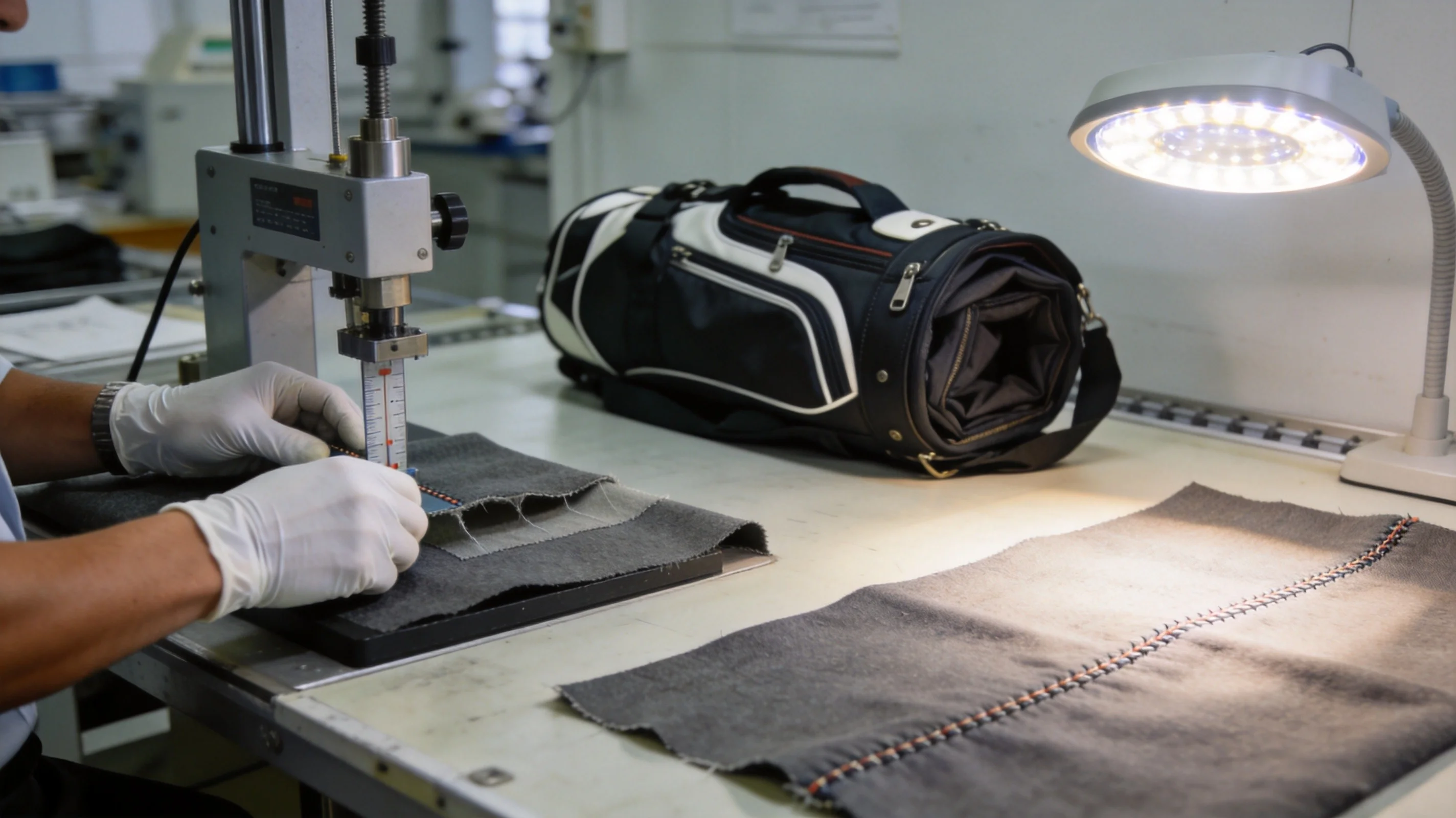
Certification is the evidence layer behind a manufacturing standard. ISO 9001 confirms a structured quality management system, while social audits such as BSCI document working conditions. For many export markets, these credentials are expected, not optional, and they should be verified rather than taken at face value.
A third-party audit is the strongest verification. An on-site audit conducted by SGS — for example, one registered in March 2026 at a main manufacturing facility of around 4,950 square metres — independently confirms that capacity, equipment, staffing and working conditions match what the supplier claims. When you are buying at volume, commissioning or reviewing a current third-party audit is the most reliable defence against inflated claims. It converts the supplier's word into an inspector's record you can actually trust.
The Standard-Setting Table for Ice Bag Manufacturing
| Element | Typical standard | Verification |
|---|---|---|
| MOQ | 200 pieces (100 test) | Written quote and contract |
| Sampling | 10-20 days | Physical pre-production sample |
| Bulk production | 45-60 days | Production schedule and milestones |
| Quality system | ISO 9001, BSCI | Third-party audit, SGS site check |
| Insulation | Closed-cell + reflective | Cold-retention test result |
| Leak protection | Sealed interior | Leak test on sample |
Custom Branding and Decoration Standards
A golf ice bag rarely ships blank. Embroidery, screen printing, woven labels and custom colourways are the standard ways a brand or course owner marks the product, and each method has its own quality bar. Embroidery must register cleanly on the curved panels of a cooler, printing must survive moisture and sun exposure without fading, and the logo placement should be agreed on a dimensional artwork before any production run.
The decoration is where many OEM relationships go wrong, because artwork that looks right on screen misbehaves on fabric. A professional factory provides a punch or print proof, confirms colour values against a recognised standard, and signs off the placement with you before sampling. Establishing those standards up front prevents a batch arriving with mis-registered logos that cannot be sold.
Testing Cold Retention and Leak-Proofing
Two tests carry the whole credibility of an ice bag, and both must be in the manufacturing standard. The cold-retention test fills the bag with pre-chilled product and a known amount of coolant, logs the interior temperature in a controlled ambient, and reports how long it stays below a usable threshold. The leak test confirms the sealed interior and seams hold meltwater and condensation without weeping through to the outer bag or your gear.
Run both on your sample and ask for the factory's documented results and method. A figure without a method is advertising; a figure with a method is engineering. When you get both, spec them into your own product sheet so your customers hear the same standard you verified from the source.
Because cool-nosed products fail in two opposite ways — warm too fast or leak on the second round — it is wise to record the exact conditions of your own verification so you can repeat it on later batches. Keep a simple log of the start temperature, coolant amount, ambient temperature and the time each sample stays under the threshold. Over a few orders this log becomes your own baseline for whether a new supplier, a material change or a different season is degrading or improving performance, and it gives you a factual basis for conversations with the factory when something drifts.
Choosing a Partner: What to Verify Before You Commit
Before signing an OEM agreement, carry out a focused due diligence pass. Confirm the legal manufacturing entity and its age, review its certifications and any recent third-party audit, request real samples and run your own checks, and speak to the production team about capacity and scheduling. The entity behind your order matters especially for multi-year or high-volume programmes.
A factory serving 200+ brands across 100+ countries demonstrates breadth of experience, but breadth should be confirmed by evidence, not claimed on faith. Our manufacturer selection guide walks through the full set of factory and quality due-diligence questions, and our quality standards guide sets out the concrete checks to apply to samples and production.
It is also worth confirming who you will actually communicate with. A direct line to a responsible production or quality contact changes everything during a sample round or a schedule shift, saving days compared with routing every message through a distant sales layer. When a factory is open about both its legal entity and its working team, and replies to genuine technical questions with specifics, that transparency is itself a signal of a standards-driven partner worth building a programme around.
Starting an OEM Ice Bag Order?
Established 2014, ISO-verified production, SGS site audit March 2026. Standard 200-piece MOQ, 100-piece test orders, 10-20 day sampling, 45-60 day bulk.
Request a Custom Quote →Commercial Terms Worth Specifying
The strongest manufacturing standard is undermined by vague commercial terms. Put in writing the payment schedule, the incoterm and destination, the acceptable defect rate and how it is measured, the inspection party and stage, and the remedies for a failing batch. Agreeing these before production protects both sides and makes the standard enforceable rather than aspirational.
Clear terms also make the partnership scalable. When you know the defect threshold, the inspection standard and the lead time framework, you can plan repeat orders without renegotiating from scratch every time. This contractual clarity is what allows a small initial test order to grow calmly into a long-term programme.
Designing the Ice Bag Layout and Pockets
A great ice bag is more than a box with a zipper, and the layout deserves design attention at the specification stage. Think about how many cans the interior must hold, whether it should also accept bottles, and how the insulated pocket relates to the rest of the bag's organisation. A wide-mouth opening and a full-length zipper make loading and cleaning far easier, while a drainage or easy-clean floor deals with the condensation every cooler produces.
The handle and mounting matter every bit as much as the pocket. A loaded cooler is heavy and wet, so the main handle must be reinforced and the bag should offer a way to attach to a trolley, cart or stand bag without putting stress on a seam. When you brief the factory, be explicit about both the capacity target and the attachment points, because they drive the material layup and the QC checks that follow.
Zoning is just as important as the pocket itself. If the ice bag is one compartment in a larger golf bag, the other pockets — valuables, apparel, rangefinder — should be designed so that cold air and condensation from the cooler never reach them. A thermically separated zone protects the rest of the gear and keeps the whole product pleasant to use. The way these zones are organised across golf bag types is covered in our golf bag types guide, which helps you match pocket architecture to how the bag will actually be carried.
Packaging, Carton and Export Considerations
How an ice bag is packed is often the difference between an order that lands safely and one that arrives damaged. Individual bags should be protected against abrasion during shipping, and the carton layup must account for the fact that a cooler is bulkier and heavier than a comparable uninsulated bag of the same footprint. Clear inner packaging also helps a retail display of a cooler bag survive the journey to the shelf intact.
Export logistics add their own requirements: accurate carton dimensions and weights for freight costing, correct documentation for customs, and labelling that complies with the destination market. A factory that handles these details on a daily basis, moving production to brands in many countries, makes the difference between an inconvenient surprise and a smooth delivery. It is one more reason capacity and experience matter when you compare suppliers.
Reinforced cartons are a worthwhile investment for coolers, because the added bulk of insulation makes a collapsed outer box far more likely in a sea container, and crushed cartons damage handles and weaken zippers before anyone unpacks them. Ask how many units fit per carton, how the bags are layered, and whether corner protectors or edge guards are used on heavier designs. Getting the packaging spec right at the start is cheaper than absorbing a claim on an otherwise perfect order.
Cost Drivers and How to Control Them
Ice bag pricing is driven by a handful of variables, and knowing them lets you control cost without cutting quality. The liner is the biggest hidden cost: upgrading from standard foam to closed-cell with a reflective layer raises material cost but is where cold retention comes from. Fabric grade, hardware quality, decoration complexity and order quantity all move the number, and consolidation of a thoughtful design helps a supplier attain better pricing through manufacturing throughput.
The discipline is to spend where the product is judged and economise where it is not. Keep the liner and sealing at standard quality because those are the performance the buyer experiences, and trim complexity in areas the user never sees. A clear cost logic against order quantity is laid out for standard golf bags in our wholesale pricing guide, and the same reasoning applies to cooler products.
Do not let a per-unit number be the only yardstick. Compute the total landed cost — unit price, freight, packing, inspection and any duty — and compare suppliers on that basis. A marginally cheaper unit price can be erased by heavier packaging or slower logistics, while the cheapest headline number often hides the lightest liner. Understanding where the money actually goes lets you negotiate for the right things and keeps the product honest at the price you are willing to deliver.
Building a Long-Term OEM Relationship
An ice bag order is rarely a one-off, and the value of a partnership grows with each season. A supplier who knows your brand, your quality bar and your scheduling is faster to sample, cheaper to manage and more likely to flag risks before they become problems. Consistency across repeat orders protects your customers from the small variations that erode trust in a branded product.
Building that relationship starts with clear standards and honest communication at the first order. Share your quality expectations in writing, agree inspection points, and review performance after each shipment rather than only when something goes wrong. The practical mechanics of a repeatable programme — samples, schedules, communication — are covered in our long-term factory partnership guide.
Common Pitfalls in Ice Bag Sourcing
- Trusting thickness over density: a thick low-density liner can underperform a denser thinner one; verify the test result.
- Skipping the leak test: insulation and waterproofing are separate promises; test both.
- Ignoring the sampling stage: the sample is your only pre-volume proof; run cold-retention and stitching checks on it.
- Misjudging hidden costs: freight, packaging and inspection make a low unit price misleading unless total landed cost is calculated.
- Assuming lead times: confirm 10-20 day sampling and 45-60 day bulk against the factory's real schedule.
Avoiding these errors is mostly a matter of disciplined verification. The same care you would apply to any overseas soft-goods order applies double to a cooler, because the two performance claims — cold retention and leak-proofing — are easy to inflate and invisible on the shelf. Apply the checks, order a reliable sample, and the pitfalls become avoidable.
Care and Shelf Life of the Finished Product
A finished ice bag holds its performance only if it is maintained, and you should pass that message on to your customers to protect your brand too. Empty and dry the interior after each round, store the bag open, and avoid crushing the foam under heavy gear. Wash the liner with mild soap and water and never expose it to harsh solvents that degrade foam or reflective film.
Provided the standard build is sound and the user follows basic care, an ice bag retains its cold-retention performance for years. Include a small care note in the packaging or on your product page; it is a low-cost way to lengthen the product's usable life and to keep satisfaction high. A simple routine is covered in our insulated cooler bag maintenance guide.
OEM golf ice bag manufacturing is a matter of defined standards, not luck. When materials are specified, quality is inspected across production, sampling and lead times are agreed, certifications and audits are verified, and both cold retention and leak protection are tested to a documented method, you get a product you can sell with confidence. Bank on those standards — not on a glossy claim — and an OEM ice bag becomes one of the more dependable items in your line.
To see how these standards apply to capacity and sizing along with insulation, our capacity and insulation guide complements this article, and the golf ice bag size guide helps buyers match volume to use.
Sources
Frequently Asked Questions
- What is the minimum order quantity for OEM golf ice bags?
- 200 pieces standard, 100-piece test orders accepted; sampling 10-20 days and bulk production 45-60 days.
- What certifications should an OEM ice bag factory hold?
- ISO 9001 for quality management plus social audits such as BSCI, verified by third-party inspections such as an SGS site audit.
- How do I verify a factory's quality?
- Request a pre-production sample, a documented cold-retention test and a leak test, and review a current third-party audit.
- How long does sampling and bulk production take?
- Sampling 10-20 days; bulk production 45-60 days depending on size and customisation.
- Can I customise logo and colour?
- Yes, via embroidery, printing, woven labels and custom colourways, around the factory's scheduled monthly capacity.
- What capacity supports large ice bag orders?
- 7 production lines, 126 sewing machines and 137 staff support around 200,000 units monthly for 200+ brands in 100+ countries.