Smart Golf Bag Technology Integration 2025
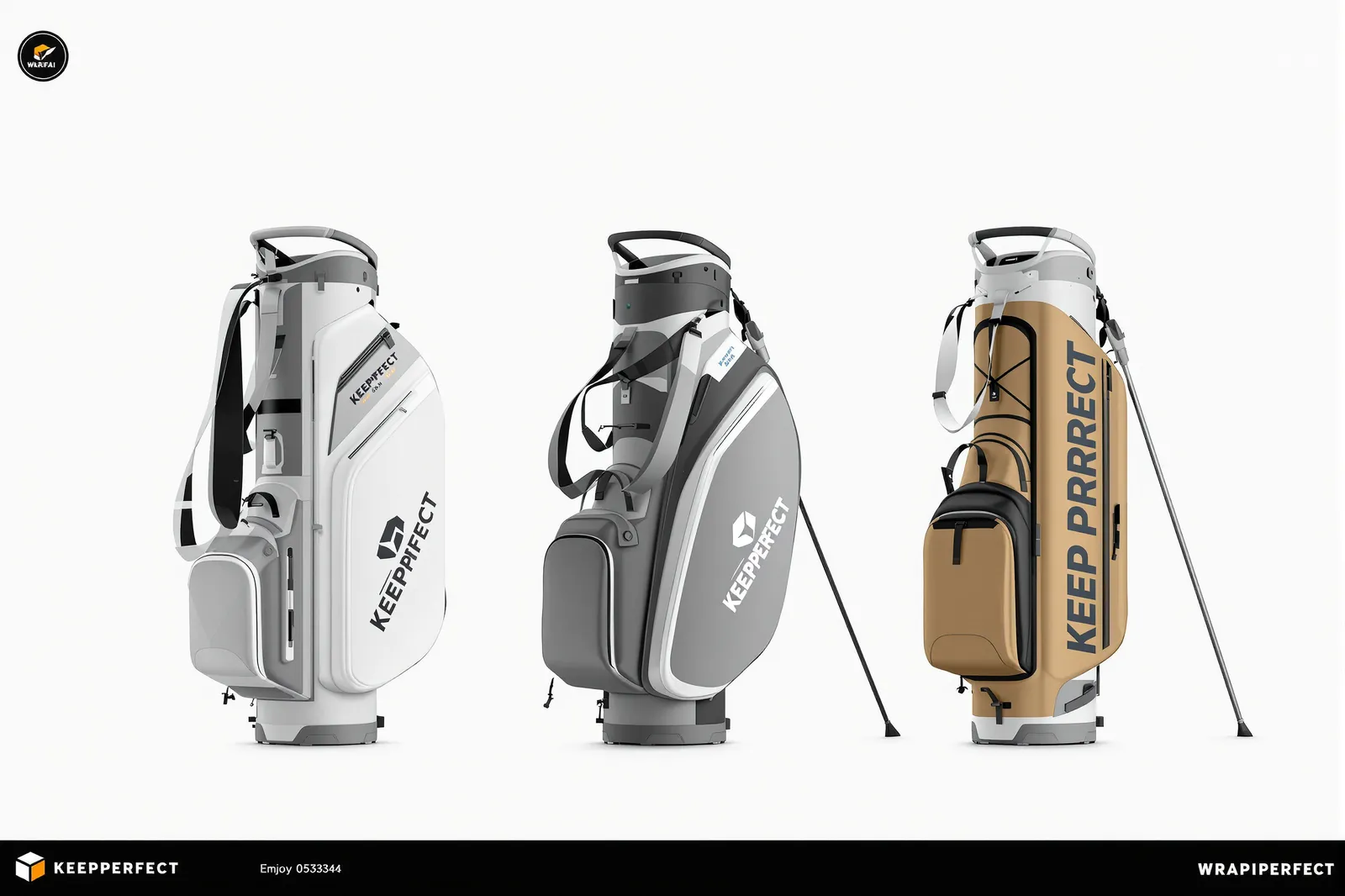
Technology integration in a 2025 golf bag is the deliberate engineering of sensing, tracking, power and connectivity into one durable shell — GPS and Bluetooth for location, RFID for club inventory, weighing sensors for carry weight, USB or wireless charging for power, and smart storage that turns organization into information — and the honest measure of a great integrated bag is not its feature count but whether those systems were engineered, sealed and made serviceable together so they still work reliably in rain, heat and after years of use. This guide, from the standpoint of a golf bag factory in Quanzhou, China, explains what integration genuinely delivers in 2025, what to trust, and how to judge whether an integrated bag is worth its higher price.
What Integration Means in 2025
Integration is different from simply adding a gadget. A bag that is integrated treats its electronics as part of the product: the GPS module sits where it can see the sky, the battery is placed so it never crushes clubs or shifts under load, the sensors feed a single app, and the whole system is protected by the same weather-sealing that keeps your gear dry. In 2025 this has matured to the point that the electronics are nearly invisible, and the bag simply works smarter without demanding to be managed like a device. The most successful products of this generation are deliberately quiet about the technology — you notice the convenience, not the engineering, because the electronics are integrated far enough into the product that they stop drawing attention to themselves.
The distinction matters for value. A bag with one bolt-on tracker and a large price is not integrated — it is decorated. A genuinely integrated bag coordinates several functions through a shared power, data and sealing architecture, which is harder to build but far more reliable and pleasant to use. When you shop, ask whether the electronics share a common power system and app, whether they are sealed as one unit, and whether the integration survives the harsh life a golf bag leads.
The Integration Stack: Sensing, Tracking, Power
Almost every 2025 integrated bag is built from the same handful of mature technologies, combined in different proportions. Sensing comes from load cells that measure carry weight and estimate club count. Tracking combines GPS for wide-area position and Bluetooth Low Energy for nearby presence. Power comes from rechargeable cells that both run the bag's electronics and charge the golfer's phone or rangefinder. Around these, RFID adds item-level inventory of tagged clubs and accessories. The art is in weaving them into one seamless system with a single power source and app.
Each element is publicly available and well documented — GPS is an open satellite system, Bluetooth is an open standard, and RFID is common across retail and logistics. The factory challenge is not inventing them but integrating them reliably: coordinating power draw, placing antennas for best reception, sealing every joint, and making the whole assembly serviceable. How well a manufacturer does that coordination is the true differentiator between an integrated bag you will love and a collection of parts that eventually confuses you.
GPS and Connectivity Converging
In an integrated bag, GPS and connectivity no longer work as separate features but as one location layer. GPS provides wide-area position — it finds the bag across the course or region, delivering course distances and a map you can use to walk back to a forgotten bag. Bluetooth Low Energy handles the fine detail, confirming the bag is near your phone, reporting battery health and streaming status. Together they bridge every step from "somewhere on the 14th" down to "right beside this cart."
The convergence is most visible in the app, which merges both data sources into one view: distance, location, battery and inventory together, instead of separate tools for each. For GPS accuracy, multi-constellation receivers in current bags typically hold a few metres outdoors, with the familiar caveat that dense tree cover and indoor spaces weaken the fix. Designed well, the bag always offers a last-known position, so the location layer is dependable even when the sky is hidden.
Power Engineering for Integrated Bags
Power is the quiet backbone of every integrated bag, and its engineering decides whether the bag is a pleasure or a chore. A single rechargeable system typically runs the sensors and radios while also serving as a power bank for your devices, with capacities commonly from 5,000 to 20,000 mAh gaining the golfer many phone charges. Wired USB is dependable and inexpensive; wireless charging is cleaner but pricier and slightly less efficient. The best designs show charge level clearly and make the pack easy to charge or swap.
The honest cost of power is weight and maintenance. A battery pack, its wiring and the modules add measurable mass — often several hundred grams to over a kilogram — and the bag must be recharged like any device. This is why integrated technology is most at home in cart and staff bags, which ride and tolerate the bulk, and why a lean carry bag typically carries fewer, lighter features. Check the stated battery life under your usage and how the pack is serviced or replaced, so the bag does not become disposable when a cell naturally ages. The better designs also make power modular: a pack that clicks out for charging, a socket that accepts a replacement cell, and a clear charge display so you never approach a round blindsided by an empty battery. That modularity turns an inevitable maintenance step into an easy, non-destructive one, and it is a strong signal that the manufacturer expects the bag to be used for years rather than a season.
Smart Storage That Turns Organization into Information
One of the more useful integration layers in 2025 is intelligent organization. Instead of merely offering more pockets, a bag can use its sensors to inform how you pack: weighing totals tell you when the bag is getting heavy, inventory sensing keeps tabs on each club, and well-designed divider pockets pair with that data so a missing club or an unbalanced load becomes visible at a glance. This turns daily organization — where clubs live, how heavy the bag is getting — into information you can act on.
There is a clear line here between genuinely useful and merely clever. If the storage is supported by sensors that give you real feedback, it improves how you play and pack. If it is only extra pockets with a smart label, it is just good organization by another name. For a deeper look at how dividers and pockets are engineered even in non-smart bags, our intelligent storage and organization guide walks through the design logic that sensor systems build on.
| Integrated layer | What it does | 2025 reality | Best fit bag |
|---|---|---|---|
| GPS location | Distances + bag position | ~3-5 m outdoors, weak under cover | Cart, staff, travel |
| Bluetooth connectivity | Phone link, status share | <100 m open air | All, optional |
| Weighing sensors | Carry weight + club count | Indicator-level, needs calibration | Stand / carry (lean) |
| RFID inventory | Confirm set is complete | Works at the bag / reader | Travel, premium sets |
| Power / charging | Runs bag + charges devices | 5,000-20,000 mAh packs | Cart, staff |
Weather Sealing of Integrated Electronics
The single biggest reliability question for an integrated bag is how its electronics are protected. A bag lives in rain, humidity and trunk heat, so quality integration mounts modules behind waterproof laminated fabric in sealed, impact-resistant housings, protects charging ports with rated covers, and keeps the antenna reachable without exposing the electronics. The concrete shorthand is the IPX ingress rating — check it, and check how the module and ports are sealed, rather than assuming a bag is protected because its shell looks weatherproof.
Good integration also thinks about the moments that stress sealing most: the transition from a cart to the ground, where modules on the base must survive compression and damp ground, and the folding points of a stand mechanism, where cables flex with every open and close. The most reliable designs route every wire through a single protected spine and keep every seal an engineered component rather than a strip of tape. It is exactly this attention to the physical journey of electronics — not the brochure's feature grid — that separates an integrated bag which still performs on its hundredth wet round from one that simply worked when new.
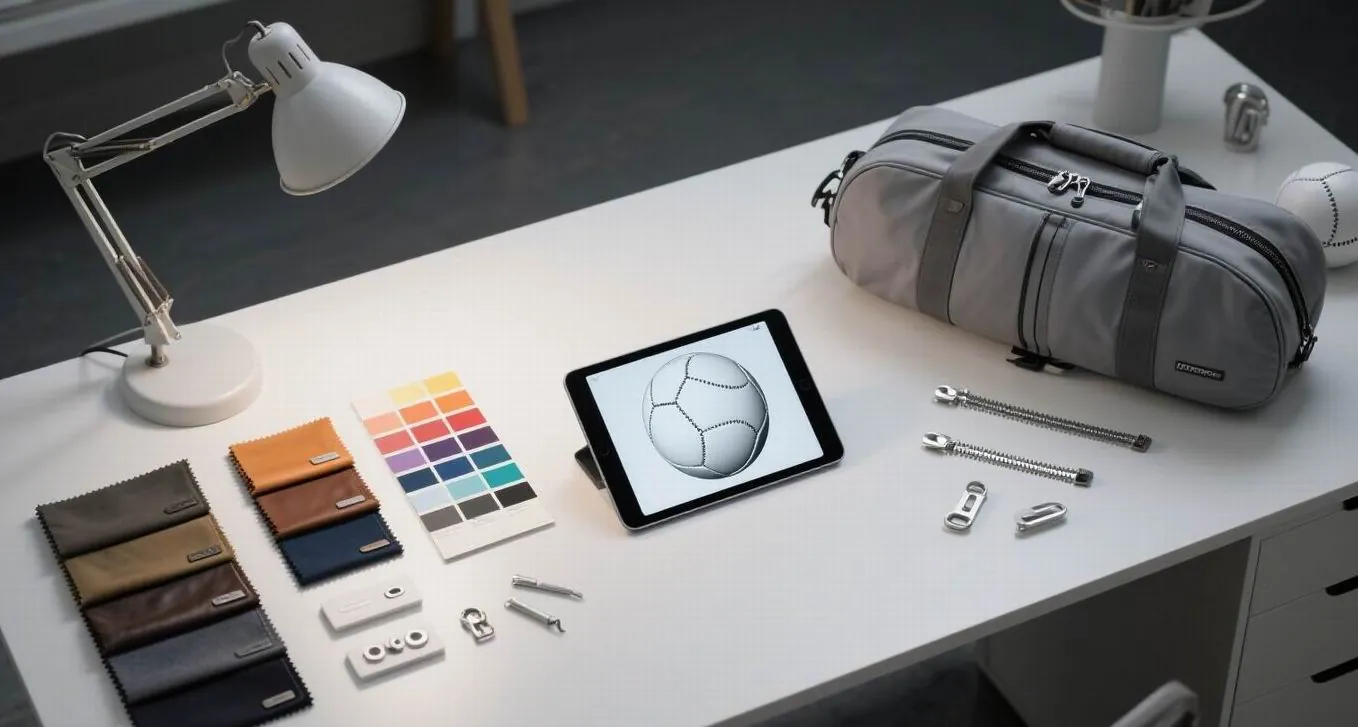
The reliability verdict is that any electronics add points of failure a mechanical bag does not have. Integration done carelessly — a module wedged into the bottom where it sits in water, wires pinched by the folding mechanism — fails on real courses and frustrates owners. Integration done well is sealed yet serviceable, so the electronics can be repaired or replaced instead of condemning an otherwise-fine bag to the bin. This serviceability is the mark of a manufacturer that expects its smart bag to last.
The Software and Data Layer
Every integrated bag leans on software, and the app is where its value is experienced or undermined. A well-made app unifies distance, location, inventory and battery into one calm view, updates the module cleanly, and stores your data responsibly — associated with your own account, deletable by you, and used only to run the features you asked for. It should also work with the bag's core functions offline, so the bag keeps doing its job regardless of connectivity.
The risk to manage is dependency. App and cloud features only last as long as support teams keep them running, so a bag whose core value requires a login and a cloud is a fragile purchase. The durable approach is to prefer local-first functions — GPS, RFID, weighing — and treat the app as a convenience layer. When you evaluate an integrated bag, ask what keeps working the day support stops, and weight the purchase toward that resilient core. Firmware updates are another quiet point: a maker that genuinely supports its product ships updates that fix real bugs and add safety, while one that abandons the app quickly leaves your bag frozen in an early, unfinished state. Give weight to how long the manufacturer commits to software support, because no matter how well the hardware is built, an integrated bag's full value lives partly in code that must be maintained over the bag's long life.
Security, Rescue and Privacy of an Integrated Bag
Integration also carries a security and privacy dimension. On the security side, integrated bags can help relocate a stolen or moved bag via GPS, and rescue services use the same location data to reunite golfers with lost equipment, which is a genuine benefit. On the privacy side, the bag generates personal data — location history, club inventory, rounds — so it matters where that data goes. Reputable makers keep it on your device and account rather than selling it, and give you control over deletion.
The balanced view is that location data used for your own loss-prevention is a fair trade, but location data quietly shared or repurposed is not. Read the privacy policy before buying, prefer designs that can work without a cloud, and treat any requirement to hand over location history for basic operation with suspicion. A bag that protects your equipment should not also expose you without consent, and the best integrated products design for both at once. On the practical rescue side, the same GPS that marks a course yardage is what lets a lost-and-found team return a bag found on the 16th or in a cart barn, so a location-enabled bag genuinely increases the odds your equipment comes home; the discipline is to keep that capability under your control rather than behind an opaque agreement.
Manufacturing Integrated Bags at Scale
Producing a reliable integrated bag at volume is a coordination challenge between sewing and electronics that few factories handle consistently. The seamstress must place compartments where modules sit and route cabling without pinch points; the electronics team must seal, test and certify each unit; and the quality line must validate both the mechanical build and the electronic module on every piece. A lapse in either discipline produces a bag that looks right and fails early, which is why integration is not a feature anyone can simply add.
The operation behind this guide treats that coordination as the product: the 4,950 m² Quanzhou facility runs seven production lines with 126 sewing machines and 137 staff at a monthly capacity of 200,000 units, pairing disciplined construction with electronics integration and inspection. For more on the mechanical standards that keep any smart bag durable, our quality standards guide and manufacturing overview explain how a reliable shell is built and checked before anyone adds a chip.
Matching Integration to Your Play
The right integrated bag is the one whose combination of features matches how you actually play. A walker who wants distances and a manageable carry will value a GPS-and-weighing integration that stays lean. A golfer with a premium set who travels will prize location plus RFID inventory. A player who ends every long round with a dead phone will appreciate generous charging above all. A club or academy managing many sets will want fleet-level location and inventory. Start from the recurring problem, not the feature list.
The buying discipline for integrated bags is to verify every claim the way you would for a serious tool: confirm the stated accuracy, the IPX rating, the battery life under your use and how the pack is serviced, whether core functions work offline, and the privacy posture. Weigh the added weight against your bag type and rounds — a compact stack for a carry bag, a richer stack for cart or staff. For the construction that carries all of it, our materials guide covers the shells worthy of integrated electronics.
The Future of Bag Technology Integration
The direction of integrated bags is toward lighter, quieter and more interoperable systems. Chips and batteries are shrinking each generation, steadily reducing the weight and cost penalty that currently temper integration in carry bags. Charging is moving toward standardized wireless support, and integration is opening to the distance apps, rangefinders and wearables golfers already own rather than locking into proprietary platforms. The result will be bags that add value with less burden and friction over time.
What persists is the principle that integration serves the bag, never the reverse. The durable shell, weather sealing, club protection and comfortable carry remain the foundation, and electronics only enhance them. Expect the coming years to shrink the remaining weight penalty further, pushing genuinely useful integration into light stand bags they were previously too heavy to carry. We expect standardization, not fragmentation, to win: open power standards and shared data formats will let a golfer pair one bag with whichever distance app and rangefinder they already trust, removing the lock-in that currently holds integrated bags back. Buy the bag for its construction, add the integrated stack that matches your rounds, and verify the sealing, serviceability and privacy as you would for any long-term investment. We explore the wider trajectory of these technologies in our power management and future technology trends articles.
Integration Built on a Bag That Lasts
Sensing, tracking, power and smart storage coordinated inside a durable, weather-sealed shell. Custom options for brands engineering a smart golf line.
Explore Integrated Custom Bags →Conclusion
Technology integration in a 2025 golf bag is genuine engineering rather than gadget-stacking: GPS and Bluetooth locate the bag, RFID protects the set, weighing sensors manage carry, charging powers your devices, and smart storage turns organization into insight — all coordinated inside a durable, weather-sealed shell. Its value is real but bounded, its reliability depends on sealing and serviceability, and its cost and weight demand that you match the stack to your play. Judge an integrated bag by how well its systems were engineered together, not by how long the specification reads, and it becomes a dependable, worthwhile upgrade rather than an expensive novelty.
Sources
Frequently Asked Questions
- What does technology integration in a golf bag actually involve in 2025?
- A durable bag deliberately combining sensing, tracking, power and connectivity — GPS, Bluetooth, RFID, weighing sensors, charging and smart storage — engineered as one system rather than bolting gadgets onto an ordinary bag.
- How is electronics protected inside a golf bag?
- Modules go behind waterproof laminated fabric in sealed, impact-resistant housings, charging ports are covered, and electronics are made replaceable or serviceable. Check the IPX rating and port protection.
- Do integrated smart bags cost and weigh more?
- Yes. GPS modules, radios, batteries and wiring add measurable weight and manufacturing cost, usually from a few hundred grams to over a kilogram, which is why integration is commonest on cart and staff bags.
- Can smart storage really do more than extra pockets?
- Yes, when driven by sensors — inventory and weight data flag missing clubs or a heavy carry, turning organization into information. Without the sensor layer, smart storage is just well-designed organization.
- What is the biggest reliability risk in an integrated bag?
- Electronics add failure points, and careless integration — unsealed modules, badly placed batteries, fragile wiring — fails on real courses. Reliability depends on integration discipline and serviceability more than the feature list.
- Are integrated smart bags worth the price for most golfers?
- Only if integration solves real recurring problems — finding a lost bag, protecting a premium set, powering devices on long rounds. Otherwise a conventionally built quality bag is better value, because the shell matters more.
- How long do smart golf bag electronics last?
- A well-engineered bag is designed so electronics outlast several batteries and can be serviced or replaced, rather than disposing of the whole bag, with per-charge life of several rounds depending on use.