Sustainable and Eco-Friendly Golf Bag Manufacturing Options
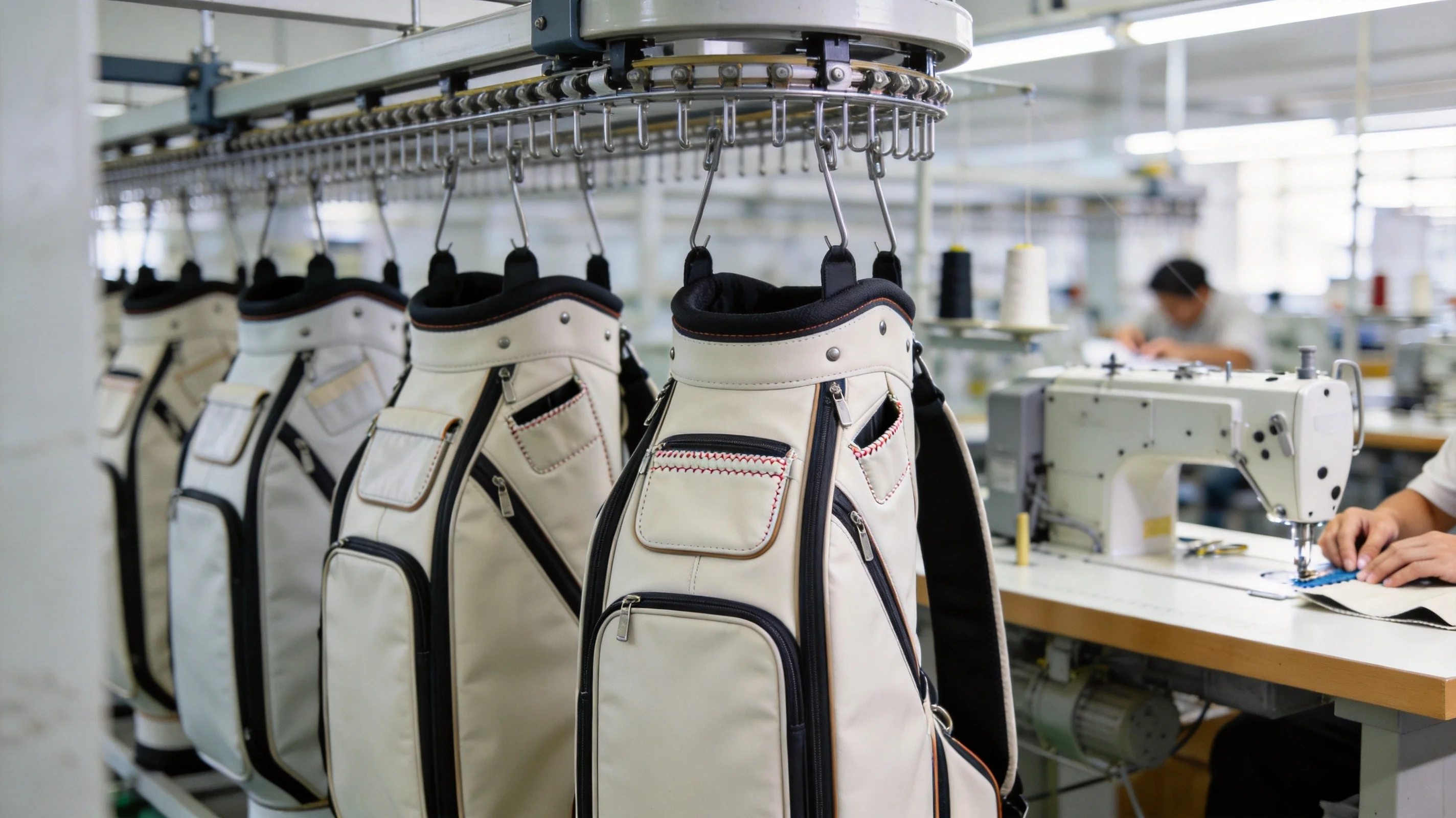
Sustainable golf bag manufacturing options today span recycled and organic fabrics, water-based decoration, low-impact dyeing and recycled trims — all available at a 200-piece custom MOQ with 100-piece test orders, sampling in 10-20 days and bulk production in 45-60 days from a 2014-founded factory with a 2026 SGS audit.
For a brand sourcing OEM or ODM golf bags, 'sustainable manufacturing' can feel like a vague promise. In practice it is a set of discrete, comparable choices: which shell and lining fabric, how the bag is dyed and coated, what inks and decoration are used, what trims and hardware go in, and how the factory handles waste and energy. Once each choice is specified, a buyer can compare factories on concrete, evidence-based ground rather than marketing language.
This guide, written from the floor of QUANZHOU JUNYUAN BAGS in Quanzhou, China (founded 2014; our founder entered the industry in 2004), walks through each sustainable manufacturing option, what it costs and how long it takes, and how it fits into a standard MOQ. It is designed for brands that want an eco line without breaking the budget or the production calendar.
The Menu of Sustainable Manufacturing Options
Think of sustainable golf bag manufacturing as a set of switches you can turn on independently. You might choose a recycled shell now, add organic linings on the next order, and adopt water-based decoration and recycled trims as suppliers mature. Because each switch is independent, brands can phase sustainability in without a risky all-or-nothing jump. The most common levers are: recycled polyester (rPET) shells and linings; organic cotton linings and accents; low-impact or reduced-chemical dyeing; water-based and solvent-free inks; recycled zipper tape and moulded hardware; and lighter, recyclable packaging. Together they lower the bag's material and chemical footprint while keeping performance intact. These options sit inside the same kit of parts as conventional production at a golf bag factory. Since QUANZHOU JUNYUAN BAGS runs 7 production lines with 126 sewing machines and 137 staff at about 200,000 pieces per month, sustainable variants move through the same efficient route — which is exactly why the premium stays small. Our golf bag materials guide maps the underlying substrate choices.Recycled Polyester (rPET) Shells and Linings
Recycled polyester is the workhorse of sustainable manufacturing because it directly replaces virgin polyester in the most material-heavy part of the bag. Post-consumer bottles and polyester waste are cleaned, melted and re-extruded into yarn, then woven into the 600D, 900D, 1200D and 1680D fabrics used for shells and dividers. Manufacturers prefer rPET because processed correctly, it performs like virgin polyester. A GRS-certified 1680D recycled ballistic nylon or recycled polyester shell matches a conventional one for tear strength and abrasion, so the eco switch does not force a durability compromise. rPET is also stable in color, which protects brand colorways. Recycled content should be documented. The Global Recycled Standard (GRS) or Recycled Claim Standard (RCS) from Textile Exchange certifies the recycled share through the supply chain. When a supplier quotes rPET, ask which standard applies and request the certificate and lot documentation. For a closer look at fabric options, see our material comparison guide.
Organic Cotton and Natural Linings
Organic cotton, certified by standards such as the Global Organic Textile Standard (GOTS), replaces conventionally grown cotton in linings, pocket bags and soft-touch panels. Because it is grown without synthetic pesticides and fertilizers, it reduces agricultural chemical load and supports soil and water health. In a golf bag, organic cotton is most valuable where fabric touches clubs and accessories: interior pocketing, valuables pouches, and the soft padding around the top. These areas benefit from a natural, breathable feel while the water-facing shell can remain in coated recycled polyester. One caution: organic cotton is not waterproof, so it should not be the sole outer shell fabric for an outdoor-use golf bag without a treatment or a protective shell. Blended with rPET, it gives a balanced, verifiable sustainability story combining recycled and natural fibers. Our eco materials overview goes deeper into the mix.Low-Impact Dyeing and Finishing
Dyeing and finishing are among the most chemical- and water-intensive steps in any textile product. Lower-impact methods reduce water usage, energy and dye effluent. In practice, a factory can use dye-lot discipline to minimize re-dyeing, choose reactive dyes that fix to synthetic fibres efficiently, and manage water treatment responsibly. For the buyer, the practical signal is cleaner chemistry. Supplies and trims that carry OEKO-TEX® Standard 100 data have been screened against a defined list of harmful substances, so a golf bag is safe to handle and use. bluesign®-certified inputs go further, addressing the whole production process. The net effect is a bag whose material, dye and finish do less environmental damage while meeting the colorfastness and coating requirements of active golf. A factory's ability to document these processes is part of the audit; read our certifications guide for the checklists to request.Water-Based and Low-Solvent Decoration
A large part of a branded golf bag's footprint is in how the logo is applied. Screen printing traditionally uses plastisol inks that rely on solvents. Water-based inks use water as the carrier, cutting volatile organic compound (VOC) emissions and simplifying cleaning in the print shop, while matching color pop and abrasion on most polyester fields. Water-based PU transfers and heat-applied patches are also greener alternatives that still deliver a crisp, premium logo. For high-wear zones, embroidery remains durable and can use recycled or natural threads. The best eco decoration plan is one dominant, neatly placed logo zone — it uses less ink and thread and reads better. Decoration is fully compatible with recycled shells, so a brand does not choose between sustainability and branding. Our custom branding guide covers which method suits which fabric and placement.
Recycled Trims, Zippers and Hardware
Sustainability extends to the parts most people rarely inspect: zipper tape, sliders, buckles, bases and feet. Recycled polyester zipper tape is increasingly available, and some manufacturers now offer recycled-moulding buckles and sliders. These swap small but repeated components toward recycled feedstocks. Metal and moulded hardware can also be specified to meet restricted-substance limits, which supports both product safety and recyclability at the bag's end of life. Because hardware is usually a small share of the cost, choosing recycled or cleaner options has a minor price effect. When specifying trims, the same verification logic applies as for fabric: ask for recycled-content documentation and any chemistry reports. This keeps the whole bill of materials consistent with the sustainability story rather than undermining it with uncertified parts. Our OEM/ODM services page explains how the full parts list is managed.Reducing Waste and Energy in Production
Sustainable manufacturing is also about how the factory handles what it buys. Computerized marker nesting arranges pattern parts to use fabric as fully as possible, and nested cutting combines multiple part sets to minimize offcuts. Offcuts can be reused for linings, pockets and binding, keeping fabric out of the waste stream. Energy use is trimmed through efficient machine settings, scheduled runs that avoid repeated machine warm-ups, and consistent quality that lowers rejection and rework. Fewer defective bags means less material, energy and shipping wasted — a directly measurable sustainability gain. These practices reinforce the financial case: less waste usually means lower cost per good bag, so sustainability and efficiency align. Our manufacturing overview and manufacturing process guide show how production is organized.Packaging and the Shipping Footprint
Packaging often makes up a bigger slice of a golf bag's footprint than buyers expect. Every polybag, insert, carton and strap ships with the bag around the world, so trimming packaging compounds the environmental benefit. Options include recycled-content boxes, recyclable polybags, removing foam fillers and packing more bags per carton. Logistics also matter: consolidating orders, choosing efficient packing that reduces container volume, and favoring sea freight where schedules allow shrink the per-bag transport footprint. An affiliated-factory model keeps the supply chain short and traceable, which helps document the full footprint. Eco materials usually ship on the same routes and schedules as conventional ones, so switching to sustainable options does not inherently lengthen transit. The main planning variable is certified fabric lead time. Our supply chain guide covers consolidation and planning.Factory Audits and Verification
Options are only as credible as their evidence. Material certificates prove the raw content; chemistry data proves the finish; and a facility-level audit proves the factory operates responsibly. A widely recognized benchmark is a social-compliance audit by an independent body such as SGS, which reviews labor, safety and environmental management. QUANZHOU JUNYUAN BAGS completed a 2026 SGS factory audit, giving buyers a third-party, comparable signal that sits alongside material certificates. Pairing that facility audit with GRS, GOTS, bluesign or OEKO-TEX material data creates the complete picture a sophisticated buyer wants. If a supplier cannot show certificates, material reports and audit results, treat its sustainability claims with caution. Evidence-based verification protects your brand from greenwashing accusations and gives you defensible claims to repeat to your own customers.Cost, MOQ and Lead Times for Sustainable Options
A recurring question is whether sustainable manufacturing inflates the budget. At factory-direct prices, the premium for rPET and certified materials is usually modest, and it can be offset by lighter packaging, efficient decoration and reduced waste. The exact figure depends on fabric grade, certification cost and order structure. MOQs stay practical: standard custom MOQ is 200 pieces per design and colorway, with test order options from 100 pieces so brands can pilot a sustainable version at low risk. Sampling runs 10-20 days and bulk production 45-60 days, with specially ordered or certified fabric the main lead-time variable. This accessibility is why many brands convert an existing style to sustainable materials rather than launching a separate, expensive line. If your volumes are smaller, a test order from 100 pieces lets you validate the market before committing. For the wider procurement picture, our inquiry-to-delivery guide is a useful companion.How to Choose the Right Combination for Your Brand
The right combination depends on your claim and your customer. If your sales story is recycled plastic, emphasize the rPET shell and trim with GRS documentation. If your story is natural and organic, lead with GOTS organic linings and accents. If your market values safety and premium, foreground bluesign or OEKO-TEX chemistry data. Start with one verifiable claim rather than a vague '100% sustainable' phrase, which invites scrutiny. Build a bag whose strongest claims are documented, and keep the rest as honest supporting context. This is the approach that survives retailer sustainability questionnaires and consumer questions. QUANZHOU JUNYUAN BAGS can blend recycled shells, organic linings, water-based decoration and recycled trims into a single program at a 200-piece MOQ (test from 100), sampling in 10-20 days and bulk production in 45-60 days. Our custom solutions team can help match the options to your market.Conclusion: Sustainable Manufacturing Is a Choice, Not a Sacrifice
Sustainable golf bag manufacturing is not a compromise on strength or a niche luxury. It is a set of discrete, affordable, verifiable choices — recycled fabric, organic linings, cleaner chemistry, water-based decoration, recycled trims and lighter packaging — that any brand can phase in around a standard MOQ. From the factory's perspective, the economics are sound: recycled yarn is now a commodity, cleaner finishing reduces waste, and efficiency lowers cost per good bag. That is why sustainability is spreading to mainstream OEM and ODM timetables rather than staying exclusive. To start, decide your claim, verify it with certificates and audits, and source from a factory that states materials, MOQ and lead times plainly. QUANZHOU JUNYUAN BAGS (founded 2014, 2026 SGS audit) can quote a sustainable line today at service@junyuanbags.com or +86 17750020688.Comparing Sustainable Options for B2B Buyers
B2B buyers choose between sustainable options differently from consumers, because the decision carries procurement, compliance and merchandising weight. The first split is between a recycled-shell upgrade and a full organic-and-recycled redesign. The upgrade is cheaper and faster; the redesign tells a stronger story. The second split is chemistry. A buyer exporting to the EU should prioritize cleaner chemistry and restricted-substance data up front, while a buyer marketing a 'green' line at home may lead with recycled percentage. Matching the option to the market requirement avoids paying for claims that earn no return. Whichever way a buyer leans, the same discipline applies: collect the certificate, verify the percentage, and confirm the option is producible at the planned MOQ. Sourcing through a single partner that manages these options as one bill of materials, like QUANZHOU JUNYUAN BAGS, keeps the comparison simple and the specification coherent.Sustainability and Export Compliance
For brands selling into the EU, sustainable manufacturing intersects with a tightening regulatory landscape. Producers face rising expectations to document the environmental credentials of textile products, from material content to restricted substances and, increasingly, product tracing. Certified recycled and organic inputs align neatly with these expectations. Restricted-substance compliance is the clearest example. Fabrics, coatings, inks and hardware that carry bluesign or OEKO-TEX data help a finished golf bag clear regulated-market checks without surprises. Cleaner chemistry is therefore not just a green ideal; it is an export-risk control. Documentation is the common thread. Keeping certificates, audit reports and product test data in the product file supports both sustainability marketing and regulatory submission. A factory that assembles this file, as read about in our certification guide, lowers the compliance burden on the buyer's side.Making Sustainable Options Operationally Simple
The fear that sustainable options complicate factory operations is largely outdated. Recycled and organic fabrics order like any material, run on the same lines, and take the same decoration and hardware. At QUANZHOU JUNYUAN BAGS these options sit inside the normal 7-line, 126-sewing-machine operation without special tooling. Operational simplicity keeps MOQs practical. Because the sustainable bill of materials is assembled from mainstream inputs, it can be quoted at a 200-piece MOQ with a 100-piece test order rather than requiring a dedicated line or premium volumes. The simplicity extends to scheduling. Sampling holds at 10-20 days and bulk production at 45-60 days, with certified-fabric lead time the only realistic variable. This is what makes sustainable manufacturing a routine option rather than a special project — and why so many brands now run their sustainability as an ordinary, repeatable program.Choosing Between Options with a Decision Matrix
A decision matrix disciplines option selection. Score each sustainable option against three axes that matter to a B2B buyer: the strength of the claim it supports, the ease of verification, and the cost and lead-time impact. Recycled shells score high on all three, which is why they lead most programs. Organic linings score high on claim strength and verification but carry a higher cost; cleaner chemistry scores high on verification and regulatory value with minimal cost; recycled trims add claim depth with small cost. Rank the options and choose the set that maximizes verified claim per dollar. A matrix also surfaces trade-offs honestly — for example, the cost of organic cotton versus the endurance of its market story. Documenting the scoring keeps the decision rational and explainable to a leadership team. This structured approach turns vague 'greener' preferences into a defensible spec.What to Verify When Auditing a Sustainable Supplier
When you audit a supplier for sustainable capability, verify more than certificates. Check that the factory can actually source certified materials at your MOQ, holds current certificates with matching lot documentation, and can show waste and yield data that proves genuine process improvements rather than a sales sheet. Verify decoration and finishing claims with product data: water-based inks with VOC documentation, coatings with restricted-substance reports, hardware with compliance evidence. And confirm a facility audit with a named body, date and scope, so labor and environment claims are third-party checked. A verifiable supplier is a low-risk partner. SGS-audited facilities such as QUANZHOU JUNYUAN BAGS provide this reassurance; a factory that cannot produce audit and material evidence invites caution. Verification is the difference between a sustainable program and a costly gamble.Structuring a Transition to Sustainable Production
Transitioning to sustainable production rarely needs to happen overnight. A phased plan usually wins: in season one, convert the core selling style to a recycled shell; in season two, add organic linings and water-based decoration; in season three, extend recycled trims and reduce packaging across the range. Each phase is quoted, sampled and validated at a 100-piece test order before full rollout, so learnings compound without a big-bang risk. The documentation file grows in step, giving the brand a steadily stronger story to present. Because phases reuse existing tooling and decoration where possible, the transition keeps sampling in 10-20 days and bulk production in 45-60 days. A factory that supports phased rollouts, as QUANZHOU JUNYUAN BAGS does, makes the move to sustainability manageable and affordable.Common Pitfalls in Eco Manufacturing and How to Avoid Them
The first pitfall is claiming sustainability without evidence, which invites greenwashing accusations. The fix is simple: only say what certificates and reports support. The second is putting recycled content in the shell but finishing with high-VOC inks and heavy packaging, undercutting the story — address the whole bag. A third pitfall is ignoring supply risk: a single-source certified fabric can stall an order. Mitigate with a second approved supplier and early ordering. Fourth is paying a large 'eco premium' masked as certification when the real cost is margin — negotiate transparent line items. Finally, avoid swallowing vague sustainability language in vendor marketing. Hold every claim to a document and a number. Keeping these disciplines turns eco manufacturing from a risk into a reliable, defensible capability.Sustainable Golf Bag Manufacturing Options at a Glance
| Option | Where It's Used | Verification | Cost Impact |
|---|---|---|---|
| Recycled Polyester (rPET) | Shell, lining, binding, dividers | GRS / RCS | Low-moderate |
| Organic Cotton | Linings, pocketing, accents | GOTS | Low-moderate |
| Low-impact dyeing / clean chemistry | Fabrics, coatings | bluesign / OEKO-TEX | Neutral |
| Water-based decoration | Printing, patches | Ink product data | Neutral-slightly lower |
| Recycled trims / hardware | Zipper tape, mouldings | GRS / RCS | Low |
| Reduced packaging | Cartons, polybags | Spec sheet | Slightly lower |
Looking for a Reliable Sustainable Manufacturing Partner?
Whether your line needs a recycled shell, organic linings, water-based logos or recycled trims, our factory can assemble a verified sustainable program. 200-piece MOQ, 100-piece test orders, sampling in 10-20 days, bulk in 45-60 days, backed by a 2026 SGS audit.
Request a Sustainable Bulk Quote →Frequently Asked Questions
- What are the main sustainable golf bag manufacturing options?
- The main levers are recycled or organic shell fabrics, low-impact and water-based inks, reduced-chemical dyeing, recycled linings and hardware, and energy-smarter factory processes.
- Is water-based printing as durable as solvent-based on a golf bag?
- High-quality water-based screen inks and water-based PU transfers can match the abrasion resistance of solvent-based options on most 1680D and 600D polyester fields, especially in flat logo zones.
- Can I combine sustainable materials with custom branding?
- Yes. Sustainable fabrics, recycled zipper tape and water-based decoration can be combined with screen printing, embroidery or woven labels inside a single custom program.
- What MOQ applies to sustainable material options?
- Standard custom MOQ is 200 pieces per design and colorway, with test order options from 100 pieces so brands can pilot sustainable versions before scaling.
- Do sustainable options change lead times?
- They can add a little time if a fabric must be specially ordered and certified. Sampling is typically 10-20 days and bulk production 45-60 days.
- Which certifications should a sustainable factory hold?
- Look for material-level certifications (GRS, GOTS, bluesign, OEKO-TEX) and facility-level compliance such as an SGS social audit; QUANZHOU JUNYUAN BAGS completed a 2026 SGS factory audit.