Top Waterproof Golf Bags for Golf Courses in Rainy Regions
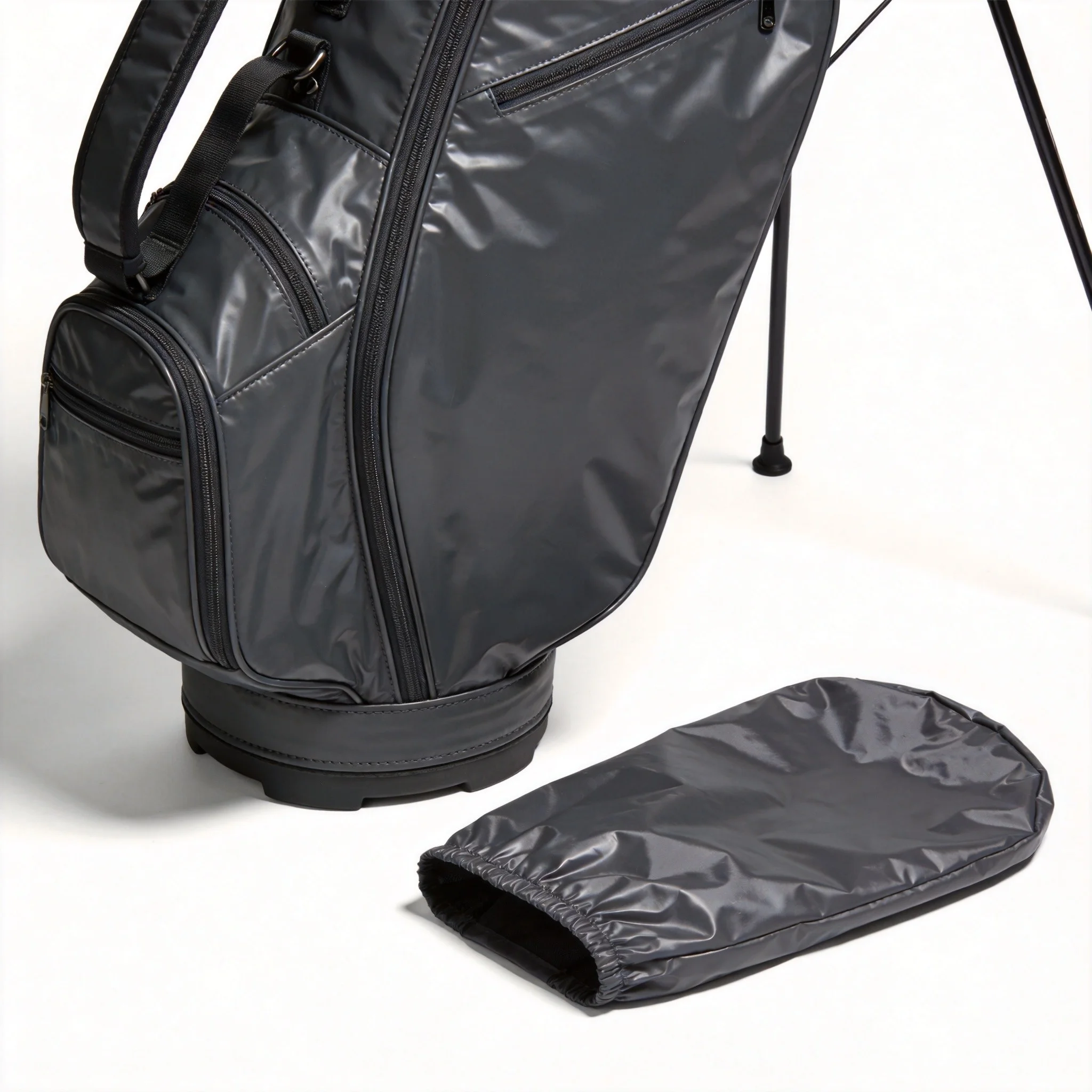
The direct answer: for golf courses and players in genuinely rainy regions, choose a golf bag that meets IPX6 under IEC 60529 (steady, heavy rain), built from a TPU- or PU-coated shell with a hydrostatic head of at least 3,000 mm under ISO 811, heat-taped or welded seams, waterproof or storm-flapped zippers, and a drainable bottom—cart bags are generally easier to keep sealed than stand bags because they stay mounted and lack leg mechanisms and carry-strap entry points. In areas where rain is a weekly reality rather than an occasional shower, splash-rated IPX4 bags are not enough; the difference between a dry set of grips and a soggy round is decided by these construction details, not by a marketing number. This guide explains how to choose the right waterproof bag for a wet climate, how to read the specifications that actually matter, and how courses and resorts can buy reliable waterproof bags in volume.
1. Why Rainy Regions Demand a Higher Standard
In a dry, semi-arid region, an IPX4 splash-rated bag covers morning dew, light drizzle and the occasional passing shower. In a rainy region—the Pacific Northwest, much of the UK and Ireland, the European north-west, parts of Southeast Asia and Japan, the Scottish links—rain is a weekly, often daily, condition that can persist for hours. Under those conditions, splash protection is irrelevant because the bag is not being splashed; it is being subjected to steady, heavy rainfall with water running across every surface and pooling around the base.
The practical translation is simple: IPX6 is the sensible floor for rainy regions because it reflects strong jets and heavy rain under the IEC 60529 test. A bag rated IPX4 will keep out a light spray but will admit driven rain through unprotected seams and zippers. For the most demanding maritime or monsoon climates, an IPX7 cover or a fully submersible dry-bag pouch for valuables adds a useful layer for electronics, but it is the IPX6 shell plus sealed construction that does the everyday work of keeping clubs dry.
Courses that rent bags or supply a fleet to members should set the same floor across the whole inventory. A single failure in a rental bag damages both the experience and the equipment, and in a wet region the waterproofing spec should be a fixed requirement rather than an optional upgrade. For a deeper dive into how ratings are actually earned, see our waterproof golf bag testing and IPX ratings guide.
2. Cart Bag vs Stand Bag in a Wet Climate
The choice between a cart bag and a stand bag is one of the most important decisions for a rainy region, and it usually favours the cart bag for two structural reasons.
Sealing simplicity. A cart bag stays mounted on a trolley or cart for the round. Its body is a relatively simple seam shell, which means fewer entry points to seal and a straightforward drainable-bottom design. A stand bag, by contrast, carries a leg mechanism, hinges and a base plate that are all potential routes for water, and it moves between cart and shoulder throughout the round. Sealing the leg mounts and strap anchors on a stand bag is possible but requires more design discipline and often more material.
Drainage behaviour. When a cart bag gets a little water inside, gravity and a drainable bottom quickly evacuate it because the bag stands upright on the cart. A stand bag, especially when carried on a shoulder, tilts and flexes, so water that enters can travel toward grips and valuables before it drains. This is why many experienced wet-climate players choose a cart bag for daily use and keep a lighter, rain-hooded stand bag only for walking rounds in light conditions.
| Bag Type | Sealing Difficulty | Drainage | Best Wet-Climate Use |
|---|---|---|---|
| Cart bag | Low (simple shell) | Excellent (upright, drainable) | Daily play, rental fleets, heavy rain |
| Stand bag | Higher (legs, straps) | Moderate (tilts while carried) | Walking rounds, light rain, with hood |
| Staff / travel bag | Moderate (larger) | Good when rigid | Tournament travel, storage |
3. Materials That Hold Up in Constant Rain
Constant rain is different from occasional rain: the shell is repeatedly wetted, folded, vibrated on carts and exposed to humidity for long periods, so material durability matters as much as initial water resistance. Three material families dominate the serious end of the market.
TPU-laminated shells are the strongest choice for sustained rain. Thermoplastic polyurethane lamination is more resistant to hydrolysis and abrasion than standard PU, so it holds its barrier better through repeated wetting, folding and cart vibration. This makes TPU the reference construction for a genuine storm bag that must last several seasons in a wet climate.
PU-coated nylon is the most economical serious option and performs well at IPX6 when combined with sealed seams and protected zippers. Its one caveat is long-term hydrolysis in humid storage, so a durable-grade PU is worth specifying if the bag will live in a damp climate year-round.
Coated polyester is lighter and lower in cost, holds coatings well, and resists UV reasonably, which suits a region with heavy sun under the rain. It is a sound choice for bag bodies where maximum storm performance is not the top priority. Whichever you choose, pair the fabric with a 3,000 mm-plus hydrostatic head and verify the complete construction rather than buying on the shell alone. Our golf bag materials guide compares these textiles in full.
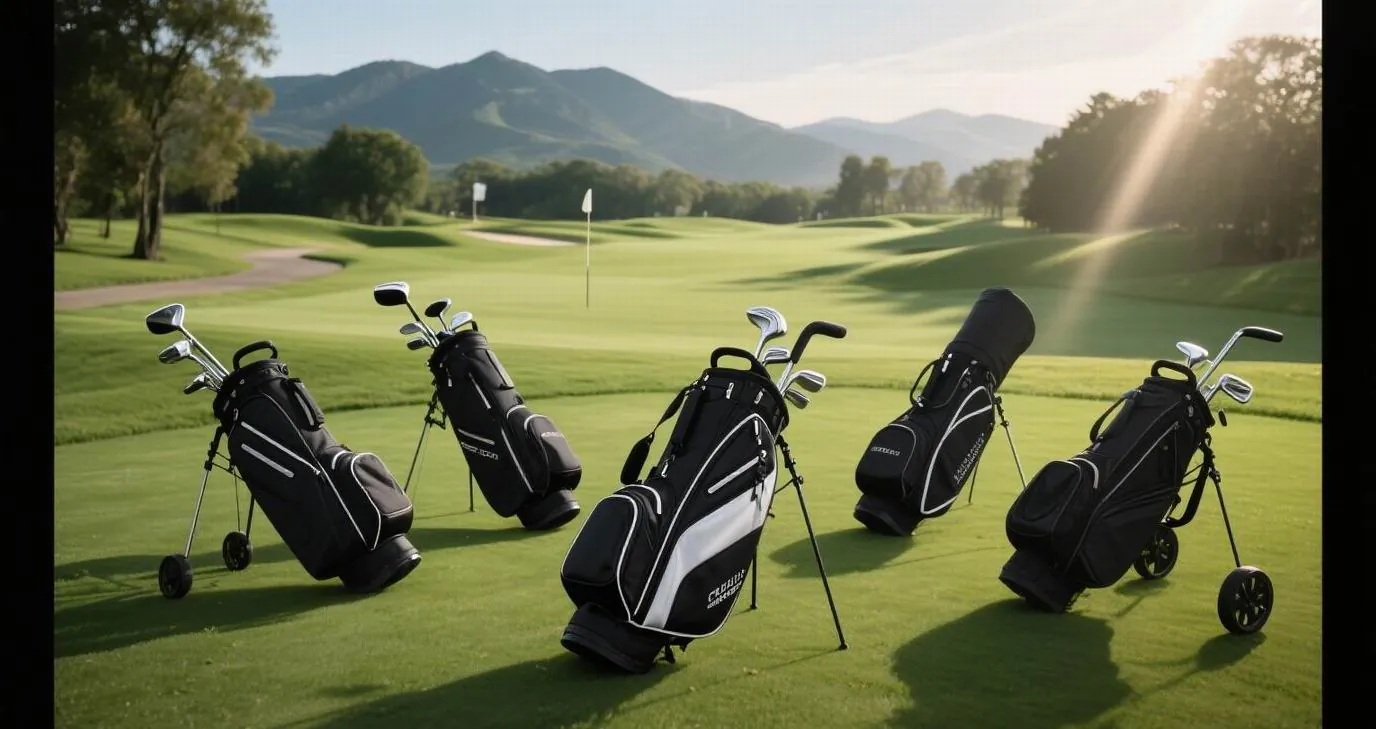
4. The Three Details That Decide Wet-Climate Performance
Above the fabric, water has three remaining entry routes, and in a rainy region all three must be closed for the bag to survive a full season.
Seams. Every needle hole is a capillary that admits water under pressure. Heat-taped or welded seams close those holes. On a heavily pocketed shell there are many seams, so require seam-sealing coverage to be stated panel by panel rather than promised in vague terms.
Zippers. Standard coil zippers breathe water. A waterproof PU-laminated zipper or a storm flap on the main and valuables openings turns the closure into a barrier. In a rainy region, the valuables pocket—where wallets, phones and range finders live—deserves the highest protection, ideally a waterproof zipper and a covered housing.
Drainage. A drainable bottom with a sealed grommet converts any ingress into a nuisance instead of a disaster. Water that gets in flows out rather than pooling around grips and electronics. This is non-negotiable for a wet-climate bag: even a bag sealed well at the top needs a way to evacuate moisture that enters through the stand, base or a worn grommet after months of use.
5. Matching the Bag to Your Specific Climate
Rainy regions are not all alike, and the ideal bag depends on the flavour of your wet weather.
Maritime and coastal. Constant drizzle, sea mist and humidity. Choose a cart bag with TPU or durable PU, sealed seams, a drainable bottom, and corrosion-resistant hardware because salt air attacks metal. Re-proof coated fabrics once or twice a year.
Monsoon and tropical. Extreme, short, violent downpours, often with high humidity between storms. An IPX6 shell with a drainable bottom is essential, and an IPX7 cover or waterproof valuables pouch protects electronics during the heaviest bursts. Fast-drying, coated fabrics reduce the damp-feel problem between rounds.
Cold-temperate rain. Persistent light-to-moderate rain over long seasons. IPX6 with sealed seams and protected zippers is the floor, and insulated or dry pockets for raingear keep essentials dry through a long round. Upright cart bags with drainage are easiest to manage here.
6. Reading a Waterproof Spec Like a Buyer
Whether you are an individual golfer or a course stocking a fleet, you should be able to read a waterproof claim in numbers. A credible wet-climate bag spec looks like this:
- Class: "IPX6 per IEC 60529, verified on finished-sample tests."
- Fabric: "TPU/PU-coated nylon, minimum 3,000 mm hydrostatic head (ISO 811)."
- Seams: "All shell seams heat-taped or welded, coverage stated panel-by-panel."
- Zippers: "Main and valuables openings with waterproof PU-laminated zipper or storm flap."
- Bottom: "Drainable bottom with sealed grommet; stand mounts weather-sealed."
If a supplier cannot state these numbers, the product is not a serious wet-climate bag no matter what its hero image promises. You can compare candidates across our waterproof golf bags product range once you have a target spec in mind.
7. Care That Keeps a Wet-Climate Bag Alive
Even a flawless bag is a finite machine, and in a rainy region it is worked hard. Abrasion from cart rides, constant flexing at the stand hinges and repeated folding all thin the coating; seals eventually lose their grip. The honest lifecycle guidance for a wet climate is seasonal: re-proof coated fabrics once or twice a year, inspect zippers for grit that can compromise the seal, re-seal any taped seam that lifts, and never store the bag damp—allow it to dry fully after each round, because trapped moisture accelerates hydrolysis and mildew. For the full upkeep routine, see our golf bag maintenance and care guide.
Neglecting that upkeep converts a genuine IPX6 bag into a leaky shell long before the shell itself is worn out. This is why honest warranty language backs seam and zipper workmanship while making clear that no manufacturer can guarantee lifetime waterproofing against a careless owner. Set the expectation with the care guidance and the bag lives up to its label.
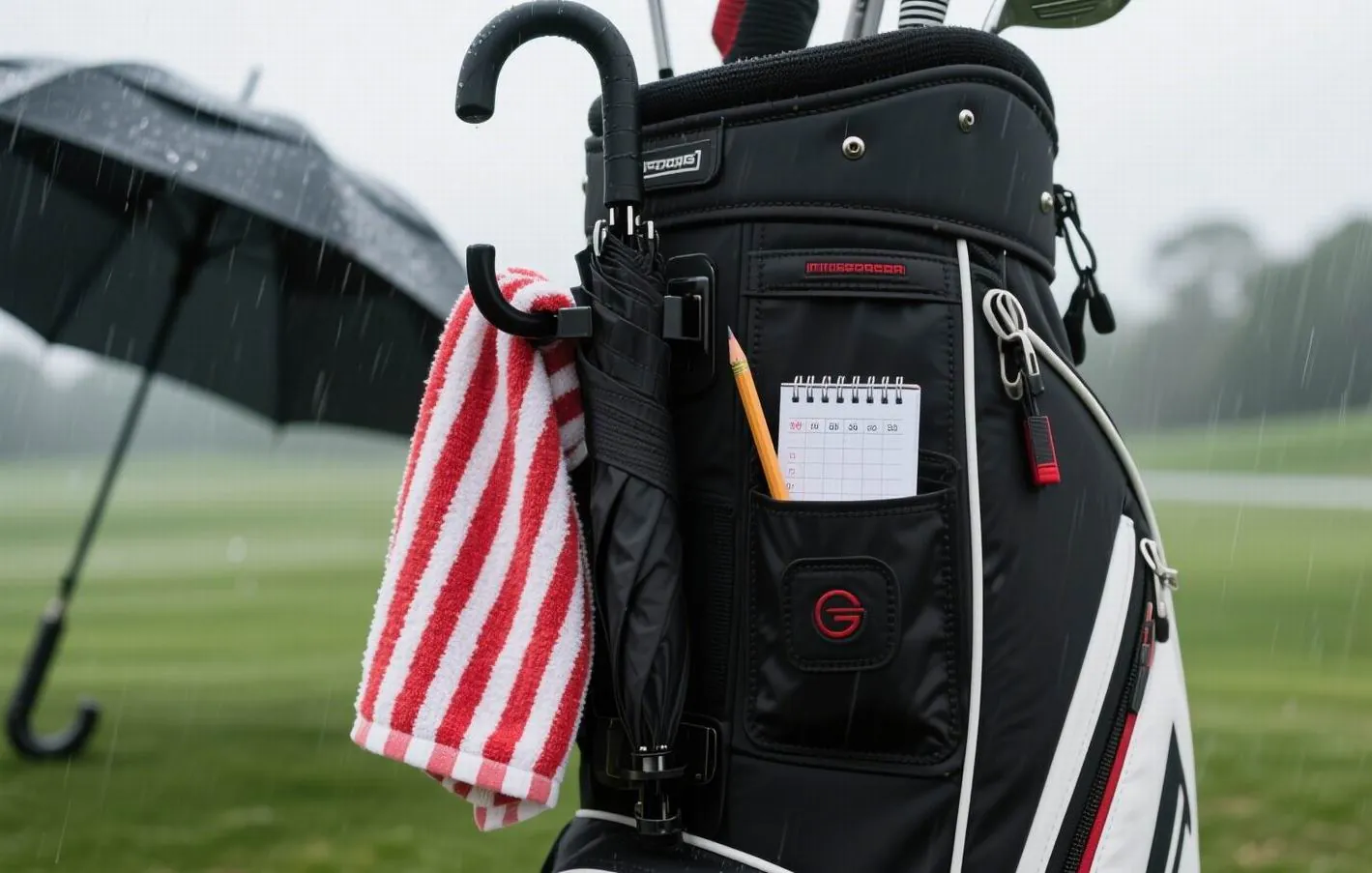
8. Testing a Waterproof Bag Locally Before You Commit
Never commit to a wet-climate bag—individual or fleet—without testing a sample in conditions that resemble real rain. The most undervalued verification tool is simple and local, and it catches the gap between a laboratory panel test and a real assembly long before you spend money on volume.
Start with a hose test. Take the bag outdoors and run a garden hose over it at a steady, even spray from about the height and angle of natural rain for a full half hour, then inspect the interior for dampness. Reproduce the factory's claimed condition as closely as the environment allows, focusing on the seams, the zipper tracks and the base rather than the flat panels—those are where a genuine leak appears first. If you have a shower head, mounting it above the bag gives an even covering that mimics steady rainfall across the whole shell.
Pair the hose test with a structured seam and closure crawl. Run a finger along every taped seam and feel for gapping or a lifted edge, open and close each zipper under the spray to check whether the storm flap or waterproof housing actually sheds water, and tilt the bag to either side to confirm any ingress drains out of the bottom rather than settling. Then place a few folded paper towels in the valuables and main pockets before the test; after half an hour, check whether the towels stayed dry. This gives you a simple, measurable pass/fail you can apply identically to any candidate bag.
One 30-minute local test routinely exposes designs that read beautifully on paper and fail in a real downpour—a seam that was sealed only on the flat rectangle, a zipper that sheds spray from one angle but not another, a stand mount that admits water after a few minutes of exposure. It is cheap insurance against a five-figure volume order built around a flawed waterproofing story, and it lets you compare two bags priced and rated the same on objective performance rather than on marketing. If you are evaluating several suppliers, run the identical test on each sample and log the results side by side; the bag that stays dry through all three checks is the one to take forward, even if its headline rating matches a competitor that fails.
For courses stocking an entire rental fleet, extend this thinking from one sample to a tiny pilot run: order the available 100-piece test batch, put a handful of bags into real rental use for a few weeks of wet weather, and inspect them for leaks, coating wear and zipper fatigue before committing to the full container. The pilot converts a paper waterproofing claim into observed behaviour on your own course, under your own climate, before you scale to volume. It is the most honest and the most cost-effective quality gate a wet-climate buyer can operate.
9. Buying for Courses, Resorts and Academies
Courses, resorts and academies in rainy regions buy bags in volume, often as branded rental or member-inventory stock, and they face a different set of priorities from the individual buyer: consistency across the fleet, easy maintenance, and a waterproofing standard that protects the investment against daily abuse.
A sensible fleet strategy is a waterproof cart bag with a drainable bottom, a durable TPU or PU shell, and simple, sealed construction that is easy for staff to dry and store. Because a full container of rental bags represents a meaningful capital outlay, the waterproofing spec should be written into the order: the IPX class, the hydrostatic-head minimum, seam-sealing coverage and drainage all in writing, with a finished-sample rain test approved before production. When a course partners with an OEM manufacturer for a custom solution—adding a course logo, club colours or specific pocket layouts—the same waterproof baseline should hold regardless of the branding complexity.
10. Sourcing Reliable Waterproof Bags in Volume
For a course or retail buyer, a waterproof bag order is one line in a broader sourcing decision that includes factory certifications, production capacity and quality systems. The affiliated QUANZHOU JUNYUAN BAGS facility has been active in the industry since the founder entered the trade in 2004 and the company was established in 2014—roughly two decades of bag-making experience. It passed an SGS factory audit in March 2026, operates seven production lines with 137 full-time staff on about 126 sewing machines, and runs a monthly capacity near 200,000 units. It is an affiliated manufacturing partner rather than an in-house factory, and it works with more than 200 brands selling into 100+ countries.
The standard volume structure is pragmatic: a minimum order of 200 pieces per design, with a 100-piece test order available to validate the design and waterproofing before volume. Sampling typically runs 10–20 days and production 45–60 days, with the waterproofing validation folded into those windows. That context matters because waterproofing is only meaningful inside a reliable quality system—a factory that cannot trace a lot or share test logs will fail your IPX claim even with the same fabric and zipper on paper. When you compare partners, ask how the test battery is logged and shared. You can begin with our OEM / ODM services page or contact our manufacturing team to start the discussion.
11. The Bottom Line
For rainy regions, waterproofing is never a single number. It is a stack—fabric, coating, seams, zippers, drainage and honest seasonal care—and each layer must hold for the label to mean anything. Choose IPX6 as your floor, prefer a cart bag for daily wet-climate play, specify a 3,000 mm-plus hydrostatic head with sealed seams and a drainable bottom, and judge the product by its weakest link. Set the climate first, translate it to a class, then demand the construction that honours the class. That sequence—not the loudest marketing number—is what keeps your clubs dry through a long, wet season.
One final consideration for rainy regions is sustainability. Because a wet-climate bag is worked hard and often, its durability is itself an environmental feature—a shell that survives years of storm use replaces less frequently than a cheap spray-coated bag that leaks after one season. Choose a coated or laminated construction with a long expected life, keep the maintenance discipline described above, and the bag's environmental cost is amortised over far more rounds. This is why our guide to the best waterproof materials and related sustainable-material guidance matter: the most sustainable waterproof bag is the one that stays dry and functional longest, not the one with the most recycled content in a shell that fails quickly. Match durability to climate, maintain it honestly, and you get both dry clubs and a product that performs for years.
Frequently Asked Questions
- What IPX rating is best for a golf bag in a rainy region?
- Players and courses in genuinely rainy regions should choose IPX6 with sealed seams and a drainable bottom, because IPX6 reflects steady, heavy rainfall under IEC 60529. IPX4 only covers splash and is fine for light drizzle.
- Is a waterproof cart bag or stand bag better for wet climates?
- Cart bags are usually easier to keep sealed because they stay mounted and their larger, simpler shells accommodate sealing and drainage more easily. Stand bags add leg mechanisms and carry straps that are more entry points for water, so they need extra attention to sealed stand mounts.
- What materials are best for a golf bag in constant rain?
- TPU-laminated or PU-coated nylon and polyester shells with a hydrostatic head of 3,000 mm or more, heat-taped or welded seams, waterproof zippers and a drainable bottom perform best in sustained rain.
- How long does a waterproof golf bag stay waterproof?
- With seasonal re-proofing of coated fabrics, zipper inspection and re-sealing of lifted taped seams, a good waterproof bag can stay at its rated class for many years. Without care, the coating abrades and it silently regresses.
- How should golf courses buy waterproof bags in bulk?
- Courses, resorts and academies in rainy regions order through an OEM partner with a standard MOQ of 200 pieces (100-piece test orders) and specify the IPX class, hydrostatic-head minimum, seam sealing and drainage in writing. Sampling runs 10-20 days and production 45-60 days.
Sources
- IEC 60529 — Degrees of Protection Provided by Enclosures (IP Code)
- ISO 811 — Determination of resistance to water penetration (hydrostatic head)
- AATCC — Textile water resistance and rain-spray test methods
- IP Code (International Protection Marking) reference
- ASTM International — Textile and coated fabric standards