Walking vs Riding: Choosing the Right Golf Bag for Your Game

Choose your golf bag by whether you walk or ride: walkers need a lighter stand bag with a folding leg mechanism and padded dual straps; riders want a roomier cart bag with 14-way dividers and generous storage that sits securely on a trolley; and golfers who do both should pick a cart-compatible stand bag that bridges the two. The transport choice is the single biggest factor in the bag decision, outweighing brand and style, because a bag that does not match whether you walk or ride will frustrate you every round. This guide reflects the buying advice we give at our affiliated factory, QUANZHOU JUNYUAN BAGS (founded 2014, our founder active in the industry since 2004), which builds all these bag types for the 200+ brands we serve across more than 100 countries.
Why the Walking or Riding Decision Drives the Bag Choice
The decision to walk or ride fundamentally changes what a golf bag has to do. A bag for walking must be light enough to carry comfortably for miles, balanced so it does not swing awkwardly, and able to stand upright anywhere using its folding legs. A bag for riding must sit securely on a trolley, hold more gear because the cart carries the weight, and put storage convenience first.
Because these are genuinely different jobs, the industry has evolved two clear families: stand bags for walkers and cart bags for riders. Choosing a bag that matches your transport is the difference between a round that feels effortless and one that feels like a struggle. Most golfers who dislike their bag chose the wrong type, not a bad bag.
So before anything else, be honest about how you play. If you walk most rounds, buy a stand bag. If you ride, buy a cart bag. If you split your time, look for the hybrid cart-compatible stand bag. Getting this right makes every other feature decision easier and more meaningful.
The Walkers' Bag: Stand Bags and Light Carry
For the golfer who walks, the stand bag is built around the demands of carrying. It has a folding leg mechanism that lets you set the bag down and have it stand upright anywhere on the course, and a padded back panel with dual, well-padded straps that spread the weight across your shoulders. Modern stand bags are light and well-balanced so the load sits close to your centre of gravity.
Weight is the defining concern for a walker, so a lighter stand bag with the features you actually need is better than a heavy one. Quality straps and padding matter enormously over eighteen holes, and full-length dividers stop the clubs rattling and sliding with every step. A stand bag that does these things well makes walking the course genuinely enjoyable and is much easier on your body.
Walking is one of the healthiest ways to play golf, and the right stand bag removes the physical barrier, letting you focus on the game rather than on discomfort. For the mechanics behind a bag that carries well, see our guide to posture and carrying.
The Riders' Bag: Cart Bags for Convenience
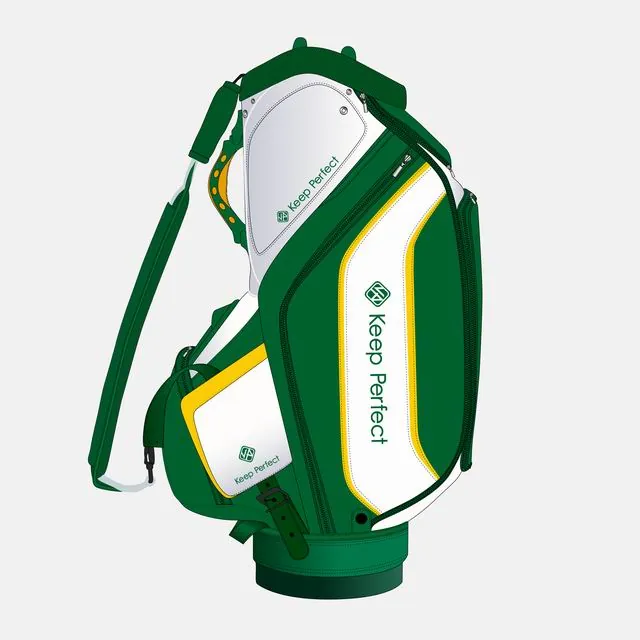
For the golfer who rides, the cart bag is built around riding convenience. It sits securely on the trolley with attachments, holds more storage than a stand bag because the cart carries the weight, and often features 14-way full-length dividers so every club has its own slot for the best possible protection. Riders can carry all-day gear, layers and drinks without worrying about weight.
Because you do not carry a cart bag, you can prioritise capacity and convenience. Generous pockets, a cool pocket for hydration, easy-access layout and maximum club protection all make sense on a cart bag. For the majority of recreational golfers who ride, a cart bag offers the simplest, most comfortable and most convenient experience.
The trade-off is simple: a cart bag is heavier and not built to be carried, so if you occasionally walk, it will feel awkward. When riding dominates your game, however, the cart bag's convenience and capacity make it the clear winner. For a closer look at when each is ideal, see our stand bag versus cart bag guide.
The Hybrid: Cart-Compatible Stand Bags
Many modern golfers walk on some days and ride on others, and for them the cart-compatible stand bag is the smart middle ground. It keeps the folding legs and padded carry straps of a stand bag, so you can walk comfortably, but adds cart attachments and a construction designed to sit securely on an electric or pull trolley when you choose to ride.
Choosing a cart-compatible stand bag means you never have to own two bags or switch between them. You get true flexibility - walk when the weather and course suit it, ride when you want speed or are tired, without changing your equipment. The only compromise is that a hybrid can neither match a dedicated cart bag's storage nor a dedicated ultra-light stand bag's low weight, but for most split players it is the ideal balance.
If you genuinely alternate, measure your pockets and storage needs honestly so the hybrid holds everything you carry on both modes. For walking-specific considerations like balance, see our golf bag weight and portability analysis.
Weight: The Walker's First Priority
For walkers, weight is the feature that most affects the round. Every kilogram carried is felt across eighteen holes, and a heavier bag compounds into real fatigue by the back nine. Walkers who prioritise weight report less strain, more energy and a more enjoyable game, so portability should rank above almost every other consideration when choosing a stand bag.
Light weight comes from quality materials and efficient design - lightweight but strong frames, panel construction without unnecessary bulk, and minimal but functional pockets. The goal is the lightest bag that still holds your full set and organises your essentials. Our lightweight golf bags for walkers guide covers what to look for in detail.
Storage and Capacity: The Rider's Second Priority
For riders, capacity is what the cart bag excels at. Because the cart carries the weight, you can hold a full 14-club set, extra layers, rain gear, a rangefinder, drinks and snacks without penalty. Riders should use this capacity for genuine convenience - route the pockets so the items you need most are within easy reach, and keep the deep pockets for bulkier occasional gear.
A rider's cart bag often pairs maximum storage with 14-way full-length dividers for elite club protection. For guidance on getting the most from a well-stocked bag, see our golf bag compartment design guide, and for organising the pockets our organization pro tips.
| Factor | Walker / Stand Bag | Rider / Cart Bag |
|---|---|---|
| Primary need | Lightweight & comfortable carry | Capacity & convenience |
| Support | Folding legs stand it upright | Cart attachments hold it secure |
| Weight | Light (carried) | Can be heavier (carted) |
| Dividers | Full-length to stop rattling | Often 14-way for max protection |
| Storage | Essential pockets only | Generous all-day capacity |
The Health and Enjoyment Case for Walking
Beyond equipment, the walking versus riding choice has real health and enjoyment implications. Walking a round of golf typically covers six to eight kilometres and is excellent, low-impact exercise that improves cardiovascular fitness and helps manage weight. Many golfers also report that walking keeps them more focused and in rhythm than riding, which can feel like waiting between shots.
Riding, meanwhile, is faster, less physically demanding and much better suited to long or hilly courses, extreme heat, or players with mobility constraints. There is no universally right answer - the right choice depends on your body, your goals, the course and the day. Whatever you choose, the right bag makes it better: a lighter stand bag supports a healthier walking habit, and a convenient cart bag makes riding effortless.
Course Type and Season: When Transport Choices Change
Your walking or riding habits often vary with the course and the season, which is worth anticipating when you buy a bag. On a hilly, spread-out resort course in summer heat, you are far more likely to ride. On a gentle, compact municipal course in pleasant spring weather, walking is attractive. A golfer who mostly walks but rides on hot holiday rounds is exactly the profile that benefits from a cart-compatible stand bag.
Think about the courses you play and the seasons you play in, not just your best-case plan. Choosing a bag that works across the situations you actually face prevents the frustration of owning a bag for the wrong kind of golf. For how the seasons affect what you carry and how you set up the bag, see our seasonal usage guide.
Common Mistakes in the Walking vs Riding Decision
The most common mistake is overestimating how much you walk. Many golfers buy a light carry bag assuming they will walk more than they do, then end up riding with a bag that lacks cart convenience and storage. The opposite - a walker buying a heavy cart bag for its looks - is equally common and causes fatigue on every carried round.
Be honest about your actual behaviour over a season, not your intentions. If you genuinely split, buy the hybrid. If you mostly do one, buy the specialised bag for it. Avoid the lure of a single bag doing everything badly when a bag matched to your dominant mode does the job excellently. This honesty about transport is the difference between a bag you love and a bag you tolerate.
Choosing the Right Bag for Your Brand or Buyers
If you buy or sell golf bags for a brand, the walking versus riding split directly shapes your range. Offer both strong stand bags for the walking segment and roomy cart bags for the riding segment, plus a cart-compatible hybrid for the growing number of split players. Balancing the range to the local market's habit - more walkers in some regions, more riders in others - keeps inventory moving.
Working with a factory that produces all types ensures you can serve every segment with consistent quality. At our affiliated factory we build stand bags, cart bags and hybrids across 7 production lines with 126 sewing machines and a team of 137 employees, to a monthly capacity of around 200,000 pieces, and every order passes a documented quality-control stage. We have also passed an SGS factory audit in March 2026. For how to build the range, see our wholesale and pricing guide and OEM/ODM process guide.
Need the Perfect Bag for Walking, Riding, or Both?
Choose the right type for your play style and have it built to specification. Standard 200-piece MOQ (test orders from 100 pieces), quality-assured production, sampling in 10-20 days and bulk delivery in 45-60 days. All orders are run through an SGS-audited affiliated factory in Quanzhou.
Explore Custom Golf Bags →Conclusion
The walking versus riding decision is the single most important factor in choosing your golf bag. Walk mostly and buy a light stand bag; ride mostly and choose a roomy cart bag; alternate and pick a cart-compatible stand bag that bridges both. Weigh weight for the walker, capacity for the rider, and storage and portability together for the hybrid. Match the bag to your transport and it will make every round more comfortable and more enjoyable.
Sources
Fitting the Bag to the Player, Not the Other Way Round
A theme that runs through the walking versus riding decision is fitting the bag to the player rather than expecting the player to adapt to a bag. Some golfers are strong walkers who happily carry a fuller-featured stand bag, while others prefer the minimum weight of an ultra-light carry. Some riders want maximum storage and others want simplicity. There is no universal right answer, only the right answer for a given golfer.
When you buy, choose honestly for your body, your habits and your goals. When you buy to sell, build a range that covers the spread so every golfer finds a bag that fits how they actually play. This fit-first approach is what separates a bag that is used from one that is tolerated.
A Note on Club Transport Equipment
The walking versus riding decision also interacts with how you move the bag beyond the course. If you walk, a well-designed stand bag combined with a good push cart can extend your options on hilly or hot days without owning a separate cart bag. If you ride, a lightweight, secure trolley makes a cart bag easy to load and move. For travelling golfers, a bag that travels well - with a compatible travel cover - prevents damage between venues. See our travel and airline transport guide for protection on the move.
Thinking about the full journey - from the car, onto the trolley or your back, round the course and home - ensures nothing in the transport chain lets you down. A bag matched to your transport habits, supported by the right equipment, makes every round smoother.
Separately, it is worth being honest about the trade-off in convenience versus the effort of carrying. Riding is undeniably faster and less tiring, which matters on long, hilly, hot days and for players with physical constraints. Walking is better exercise and, for many, a more rewarding experience of the course. Neither is superior in the abstract; the right choice depends on the individual, the occasion and what they want from the round. Choosing the bag to match means the transport decision is honoured by your equipment rather than fought.
Finally, players who genuinely enjoy both modes will find the hybrid cart-compatible stand bag the most economical and flexible answer, removing the need to own and switch between two bags. By choosing the bag that matches your dominant transport and knowing your occasional habits, you get a single piece of equipment that serves you well in nearly every situation.
There is also a consideration for players who transition as they progress. A newer golfer often rides while learning and walking the course less, then gradually walks more as fitness and confidence grow. Choosing a hybrid cart-compatible stand bag at the outset accommodates that evolution, so the bag still works whether the player is riding early on or walking more later. This forward-looking choice avoids buying a very specialised bag that a changing habit quickly outgrows.
Similarly, players returning to the game after a break, or adapting to a physical change, may shift between walking and riding over time. A flexible bag that serves both modes, matched with honest attention to how you feel each season, keeps the equipment in step with the realities of your golf.
Where a player lands on the walking versus riding spectrum, the right bag is the one that removes obstacles to enjoying the game. For a walker, that means a light, balanced stand bag they can carry without struggle; for a rider, a convenient cart bag that holds everything within reach. Matching the equipment to the choice removes friction, letting the golfer focus on playing well and having a good day on the course.
Frequently Asked Questions
- Should walkers use a stand bag or cart bag?
- Walkers should use a stand bag. Stand bags are lighter, have a folding leg mechanism so they stand upright anywhere on the course, and are built to be carried comfortably with padded dual straps. A cart bag is heavier and designed to ride on a trolley, so it is a poor choice for someone who walks.
- Do I need a special bag if I mostly ride?
- Mostly riders should use a cart bag. Cart bags sit securely on a trolley, offer more storage for all-day gear and often have 14-way dividers for maximum club protection. Because the cart carries the weight, riders can prioritise convenience and capacity over portability.
- What is a cart-compatible stand bag?
- A cart-compatible stand bag is a stand bag designed to also work on a cart. It has the folding legs for walking and cart attachments so it sits securely on an electric or pull trolley. It is the best choice for golfers who alternate between walking and riding.
- Is it worth having two golf bags - one for walking and one for riding?
- If you genuinely split your play between walking and riding, owning both a stand bag and a cart bag lets you match the bag to the day, giving you the ideal tool each time. If you mostly do one or the other, a single well-matched bag (or a cart-compatible stand bag) is enough and more economical.
- How much difference does bag weight make to a walker?
- Weight matters enormously to a walker - every kilogram you carry is felt across eighteen holes. A lighter bag reduces fatigue, helps preserve energy for the back nine, and makes the round more comfortable. Walkers should weigh portability heavily when choosing a bag.
- Can a cart bag be carried?
- Technically yes, but it is not designed for it. Cart bags are heavier and shaped to ride on a trolley, with less comfortable carry straps. If you plan to walk, choosing a carry or stand bag instead avoids the discomfort and strain of carrying a bag built for a cart.
- What features should a walker prioritise in a golf bag?
- Prioritise low weight, quality padded dual straps, a stable folding stand mechanism, balanced weight distribution and full-length dividers that stop clubs rattling as you walk. Good pocket routing is also important so you can reach essentials while the bag is on your back.
- Is walking or riding better for golf?
- Both are perfectly valid. Walking is better for fitness, has been shown to keep golfers more focused and is often seen as the purest form of the game, while riding is faster, less tiring and better for long or hilly courses and hot days. Choose the transport that suits your body, the course and your goals - the bag follows the choice.