Waterproof Golf Cart Bag Materials Compared for Longevity
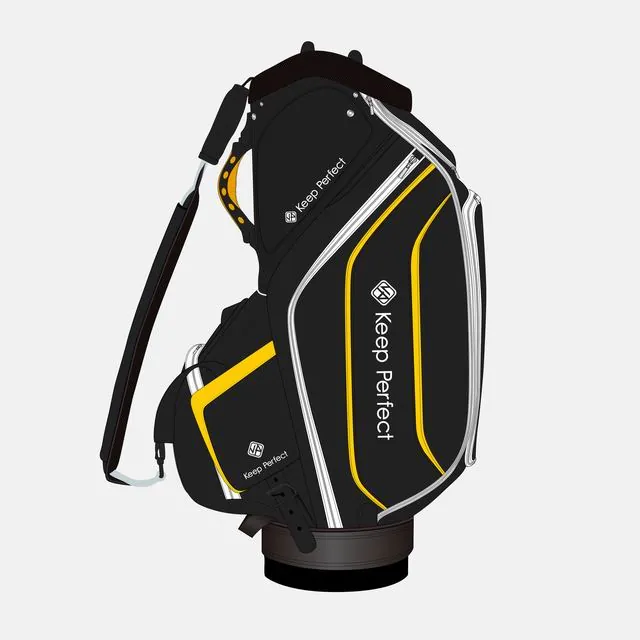
The direct answer: for a waterproof golf cart bag built to last, the material hierarchy for longevity runs TPU-laminated shells first (most resistant to hydrolysis and abrasion, so the water barrier holds through years of wetting, folding and cart vibration), then durable-grade PU-coated nylon and coated polyester—but the materials only matter if the seams are sealed, the zippers are protected, and the hardware resists corrosion, because a bag's usable life is decided by its weakest link rather than its headline fabric. Across every layer, longevity is a systems question: a TPU shell with untaped seams and rusting buckles will fail before a good PU-coated bag with taped seams and quality hardware. This guide compares the main material families, explains what the numbers mean, and gives buyers a clear way to pick a cart bag that stays waterproof for seasons, not just a single wet round.
1. What Actually Decides a Cart Bag's Lifespan
A golf cart bag lives a harder life than most bags. It rides on a cart or trolley for every round, absorbing vibration, scuffs and sun, and in many regions it is rained on regularly. Its usable life is therefore not determined by one dramatic feature but by a stack of interacting details: the textile and its coating, the seams, the zippers and hardware, and how the owner maintains all of it.
When buyers ask "which material lasts longest?", the honest answer is that longevity is a systems property. Two bags can share the same shell fabric yet have very different lifespans because one seals its seams, protects its zippers and uses corrosion-resistant hardware while the other does not. The practical approach is to compare materials first, then judge the whole construction by its weakest link. A durable shell is necessary for a long-lived waterproof cart bag, but it is never sufficient on its own.
2. The Main Shell Materials Compared
Four constructions dominate waterproof cart bag shells, and each has a different longevity profile. The differences come down to how the water barrier is applied and how well it survives repeated wetting, folding and abrasion over time.
PU-coated nylon. A polyurethane coating applied to the reverse of a nylon shell gives a good balance of water resistance, weight and cost. Nylon is strong and abrasion-resistant, and a PU coating at 3,000 mm or more hydrostatic head performs well at IPX6 when the rest of the construction is sealed. Its main longevity caveat is hydrolysis: standard PU can degrade in humid storage over many years, so a durable-grade PU is worth specifying for a bag that will live in a damp climate.
TPU-laminated shells. Thermoplastic polyurethane lamination is the strongest option for longevity. TPU is more resistant to hydrolysis and abrasion than standard PU, so the barrier holds up better through repeated wetting, folding and the constant vibration of cart rides. It carries slightly more cost, but for a bag expected to last several seasons in demanding use, the extra durability is usually worth it. This is why serious storm cart bags frequently favour TPU.
Coated polyester. Polyester holds coatings well and resists UV degradation somewhat better than some nylon options, which suits a bag that spends long hours in strong sun as well as rain. It is lighter and lower in cost than a premium laminate. Its long-term water barrier is generally adequate for cart-bag use, though it is not typically the longest-wearing option under constant storm exposure.
Lighter or untreated weaves. A basic, uncoated or lightly treated nylon or polyester will shed light moisture but is not a genuine waterproof shell; it belongs only in dry-climate cart bags. If the goal is a bag that stays reliably dry and still works years later, an untreated weave is not the right starting point. For a full breakdown of how these materials interact, our golf bag materials guide covers the whole landscape in detail.
| Material | Water Barrier | Longevity Risk | Best For |
|---|---|---|---|
| PU-coated nylon | Good (3,000 mm+) | Standard PU can hydrolyse in humidity | Good cost-to-performance cart bag |
| TPU lamination | Excellent | Low (hydrolysis and abrasion resistant) | Longest-wearing storm cart bag |
| Coated polyester | Good | Moderate; UV-resistant, lighter | Sun-and-rain cart bags, cost-sensitive |
| Untreated weave | Minimal | Not genuinely waterproof | Dry-climate only |
3. Hydrostatic Head and What a Meaningful Number Looks Like
To compare materials objectively, buyers should look at the fabric's hydrostatic-head value, reported in millimetres of water column under ISO 811. This number describes how much water pressure a fabric resists before penetration, and it is continuous—higher is meaningfully better.
Very roughly: 300–700 mm suits light showers; 1,000–3,000 mm handles sustained rain; 5,000 mm and above is serious storm territory and usually demands a coated or laminated construction. For a waterproof cart bag bought for longevity, a minimum of 3,000 mm is a sensible floor, and more is better in demanding climates. But remember the caveat from the start of this guide: a fabric at 10,000 mm in a bag with untaped seams still leaks through the stitches. The headline number sets the ceiling; the construction details decide whether the bag reaches it over its whole life. Whenever you compare candidates, ask for both the hydrostatic-head figure and the seam-sealing and zipper specification, not just the fabric.
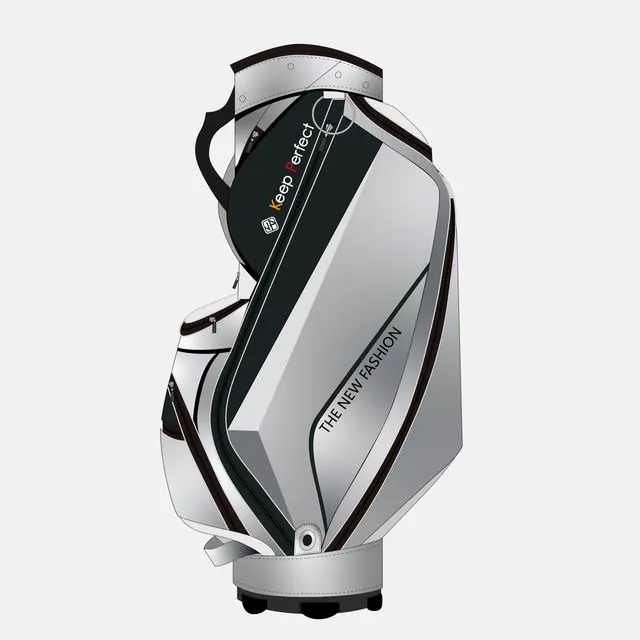
A note on reading these figures in the field: the hydrostatic-head value is measured on a clean, new fabric sample, so it describes the shell's starting ceiling, not its performance after a season of sun, rain and cart vibration. A durable coating or lamination slows the decline by resisting the abrasion and hydrolysis that attack the barrier, which is precisely why the material choice matters so much for longevity. A 10,000 mm laminate that holds most of its capability for years can out-perform a 6,000 mm coating that degrades quickly and leaks season one, even though the first number is higher on paper. Do not, therefore, select purely on the biggest headline figure; weigh the coating's durability and your climate together, because the figure that matters most is the one the fabric still delivers after two or three seasons of real use. This is the difference between a number that impresses in a spec sheet and a number that protects clubs in practice over the life of the bag.
4. Seams, Zippers and Hardware: The True Longevity Details
Material is only the beginning. On a cart bag that must stay waterproof for years, three construction areas matter as much as the shell.
Seams. Every needle hole is a capillary for water. Heat-taped or welded seams close those holes, and long-term integrity depends on sealing that does not lift or crack. A bag whose tape lifts after a season will leak even with a TPU shell. Inspect and re-seal any lifted taped seam as part of seasonal care, and prefer a supplier who demonstrably seals complex, multi-panel shells.
Zippers. Standard coil zippers breathe water and wear with grit. Waterproof PU-laminated zippers or storm flaps on the main and valuables openings last longer and seal better. On a bag used daily, zipper quality is one of the most common longevity limiters, so it deserves as much attention as the fabric in your spec.
Hardware. Buckles, clips, stand pieces and feet face constant vibration, weather and sweat. Corrosion-resistant, well-anchored hardware dramatically extends a cart bag's life in wet or coastal climates, while cheap, rusting hardware can fail long before the shell does. When comparing materials for longevity, always ask what hardware the bag is built with—a TPU shell attached to rusting buckles is still a short-lived bag.
5. Matching Material to Your Climate and Use
The right material depends on the conditions the bag will actually face, so longevity is relative to the environment it lives in.
Coastal and maritime. Salt air corrodes hardware and humidity accelerates hydrolysis. Choose TPU lamination for the shell, corrosion-resistant hardware, and re-proof coated areas seasonally. This is where material quality pays for itself fastest.
Monsoon and tropical. Extreme downpours plus high humidity between storms. A TPU or durable-PU shell at 3,000 mm or more, with sealed seams, protected zippers and good drainage, gives the best balance of storm performance and longevity.
Cold-temperate rain. Long seasons of light-to-moderate rain. A well-sealed PU-coated or coated-polyester bag serves well and lasts; hardware quality and drainage matter more than pushing to the most expensive laminate.
Heavy, frequent use. A daily-ride cart bag faces constant abrasion and fold stress, so TPU lamination and sealed construction reward the higher spend. For a true high-frequency or tournament-use bag, see our waterproof golf bags range to match materials to the workload.
6. Longevity Economics: Cost Per Season
Buying a cart bag is a cost-per-season decision more than a sticker-price decision. A cheaper PU-coated bag that leaks or wears out after one or two wet seasons can cost more over five years than a pricier TPU-laminated bag that stays dry and functional for many more. When buyers compare materials "for longevity," the right metric is total cost divided by seasons of reliable use.
For a serious wet-climate or high-use cart bag, the extra cost of TPU lamination, sealed construction and quality hardware is usually recouped several times over by a longer useful life and by avoiding the inconvenience and replacement cost of an early failure. That same logic scales to volume: a course or brand ordering a fleet should weigh durability against price over the fleet's expected service window, because replacing a container of failed cart bags is far more expensive than specifying durable materials in the first place.
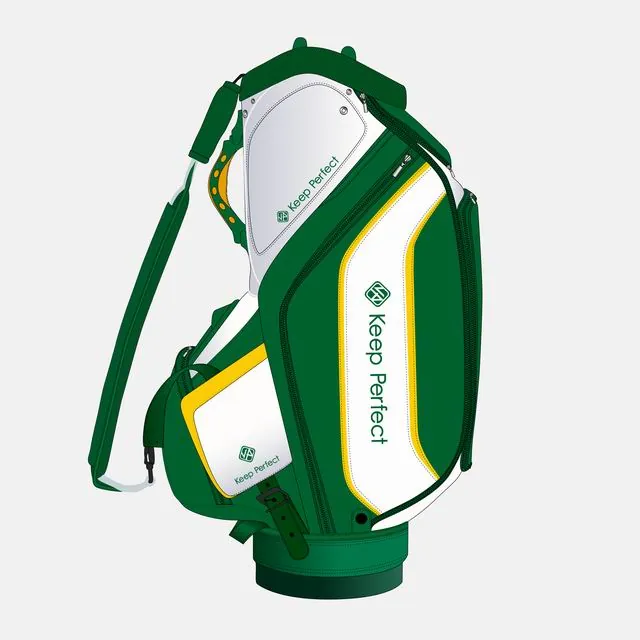
It is worth adding that the cost-per-season comparison should also account for downtime and convenience. For a club or tournament player whose bag is in near-daily service, an early failure does not just cost money to replace; it interrupts use at exactly the moments the bag is needed most, and it can damage or expose clubs and valuables that a leaky bag no longer protects. For a retail brand, a cart bag that fails quickly generates returns, negative reviews and damage to customer trust that are far harder to quantify than the unit price but are very real on a balance sheet. When the per-season math is done properly—including replacement cost, downtime risk and customer goodwill—the durable TPU-laminated option is often the economically rational choice even when its upfront price is higher, because it turns a recurring expense into a long-lived asset. The opposite mistake is buying on sticker price alone: the cheapest bag almost always costs more per season of reliable use, and in a wet climate it often leaks before it wears out, combining both failure modes into the worst possible outcome for every buyer who relied on it.
7. Verifying Longevity Before You Buy
You can verify a cart bag's likely longevity with a few practical checks that catch early-failure designs before you spend. First, inspect the seam sealing: run a finger along each taped seam and feel for gapping, and confirm sealing covers all panels, not just a flat rectangle. Second, test the zippers under a spray of water, opening and closing each one, to check that the storm flap or waterproof housing actually sheds water. Third, examine the hardware—buckle material, strap anchors and any stand or base pieces—for durability and corrosion resistance, since cheap metal is a common early-failure point.
Fourth, run the shell itself through a simple water test. Set the bag upright, spray the shell and seams with a hose at steady pressure for half an hour, and inspect the interior. This local check reproduces the factory's claim and catches the gap between a lab panel test and a real assembly, in exactly the way you would test any wet-weather product. A waterproof cart bag that passes these checks on a sample is far more likely to deliver the years of service its material promises. For the full inspection and selection rubric, our waterproof testing and IPX ratings guide walks through it section by section.
8. Seasonal Care That Extends Cart-Bag Life
Even the best TPU-laminated cart bag is a finite machine, and longevity depends heavily on maintenance. Re-proof coated fabrics once or twice a year, especially after a season of constant rain or sun. Keep rust-prone hardware clean and dry, because moisture plus heat accelerates both hydrolysis and corrosion. Never store the bag damp—drain and dry it fully, since warm, damp storage is the single fastest way to degrade a coating. Inspect and re-seal any taped seam that lifts, and keep zippers free of grit and lightly lubricated so the seals stay sound.
That discipline is what separates a cart bag that stays waterproof for years from one that quietly regresses after a single summer. Neglecting it converts a genuine IPX6 bag into a leaky shell long before the fabric is worn out. This is why honest warranty language backs seam and zipper workmanship while making clear that no manufacturer can guarantee lifetime waterproofing against an owner who stores a bag damp and never re-proofs it. For the full routine, see our golf bag maintenance and care guide.
9. Buying for Volume: Bags That Last, Specs That Hold
Courses, resorts and retail brands order waterproof cart bags in volume, and for them longevity is not a preference but a budget line. A fleet that fails early forces costly replacement and disappointing members or customers, so the durable-material decision belongs in the order spec, not left to chance.
A sensible volume spec pins down the construction in writing: the shell material and hydrostatic-head minimum, seam-sealing coverage panel-by-panel, waterproof or storm-flapped zippers on main and valuables openings, corrosion-resistant hardware, and a drainable bottom. Volume ordering is pragmatic and predictable. The standard minimum order quantity at the affiliated facility is 200 pieces per design, which lets a production run use the floor's 126 sewing machines efficiently, and new partners can start with a 100-piece test order to validate the materials, sealing and durability before scaling to volume. Sampling runs 10–20 days and production 45–60 days at the affiliated facility, with waterproofing and durability validation folded into those windows, and a finished-sample water and spray test should be approved before volume. When a brand commissions a custom cart bag through an OEM / custom solution, the same durable, sealed baseline should hold regardless of branding complexity, because a logo does not excuse a bag that leaks or the buckles that rust after a season.
10. Sourcing Context and Who to Work With
For buying teams, the material and longevity spec is one line in a broader sourcing decision that includes factory certifications, production capacity and quality systems. The affiliated QUANZHOU JUNYUAN BAGS facility has been active in the industry since its founder entered the trade in 2004 and the company was established in 2014—roughly two decades of bag-making experience. It passed an SGS factory audit in March 2026, operates seven production lines with 137 full-time staff on about 126 sewing machines, and runs a monthly capacity near 200,000 units. It is an affiliated manufacturing partner rather than an in-house factory, and it works with more than 200 brands selling into 100+ countries.
That context matters because longevity claims are only meaningful inside a reliable quality system. A factory that cannot trace a lot, cannot share test logs and cannot consistently hold a seam-sealing process will fail your durability spec even with the same materials on paper. When you compare partners, ask how the seams, zippers and hardware are validated and logged. You can begin with our OEM / ODM services page or contact our manufacturing team to start the discussion on a custom waterproof cart bag built for longevity.
11. The Bottom Line
For a waterproof golf cart bag, longevity is never a single material or number. It is a stack—textile, coating or lamination, seams, zippers, hardware and honest seasonal care—and each layer must hold for the bag to serve for years rather than a season. Rank TPU lamination first for the longest-wearing shell, specify a hydrostatic head of at least 3,000 mm, then judge the bag by its weakest link: the untaped seam, the breather zipper, the rusting buckle. Judge total cost per season, verify the construction on a sample, and maintain the bag after purchase. Do that, and a waterproof cart bag stops being a purchase you repeat and starts being equipment that earns its place for many seasons.
Frequently Asked Questions
- Which material lasts longest for a waterproof golf cart bag?
- TPU-laminated shells typically last longest because thermoplastic polyurethane resists hydrolysis and abrasion better than standard PU, so the barrier holds through repeated wetting, folding and cart vibration. Coated polyester and PU-coated nylon can also last well when built with sealed seams and quality hardware.
- What is the difference between PU-coated nylon and TPU-laminated materials?
- PU-coated nylon has a polyurethane coating on the fabric reverse, offering a good cost-to-water-resistance balance, but standard PU can degrade by hydrolysis in humid storage. TPU lamination adds a tougher, more flexible and more hydrolysis-resistant barrier, extending shell life at added cost.
- What hydrostatic head should a waterproof cart bag have?
- A serious storm cart bag should specify a fabric hydrostatic head of at least 3,000 mm under ISO 811, ideally more in demanding climates. The higher the figure the stronger the fabric's barrier, but seams, zippers and drainage decide real performance.
- Why do two waterproof cart bags wear differently over time?
- Because longevity depends on the weakest link: seam sealing, zipper durability, hardware corrosion and coating grade. A bag with taped seams, rust-resistant hardware and a durable coating outlasts a bag with the same headline rating but untaped seams and cheap hardware.
- How can I make a waterproof cart bag last longer?
- Re-proof coated fabrics seasonally, keep rust-prone hardware clean and dry, avoid storing the bag damp, inspect and re-seal any lifted taped seams, and lubricate zippers. Regular care separates a bag that lasts years from one that quietly regresses.