Best Golf Bags for Push Carts in 2025
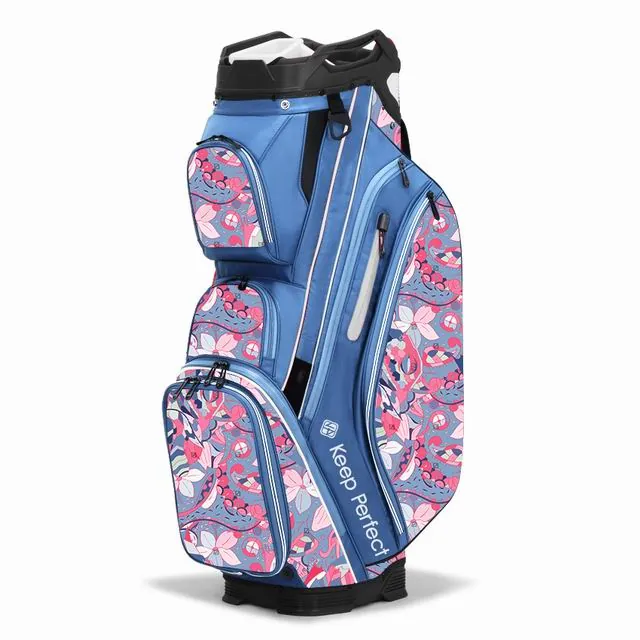
The best golf bags for push carts in 2025 combine a stable rounded or flattened base, open strap passages or durable D-rings, and pocket layouts that let cart straps pass without crushing storage. Whether you choose a dedicated cart bag or a push-cart-friendly stand bag, the deciding factors are base geometry, strap-compatible pocket placement and leg lock-up. Written from the production floor of QUANZHOU JUNYUAN BAGS — a golf bag factory founded in 2014 that serves 200+ brands across 100+ countries with a monthly capacity of 200,000 pieces — this guide tells you exactly how to choose, compare and wholesale-source bags that ride push carts with zero wobble and no premature wear.
Why Push-Cart Compatibility Became a Core Bag Criterion
Walking golf with a push cart has grown steadily as clubs encourage on-course exercise and carts themselves got lighter, folding models with better wheels. When a golfer pushes instead of carrying, the bag spends the whole round strapped to a platform rather than on a shoulder. That changes which bag features matter: base stability, strap routing, and abrasion resistance at the contact points. A bag that is perfect for carrying can feel unstable or get worn at the base when used on a push cart every round.
For manufacturers this shift shows up in the spec sheet. Bags ordered for push-cart use now specify a wider, flat-seating base tub, reinforced lower side panels, and a strap-passage cutout or dedicated D-ring system. At our factory, push-cart bags also get extra bar-tacking where the upper strap lands, because that is where a tensioned cart strap presses hardest against the shell. Fewer complaints about "the bag leaning" and "the fabric scuffing" come back to a handful of design choices we can control at the drawing board.
Base Design Is the #1 Compatibility Factor
The base is where push-cart compatibility truly lives. A bag sits on a molded plastic tub, and that tub needs a generous, rounded footprint so it seats flat and does not rock on the cart platform. Many entry bags use a narrow, rounded bottom that tips when the bag is loaded; the best push-cart bags use a wider tub with a recessed channel that accepts the cart's central strap or a flat base plate with non-slip contact.
Two base families dominate the market. The first is a molded hard base with a continuous bottom — simple, sturdy, and the norm for dedicated cart bags. The second is a flared soft base with a stiffened internal board, common on push-cart stand bags that need the bag to also stand on grass when removed. When we engineer push-cart stand bags we add a leg-release mechanism that locks legs flat and out of the way so they do not scrape the cart when the bag is pushed. A locked, low-profile leg is the quiet difference between a bag that feels solid on a trolley and one that clicks and clatters all round.
Strap Passage and D-Ring Routing
How the cart strap wraps the bag matters as much as the base. Two common systems exist. First, a molded strap-passage channel through the bag body — a tunnel the strap threads through, which holds the bag against the cart without squeezing pockets. Second, a set of identified D-rings or loops onto which the strap locks. The best bags provide both a clear visual strap zone and reinforcement there.
Pocket placement is the hidden trap. If a front pocket sits exactly where the lower strap cinches, the strap compresses the pocket and frustrates the golfer every round. Designers solve this by locating the primary strap line through a full-width divider area or a dedicated strap sleeve, and by keeping the front valuables pockets above or beside the strap zone. On our push-cart bags we print or emboss a subtle strap guide and test each prototype by mounting it on three common push-cart brands to confirm the strap clears the pockets and the bag stays centered — the practical validation our push cart compatibility guide explains step by step.
Divider Layout: Full-Length Dividers Win on Carts
Because a cart-mounted bag is not carried, its weight is less critical than its organization — which is why push-cart bags almost always carry more dividers than stand bags. The current standard for a push-cart or cart bag is 4-way or 5-way tops, moving toward 14-way full-length dividers on premium models. Full-length dividers keep club heads from tangling and grips from clattering against each other when the cart is pushed over rough ground.
For most golfers a 5-way top with full-length dividers is the practical sweet spot: enough organization to separate driver, woods, irons, wedges and putter, without the head-space congestion of a crowded 14-way. Dedicated putter wells are especially valuable on carts because the putter is the most-handled club. Our 14-way vs 5-way divider guide compares the trade-offs, and the cart bag lineup shows how divider layouts are fitted to different playing styles.
Stand Bag vs Cart Bag: Which Belongs on a Push Cart
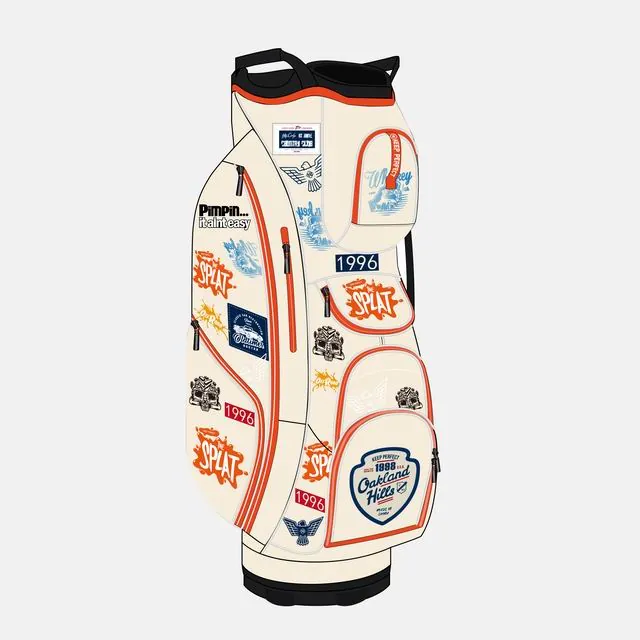
The classic question is whether to push a stand bag or buy a dedicated cart bag. The honest recommendation splits by how you split your time. If you push your bag 100% of the time and never carry, a cart bag is the better buy: it is lighter than a staff bag, has full-length dividers, ample pockets, and no leg mechanism to complicate the mount. If you alternate between pushing and carrying — for example, riding some courses and walking others — a push-cart-friendly stand bag with a flat base and lockable legs is the more versatile choice, even if you give up a little divider density.
The middle ground brands love is a "crossover" or hybrid bag that rides the line: a 5-way stand bag with a locking leg system and a stiffened base, engineered specifically to sit flat on a trolley platform. These have expanded Fast in golf retail because they collapse the "which bag do I buy" decision for the large cohort of weekend walkers who use a cart on most outings. Our stand vs cart bag comparison walks through the decision framework by actual usage profile.
Comparison of Push-Cart-Compatible Bag Types
| Bag Type | Divider Layout | Base / Legs | Best For | Typical Weight |
|---|---|---|---|---|
| Push-cart crossover stand bag | 4-5 way full-length | Flat base + lockable legs | Walkers who alternate push & carry | 2.0-2.6 kg |
| Cart bag (dedicated) | 5-14 way | Molded hard base, no legs | Riders and exclusive push users | 2.5-3.5 kg |
| Sunday bag on a push cart | 2-3 way | Narrow soft base | Short rounds, minimal kit | 0.8-1.5 kg |
Typical weights reflect representative factory specifications for mainstream push-cart-compatible bags.
Materials That Survive Cart-Riding Abrasion
Push carts create two wear patterns full carry rarely does: rubbing at the lower side panels where the bag meets the cart frame, and compression marks under the strap lines. Durable 600D-840D polyesters remain the workhorse for the body. For the base and lower side panels, we recommend a heavier 840D-1000D fabric or a reinforced scuff panel, because that is the zone that meets the cart body and rough ground every round. A transparent or dedicated kick pad can also protect the bottom seam.
Water-repellent and waterproof treatments are increasingly popular for push-cart bags because a pushed bag collects more rain splash and cart-spray than a carried one. A PU-coated shell keeps the top and pockets dry, and if you golf in wet climates, specify taped or seam-sealed waterproofing. Our materials guide and waterproof golf bag guide compare coating options and durability ratings so you can match fabric to your rainfall reality.
Pockets That Work Within a Strap Binding
A well-designed push-cart bag still needs its pockets to be usable while strapped down. The front pockets are the workhorse — balls, tees, rangefinder, gloves — so they must sit above the front strap line or open away from it. The most successful layouts use a large open front pocket, a mid-tier rangefinder pocket, and a top access for the valuables. On the sides, a beverage pocket and a full-length apparel pocket round out the round.
A useful rule of thumb when comparing layouts is to count how many times you bend to the front pockets in a typical round: every bend is friction you want to eliminate. The most usable push-cart layouts keep the ball pocket, tee pocket and glove pocket all above the kneeline so you can reach them without crouching, and they reserve the lowest volume for the things you access least — spare apparel, rain gear or a towel.
Opening direction also relates to the direction you push. Since most push carts place the bag at a slight angle leaning back, pockets that open toward the rear (away from the direction of push) stay cleaner and are easier to reach than top-opening pockets facing uphill. A thoughtful factory will rotate the pocket zipper orientation in the pattern so that gravity helps rather than the bag tipping its contents out as you crest a slope. Layer these choices onto a stable base and an open strap line, and the resulting bag feels purpose-built for walking golf rather than merely compatible with it.
Because bags ride upright on a cart, designers often add "cart-friendly" opening angles: pockets that open away from the strap side or a top that provides easy grab without reaching through the strap. A small but meaningful detail is a separate, lined valuables pocket with a smooth closure that stays secure even when the strap pulls the bag tight against the cart. Getting these pocket positions right is where a seasoned factory earns its fee — a layout that looks fine flat on a table can fail badly once strapped, which is why we pressure-test pocket accessibility on an actual push-cart mount before approving a prototype.
Top Handles, Umbrella and Accessory Mount Points
On a push cart, the bag becomes a mobile caddy, so subtle access points matter more than on a carried bag. A large top handle is essential for lifting the bag off the cart and into the trunk; it should be bar-tacked to take repeated lifting. An integrated umbrella holder or a mount point for accessories (rangefinder holsters, towel rings, glove clips) increases utility, and many cart bags include a dedicated top handle feature and accessory attachment loops precisely because a cart bag is never out of reach.
Some push-cart bags also add a small pocket or "cart bag" niche for the scorecard and a tee holder within reach at the top — these reduce the need to bend to the front pockets between shots. When brands brief us on a cart-bag program, we often add a top tee well and an oversized grab handle as default features because they cost little in production but visibly improve real use. The balance of divider tops, handles and accessory loops is covered in our cart bag size guide.
Sourcing Push-Cart Bags Wholesale: MOQ and Lead Times
For retail buyers and brands, push-cart bags are one of the higher-growth SKUs in the golf bag category because they ride the walking-with-a-cart trend. Wholesale sourcing follows the same factory-direct discipline as other bag types. The standard MOQ is 200 pieces per design and colorway, with 100-piece test orders available for new programs. Prototyping and sampling take 10-20 days; bulk production runs 45-60 days depending on divider complexity, fabric and decoration.
Push-cart bags carry slightly more material than sunday bags, so per-unit pricing is a step up, but cart bags are still far more affordable than staff bags. Three levers control cost: divider density (5-way is cheaper than 14-way), base construction (molded hard base adds tooling versus a stiffened soft base), and decoration (screen print is cheaper than embroidery). Our wholesale pricing guide breaks down these levers, and the wholesale section covers ordering. For full line planning, custom solutions bundles cart, stand and sunday bags into one branded program.
Quality Control for Push-Cart-Specific Stress
Push-cart use stresses a bag in ways that stand/carry use does not, so our quality control adds cart-specific checks. Beyond the standard three-stage inspection (incoming materials, in-line sewing, final AQL sampling), push-cart bags are validated for: base pan flatness and rigidity, leg lock performance and wear after repeated cycles, strap-passage integrity, and bar-tack strength at strap-contact points. We also run a simulated cart-mount test on a representative trolley to confirm stability with a fully loaded bag.
These checks are why bags that come back "used on a cart for two seasons" show far fewer scuffs and no strap-torn pockets than cheap imports. For brands that want the protocol written down, our quality standards guide and manufacturer selection guide document the inspection steps. In 2026 our factory underwent on-site SGS and Alibaba verification, giving buyers independent confirmation that these quality systems are actually in place.
Caring for a Push-Cart Bag Between Rounds
Push-cart bags take more physical abuse than carried bags, so a short maintenance routine pays off. The base panel and lower side seams take the most scuffs; after a dusty round, wipe these zones with a damp cloth so abrasive grit does not work into the seams. Check the strap-passage area and any visible D-rings periodically, because repeated strap tension is what loosens or frays hardware over a season. If the bag has a molded hard base, confirm the base pan has not cracked or compressed — a cracked base is the fastest way to a bag that rocks on the trolley.
Leg mechanisms on crossover stand bags deserve special attention. Test that legs lock flat and extend cleanly every few rounds; if they become sticky, clean the pivot pins and apply a dry lubricant sparingly. Keep zippers free of sand (the #1 cause of mid-round jams) and air the bag out if it got damp, especially if you specified waterproofing that relies on coatings. When the season ends, store the bag on a shelf with pockets open rather than cinched shut under the cart.
Because a push-cart bag is integrated with your walking gear, also check the nylon strap-material interface: some cart straps have metal or plastic buckles that can rub a mark into the shell. A simple protective pad or careful routing avoids permanent rutting in the fabric. For thorough guidance, our maintenance guide and seasonal storage guide walk through cleaning, hardware checks and off-season care for cart-specific bags. A bag that lives on a trolley lasts longest when its base, strap zones and legs are inspected on a regular rhythm rather than after a failure.
Seven Buying Rules for Push-Cart Bags
- Check the base first: a wide, flat or rounded moldable base is non-negotiable for stability.
- Ask about leg lock-up: if it is a stand bag, confirm legs lock flat so they do not scrape the cart.
- Verify the strap line: confirm cart straps will not crush a front pocket.
- Match divider count to habit: 5-way full-length suits most; go 14-way only if you hate tangled heads.
- Reinforce the base panel: request a scuff- or kick-resistant lower panel for cart life.
- Add an oversized top handle: you will lift the loaded bag off the cart often.
- Use the low MOQ to test: a 100-piece test order validates fit on real trolleys before a 200+ scale-up.
Frequently Asked Questions
- What makes a golf bag compatible with a push cart?
- Compatibility comes from a stable flat/rounded base, an open strap passage or D-rings, pocket placement that avoids the strap line, and (for stand bags) legs that lock flat.
- Should I use a stand bag or a cart bag on a push cart?
- Cart bags (with full-length dividers and no leg mechanism) are ideal for riders and exclusive push users. Push-cart-friendly stand bags suit golfers who alternate between pushing and carrying.
- Do push carts damage golf bags?
- Push carts can scuff the base and stress strap-contact panels. Reinforced bases and padded strap zones, specified at manufacturing, greatly reduce marks and wear.
- Can I get a custom push-cart-compatible bag for my brand?
- Yes. OEM/ODM push-cart bags are made at a 200-piece standard MOQ per colorway with 100-piece test orders, sampling in 10-20 days and bulk production in 45-60 days.
- How many dividers do I need on a push-cart bag?
- Five-way full-length dividers are the practical sweet spot for most golfers. Fourteen-way suits those who want maximum separation and have enough clubs to fill the slots.
- Are cart bags waterproof for rainy-course use?
- Standard cart bags are water-repellent. For heavy rain, specify a PU-coated or seamless-welded waterproof shell and taped seams.
- What is the lead time for custom push-cart bags?
- Sampling typically takes 10-20 days; bulk production runs 45-60 days depending on divider complexity, fabric and decoration.
Factory Verdict on Push-Cart Bags
From the production floor, the best golf bags for push carts in 2025 are engineered around four realities: a stable base, an open strap route that never crushes pockets, locked low-profile legs on stand-bag versions, and reinforced contact panels for abrasion. Divider density and pocket utility then follow. When sourced from a factory that pressure-tests on real trolleys, a push-cart bag becomes a genuinely different (and better) product than a generic bag that merely "fits" a cart.
QUANZHOU JUNYUAN BAGS has built push-cart-compatible cart and crossover bags since founding in 2014, backed by 7 production lines, 149 machines (126 sewing machines among them), 137 staff and a 200,000-piece monthly capacity. If you are selecting a bag for your own cart rounds or sourcing a retail push-cart line, our engineers will validate your spec against real trolley mounts. Reach us at contact, email service@junyuanbags.com, or WhatsApp +86 17750020688.
Looking for a Reliable Manufacturing Partner?
Whether cart bags, push-cart crossover bags, stand bags or travel covers, our team delivers factory-direct quality. Test orders from 100 pieces, sampling 10-20 days, bulk in 45-60 days.
Request a Bulk Quote →Sources
- [USGA – Equipment and Walking Golf Rules](https://www.usga.org/)
- [PGA of America – On-Course Fitness and Walking](https://www.pga.com/)
- [National Golf Foundation – Golf Cart & Walking Trends](https://www.ngf.org/)
- [Golf Datatech – Bag Category Sales Data](https://www.golfdatatech.com/)
- [The R&A – Equipment Guidance](https://www.randa.org/equipment)