Best Golf Cart Bags for Tournaments and Competitive Play
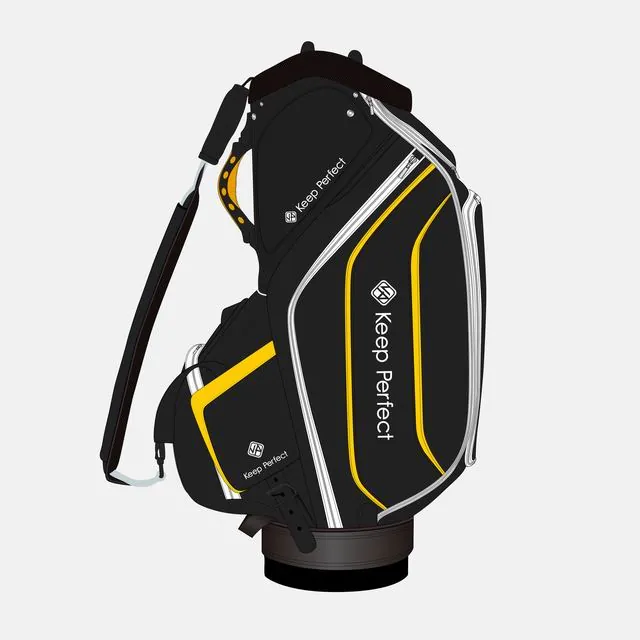
The best golf cart bags for tournaments and competitive play share four non-negotiable traits: full-length dividers so clubs never tangle under pressure, organized pocket access that keeps routine clubs and balls within a second's reach, a stable reinforced base that seats perfectly on any cart, and tournament-grade weatherproofing and abrasion resistance that survive 18 hard holes week after week. Whether you represent a touring player, a scratch amateur, or a club team stocking its staff with competition cart bags, the same manufacturing logic that governs the bags on tour applies on the assembly line. This guide comes from QUANZHOU JUNYUAN BAGS — a factory founded in 2014 serving 200+ brands across 100+ countries with a monthly capacity of 200,000 pieces, 7 production lines and 149 machines (126 sewing machines among them) — and it explains exactly how to choose, compare and source a competition-ready cart bag.
What "Tournament-Grade" Actually Means
"Tournament-grade" is marketing until it maps to measurable design decisions. In competitive play the margin between shots is narrow, so a bag that tangles grips, swallows a rangefinder, or leaks can cost concentration that no club can replace. From an engineering point of view tournament-grade means: a divider system that keeps full-length railings between every club or logical group, bottom-feeding club tubes that prevent club heads from clanging, reinforced high-wear zones, and closures that stay sealed even when the bag is jostled on a motorized cart all day.
It also means consistency. A tournament bag gets used hard, and a failure on hole 14 of a company's sponsored event reflects on the brand. Factories that make tournament cart bags for established labels spec higher-grade zippers, heavier bar-tacking, and multi-stage inspection because they know the products will be photographed, swung, and loaded into carts in public every round. When we build competitive-play cart bags at QUANZHOU JUNYUAN BAGS we hold them to our strictest AQL sampling, including seam-pull, zipper-cycle and strap-pull tests on every production lot — the same discipline that underpins our quality-standards coverage in the quality standards guide.
Divider Systems: Why Competitive Players Demand Full-Length
The single most important feature in a competition cart bag is the divider. Club tangling is not just annoying; it slows shot selection and damages grips. Full-length dividers run from the top ring all the way down to the base, so each club occupies its own column and cannot cross into its neighbor. On a cart bag this is easier than on a stand bag because weight is less critical, so tournament cart bags routinely go to 14-way full-length dividers.
The two classic layouts are 5-way and 14-way. A well-laid-out 5-way separates woods, long irons, mid irons, wedges and a putter well; it is faster to grab clubs from and slightly lighter. A 14-way gives every club its own slot, which many competitive players prefer because nothing moves and club heads sit flush. The trade-off is head-space: if you carry fewer than 13-14 clubs, a 14-way can crowd. Our 14-way vs 5-way divider guide details when each wins, and it is the reference most of our tournament customers start with before moving to a 14-way layout.
Pocket Architecture for Match Tempo
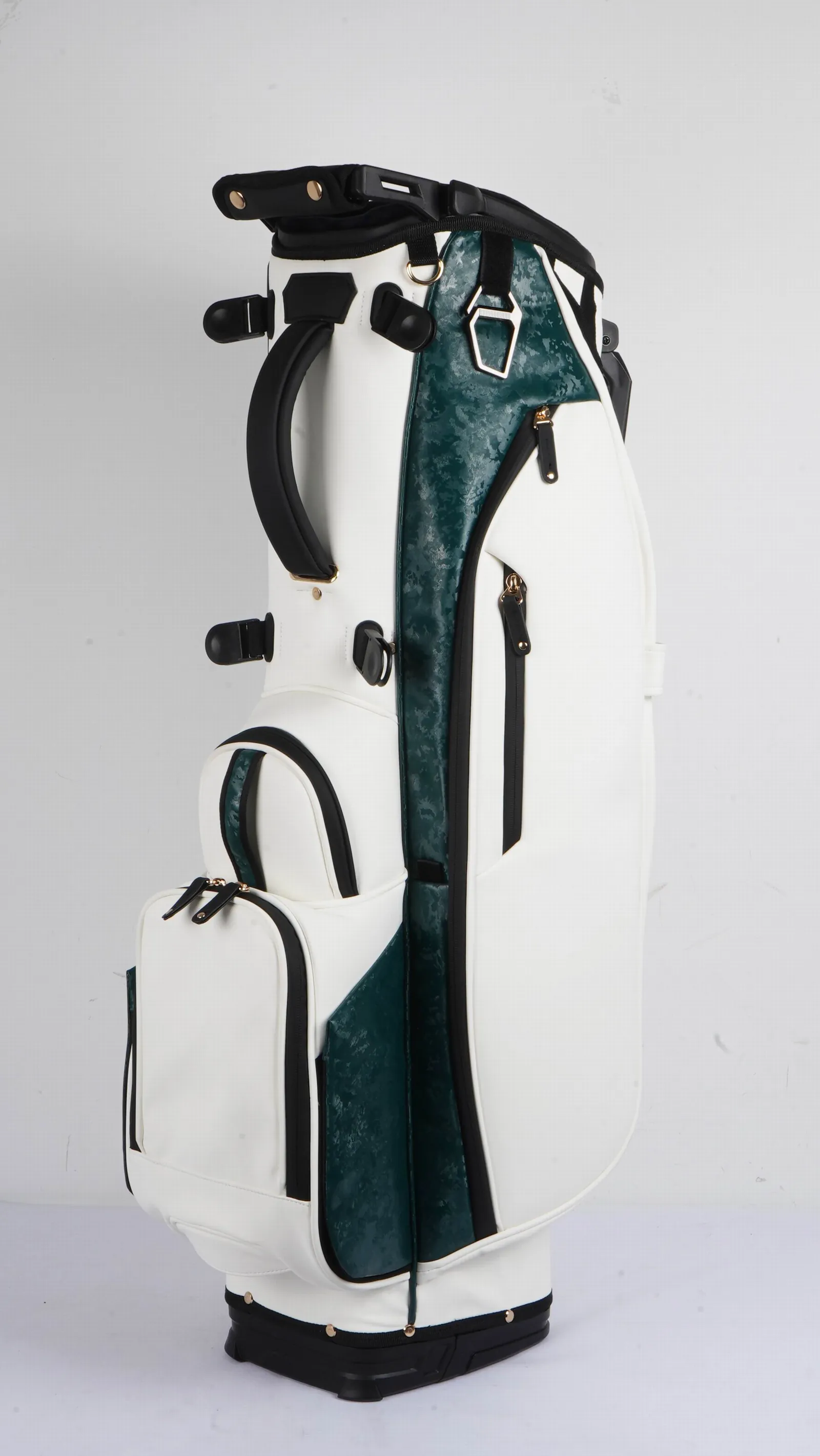
In competitive play, seconds spent fumbling in a pocket are seconds lost. The best tournament cart bags arrange pockets so that the routine kit is reachable without bending or unhitching the bag. The front pocket zone typically carries the ball and tee pocket at hand height, a rangefinder pocket on the upper front or side angled toward the golfer, a glove pocket, and a full-length apparel pocket for a vest or rain gear. A dedicated, lined valuables pocket with a smooth closure protects phone and wallet even under rough cart rides.
Because the bag rides upright on a cart, pocket openings are oriented to open "cart-friendly" — away from the strap side so loading a rangefinder mid-round is one motion. Our engineers layer in a top tee well and a scorecard slot near the handle because competitive amateur events still hand you a card. Pocket count should follow real competitive kit, not marketing: fourteen pockets full of air are worse than eight well-placed ones. The golf bag types guide and our cart bag features guide break down the organization patterns competitive players actually use.
Base and Cart Seating Stability
A tournament cart bag rides on a motorized cart that can hit rough ground, so the base must seat flat and stay put. Two features govern this: a wide, molded, stable base tub, and a strap-passage system that lets the cart strap cinch the bag without it sliding or tipping. Tournament carts vary by brand, so the best bags offer both an open strap channel and clearly marked D-ring or loop positions that work across the common cart types.
We validate every competition cart bag prototype by mounting it on representative motorized and push carts and driving a loaded round simulation. The base is reinforced so it does not flex under a fully loaded bag, and the bottom seam is protected against abrasion where the bag meets the cart body. A bag that stays centered on the cart keeps club access consistent and protects the clubs themselves from rattling. If you source for a specific fleet (for example, a resort or club with one cart brand), tell the factory — we can bias the base and strap layout to that cart model.
Weather Protection: Rain Rules and Wet Conditions
Competition does not stop for rain, and a tournament cart bag must keep water out or keep it manageable. Two approaches exist. Standard "water-repellent" bags shed light drizzle with a DWR or PU coating but resist — not stop — heavy water. "Waterproof" bags use a laminated waterproof membrane and fully sealed, taped or welded seams, keeping the inside dry through a downpour. For serious competitive climates, a waterproof shell plus a detachable rain hood covers the club opening when you are between shots.
The right choice depends on where the tournaments are. A dry-region clubman may never need full waterproofing; a links-course or spring-season competitor should not play without it. Our factory offers both builds, and our waterproof golf bag guide and waterproof golf bag lineup compare the coating and membrane technologies in practical terms, including how to check whether "waterproof" really means waterproof.
Materials and Durability for Competitive Lifespan
A competitive cart bag gets loaded, strapped, banged into cart bodies, run through rain, and transported by hand. Shell fabric should be a robust 600D-840D polyester, upgraded to 1000D at the base and high-wear lower panels, with a scuff-resistant kick panel at the very bottom. Hardware — buckles, zippers, D-rings, leg-less base fittings — should be rust-resistant plastic or coated metal, and closures should be from the top tier of zipper suppliers because zippers are the #1 field failure.
Because tournament bags carry 14 clubs at full length, internal support battens and the top ring must resist warping under a full load. We use thickened, reinforced top rings and internal stay structures so the bag keeps its shape and dividers keep alignment over many seasons. For a full comparison of fabric, hardware and construction trade-offs, our materials guide is the definitive reference, and the manufacturer selection guide explains how to verify these choices are actually built in rather than claimed.
Comparison of Competitive Cart Bag Configurations
| Configuration | Dividers | Weather Build | Best For | Typical Weight |
|---|---|---|---|---|
| Club/amateur competition bag | 5-way full-length | Water-repellent | Amateur tournaments, club comps | 2.6-3.0 kg |
| Tour-spec 14-way bag | 14-way full-length | Waterproof (optional) | Scratch and career-amateur play | 3.0-3.6 kg |
| Waterproof competition bag | 5-way or 14-way | Sealed waterproof | Rainy-season and links tournaments | 3.1-3.7 kg |
Typical weights reflect representative factory specifications for competitive cart bags.
Custom, Team and Branded Tournament Bags
Beyond individual play, competitive cart bags are a staple of teams, academies and corporate tournament programs. A club team, a college program, or a sponsor running a pro-am wants one cohesive bag that carries the logo and looks sharp in the media tent. Because these are ordered in volume and used publicly, decoration quality is critical: a misaligned logo or flaking embroidery reflects poorly on the team. Factories with dedicated deco capabilities (screen printing, embroidery, woven labels, heat-press patches) let you lock a consistent brand panel onto a competition-grade bag.
Custom tournament cart bags follow standard OEM/ODM economics: a 200-piece MOQ per design and colorway, with 100-piece test orders for new programs, sampling in 10-20 days, and bulk production in 45-60 days. Teams and corporate sponsors ordering a modest run of 100-200 bags find this workable. For schools and academies especially, a durable branded competition bag is a long-term asset used season after season. Our OEM/ODM services, custom solutions, and the tour/staff bag lineup cover the decoration and branding workflow for tournament-level programs.
Wholesale Economics of Tournament Cart Bags
Sourcing competition cart bags at wholesale follows factory-direct pricing discipline. The three cost levers are divider density (14-way costs more to tool and sew than 5-way), weather build (waterproof adds a membrane and seam-sealing step), and decoration (embroidery and woven labels cost more than screen print). For a retailer stocking competitive bags or a program ordering 200-500 units, these levers let you hit a price point without sacrificing the features players actually feel.
Because demand from pro shops and catalog retailers is consistent, most factories keep a stable pipeline for cart bags; our monthly capacity of 200,000 pieces across all bag types means tournament-cart-bag programs schedule cleanly into production. Our wholesale pricing guide and the wholesale section detail MOQ tiers, decoration pricing and fulfillment so you can model landed cost before committing.
Quality Control Specific to Competitive Bags
Tournament bags deserve the strictest factory QA. Beyond the standard three-stage inspection, competitive cart bags at QUANZHOU JUNYUAN BAGS are validated on: full-length divider alignment, seamless club tube bottoms, base pan rigidity under load, strap-passage clearance against representative carts, zipper-cycle durability on all closures, and bar-tack integrity at high-stress points. Rain and waterproof builds are tested for seam integrity against a water column before release.
For a tournament brand, an AQL-based final inspection with independent sampling is the difference between a reliable flagship product and a brace of warranty claims. In 2026 our factory underwent on-site SGS and Alibaba verification, giving buyers independent evidence of these controls. The full inspection checklist we recommend for any competitive cart bag is documented in our quality standards guide and manufacturer selection guide.
Caring for a Competition Cart Bag
A tournament bag is an investment, and a short maintenance routine protects it. After each round, wipe the base panel and strap zones free of dirt so grit does not work into seams; sand is the top cause of zipper jams, so brush closures clean. Air the bag if it got wet before zipping up, and refresh any DWR water-repellency on the shell once a season. Check the top ring and divider alignment, and confirm the base pan has not cracked or warped from hard cart use.
Between events, store the bag upright and loosely packed, not cinched shut, to preserve the shell and dividers. Lubricate moving cart-strap hardware sparingly and inspect strap-passage wear. For a full care protocol, our maintenance guide and seasonal storage guide cover cleaning, hardware upkeep and off-season care specific to heavy-use cart bags. A well-cared-for competition bag routinely delivers several seasons of reliable tournament service.
Seven Buying Rules for Tournament Cart Bags
- Make full-length dividers a must: 14-way for maximum separation, 5-way for faster grab and lighter carry.
- Verify the base seats flat: match the base and strap layout to the cart fleet you use.
- Count pockets against real kit: ball/tee, rangefinder, glove, apparel and valuables beat empty extras.
- Decide waterproof vs water-repellent: base it on your tournament climate, not marketing.
- Reinforce the wear zones: 1000D base and kick panel prolong competitive lifespan.
- Specify top-tier zippers and bar-tack stress points: zippers are the #1 field failure.
- Use the low MOQ to iterate: a 100-piece test order validates layout before scaling a team or retail program.
Frequently Asked Questions
- What makes a cart bag tournament-grade?
- Tournament-grade means full-length dividers, reinforced shells and bases, real weather protection, organized reachable pockets, and QA that holds under 18 hard holes because the products are used publicly.
- How many dividers should a competition cart bag have?
- Most competitive players prefer 14-way full-length dividers. A well-laid-out 5-way is lighter and faster to grab from, and suits players who carry fewer than 13 clubs.
- Is a tournament cart bag waterproof?
- Standard versions are water-repellent. For serious rain, specify a sealed waterproof build with a laminated membrane and taped/welded seams, optionally with a rain hood.
- Can I order custom tournament bags for a team or brand?
- Yes. OEM/ODM tournament cart bags are made at a 200-piece standard MOQ per colorway (100-piece test orders), sampling in 10-20 days and bulk production in 45-60 days.
- What is the difference between 5-way and 14-way for competition?
- Five-way groups clubs into five sections for faster grab; 14-way gives each club its own full-length slot to prevent any tangling, at the cost of more head-space when lightly loaded.
- How long does a custom tournament cart bag take to produce?
- Sampling typically takes 10-20 days; bulk production runs 45-60 days depending on divider count, weather build and decoration.
- Do tournament cart bags fit any cart?
- Most bags fit a wide range of carts via open strap channels and D-rings. For a specific fleet, tell the factory so the base and strap layout can be biased to that cart model.
Pocket Architecture for a Tournament Day
A tournament round is a long equipment event: you need a full set organized, plus rain gear, apparel, rangefinder, balls, tees, gloves, first-aid basics and often a beverage pocket. The best tournament cart bags are designed so every item has a logical home you can reach without hunting. A large valuables pocket with a soft lining protects phone and keys; a full-length apparel pocket swallows rainwear on the course; dedicated ball, tee and glove pockets keep essentials at a consistent spot; and a rangefinder pocket with easy access spares you a stall in the fairway.
Pocket layout is not cosmetic — in competition, seconds and composure are real. A bag that makes you fish for a glove or a ball between shots costs you focus. When we build tournament cart bags, we lay out pockets around the actual sequence of a round: what a competitor reaches for from the cart seat, what stays in the large pocket until the turn, and what must be sealed against weather. The tournament bag organization guide walks through a full packing system, and the cart compatibility guide helps confirm the bag fits your cart precisely.
Waterproof Protection for Competitive Play
Tournaments run in all weather, and rain or dew decides whether a round is enjoyable or miserable. A competitive golfer needs a bag whose protection matches the worst forecast, not the average. A water-repellent PU-coated shell sheds morning dew and drizzle; a fully waterproof build with a laminated membrane and sealed seams protects clubs and attire through downpours. Because cart bags have many pockets, waterproofing the closures and seams is the difference between dry shorts and a soaked change of clothes.
Many serious competitors also favor a detachable rain hood over the top so clubs stay dry between shots — invaluable during a steady rain that would otherwise leave grips soaking. When we engineer tournament cart bags we treat weather readiness as a core requirement, with higher-order waterproofing available for wet-climate teams and events. The full comparison of water-repellent versus waterproof construction is in our waterproof golf bag guide, and the waterproof lineup shows the build tiers.
Team, Club and Event Sourcing of Cart Bags
Tournament cart bags are a staple of team and club orders, because a matching set of high-quality cart bags gives a squad a professional, cohesive look and builds brand presence at events. Clubs buy them for elite members, junior academies and captains; corporates sponsor tournament teams with branded bags. Wholesale sourcing follows the standard model: a 200-piece MOQ per design and colorway, 100-piece test orders, sampling in 10-20 days, and bulk production in 45-60 days.
A 14-way cart bag with premium dividers and branding is a flagship SKU, and bundling it with a matching staff bag or travel cover keeps a team's identity consistent across equipment. When a club or sponsor decorates a tournament bag, deco durability matters because the bag is used and seen intensively for a season. Our OEM/ODM services and custom solutions manage the branding workflow, the wholesale section models multi-SKU team programs, and the wholesale pricing guide maps the cost levers of a premium tournament bag.
Factory Verdict on Tournament Cart Bags
From the production floor, the best golf cart bags for tournaments and competitive play are distinguished by discipline, not gimmicks: full-length dividers that hold alignment, reachable pocket layouts tuned to match tempo, stable bases that seat on any cart, real weather protection, and high-wear reinforcement that survives seasons of competitive use. When those features are built on strong fabrics and verified by strict QA, the bag fades into the background and the golf comes first — which is exactly what a tournament player needs.
QUANZHOU JUNYUAN BAGS has supplied competitive cart bags for teams, academies and retail brands since its founding in 2014, backed by 7 production lines, 149 machines (126 sewing machines among them), 137 staff and a 200,000-piece monthly capacity. Whether you are outfitting a touring player or launching a branded competition line, our engineers will validate your spec and deliver factory-direct. Reach us at contact, service@junyuanbags.com, or WhatsApp +86 17750020688.
Looking for a Reliable Manufacturing Partner?
From tournament cart bags to staff bags and travel covers, our team delivers competition-grade quality factory-direct. Test orders from 100 pieces, sampling 10-20 days, bulk in 45-60 days.
Request a Bulk Quote →Sources
- [USGA – Equipment Rules and Conforming Guidance](https://www.usga.org/)
- [PGA of America – Tour and Competitive Golf Resources](https://www.pga.com/)
- [National Golf Foundation – Amateur and Competitive Participation Data](https://www.ngf.org/)
- [Golf Datatech – Bag Category Sales and Trends](https://www.golfdatatech.com/)
- [The R&A – Equipment Rules](https://www.randa.org/equipment)