Best Golf Cart Bags With Full-length Divider Systems
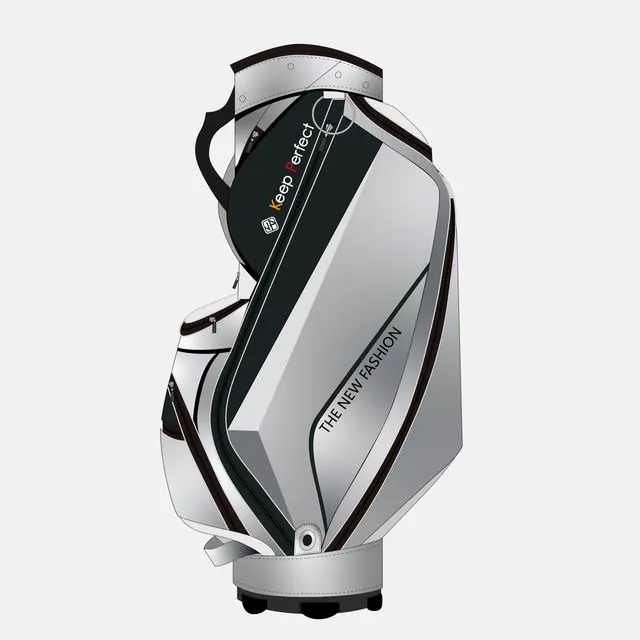
The best golf cart bags with full-length divider systems separate every club from top ring to base, ending grip tangles, shaft chatter and clattering head covers for good. The two dominant layouts are 5-way full-length (grouped for speed) and 14-way full-length (individual slots for maximum separation); which is "best" depends on your club count and how much you value grab speed versus total isolation. Written from the assembly floor of QUANZHOU JUNYUAN BAGS — a factory founded in 2014 serving 200+ brands across 100+ countries — this guide tells you how full-length divider systems work, how to compare them, and how to source a quality example wholesale.
Why Full-Length Dividers Changed the Game
For decades most golf bags used "top-only" dividers: a molded ring at the top that separated club openings but left the shaft area free. The result was the classic annoyance — pull a wedge and the grips of three neighbors ride with it, or hear a metallic clatter as shafts cross each other when the bag is strapped to a cart. Full-length dividers solve this by carrying a padded rail, tube, or fabric separation all the way from the top ring down to the base, so each club occupies a column with nowhere to drift.
The benefit is most pronounced on a cart or push trolley. When a bag rides sideways at an angle, gravity pulls shafts sideways; without full-length separation they tangle, and the grips wear against each other. Full-length systems keep the bag's interior ordered, which protects grips, reduces noise, and speeds club selection. That is why nearly every serious cart bag, and increasingly premium stand bags, now ship with full-length divider systems as standard rather than an upgrade.
How Full-Length Systems Are Built
Manufacturers build full-length dividers in three main ways. The first is individual full-length club tubes — a molded plastic or sewn fabric tube from top to base that cradles each club in its own enclosure, favored for 14-way layouts. The second is padded separator panels that divide the interior into vertical sections running full height, used for 5-way and 6-way layouts. The third is a combination: padded individual sleeves in the wood area and sectional panels in the iron area.
The engineering subtlety is at the base. Dividers must meet a reinforced bottom panel that keeps each column aligned and prevents clubs from poking through; a weak bottom defeats the whole purpose. That is also why full-length systems cost more to produce — more material, more stitching, more careful alignment, and a bottom seat that must be rigid but not heavy. On our production lines (126 sewing machines among 149 total, 137 staff), the divider station is one of the most quality-sensitive steps in building a cart bag, because misaligned dividers are the fastest way to a service complaint.
5-Way Full-Length: Speed First
A 5-way full-length layout divides the top into five sections — typically driver/woods, hybrids, mid-irons, wedges, and a dedicated putter well. Each group runs full-length, so within a group clubs stay in their own column, but you grab into a small cluster rather than an exact slot. The advantage is a wider, friendlier opening that makes it easy to return clubs quickly and grab the club you want without hunting for a specific narrow slot. Many players find 5-way faster under normal pace of play.
Five-way is also the better choice if you carry fewer clubs — for example 10-12 clubs — because a 14-way with empty slots feels spacious in the wrong way. It is lighter than 14-way and slightly more affordable to build and retail. For the large majority of recreational and mid-handicap golfers who ride carts, a 5-way full-length layout is the recommended balance of speed, protection and weight. It is the layout we recommend to most buyers before they consider 14-way, and it is documented alongside the alternatives in our 14-way vs 5-way guide.
14-Way Full-Length: Maximum Separation
A 14-way full-length layout gives every club its own full-length slot — the flagship configuration for tour-spec and premium cart bags. Because each club has a dedicated column, grips can never tangle and club heads never clatter, even on a rough cart ride. Players who carry a full 14-club set and dislike any shaft contact gravitate to 14-way. Many also like the orderliness: every club has an assigned home so nothing wanders.
The trade-offs are real. The 14 openings are narrower, so grabbing and returning clubs takes slightly more precision; some players describe it as "denser." It is also heavier and costlier. And if you carry more than one club type per slot (for example two wedges sharing), you lose the isolation benefit. So 14-way is genuinely best for the dedicated player with a full set who prioritizes organization. For everyone else, 5-way usually wins. Both are covered in depth in our divider system guide, and you can see how they are fitted at the cart bag lineup.
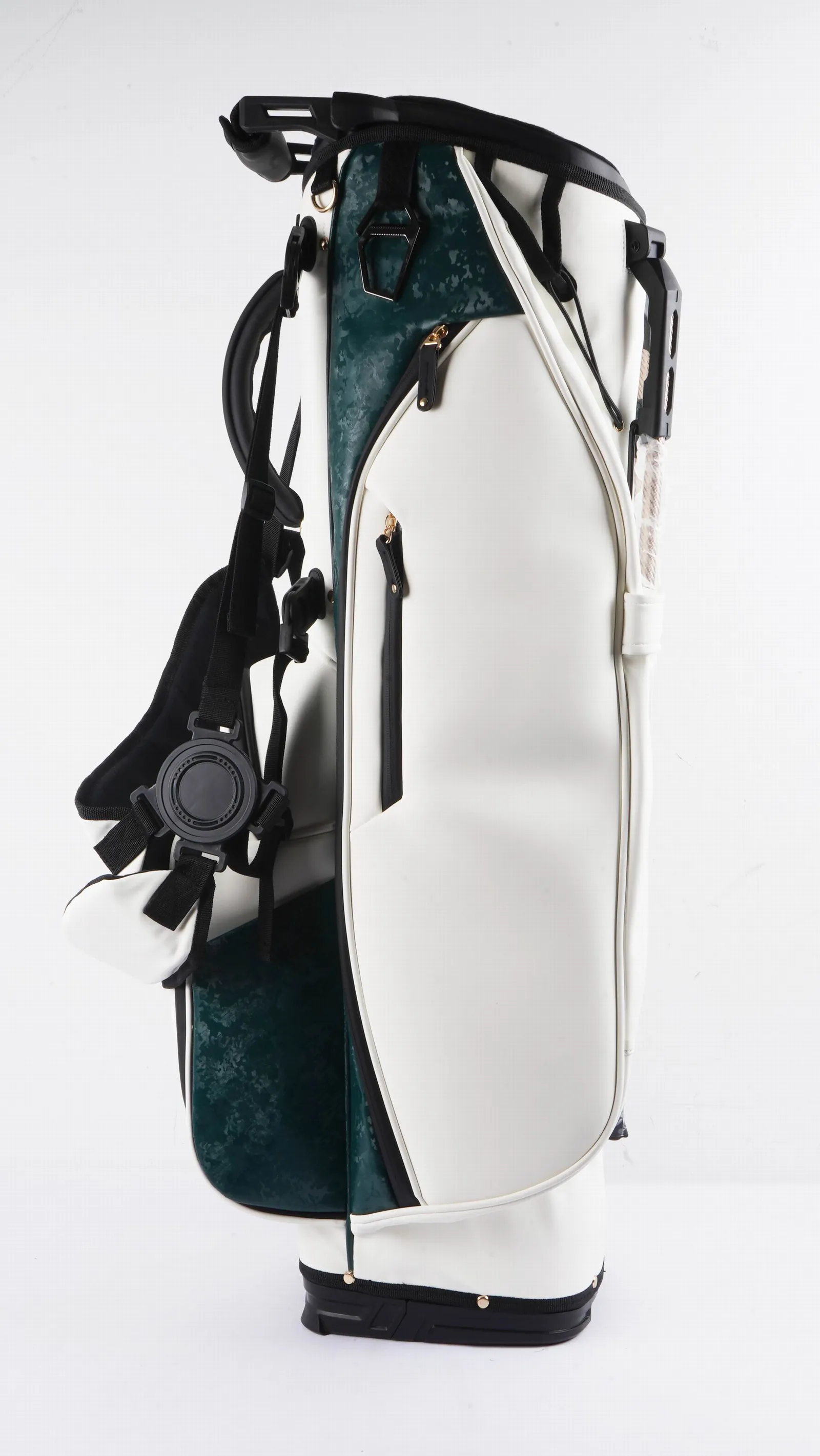
Dedicated Putter Wells and Their Value
One of the most underrated aspects of a full-length divider system is a dedicated putter well. Because the putter is the most-handled club, giving it its own full-length, often foam-lined slot protects the grip and makes it instantly reachable. Premium cart bags place the putter well at the front or side for easy draw without disturbing other clubs. In a 14-way layout the putter well is usually a distinct, padded channel; in a 5-way it is the fifth section.
From a manufacturing view, a foam or fleece-lined putter sleeve is a small cost that improves perceived quality dramatically — you feel the padded draw when you pull the putter. When brands brief us for a full-length cart bag program, we recommend never dropping the putter sleeve to save grams, because it is the feature testers notice first. The compartment reasoning behind good layout is explored further in our compartment design guide.
Matching Divider Count to Your Real Club Set
The single best tip for choosing a full-length system is to count your actual clubs before picking layout. If you carry 13-14 clubs, a 14-way gives every club its own slot and is worth it. If you carry 10-12 clubs, 14-way leaves empty columns that can make the bag feel overbuilt; a 5-way arranges your clubs efficiently. If you carry fewer than 10 clubs (common for juniors and some occasional players), even a 5-way may be more than you need, and a lighter layout serves better.
Club length also matters. Full-length dividers should accommodate the longest club (driver) without the head wedging at the top, so spec the divider to your driver length. A good factory will ask for your club set breakdown and can adjust 5-way section sizing so, say, the hybrid slots fit hybrids. This customization is a genuine advantage of ordering through an OEM/ODM program rather than buying off-the-shelf, and it is the kind of detail our golf bag types guide helps you get right.
Materials and the Feel of a Quality System
What separates a premium full-length system from a cheap imitation is material and construction. Look for: padded or flocked dividers that do not scratch shafts and grips; a rigid but light base seat that keeps columns aligned; a reinforced top ring that resists warping; and smooth edges where fabric meets plastic so nothing snags club heads or head covers. Low-cost bags often use thin unpadded dividers that sag and let shafts drift anyway — proof that "full-length" label alone means little.
At QUANZHOU JUNYUAN BAGS we use flocked, double-stitched padded dividers and a stiffened HDPE-style bottom seat on our premium cart bags, and we test that a fully loaded 14-way bag survives repeated cart-mounting without dividers shifting. The fabric choices (600D-840D shells, heavier base panels) and build standards are detailed in our materials guide, and the exact test points in our quality standards guide.
Comparison of Full-Length Divider Layouts
| Layout | Full-Length Isolation | Grab Speed | Best Club Count | Relative Weight |
|---|---|---|---|---|
| 5-way | Grouped sections | Fastest | 10-12 clubs | Lighter |
| 6-way (woods split) | Grouped + split woods | Fast | 12-13 clubs | Mid |
| 14-way | Individual slots | Slower per grab | 13-14 clubs | Heavier |
Guidance reflects typical factory specifications for full-length divider cart bags.
Full-Length Dividers in Stand Bags and Crossovers
Full-length divider systems are no longer exclusive to cart bags. Premium stand bags and push-cart crossover bags increasingly adopt 5-way or even 14-way full-length layouts, because walkers value grip protection and organization just as much as cart riders. The difference is weight discipline: a stand bag carries these dividers on your shoulder, so manufacturers use lighter-fraction materials — sometimes individual padded tubes rather than heavy panels — to preserve portability.
If you alternate between carrying and pushing, a full-length crossover bag gives you the best of both: cart-style organization plus carry-ability. Our stand vs cart comparison and the carry bag lineup help you decide which form factor fits your rounds, while the push cart compatibility guide confirms a full-length divider bag will seat well on your trolley.
Sourcing Full-Length Divider Cart Bags Wholesale
For retailers and brands, full-length divider cart bags are a strong category because they command better margins than basic bags and satisfy the players who care most about their kit. Wholesale sourcing follows the standard factory-direct model: a 200-piece MOQ per design and colorway, with 100-piece test orders for new programs, sampling in 10-20 days, and bulk production in 45-60 days. Divider count materially affects cost — 14-way needs more material, more sewing and more careful alignment than 5-way — so price your SKUs accordingly.
Three cost levers let you hit a target: divider count, shell fabric weight, and decoration (screen print vs embroidery). When we quote a full-length program we also flag the base-seat construction, because that is the component that either holds dividers in place for years or quietly fails. Our wholesale pricing guide and the wholesale section model the MOQ tiers and landed cost, and custom solutions bundles multiple bag types into one branded program.
Quality Control for Full-Length Systems
Because divider alignment is invisible at first glance but painful to live with, factory QA must verify it explicitly. At QUANZHOU JUNYUAN BAGS we check: divider rail alignment top to base, bottom-seat rigidity under a full 14-club load, padded coverage (no hard plastic exposed to shafts), and that dividers do not shift after a simulated cart-ride cycle. These checks sit inside the standard three-stage inspection we run on every lot, and are backed by the independent SGS and Alibaba verification our factory underwent in 2026.
For a brand it is worth asking a factory to show you its divider-alignment protocol, because a visually perfect divider can still line up badly at the base where it matters. The full inspection checklist we recommend is in our quality standards guide, and manufacturer selection guide explains how to audit a factory's claims in practice.
Caring for Full-Length Divider Bags
Full-length systems are low-maintenance but reward basic care. Keep the divider openings free of debris, especially sand that can lodge between dividers and jam clubs; a light weekly shake-out clears it. When cleaning, avoid forcing water through the padded dividers in a way that soaks the foam and invites mildew — use a damp cloth and let the bag dry fully with dividers exposed. Periodically verify the base seat has not cracked or flexed, since that is what keeps dividers aligned.
Never pack a full-length divider bag loose and wet, and store it upright with clubs out or loosely placed so the padded rails hold their shape. If a zipper jams, clear it gently rather than forcing. For the full protocol, our maintenance guide and seasonal storage guide cover cleaning, hardware and storage for premium cart bags.
Seven Buying Rules for Full-Length Divider Bags
- Count your clubs first: choose 5-way for 10-12 clubs, 14-way for a full 13-14 club set.
- Check the divider reaches the base: "full-length" must mean top to bottom, with a rigid base seat.
- Insist on padded/flocked dividers: unprotected plastic will scratch shafts and grips.
- Keep a dedicated putter well: it is the feature players notice first.
- Match size to your driver: divider openings must accept the longest club.
- Recognize the cost step: 14-way costs more; price accordingly.
- Use the low MOQ to validate: a 100-piece test order confirms the layout feels right before scaling.
Frequently Asked Questions
- What is a full-length divider in a golf cart bag?
- A padded rail or tube running from the top ring to the base that separates clubs along their whole length, preventing grip tangles, shaft chatter and clattering head covers.
- Which is better, 5-way or 14-way full-length?
- A 5-way suits 10-12 clubs and faster grabbing; a 14-way suits a full 13-14 club set and maximum separation. Count your real clubs before choosing.
- Are full-length dividers worth the extra cost?
- Yes for most players who value grip and shaft protection. They end tangles and extend club life, and are now standard on premium and cart bags.
- Do stand bags come with full-length dividers?
- Yes, premium stand and crossover bags increasingly use 5-way or 14-way full-length dividers, with lighter materials to preserve carry-ability.
- Can I wholesale-source full-length divider cart bags?
- Yes. Standard MOQ is 200 pieces per colorway with 100-piece test orders, sampling in 10-20 days and bulk production in 45-60 days.
- Do full-length dividers fit oversized head covers?
- Most do, but you should size the divider openings to your driver and any oversized head covers so clubs load without wedging.
- What is the lead time for custom full-length cart bags?
- Sampling typically takes 10-20 days; bulk production runs 45-60 days depending on divider count, fabric and decoration.
How Full-Length Dividers Are Built
Full-length dividers are not just fabric tubes; they are engineered components. In a quality build, each club slot is lined to its full depth so a shaft slides into its own channel and stays there, rather than dropping into a shared cavity where grips can lock together. The divider assembly is attached to both the top ring and the base, which keeps the channels registered so clubs cannot jump lanes. The number of ways (14-way, 6-way, 4-way) dictates how far the separation goes and how many separate slots you get.
The engineering decisions, however, are subtle. Full-length individual dividers maximize separation but make the bag heavier and reduce airiness and pocket space; a partial or "full-length perimeter with open center" layout separates the perimeter clubs while pooling the middle clubs more openly, cutting weight and clutter. Choosing the right system is about matching organization to your set and your level of fussiness, not just picking the highest divider count. The divider systems guide details each layout, and factory craftsmanship that keeps dividers aligned under daily use is covered in our quality standards guide.
Dividers That Support Different Club Sets
The ideal divider system depends on what you carry. A golfer carrying a full 14-club set with multiple woods benefits most from a 14-way, where every frame has its own slot and the grips never touch — the classic tournament preference. A set with fewer clubs or a preference for lower carry weight is served well by a 6-way, which separates into groups (woods, long irons, mid irons, wedges, putter) without the bulk of 14 individual channels. A 4-way remains the simple, light option for those who want the putter well and broad separation without more compartments.
For most amateurs the honest recommendation is a 5-way or 6-way full-length perimeter system: it stops tangling for a modest set, keeps weight reasonable, and is easy to organize. Serious competitors and low-handicap players who carry a complete, well-filled set gravitate to 14-way for maximum isolation. Our divider systems guide walks through every configuration and our stand vs cart bag guide helps match bag type to how you play.
Sourcing Divider Cart Bags for Retail and Competitors
Full-length divider cart bags are a core retail SKU: performance-minded golfers specifically search for them, and retailers stock them from entry to tour-spec. Wholesale sourcing follows the standard model: a 200-piece MOQ per design and colorway, 100-piece test orders, sampling in 10-20 days, and bulk production in 45-60 days. The divider system is a major cost and quality lever — 14-way, full-length construction with rigid or padded dividers costs more than a light 4-way — so the layout should be chosen to match the price point and buyer.
For a retailer serving competitors, carrying both a 5/6-way and a tour-style 14-way gives you the two obvious buyer segments. Displaying divider quality in-store (clubs visibly separated) is the strongest demo for the feature. Our OEM/ODM services and custom solutions build these SKUs to spec, the cart bag lineup shows the divider tiers, and the wholesale pricing guide maps the cost levers that separate an entry and a tour-spec divider bag.
Factory Verdict on Full-Length Dividers
From the production floor, the best golf cart bags with full-length divider systems are the ones where the divider is genuinely built — padded, reaching the base, seated in a rigid pan, and aligned under load — not merely labeled. The 5-way vs 14-way decision is a personal mapping of your club count to your preference for speed versus isolation, and a quality factory will adapt the layout to your real set rather than forcing you into a fixed template.
QUANZHOU JUNYUAN BAGS has manufactured full-length divider cart, stand and crossover bags since founding in 2014, backed by a 200,000-piece monthly capacity, 7 production lines and 149 machines. If your bag currently tangles or chatters, upgrading to a properly engineered full-length system is one of the highest-impact equipment changes you can make. Reach us at contact, service@junyuanbags.com, or WhatsApp +86 17750020688.
Looking for a Reliable Manufacturing Partner?
From full-length divider cart bags to stand bags and travel covers, our team builds precision organization factory-direct. Test orders from 100 pieces, sampling 10-20 days, bulk in 45-60 days.
Request a Bulk Quote →Sources
- [USGA – Equipment Rules and Conforming Guidance](https://www.usga.org/)
- [The R&A – Equipment Guidance](https://www.randa.org/equipment)
- [National Golf Foundation – Equipment and Participation Trends](https://www.ngf.org/)
- [Golf Datatech – Bag Category Market Data](https://www.golfdatatech.com/)