
Published 2025 · Golf Bag Value & Pricing Analysis
The short answer: the best "budget" golf bag value sits between $60 and $140 retail, and measured by cost-per-round a $100–$120 bag that lasts 150+ rounds reliably beats a $30–$50 bag that fails after 30–40 rounds. Using cost-per-round mathematics, a $110 bag across 150 rounds costs $0.73 per round, whereas a $45 bag across 35 rounds costs $1.29 per round—making the "cheaper" bag measurably twice as expensive per round played. For buyers sourcing in volume from an affiliated golf bag factory, the same logic applies at wholesale: a moderately specified design with dense nylon, a metal stand, and reinforced base plate outperforms a stripped-down design on satisfied end-customers and repeat orders, even at a small unit-price premium. This guide draws on factory-level pricing, 2025 retail benchmarking, and lifecycle cost data to give you a transferable method for judging value rather than a list of disposable opinions.
Why Traditional "Cheapest Wins" Logic Fails Budget Buyers
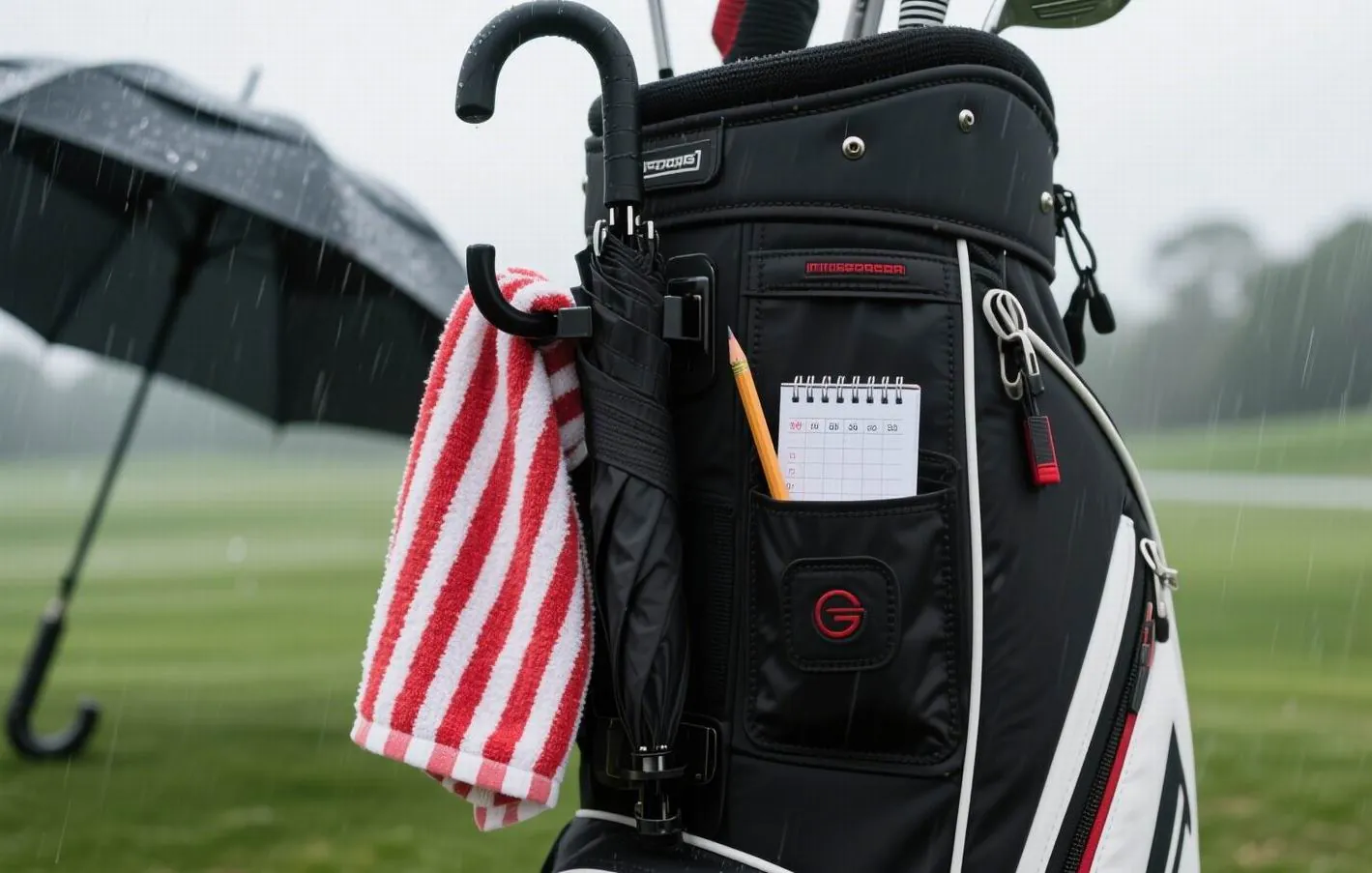
Most consumers default to the lowest sticker price when shopping on a budget, yet golf bag replacement data shows this rarely minimizes total spending. The failure points that kill a cheap bag are predictable: zipper teeth that pull apart, a stand mechanism that clicks loose, base plates that crack under club weight, and rain covers that soak through in the first heavy shower. Each of these failures lands at roughly the 30th to 40th round mark, forcing a replacement purchase sooner than the shopper planned.
When you add the second purchase into the calculation, the apparent saving evaporates. A buyer who spends $45 on a bag that fails by round 35 and then buys another $45 bag has spent $90 before a $110 bag’s first equivalent service interval has even finished. The value discussion therefore must be anchored to cost-per-round or cost-per-season, not to the price tag alone.
Industry-standard durability expectations used by OEM buyers frame the target clearly. A golf cart bag or stand bag should comfortably exceed 150 rounds for an amateur playing 30–50 rounds a year—that represents three to five seasons. Any bag that falls short of this because of a 10-cent zipper or a thin stand spring is not a value product; it is a deferred cost.
The Cost-Per-Round Method, Built for Real Numbers
The cost-per-round calculation is the most honest value benchmark available. You divide the total price you pay by the number of rounds the bag realistically survives. To make it useful you also add the replacement cost, because every premature failure resets the math. The formula that captures both is: Total Cost of Ownership = (Purchase Price × Number of Purchases) ÷ Total Rounds Played.
Applying the formula with 2025 street prices gives a clear spread. A $45 budget bag surviving 35 rounds produces a total-cost-of-ownership of $1.29 per round assuming just one purchase. A $110 bag surviving 150 rounds produces $0.73 per round. A $280 premium cart bag surviving 220 rounds produces $1.27 per round. The budget bag at $110 is cheaper per round than both the ultra-cheap bag and the premium option—yet many shoppers never check this number.
Retail markup also matters when you are comparing what you see on the shelf with what a bag actually costs to make. Golf bags marketed in the $60–$140 band typically carry retail margins of 40–60%, meaning the comparable landed cost from manufacturing sits far lower. Knowing this protects you from overpaying for a thin margin-additive feature and lets you judge whether a low price is a genuine factory-direct deal or just a rebadged commodity.
2025 Budget Price Bands and What They Realistically Buy
Putting 2025 retail dollars against realistic specifications removes most of the guesswork. The category breaks cleanly into four bands, and each band has an honest capability ceiling.
Under $50: This band buys a basic cart or stand bag with low-denier polyester, a plastic stand, limited padding, and 2–4 pockets. It fits a true casual player and a short season, but durability, water resistance and stand reliability are all compromised. Expect replacement within one to two seasons of regular play.
$50–$140 (the sweet spot): This is the genuine budget-value zone in 2025. It delivers dense 600D–900D nylon, a metal or reinforced stand frame, a 4–14-way top, a padded shoulder strap, and at least one sealed or water-repellent pocket. Bags in this band routinely clear 150 rounds with basic care and are the strongest cost-per-round value.
$140–$280: This moves you into mid-tier territory: full-length dividers, better zippers, improved stand geometry, subtle waterproofing and stronger base plates. The durability gain over the $110 bag is real but incremental, so value depends heavily on how much you actually play.
$280 and up: Premium and pro-level builds with premium components, refined ergonomics and extensive waterproofing. Durability is excellent, but per-round cost usually undercuts the whole point of budgeting unless you play a very high number of rounds or need tour-level features.
| Price Band | Typical Spec | Realistic Life (Rounds) | Cost/Round | Verdict |
|---|---|---|---|---|
| Under $50 | Low-D polyester, plastic stand, 2–4 pockets | 30–40 | $1.13–$1.50 | Replacement trap |
| $50–$140 | 600D–900D nylon, metal stand, 4–14-way | 150+ | $0.33–$0.93 | Best budget value |
| $140–$280 | Full dividers, better zippers, waterproofing | 180–200 | $0.70–$1.55 | Good if heavy use |
| $280+ | Premium components, tour ergonomics | 200+ | $1.40+ | Per-round cost rises |
What Drives the Price of a Budget Golf Bag at Factory Level
To judge value correctly, it helps to know where cost actually accumulates in manufacturing. At an affiliated factory like QUANZHOU JUNYUAN BAGS—founded in 2014, its founder having entered the industry in 2004—the cost of a golf bag is driven in order of weight by fabric quality, hardware, labor, stand and strap systems, and finishing.
The single biggest cost lever is fabric. Swapping a low-denier polyester for dense 600D–900D nylon can move unit cost by 15–25% while meaningfully changing durability and water resistance. Next come zippers and hardware; a water-resistant bonded zipper costs more than a standard one but is the most common early failure point in budget bags. Third is labor intensity: a cart bag with a 14-way full-length divider system takes materially more sewing time than a 4-way top, which is why divider count scales with price.
Factory fundamentals explain how value prices stay sustainable. QUANZHOU JUNYUAN BAGS operates 7 production lines, 126 sewing machines and 137 employees with a monthly capacity of roughly 200,000 units, and has shipped to more than 200 brands across 100+ countries. Because the site is an affiliated factory rather than a single-owner plant, buyers get the benefit of an established, SGS-audited production base (last audit March 2026) without the overhead of proprietary brand marketing baked into unit pricing.
MOQ, Sampling and Lead Time That Keep Budget Projects Viable
A budget value strategy often fails at the ordering stage when buyers discover minimums or lead times that blow up their unit math. Clear procurement parameters prevent this. At QUANZHOU JUNYUAN BAGS the standard MOQ is 200 pieces per design, with test orders accepted from 100 pieces—an important concession that lets a smaller brand validate a budget design cheaply. Sampling normally takes 10–20 days, and bulk production 45–60 days across the factory’s 7 lines.
For a budget-focused private-label or wholesale program, the practical implication is to consolidate designs. Running one proven pattern in volume unlocks lower per-unit cost, while a long tail of tiny custom orders erodes the margin a budget line depends on. Budget value is fundamentally a volume and specification game, and treating it as such at the factory-door is what separates a sustainable line from a one-off.
Five Specifications That Define a Good Budget Bag
1. Fabric density over branding. A 600D or higher nylon shell with a water-repellent finish is non-negotiable; no logo or colorway compensates for a weak shell.
2. Metal or reinforced stand. A flexible plastic leg assembly is the first thing to fail. Prioritize a metal frame and a secure hinge.
3. Reinforced base plate. The base carries all the club weight. A stiff, well-secured plate is the strongest predictor of a bag that survives multiple seasons.
4. Zipper quality and placement. Sealed or bonded zippers on the top access and valuables pocket add little cost but save the most replacements.
5. Dividers matched to your club set. A 14-way top prevents club chatter but costs more to sew and adds weight; a 4–6-way top delivers most of the protection at a fraction of the cost for most amateurs.
Lifecycle Cost Comparison: Budget vs. Premium Over Five Years
Stretching the comparison over five years makes the value picture unambiguous. Assume a player averages 40 rounds a year, so 200 rounds over five years. A $110 budget bag purchased once and maintained covers the full window at a total cost of $110, or $0.55 per round. A $45 bag replaced at round 40 and again at round 80, 120, 160 and 200 costs roughly $225, or $1.13 per round—double. A $280 premium bag lasting 220 rounds still needs a second purchase partway through year five, landing near $560 and $2.80 per round.
The takeaway is not that the cheapest option or the most expensive option is "bad"; it is that the mid-budget zone consistently minimizes five-year spend while preserving a satisfactory feature set. Buyers who play fewer than 15 rounds a year can legitimately accept a cheaper bag, because the per-round penalty is diluted. Buyers who play competitive or traveling golf should lean toward the upper end of the budget zone.
A budget golf bag delivers real value when construction survives repeated rounds: look for 840D or heavier fabric, reinforced stress points and quality hardware, not just the lowest price.
Budget Value Calculator Logic You Can Reuse
Rather than memorize price bands, carry a simple decision rule. First, fix your annual rounds. Second, estimate expected lifespan from the durability tiers above. Third, divide price by lifespan and multiply by the number of purchases you expect over your planning horizon. If the result is below $1.00 per round, you are in solid value territory; above $1.50 per round, reconsider the purchase or the usage plan.
This same logic lets wholesale buyers defend a price to their own customers. A retailer who sources a well-specified budget bag at a healthy margin can still tell an end-customer the honest per-round story, which is persuasive and truthful at the same time. It is the difference between competing on sticker price and competing on realized value.
How Rainfall and Climate Shift Budget Value
Value is local. In a dry climate, a low-water-resistance bag is rarely a problem and the cheapest durable option may be the rational choice. In a rainy coastal climate, water resistance moves from a nice-to-have to a defining value factor, because a bag that fails in the first wet round is a total loss however cheap it was. Budget buyers should weight expected rainfall and course conditions before finalizing a specification, and consider at least a sealed valuables pocket plus a rain cover in the bundle.
Temperature and UV also matter at the budget end. High-UV climates degrade low-end plastic stands and thin webbing faster, so a slightly denser fabric and better hardware repay themselves quickly. Climate-adjusted value is simply cost-per-round weighted by local wear conditions.
Transport, Storage and Care That Extend a Budget Bag
The cheapest way to buy value is to keep whatever you bought alive longer. Store the bag on a padded stand or hanger rather than sitting on its base plate for months, keep zippers clean and lightly lubricated, never force a jammed divider, and dry the bag fully before storage after a wet round. These habits cost nothing and routinely push a budget bag past its expected service interval, improving the already-favorable cost-per-round.
For bags that travel by air, a simple padded travel cover protects investments at any price point and is far cheaper than replacing clubs or a crushed bag. Care is the multiplier on every value calculation in this guide.
Common Budget Bag Buying Mistakes to Avoid
Three mistakes account for most disappointing budget purchases. First, buying on imagery: vivid product photos hide fabric weight and stand quality until it is too late. Second, ignoring the stand and base entirely, which are the real durability drivers. Third, assuming a premium brand name guarantees value—brand markup can exceed 100% with no proportional durability gain. Read the specification sheet, demand the fabric denier, check the stand material, and only then compare prices.
For budget buyers sourcing or selling wholesale, the parallel mistake is treating unit price as the only variable. Weight of fabric, hardware grade and lead time all move the real value number, and a marginally higher unit cost financed by a better spec routinely produces a cheaper bag over its life.
Sourcing a Budget Golf Bag with a Rational Value Specification
If this analysis leads you to source rather than buy off the shelf, approach the factory with your value target written down: a denser nylon shell, a metal stand, a reinforced base, decent zippers and a divider count matched to your market. Share these parameters, not just a dollar figure. A capable OEM partner will cost the spec honestly. You can explore the full custom range through the OEM and ODM program, review the wholesale pricing framework, or read the detailed price-analysis buying guide before you commit.
QUANZHOU JUNYUAN BAGS welcomes value-focused inquiries with clear parameters, at service@junyuanbags.com or +86 17750020688, and flags the MOQ and sampling lead times up front so there are no surprises in your unit math.
Budget Value by Golfer Type
Value is not a single number because golfers are not a single profile. A weekend social player stepping onto a municipal course roughly 15 times a year has a different rational budget than a competitive amateur practicing twice a week. Matching the recommendation below to the golfer type prevents both overspending and premature replacement.
Casual social players (under 20 rounds/year). A straightforward cart bag in the $60–$90 band with a 4–6-way top, two or three pockets and a water-resistant shell is a defensible choice. Low usage dilutes the per-round penalty of a shorter-lived bag, so there is little reason to pay for 200-round durability.
Weekend regulars (20–40 rounds/year). This is the heart of the $100–$140 value zone. Weekend regulars are the golfers most likely to feel the difference between a failed stand and a reliable one, and to benefit from a reinforced base and denser fabric. This band minimizes total cost of ownership for the most common playing profile.
Walking players. If you carry a stand bag most rounds, weight and the stand frame dominate value. Pay for a lighter fabric and a metal stand; skip expensive styling. Comfort every round compounds into value faster than any badge.
Avid competitors and travelers (50+ rounds/year). You will amortize a higher spend. A $200–$280 bag with full-length dividers, better waterproofing and a stiffer base returns a lower per-round cost than a budget bag replaced every 150 rounds, especially when air-travel protection is added to the equation.
Deal Timing, Discontinuations and the Real Price Floor
Budget buyers can stretch money further with timing. Golf bag pricing follows a seasonal cycle: new-season stock launches in spring, and the previous season’s colors are discounted through late summer and autumn to clear inventory before the next launch. Buying a prior-season colorway of an identical durable shell regularly saves 20–40% with zero specification compromise, because the underlying performance model is unchanged.
Discontinuation pressure also operates at the factory level. When a factory rotates production lines or finishes a run, leftover high-quality fabric and components occasionally surface as cost-effective lots. A long-term OEM relationship flags these opportunities early, which is one reason steady wholesale partners achieve better effective pricing than one-off transaction buyers.
Finally, know the real price floor. A well-made golf bag cannot be manufactured, shipped and retailed profitably below a certain point; a price far under that floor almost always signals a downgraded component, a thinner fabric, or an unsustainable margin. Buyers who chase the absolute bottom price usually finance the difference in replacement cycles. Anchoring to the honest cost floor is itself a value discipline.
Wholesale and Private-Label Value Math for Sellers
For retailers, distributors and private-label brands, the value framework shifts from personal use to margin and sell-through. The relevant number is not cost-per-round but margin per unit multiplied by sell-through velocity, minus the cost of returns and warranty claims. A spec that forces returns because the stand fails in the first season is far more expensive than the small premium that eliminates the returns.
This is where factory specification discipline pays twice. If you define a budget line around a denser nylon shell and a metal stand from the start, you absorb a modest unit-cost increase but compress returns, protect your brand reputation, and earn repeat orders. At QUANZHOU JUNYUAN BAGS, buyers can underwrite this with a test order as small as 100 pieces before committing to the 200-piece standard MOQ, de-risking the value bet with real samples rather than assumptions.
The wholesale price-analysis resource and the OEM/ODM program detail directly the specification levers that move both cost and perceived value, giving sellers a defensible price story at retail.
Frequently Asked Questions
- How much should you actually spend on a budget golf bag?
- $60–$140 retail covers a durable cart or stand bag with a metal stand, dense nylon and a 4–14-way top. Below $60 most bags fail within 30–40 rounds; the strongest value sits near $100–$120.
- Is the cost-per-round method the best way to judge golf bag value?
- Yes. It divides purchase price by lifespan. A $100 bag lasting 150 rounds is $0.67 per round, while a $300 bag lasting 200 rounds is $1.50 per round, so the cheaper bag can deliver better measured value for most amateurs.
- What is the minimum order quantity when buying budget bags from a factory?
- At QUANZHOU JUNYUAN BAGS the standard MOQ is 200 pieces per design, with test orders from 100 pieces. Sampling takes 10–20 days and bulk 45–60 days across the 7 lines.
- Do cheap golf bags always break faster than premium ones?
- Not universally, but cheap bags fail far more often at the stand, zippers and base plate around round 30–40. A well-specified budget bag with dense nylon, bonded seams and a metal stand can exceed 150 rounds.
- Can a factory build a budget bag with good value and acceptable quality?
- Yes. An affiliated factory like QUANZHOU JUNYUAN BAGS, founded 2014 with 2004 industry entry, runs 7 lines, 126 sewing machines and 137 staff for about 200,000 units monthly, serving 200+ brands in 100+ countries.
- When is it smarter to buy a pricier bag instead of the cheapest option?
- When you play 40+ rounds a year, travel by air, or walk often. Heavier use compounds spec differences, so a mid-range bag with a reinforced base, full dividers and better rain protection returns higher life-cycle value.
Sources
- USGA Equipment and Rules Resources
- GOLF.com Equipment Testing and Buying Guides
- MyGolfSpy Lab and Consumer Durability Testing
Author: QUANZHOU JUNYUAN BAGS. This analysis reflects factory-level and 2025 retail experience. Prices approximate actual market conditions and change with materials, labor and shipping. For project-specific advice, contact service@junyuanbags.com or +86 17750020688.