Budget vs Luxury Golf Staff Bags: Real Differences
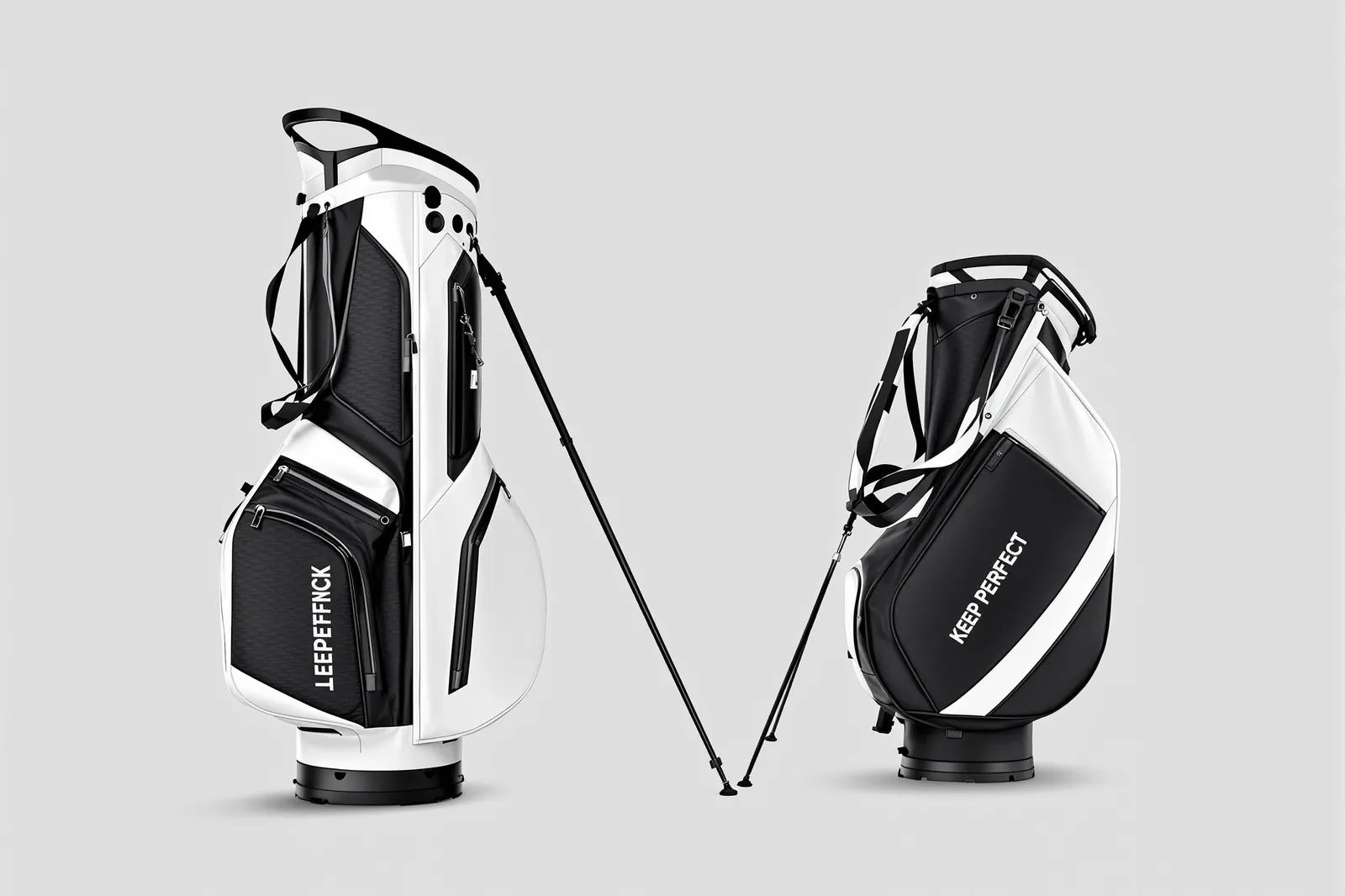
Paid budget golf staff bags typically use 300D-600D polyester, a 5-8 way top, single-stitched seams and basic hardware and cost roughly 30-50% less landed than a premium spec, which instead uses 840D-1000D nylon or polyester, full-length dividers, a reinforced plastic base, YKK-class zippers and stricter QA. That gap is not marketing: it shows up as fabric tear strength, how the top ring holds its shape, zipper lifespan and deco (logo) durability under a full season on tour. This guide, written from the production floor of QUANZHOU JUNYUAN BAGS (founded 2014, 200+ brands served across 100+ countries), lays out the measurable differences so you can buy the right spec and not overpay or under-spec for the job.
What a Staff Bag Actually Is
A golf staff bag is the largest, most storage-heavy bag in a club golf bag lineup, built to carry 14 clubs (and in tournament use more), a large amount of player and caddie gear, and to ride on a cart or buggy throughout a round. Compared with a cart bag it is bigger in the top ring, holds more pockets, and wears a large, roughly flat front panel built for a player name, brand mark or sponsor signage.
Because staff bags are built for professional and semi-professional use, the industry's price spread between a starter build and a tour-ready build is wider than for any other bag category. Understanding that spread matters if you are a brand deciding a retail lineup, a retailer setting sell-through expectations, or a tour player buying for a season of real use. Our golf bag types guide positions staff bags against cart, stand and travel bags so the naming is clear before we discuss price.
The Biggest Cost Drivers, in Plain Terms
Four things drive most of the price difference between a budget and a premium staff bag: face fabric, divider system, base and hardware, and the depth of quality control. A budget build may use a lighter 300D printed polyester with a simple 5-way top and a foam-filled base; a premium build uses a dense woven 840D-1000D shell, a 14-way full-length divider top with a putter well, a rigid molded base pan with feet, and branded YKK-style metal zippers throughout.
Decoration is the fifth lever but is line-itemed separately. Logos, embroidered panels, woven labels and trims all add real cost, and on a large staff bag panel the fabric and the deco must be matched for clean results. For a detailed cost breakdown of custom runs, our wholesale pricing guide walks through how fabric, deco and quantity combine.
Fabric: Where Budget Bags Save, and Pay Later
Budget staff bags lean on lightweight printed polyester. It is inexpensive to source and easy to print, but it is also more prone to piling, colour fade and seam slippage under heavy, daily professional use, and it does not hold a large compartmented top as rigidly. A 600D mid-range fabric is the sensible floor for a club flag bag or a promotional staff bag that will be displayed more than played.
Premium bags move to 840D or 1000D nylon and polyester with a tighter weave, a PU or waterproof coating, and heavier lower panels and base because the lower third takes the most abrasion and weather. These fabrics survive thousands of cart rides, month-long shipping in sea freight, and repeated rain. Our materials guide documents the durability and weight trade-offs of each shell fabric.
Dividers: The Difference You Handle Every Round
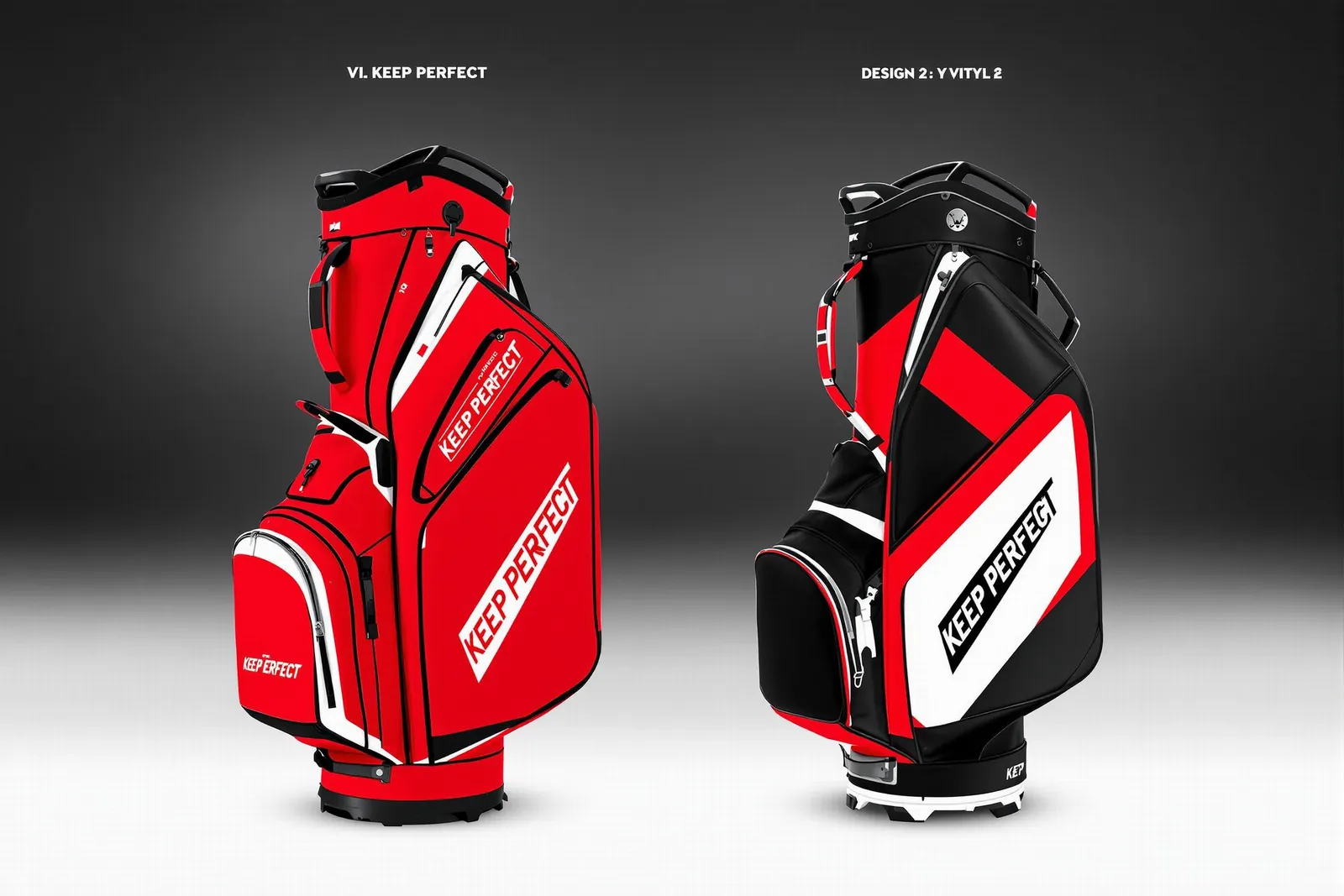
The most felt difference between a budget and a premium staff bag is the top. Basic staff bags use a 5-way or 6-way top that lets shafts cross and tangles your longest clubs. Premium builds use a 14-way full-length divider top: every divider runs the full depth of the bag, each club gets its own slot where applicable, and a dedicated putter well protects your most expensive club.
Full-length dividers stop grips catching and shafts rubbing, which protects graphite shafts from dings and keeps you from fishing for a club during a scramble. A mid spec with a 7-way or 8-way full-length top is a strong value compromise and is what many smart buyers choose. Our divider systems guide compares layouts head to head.
The panel itself also needs to be engineered for the branding job. We design the front panel with a slightly larger, flatter area than a retail bag so a sponsor or club mark has room to breathe, and we run the artwork at a verified finished size so it reads clearly. Getting the panel and the logo into a single approved drawing removes the single biggest source of rework in custom staff-bag orders, and it is the reason a good factory asks for a panel plan before a price.
Base and Hardware: Punished Daily, Decide Lifespan
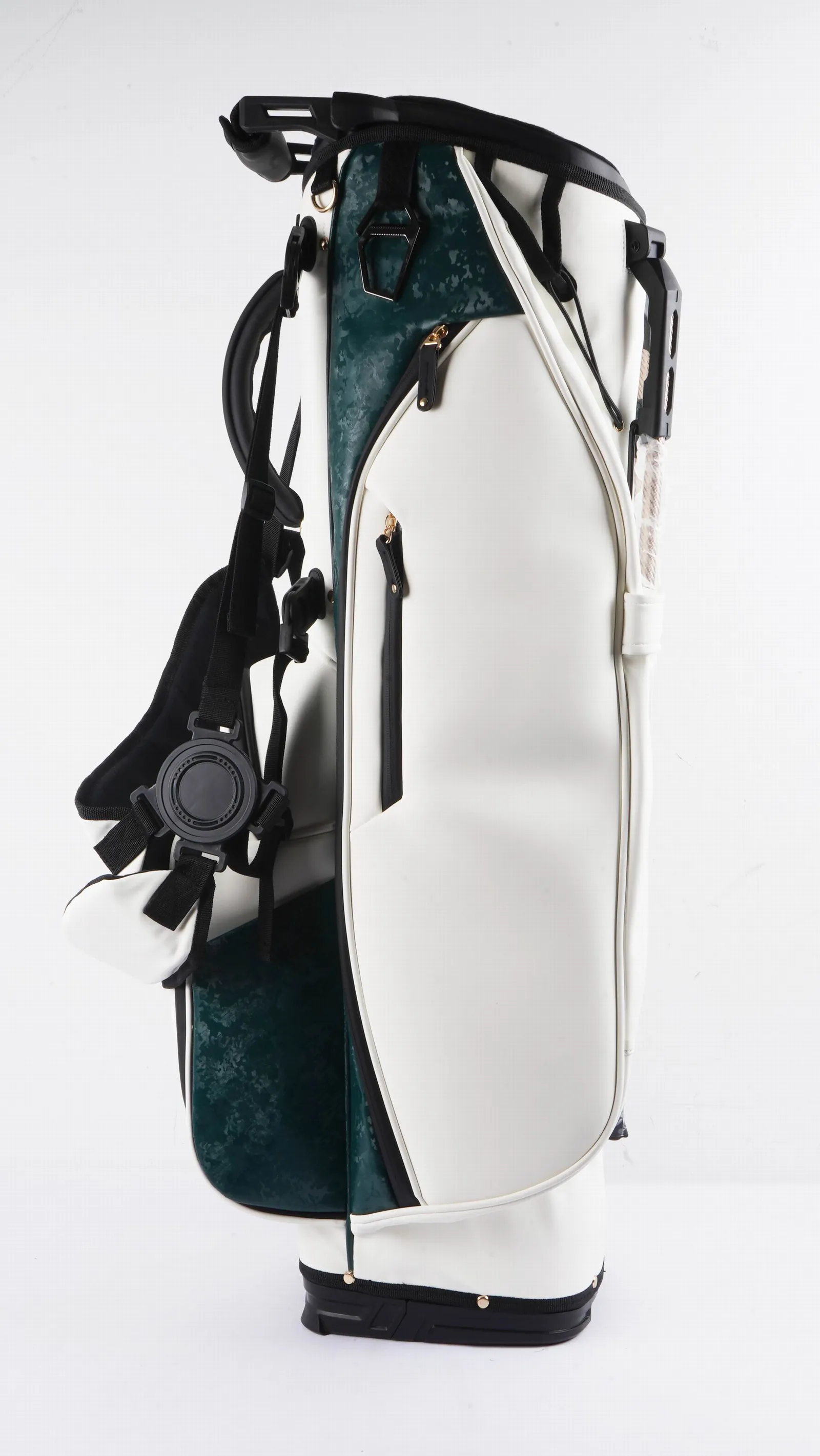
The base takes the worst abuse of any part of a staff bag. Budget bags use a soft, foam or fabric-double base that stands upright only when light and sags or tips under a full, wet load. Premium staff bags use a rigid plastic base pan with moulded feet, so the bag sits flat on wet cart floors, does not waterlog from the bottom, and does not tip toward the player when packed, which is the classic failure of budget staff bags.
Hardware is the second giveaway. Premium builds specify rust-resistant chunky zippers that survive sand and rain, reinforced D-rings and carabiner points, and strong pullers that are easy to grip with gloves. A budget zipper that jams mid-season costs more in frustration than the upcharge for a good one saved. The quality standards guide lists the hardware and base test points we use in-house.
Pockets and Compartments: Storage Density Differs
Both budget and premium staff bags carry many pockets; the real difference is construction and number of usable, dedicated compartments. Premium bags add a lined valuables pocket, a rangefinder pocket, a cooler or insulated pocket, a full-length apparel pocket, and a covered rain-hood stash, with smooth zippers that open one-handed from the cart.
Budget bags may simply stitch a ring of generic open pockets onto the shell, which is cheaper but wastes space and does not protect contents. For pros the placement is as important as the count — a rangefinder pocket on the hip you face from the cart beats two more generic pockets you cannot use. Our staff bag compartments guide explains the pocket layout pros actually ask for.
Quality Control: The Real Reason Prices Diverge
A premium price buys inspection depth, not just materials. A budget run may get one pass/fail check at final packing. A premium staff-bag run should get inspection for strap pull, base rigidity, divider alignment, zipper cycle counts, deco adhesion and colourfastness, and seam strength where the lower panels meet the base.
At QUANZHOU JUNYUAN BAGS every staff-bag lot is inspected against a written checklist, and we run independent SGS factory verification so buyers have third-party confirmation of production capability. This is the difference between a bag that lasts a season and one that lasts multiple seasons. The manufacturer selection guide lists the audit questions to ask about QC depth before you order.
Do You Actually Need a Premium Build?
Many buyers do not need a tour-spec staff bag. A club that wants a branded flag bag for the first tee, an academy that wants a matching-looking line for display, or a brand launching a price-point entry all do well with a well-made 600D mid spec. The premium build earns its price for daily-travel professional use: touring players, caddie squads, and coaches who pack the bag for matches weekly.
The disciplined move is to size the spec to the job, then choose on the two features you will actually feel — the divider top and the base — before spending on a higher fabric you may not need. The staff vs cart bag guide and bag types guide help you match a build to real usage.
When a buyer asks whether the premium tier is worth it, we give a plain answer based on the numbers. Compare the cost of a 600D budget bag replaced every season against a 1000D premium bag lasting several, and divide by the years of use; the premium bag usually wins the per-year comparison while also never embarrassing the wearer on a professional day. For a club, academy or player who will be seen, the durability of the top tier is a presentation investment as much as a product choice.
A Honest Price-Feature Comparison
The table below summarises the practical differences between the tiers so you can see where money actually moves. Figures are representative factory specifications and landed-price direction, not a quote.
Where the Money Goes in Each Tier
In a budget bag the majority of cost is raw material and basic labour. In a premium bag the same factory cost splits across heavier fabric, a more complex divider top, a moulded base, better hardware and hours of extra inspection. Because the manufacturing envelope is largely fixed, the premium premium goes to components and QC rather than to labour for labour's sake.
This is why shopping purely on the sticker under-prices a good premium build and over-prices a thin budget one. A defensible buying rule is: never pay a premium price for a budget-tier build, and never buy a budget tier expecting tour-grade durability anywhere but the colour. Putting the spec on paper before negotiating is the cleanest way to keep a quote honest.
Budget vs Luxury in Custom and Wholesale
When you order staff bags to your own brand, the budget-versus-premium choice is fully controllable on paper. Custom OEM and ODM programs let you fix the fabric, divider, base and deco narrate precisely, and the price follows the spec, not a brand name in a catalogue. This is the most useful form of the budget/premium question for a brand: you stop paying for a label and start paying for exactly the components you want.
QUANZHOU JUNYUAN BAGS runs OEM/ODM services and custom solutions that build staff bags to a documented spec, so a budget brand and a premium brand can both order from the same production base by fixing different components. Wholesale buyers can see how quantity changes unit cost in our wholesale section.
A useful habit is to keep a written spec sheet for each tier as a template. The sheet lists fabric, divider, base, hardware, pocket map and deco in one place, so a repeat order or a variant is a matter of resubmitting the sheet rather than re-negotiating. Factory-side, a documented spec is also what lets us quote accurately and hold quality; it protects the buyer from the common drift where a discount quote quietly swaps a 1000D fabric for 600D. A one-page spec is the cheapest insurance in the wholesale process.
Sourcing Standards and MOQ for Staff Bags
Custom staff bags follow the same OEM economics as other golf luggage: a standard MOQ of 200 pieces per design and colourway, with 100-piece test orders for new programs, sampling in 10-20 days and bulk production in 45-60 days. Because staff bags are large and deco-heavy, their unit cost sits above cart bags; the levers are divider count, fabric weight, base construction and decoration complexity.
QUANZHOU JUNYUAN BAGS operates 7 production lines with 126 sewing machines and 137 staff, supported by a main 4,950 m2 affiliated factory with a 200,000-piece monthly capacity, and we passed an independent SGS factory audit in March 2026. Test orders as low as 100 pieces let clubs and emerging tour programs validate a staff-bag build before committing to a full run.
The wholesale decision is also a negotiation one, and the cleanest lever is the consolidated spec. Because setup cost is real and is spread over a run, a buyer who has already fixed one design, one colourway and a simple deco is in the strongest position to ask for a better per-unit price on volume. The factory likes a clean, repeatable order as much as the buyer does, and that shared interest is what makes long-term wholesale relationships stable.
Caring for Any Staff Bag, Whatever Tier
Whichever tier you buy, a staff bag repays light care. Rinse the lower panels and base free of sand after a wet or dusty round, because sand is the top cause of zipper and seam failure. Air it open after rain, hang it dry when possible rather than laying it on wet concrete (which rots the base), and refresh any DWR treatment on the shell once a season.
Protect the dividers from warping by not over-packing past the bag's designed club count, and check the big top ring and strap bar-tacks periodically, since a heavy staff bag puts real stress on them. Our maintenance guide and staff bag storage guide cover the full routine.
Durability in daily use is also a habit. A bag that is loaded neatly, never exceeded past its club count and stored dry will outlast an identical one that is overpacked and left wet. For a professional or a club fleet the small discipline of emptying, airing and storing the bag loosely pays off in visibly longer life, and it is the part of the durability equation the buyer fully controls after the factory has done its part.
How to Decide: Budget vs Luxury, Fast
Ask three questions and the answer chooses itself. First, how often is the bag carried or moved — a promotional display bag barely moves, a tour player's bag moves daily. Second, how is it loaded — 14 clubs of spin through full-length dividers need a 7-way or better top regardless of tier. Third, in what weather — wet tracks and coastal clubs argue for a coated, water-resistant or waterproof shell and a rigid drainable base.
If you score the use case as a purely promotional or flag role, a budget build is the right buy. If any serious, repeated play is in the picture, step up at least to the mid spec with a better divider and base. A smart buyer fixes the components on paper, compares quotes on the spec rather than the sticker, and orders a 100-piece test first, which is exactly the briefing we give brands running through custom solutions.
Factory Verdict on the Budget vs Premium Question
The honest answer from the production floor is that budget and premium staff bags are different products solving different jobs, and the real difference is measurable in fabric, dividers, base, hardware and QC depth — not in brand perception. Buy the spec that matches how the bag will actually be used, and you will neither overpay for capability you never touch nor be disappointed by a bag asked to do a job it was not built for.
Since founding in 2014, QUANZHOU JUNYUAN BAGS has built staff bags at every tier for clubs, academies, tour programs and brands. Whether you need a starter bag to test a market or a tour-grade daily workhorse, reach us at contact, service@junyuanbags.com, or WhatsApp +86 17750020688.
Since 2014 QUANZHOU JUNYUAN BAGS has built staff and tour bags across 100+ countries for 200+ brands, running 7 production lines with 126 sewing machines and 137 staff in a main 4,950 m2 affiliated factory at a monthly capacity near 200,000 pieces; our founder has worked in the golf bag industry since 2004. Wholesale custom orders follow a standard MOQ of 200 per design and colourway (100-piece test orders), with sampling of 10-20 days and bulk of 45-60 days, and the facility passed independent SGS verification in March 2026. Reach us at service@junyuanbags.com or WhatsApp +86 17750020688 to source a staff bag programme.
| Attribute | Budget Staff Bag | Mid-Spec Staff Bag | Premium/Tour Spec |
|---|---|---|---|
| Face fabric | 300D-600D printed polyester | 600D-840D coated | 840D-1000D nylon/polyester |
| Divider top | 5-6 way | 7-8 way full-length | 14-way full-length + putter well |
| Base | Foam / fabric double | Foam-reinforced | Rigid moulded pan with feet |
| Hardware | Basic buckles and zips | Reinforced zips | Rust-resistant metal zips, D-rings |
| Pockets | Generic open pockets | More dedicated pockets | Lined valuables, rangefinder, cooler |
| QC / deco | Basic pass/fail | Written checklist | Full inspection + SGS verification |
| Typical use | Display / promo / flag | Club flag, coach, academy | Daily tour and professional travel |
Representative factory specifications. Real figures depend on order quantity, decoration and final component choices.
Looking for a Reliable Manufacturing Partner?
Whether you need a promotional flag bag or a tour-grade daily workhorse, our team can fix the spec on paper first so you pay for components, not a label. 100-piece test orders available, sampling in 10-20 days.
Request a Bulk Quote →Frequently Asked Questions
- What is the main difference between a budget and a luxury golf staff bag?
- The main difference is component and QC depth: budget bags use lighter fabric, simpler dividers, a foam base and basic hardware, while premium bags use dense fabric, full-length dividers, a rigid moulded base, better zippers and stricter inspection. These drive both the price and how long the bag lasts under daily professional use.
- Is a budget golf staff bag worth buying?
- Yes, if the bag is for display, promotional or flag use. A well-made budget bag is a fine value where it is not loaded and transported daily. For regular professional play, the divider and base of a budget build usually disappoint, so a mid spec is the better floor.
- Why are premium golf staff bags so much more expensive?
- Premium staff bags cost more because of denser fabric, a 14-way full-length divider system, a rigid moulded base, higher-grade rust-resistant hardware and hours of additional inspection for strap pull, dividers, zipper cycles and deco durability. These are real component and labour costs, not a label markup.
- Can I custom-build a staff bag to my own budget-performance balance?
- Yes. OEM/ODM staff bags let you fix the fabric, divider, base and hardware to any tier and marry them with your logo. That way a budget brand and a premium brand can order from the same factory and both pay only for the components they actually specify.
- What is the MOQ for custom staff bags?
- The standard MOQ is 200 pieces per design and colourway, with 100-piece test orders for new programs, sampling in 10-20 days and bulk production in 45-60 days.
- Do budget staff bags last as long as premium ones?
- Under identical heavy professional use, no. Budget builds use lighter fabrics and a softer base, which are the first places wear shows. A mid-to-premium spec with a reinforced base and better hardware typically lasts several seasons, which usually makes it cheaper per year than replacing a budget bag annually.
Looking for a Reliable Manufacturing Partner?
From budget flag staff bags to tour-grade daily workhorses, we build to a documented spec factory-direct. Test orders from 100 pieces, sampling 10-20 days, bulk in 45-60 days.
Request a Bulk Quote →