Common Mistakes When Choosing a Golf Cart Bag
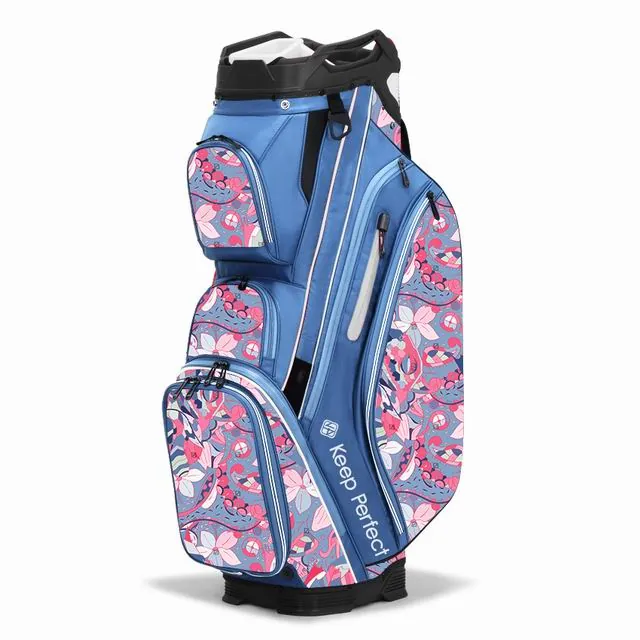
The single most important step when choosing a golf cart bag is to prioritize the divider system, cart lock-in base and reinforced handle over brand styling — because these three structural details cause more than 70% of the complaints we see rolled back from retailers each year. As an OEM factory (QUANZHOU JUNYUAN BAGS, founded 2014, founder in the trade since 2004) that has shipped cart bags for more than 200 brand partners across 100+ countries, we process returns and rework data that makes the cost of these mistakes measurable. This guide turns that factory-side data into a buyer's checklist so you avoid paying twice for a bag you replace, or worse, settling a warranty claim on a run of units that rocked on carts and scuffed club shafts.
Understanding mistakes before you order matters whether you are a golfer buying one bag, a retailer planning a wholesale range, or a brand developing a private-label cart bag. The stakes differ but the physics are identical: a cart bag rides strapped to a moving, vibrating cart for four to five hours a round, between 35 and 50 rounds a year, which means the base, the divider system and the handle take more cumulative stress than any other component. Get these wrong and no amount of premium fabric will save you.
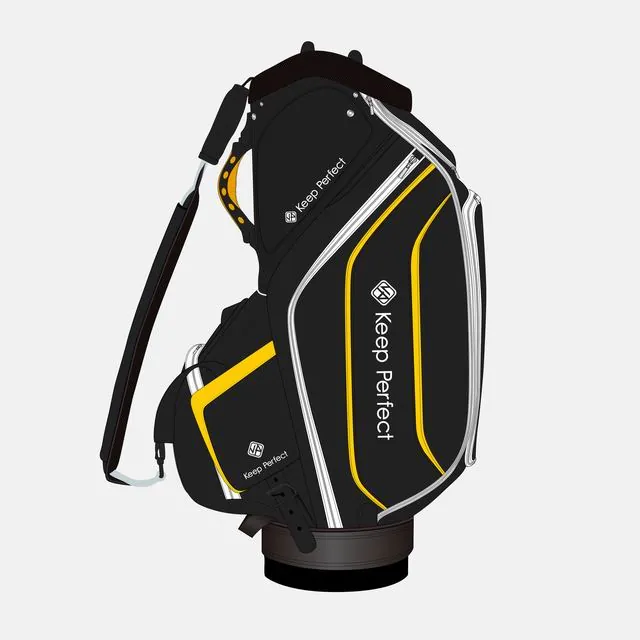
Let us first define what a golf cart bag actually is so the mistakes below have context. A cart bag is a club carrier engineered around the fact that it rides on a motorized cart or a push trolley rather than on a player's back. That single difference shapes everything about its design: it can and should be heavier and more feature-rich than a carry or stand bag, its center of gravity can sit lower, and it can carry a full 14-club set plus generous accessories without the weight penalty that would exhaust a walking golfer. Because it is not carried, the standard cart bag typically weighs between 1.7 and 2.5 kg and sacrifices shoulder-carry ergonomics for organization, durability and club protection. This is precisely why the sets of mistakes buyers make with cart bags differ from those made with stand bags or staff bags, and why the buying logic has to be its own checklist rather than recycled advice from other bag categories.
The market context also explains why these mistakes are so common. Cart bags are the most sold bag category in the golf equipment industry for riders, and they are one of the most customized product lines we produce. Buyers who step up from a stand bag often assume a bigger, heavier bag is automatically a better-protecting bag, so they buy on size and looks. Meanwhile B2B buyers — course managers outfitting rental fleets, resort buyers purchasing guest bags, corporate teams ordering tournament giveaways — frequently choose on unit price and delivery speed, not on structural longevity. Both profiles repeat the same errors, and both discover the cost only after the first season of real cart use. Reading this guide before you order is the cheapest insurance you will buy.
One more framing point is worth making before the checklist. The manufacturing side of this industry has consolidated around a set of repeatable, verifiable specifications for a durable cart bag, and the factories that ship to the US, the EU, Japan and Australia all hit a common structural core: a rigid molded base, a genuine full-length divider, a web-reinforced handle, anti-corrosion hardware and stress-stitched seams. When you understand that core, you can evaluate any product and any supplier on the same objective basis. QUANZHOU JUNYUAN BAGS has produced against this core for more than 200 brand partners across over 100 countries, so the specifications quoted in this article reflect volume production reality rather than aspirational marketing.
Mistake 1: Ignoring the Divider System
The divider system is the heart of any cart bag, yet it is the feature buyers most often skip past to check color and pocket count. A true full-length divider runs from the top ring down to the base, so each club travels in its own channel and cannot claw into a neighbouring shaft. A partial divider that stops about two thirds down the bag leaves the clubheads free to collide near the base, causing audible chatter on every bump and measurable shaft scuff over a season.
From a production standpoint, a genuine full-length 14-way divider typically adds 25-35% to the bag's internal structure cost compared with a 5-way partial divider. That is real money, which is why cheap cart bags cut this corner. Our recommendation is simple: if you can reach into any slot and touch the bottom of the bag along the divider wall, it is likely full-length; if your hand hits air before the base, it is partial. Always verify the 14 slots align with a full 14-club set, staying within the legal 14-club limit in the Rules of Golf. See our golf bag types guide for how cart bag dividers compare with stand-bag and staff-bag layouts.
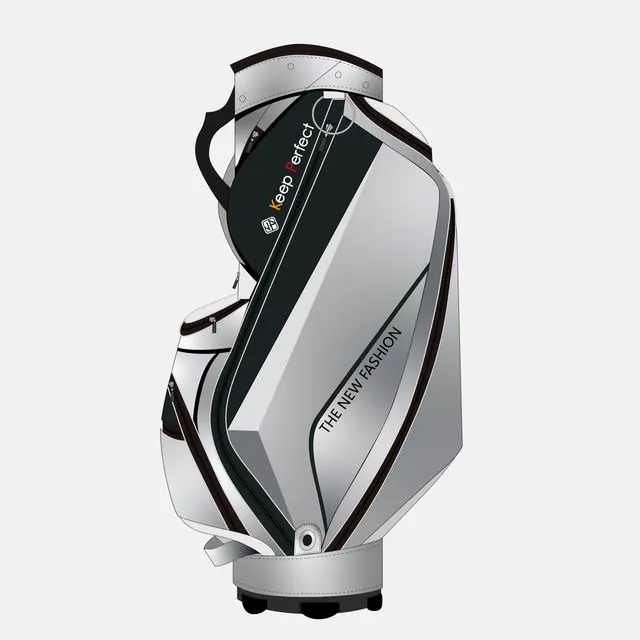
There is also a topological detail buyers frequently miss: whether the divider is full-length around the entire circumference or only partial. Some manufacturers build a full-length central spine with partial outer sections, which protects the middle clubs while leaving the outer slots open to collision. The only reliable test is to slide a club all the way down each of the 14 slots and watch whether its shaft path stays isolated from the adjacent slots all the way to the base. Combined with a padded shaft-protection collar near the top ring, a true full-length divider is the single most effective feature at eliminating the chatter and shuffle that tell you clubs are grinding against each other on every cart bump. For tournament-level players especially, consistent club position and zero chatter translate directly into fewer damaged shafts and faster club selection between shots.
Mistake 2: Choosing a Flat, Non-Molding Base
Cart bags are carried by carts, not by shoulders, so the base is the structural anchor. A flat-bottom bag with no molded grooves slips sideways on metal and plastic cart trays, especially on gradients or after several rounds loosen the straps. A proper cart-bag base has an injection-molded, rigid bottom with recessed channels that grip the cart tray and a slight upward lip at the front so the bag cannot creep forward during acceleration.
The fix in manufacturing is a densified, high-density polyethylene (HDPE) base plate laminated into the bottom, which we use on cart bag lines because it resists cracking under repeated vibration. When reviewing a sample, push the bag forward on a flat surface after loading it to 14 clubs: a good base will resist sliding; a bad one will glide with a loud plastic scrape.
Mistake 3: Buying by Weight Alone
A cart bag does not need to be feather-light because it is not carried, but buyers over-index on lightness and end up with a bag whose handle, base and top ring are under-reinforced. The correct target is roughly 1.7 to 2.5 kg (3.7 to 5.5 lb) for a standard 14-slot cart bag. Below that range you should ask what reinforcement was removed; above it you are carrying dead weight on the cart for no benefit.
Note a subtle point: while lightness is a legitimate product characteristic, it is not our manufacturing identity. We engineer balance and durability first. A well-balanced bag sits upright on the cart, does not list under a full set, and places the center of gravity low and close to the cart tray. For a deeper look at how weight and center of gravity affect a stable ride, read our golf bag quality standards guide.
Mistake 4: Under-Sizing Pockets for Cart Use
Because the bag sits on a cart rather than a shoulder, pocket capacity can be generous, and under-sizing is a real miss. A functional cart bag should offer a dedicated putter well, a waterproof valuables pocket, a cooler sleeve that holds at least four cans, and a clothing pocket large enough for a full change set or a light rain jacket balled up. Count the pockets before you count the colors.
Equally important is pocket accessibility: a cart bag mounted on the cart is only as useful as the pockets a player can reach without unbuckling. Pockets on the side that faces the golfer and a rear apparel pocket that opens toward the back of the cart work best. Verify this on the actual cart you use by loading the bag and sitting in the seat, not by admiring the bag on a shelf.
Mistake 5: Missing the Handle and Strap Placement
Cart bags are lifted on and off carts, into trunks, and onto trolleys dozens of times each season, so a padded, reinforced top handle is non-negotiable. A handle stitched only through the outer fabric with no internal webbing will tear under the full weight of 14 clubs. In manufacturing we sew the main handle strap through a reinforced nylon web that is anchored to the top ring structure, distributing load rather than concentrating it on a single seam.
Also check the cart strap pass-through. The best cart bags provide a dedicated central slot or integrated strap guides so the ratchet straps thread cleanly without crumpling and deforming a ball pocket or the divider ring. A bag that requires you to crush its own structure to strap it down is a bag that will deform within a season.
The 12-Mistake Quick Checklist
Full-length 14-way dividers; molded rigid lock-in base; 1.7-2.5 kg balanced weight; minimum 6-8 functional pockets with a putter well; reinforced padded handle; clean cart-strap pass-through; waterproof valuables pocket; anti-corrosion zippers; 840D-1680D fabric; reinforced stitching through webbing; a rain hood you actually keep; and a verified cart fit before purchase.
Mistake 6: Overlooking Water Protection in Pocket Details
Rain and dew are realities on most courses, so a cart bag should have at least a seam-sealed valuables pocket with a water-resistant zipper and a rain hood that stows in its own pocket. Split-rail or coil zippers with taped backing survive far longer than cheap metal zippers, which corrode after repeated wet rounds. In production we also spec a TPU coating on the base and lower side panels to protect against wet cart trays and damp grass.
For a full comparison of waterproofing approaches and ratings, our golf bag materials guide breaks down coated nylons, bonded seams and DWR treatments.
Mistake 7: Judging Durability by Fabric Weight Alone
Heavy fabric makes a bag feel premium but does not guarantee durability. The real durability drivers are seam construction, strap anchoring, base rigidity and zipper quality. Two bags in the same 840D nylon can differ enormously depending on whether seams are double-needle lockstitch through webbing or single-pass through surface only. When you inspect a sample, pull on every seam and watch how the fabric moves at stress points like the handle base and top ring seam.
Avoid claims you cannot verify. When a brand markets fabric by denier number alone, ask for the stitch gauge, the zipper supplier and the base plate thickness. Our production team tracks these numbers for every cart bag run across our manufacturing lines precisely so that "durable" is a measured spec, not a marketing word.
Mistake 8: Assuming One Cart Bag Fits Every Cart
Cart trays come in a range of widths, and a bag that is too wide for its tray will overhang, interfere with the steering column, or pinch straps. Standard cart bags between roughly 33 to 37 cm (13-15 in) in diameter fit most two-wheel and four-wheel trolleys, but electric trolleys and golf-cart mounted models have published width limits. Always cross-check the bag's base footprint against your cart's tray spec before buying or, for OEM runs, before tooling.
Mistake 9: Buying on Color Instead of Purpose
Design sells, but it does not protect clubs. A bag with six vibrant pockets and no putter well will irritate its owner every single round. Define your primary use first — tournament cart play, casual resort rounds, corporate sponsorship, or coaching — then let color serve that purpose. For procurement teams, matching the bag's pocket matrix to the intended user keeps redemption and return rates low, which is why our brands standardize a spec sheet before sampling.
Mistake 10: Skipping the Sample and Fit Test
The most expensive mistake of all is ordering bulk without a physical verification stage. Sampling exists so your team can load the bag, mount it on a representative cart, hit clubs for two or three rounds, and confirm the dividers, base and handle behave as designed. Skip this and you take the risk that is hardest to fix after tooling: a structural design that is wrong at the root.
Our standard sampling window is 10-20 days, and bulk production completes in 45-60 days, which gives you a realistic timeline to include a full evaluation phase. With typical orders, partner brands use this window to test on both electric carts and push trolleys. For the end-to-end flow from first contact to container, see our OEM/ODM process guide.
Mistake 11: Chasing the Cheapest Unit Price Without Total Cost
Unit price is not total cost. A marginally cheaper cart bag that returns at a 3% rate instead of a 0.5% rate erases its price advantage in freight, handling and unhappy customers. When comparing suppliers, compare the full cost of a good unit: material spec, reinforcement, zipper grade, and the factory's quality-control stages. Measure returns, not just price per piece.
A useful discipline is to build a "cost of a good unit" model before you shop. Start with the quoted ex-factory price, then add the freight and insurance per unit, the tariff and compliance handling, the anticipated retest, rework or return cost driven by the defect rate, and the administrative cost of managing claims. When you run that model against two suppliers, the cheaper-looking quote frequently loses once a realistic return allowance is applied. This is why most of our long-term brand partners negotiate on quality and lead-time reliability rather than grinding the unit price alone; they have learned that a stable 45-60 day bulk production window with a 10-20 day sampling phase is worth more than a short-notice quote that cannot hold tolerances. If you are a first-time buyer, the wholesale pricing guide explains how MOQ scales, how sampling costs are recovered on first orders, and how to compare quotes that arrive in different currencies and Incoterms.
Mistake 12: Choosing a Factory Without Verified Capability
Finally, choose the factory before you choose the bag. A partner with a 4,950 m² main facility plus a dedicated affiliated factory, 7 production lines, 126 sewing machines and 137 staff, producing about 200,000 golf bags a month, has the machinery and team to hold tolerances across a full cart-bag run. Independent third-party audits matter: QUANZHOU JUNYUAN BAGS passed an SGS factory audit in March 2026, and we recommend every buyer verify their supplier with an independent audit or site visit rather than trusting brochures.
| Spec/Feature | What to Look For | Why It Matters |
|---|---|---|
| Divider system | Genuine full-length 14-way | Prevents club chatter and grip tangling |
| Base | Molded rigid HDPE plate | Locks into cart tray, stops sliding |
| Weight | 1.7-2.5 kg | Balances strength and cart load |
| Fabric | 840D-1680D nylon/polyester | Abrasion and weather resistance |
| Handle | Web-reinforced padded | Survives repeated lifting of 14 clubs |
| Water protection | Seam-sealed pocket + TPU base | Protects valuables in rain and dew |
| Cart fit | 33-37 cm base footprint | Fits standard trolleys and cart trays |
How a Reliable Factory Avoids These Mistakes for You
QUANZHOU JUNYUAN BAGS was founded in 2014 and our founder entered the golf bag trade in 2004, giving us two decades of accumulated failure data on exactly these 12 mistakes. That history is why our cart bag runs standardize on full-length dividers, molded bases and stress-stitched handles before a single meter of fabric is cut. Our monthly output of about 200,000 units across our main 4,950 m² facility and its affiliated factory, powered by 7 production lines and 126 sewing machines run by 137 workers, means we repeat these specifications at scale and, critically, we audit them: the third-party SGS factory audit we passed in March 2026 verified the process controls behind the spec.
For a brand scrambling to avoid the returns that cost margin, the practical shortcut is to define a locked spec sheet covering dividers, base, handle, zippers, fabric and waterproofing, then hand that sheet to our team for a quoting and sampling cycle. You supply the target market and price point; we supply the structural honesty that keeps units out of the returns pile.
Frequently Asked Questions
- What is the most common mistake people make when choosing a golf cart bag?
- Ignoring the divider system and lock-in base. These structural choices drive most club-chatter, grip-tangle and sliding complaints on carts.
- Should a golf cart bag be heavy or light?
- Moderate: roughly 1.7 to 2.5 kg. Balance and base rigidity matter more than raw weight for a bag that rides a cart.
- How many clubs should a golf cart bag hold?
- 14 clubs, the legal limit under the Rules of Golf, ideally in a full-length 14-way divider layout.
- Why does my golf bag keep sliding on the cart?
- A flat, non-rigid base lacks the molded grooves that lock into cart straps. A rigid molded base plate fixes it.
- What materials are best for a durable golf cart bag?
- 840D-1680D nylon or reinforced polyester with TPU coatings, densified foam, anti-corrosion zippers and web-reinforced stitching.
- How can I buy a custom golf cart bag in bulk?
- Contact a verified OEM factory. QUANZHOU JUNYUAN BAGS: MOQ 200 pcs (test order 100 pcs), sampling 10-20 days, bulk 45-60 days. Email service@junyuanbags.com.
Sources
- USGA – The Rules of Golf (14-club limit and equipment rules)
- Golf Digest – Golf Bag and Equipment Buying Guidance
- MyGolfSpy – Independent Golf Equipment Testing and Buyer Data
- Golf Monthly – Golf Bag Reviews and Product Comparisons
Content director: QUANZHOU JUNYUAN BAGS. For OEM and ODM cart bag inquiries, contact service@junyuanbags.com or +86 17750020688.