Complete Guide to Custom Golf Bag OEM and ODM Services
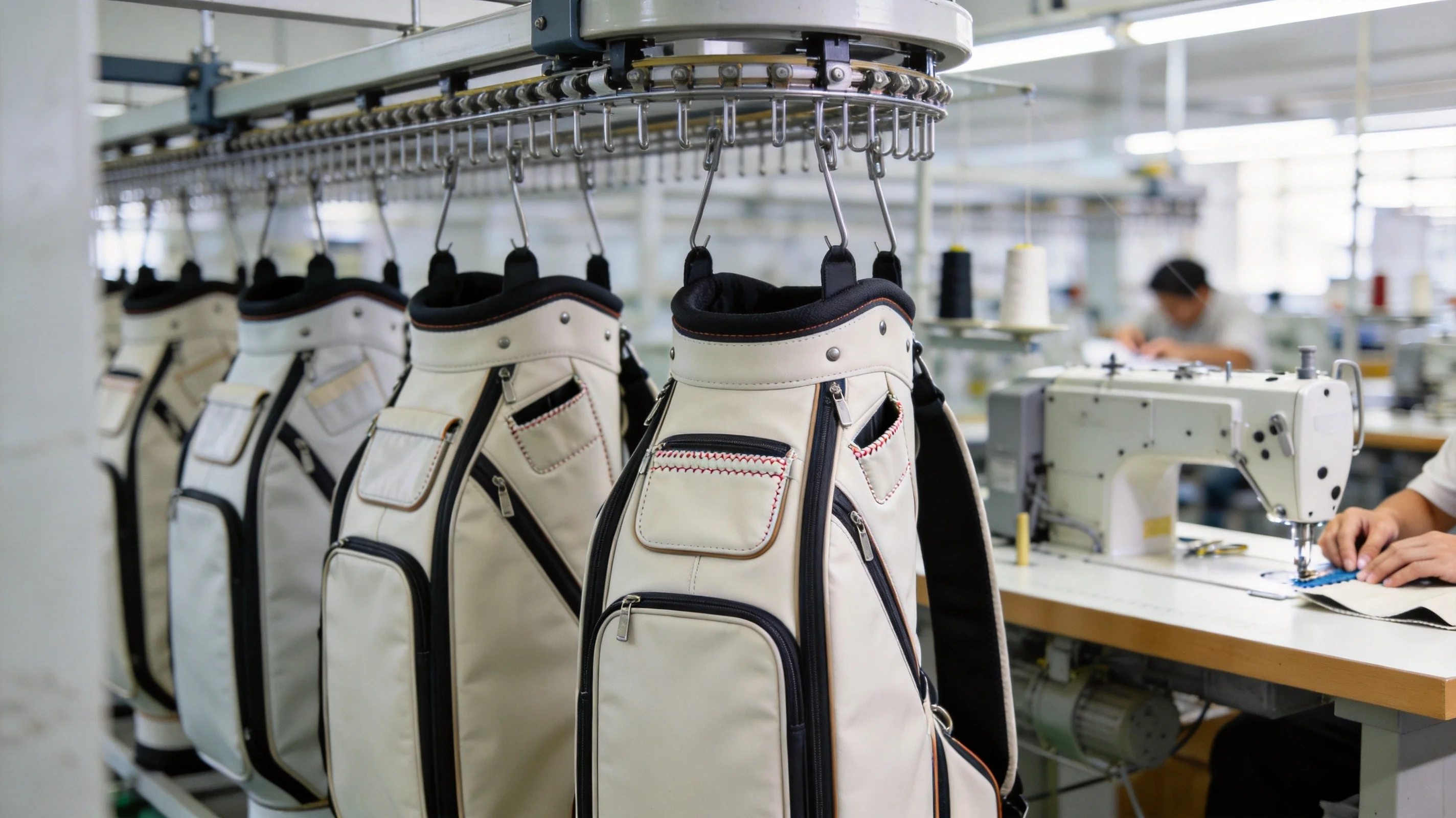
The fastest, lowest-risk way to launch a custom golf bag today is an ODM engagement built around a proven base design, with a standard 200-piece MOQ, a 100-piece test order for new markets, 10-20 day sampling and 45-60 day bulk production, produced by a factory that has served 200+ brands across 100+ countries. This guide breaks down the entire OEM/ODM journey from first enquiry to container shipment, written from the factory floor at QUANZHOU JUNYUAN BAGS.
OEM vs. ODM: Choosing the Right Model
The first decision is which service model fits you. OEM (Original Equipment Manufacturing) means you bring the design, patterns and materials; the factory executes your specification with tight control over every variable. This suits established brands protecting a distinctive identity. ODM (Original Design Manufacturing) means the factory develops and owns the base design, and you adapt it with your colours, logos, trim and options. This suits new entrants, clubs and retailers who want speed and lower risk without a design department.
Most first-time buyers start with ODM because the base design is already tested for production soundness, defect risk and cost. It is a far safer bridge into custom manufacturing than inventing a bag from scratch. As your brand matures, you can migrate to full OEM control. We detail the trade-offs in our OEM/ODM process guide.
The Standard Production Timeline
Time is the resource brands underestimate most. A realistic end-to-end calendar starts with a 10-20 day sampling window for your first prototype round, followed by revisions that usually add a week, then 45-60 days of bulk production after sample sign-off. Load, freight and port handling add another 10-25 days depending on destination. Plan a minimum of 70-90 days from kickoff to your door.
| Stage | Typical Duration | Key Deliverable |
|---|---|---|
| Design & quotation | 3-7 days | Spec + costed quote |
| Sampling | 10-20 days | Approved sample |
| Bulk production | 45-60 days | Finished goods |
| QC & inspection | 3-5 days | Inspection report |
| Freight & delivery | 10-25 days | Goods landed |
Buffer is everything. Seasonal launches and promotional deadlines fail when brands treat the fastest theoretical timeline as the plan. Adding a 15% contingency saves far more pain than it costs.
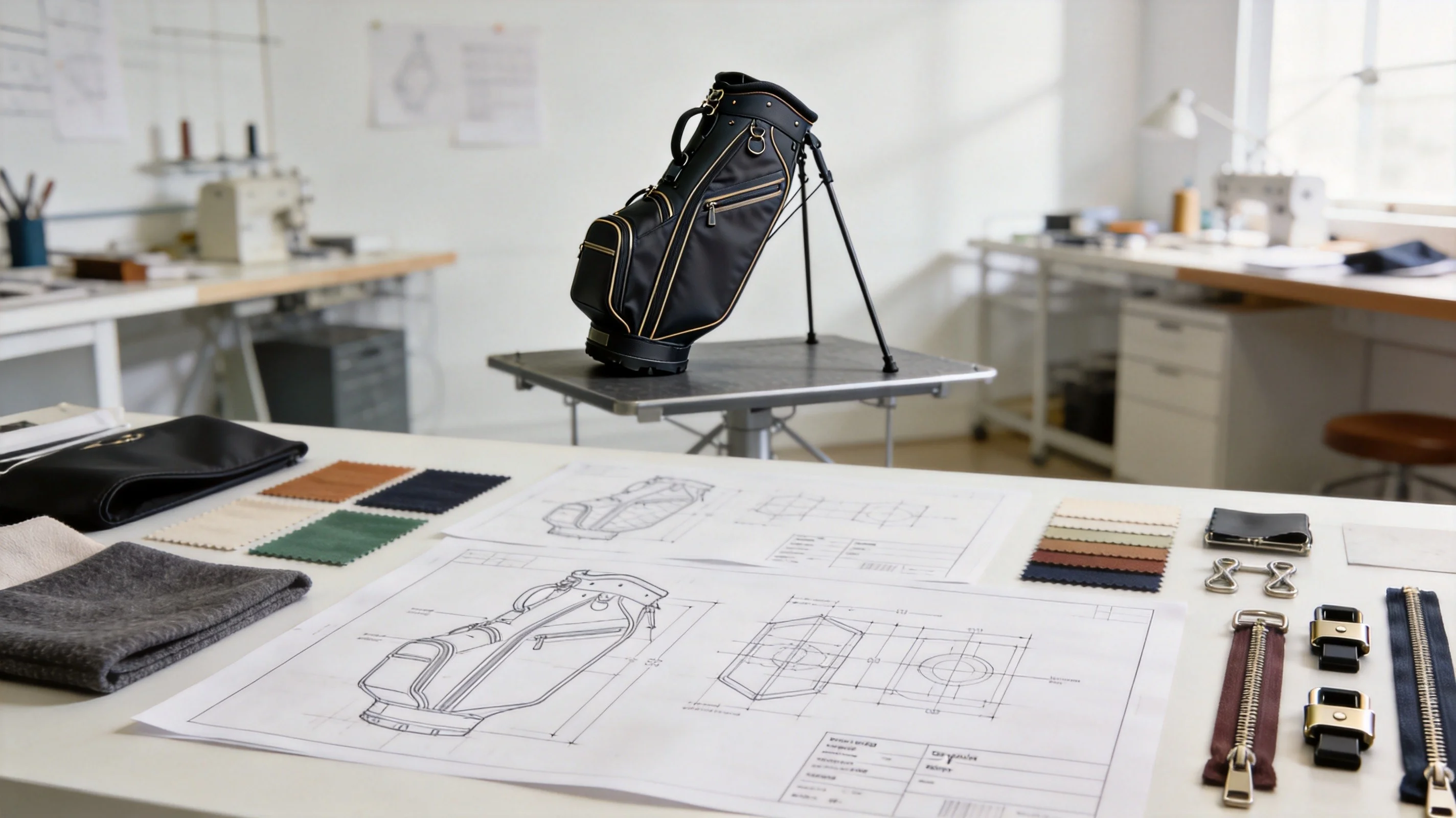
Minimum Order Quantities and Cost Levers
MOQ is the number that defines whether the business model works. Our standard MOQ is 200 pieces per design, with a 100-piece test order available to validate a new market before deep commitment. For each extra design, colourway or pocket variation you add an MOQ, so consolidating variants is the fastest way to keep unit cost down.
Unit price is driven by materials, construction complexity, decoration (embroidery vs. printing), and order size. High-volume orders spread fixed costs like pattern cutting and machine setup, sharply lowering per-unit price. When your projections are uncertain, start at low volume to test sell-through, then negotiate quantity breaks as demand proves out. Our wholesale pricing guide models this trade-off with real numbers.
The Sampling Phase: Getting It Right
The sample is where brands either save a full production cycle or waste one. Define the spec completely before sampling: exact dimensions, pocket layout, divider count, material weights, zipper type, colour references (Pantone), decoration placement and packaging. Missing items cost you revision rounds and 3-7 day delays each.
Request two kinds of feedback on the sample: aesthetic review by your design team and physical inspection by whoever handles quality. Check seam strength, strap anchoring, base rigidity, zipper glide and decorative workmanship. A well-inspected sample becomes your production benchmark — the factory matches the bulk run to it. Our quality standards guide lists the exact checks to run.
Looking for a Reliable Manufacturing Partner?
Whether you need custom stand bags, cart bags, travel covers or waterproof lines, we help you bring a tested base design to market with factory-direct pricing. Audit-verified and export-ready.
Request a Bulk Quote →Materials, Decoration and Personalisation
Materials determine both performance and price. Premium nylon and polyester weights are the workhorses, PU/TPU laminates add waterproofing, and recycled fabrics answer growing buyer demand. Decoration ties it together: embroidery is the most durable and premium option for logos, while screen and dye-sublimation printing allows more colour complexity at lower cost. Zippers, hardware, piping and trims should be spec'd from the start rather than left to chance.
Because decoration is where most quality issues surface, factories run tight inspection on logo placement, thread tension and colour matching. For a walkthrough of the full personalisation toolbox, see our guide to unique golf bag designs.
Quality Control and Factory Audits
Trust no factory purely on promises. Established suppliers hold certifications such as ISO 9001:2015 for quality management and BSCI for social compliance, and submit to independent audits. Ours passed SGS and Alibaba verification in March 2026. Always reserve the right to third-party pre-shipment inspection on your batch, and request inspection reports before release.
A defensible QC protocol runs in-line checks at cutting, sewing and finishing, plus a final random-sample inspection before packing. This is the difference between a clean container and a returns problem. Insist on documenting where and how inspections happen, not just that they do.
Certifications, Compliance and Import
Custom golf bags destined for global markets face customs, labour and material-compliance scrutiny. Confirm your supplier holds audited social-compliance status, that materials meet any regional restrictions (for example REACH in the EU), and that packaging labels comply with destination-market rules. Documentation — commercial invoices, packing lists, and origin certificates — must be clean to avoid port delays.
For US importers specifically, our import guide for the US market covers the process and documentation step by step.
Building a Long-Term Partnership
The most profitable relationships are repeat ones. A supplier that knows your brand's quality bar, colours and packaging improves with every order, cutting quoting lead time and defect rate. Invest in clear communication, pay on agreed terms, and share your sales data so capacity and scheduling align. Good factories prioritise predictable partners when seasonal demand spikes.
Treat the supplier as an extension of your operations rather than a one-off vendor. The compounding benefit of a stable, quality-aligned factory partnership is margin you cannot get from switching suppliers every season. Our manufacturer selection guide helps you pick a partner built for the long run.
Common Pitfalls and How to Avoid Them
One recurring mistake is requesting a full custom design before the production partner has even seen a basic sample of the intended materials and construction. The most reliable path is to lock the base materials, structure and finish first, confirm the sample, and only then move into bespoke pockets, dividers and branding. This ordering keeps the approval loop short, avoids expensive reworking, and gives both sides a stable reference point to measure every change against. Suppliers who work this way tend to quote more honestly because they are quoting against something concrete rather than a conceptual sketch.
Five mistakes account for most failed custom projects: skipping the physical sample review, agreeing to vague MOQ and pricing terms, choosing a factory purely on price, failing to book seasonal capacity early, and neglecting third-party inspection. Each is avoidable with a written spec, a staged approval process and honest scheduling.
Ask hard questions early: who owns the design files, what happens if a batch is defective, and how are revisions priced. Written answers prevent expensive ambiguity when problems arise. Preparation at the front end is the cheapest insurance in the entire project.
Custom golf bag OEM and ODM is a structured, predicable path when you pick the right model, respect the timeline, consolidate MOQ, and hold your supplier to documented quality. Start with ODM on a proven base, run a clean sample, use test orders for new markets, and build a partnership founded on transparent QC. Done well, a private-label golf bag line becomes a reliable, repeatable margin engine.
A custom golf bag begins long before the first stitch as a structured sequence of development steps that turn your idea into a manufacturable, tested product. In a typical OEM programme, the flow runs through requirement briefing, technical review, material selection, sample building, client approval, and then production. Getting this process right is where the quality of the final product is decided, so it pays to understand exactly how a serious factory walks you through it.
The development cycle usually starts with a clear brief of your target market, price point, club configuration and must-have features. From there the factory's design and engineering team translates the brief into a sample, working through materials, hardware, pocket layouts and construction details. A competent developer will flag cost and durability trade-offs at this stage rather than springing them on you in production. Expect a sample turn-around on the order of ten to twenty working days for the first version, with revisions time-boxed against your deadline so the programme never drifts.
Approval of the sample is the single most important gate in the entire project. Do not rush past it. Physically inspect the sample against your specification point by point: club fit, zip operation, pocket layout, strap anchoring, base rigidity and any branding reproduction. Confirm tolerances and finishes you care about. Because the sample is the factory's promise of what the production run will deliver, a rigorous sample approval is the cheapest quality insurance in the whole process. For a detailed run-through of how the OEM/ODM workflow is structured at every step, our OEM/ODM process guide is the definitive reference.
Intellectual Property and Design Protection
When you bring original designs or brand artwork to a manufacturer, protecting that intellectual property is a legitimate, practical concern, and a reputable partner takes it seriously. In practice this is handled through contractual terms and disciplined internal controls. Ask your supplier to confirm confidentiality provisions, exclusivity of your tooling and artwork, and restrictions on reproducing your designs for other clients. A proper factory will have established practices for keeping a client's IP separate.
Beyond contracts, protect yourself through sensible practice: share sensitive design files on a need-to-know basis, keep your distinctive branding and artwork under your control, and agree in writing on how tooling and moulds are stored and whether they remain exclusively yours. For custom golf bags carrying your own branding, these measures ensure the bag you design stays your product in the market, not a version your factory resells to a competitor. The same protective mindset applies whether you are ordering two hundred units or two thousand.
Quality Assurance From Sample to Shipment
Quality control is not a single check at the end of production; it is a chain of inspections that runs through the process. A disciplined factory verifies incoming materials against specification, carries out in-process checks on sewing and assembly, inspects finished bags against the approved sample, and pre-shipment checks a representative batch before anything is packed. Understanding where these checks sit lets you ask the right questions and set the right acceptance expectations.
For a buyer, the practical tools are the approved sample, a written specification, and an agreed inspection standard. Third-party inspection against that standard is common for larger or first-time orders, and many factories support it readily. Our quality standards guide explains the concrete criteria worth defining for a golf bag — from stitch density to zip pull strength to base rigidity — so you and your supplier are agreeing on the same standard from the outset rather than discovering a mismatch at inspection.
Sources
Minimum order quantities are not an arbitrary hurdle; they reflect the fixed costs of setting up a bespoke programme. Tooling, sampling, cutting patterns, marketing artwork and machine setup all carry a fixed cost that is spread across the order quantity. That is why a standard custom-golf-bag MOQ of around two hundred units, with smaller test and sample orders available in the tens, balances cost efficiency with accessibility for smaller brands. Understanding this logic helps you plan quantities that actually make economic sense rather than simply cutting an order to the minimum and absorbing per-unit penalty.
Unit price is driven by the same cost stack that determines any bag's price: materials, manufacturing complexity, features, decoration and volume. A bag with a complicated pocket layout, premium hardware and extensive branding costs more per unit than a simpler build, and a larger order pulls the per-unit price down as fixed costs are amortised. For a practical breakdown of every cost component and how to model your own margin, our wholesale pricing guide walks you through the entire cost structure line by line.
Manufacturing Capacity and Production Timelines
When you are planning a custom order, you need to know the factory you choose can actually deliver on your schedule. Capacity matters as much as capability: the number of production lines, the equipment on the floor and the size of the workforce all set an upper bound on what a supplier can realistically ship each month. A factory with a meaningful monthly capacity measured in hundreds of thousands of units has the headroom to take on a new custom programme without compromising the timelines of existing clients.
In practical terms, a dedicated sampling studio that can produce product-brief samples quickly, alongside strong production lines, is the difference between a supplier that moves fast and one that can only promise. Realistic lead times for a golf bag programme land in the order of roughly ten to twenty working days of sampling against next to forty-five to sixty days for a full production run, depending on complexity and order size. Building those lead times into your own planning — and confirming them in writing — prevents the surprise of a missed launch window. Our process guide and the materials guide cover both capacity and material selection in depth.
Communication, Samples and the Approval Loop
One of the most common questions from first-time buyers is how involved they need to be during development, and the honest answer is: as involved as the uniqueness of the product demands. For a colour-and-logo ODM order, the approval touchpoints are few and quick. For a fully bespoke OEM design, expect to engage at every gate — materials, pattern, ergonomics, branding and final finish. Either way, the investment of a few focused hours at each approval step eliminates weeks of confusion later, because a decision made early is always cheaper than a correction made after production begins.
Keep your approval documentation tidy. Numbered revisions, dated approvals and a single reference sample that everyone treats as the source of truth are the difference between a programme that runs cleanly across many orders and one that drifts into small, accumulating inconsistencies. A professional partner will support this discipline rather than resist it, because their margin depends on repeatable accuracy just as much as yours does.
The single most reliable predictor of a smooth custom programme is honest, structured communication between buyer and factory. The practical mechanics are standard: a clear written specification, an approved physical sample, a frozen colourway and a documented revision history. What separates a poor relationship from a great one is whether both sides treat the specification as a living contract that is updated, agreed and versioned rather than remembered.
Expect to cycle through sample revisions on features you care about, and expect the factory to push back with facts when a request is difficult or costly. That candour is a sign of competence, not a lack of ability. A factory that accepts every change without challenge may simply absorb risk into your price or delivery, so value the partner who flags trade-offs honestly and helps you make the best call for your market and margin.
Importing, Logistics and Landed Cost
For brands sourcing internationally, the bag does not stop being your concern at the factory gate. Freight, customs duty and importing logistics all add to the true cost of a custom programme, and getting them wrong erodes the margin that a well-negotiated factory price created. The professional approach is to model total landed cost — unit price, freight, duty, insurance and any inspection fees — before committing, and to confirm the shipping terms, or incoterm, clearly in your contract so there is no ambiguity about who carries risk at each stage.
Regulatory documentation for golf bags is straightforward compared with many products, but the process still rewards preparation: correct commercial invoices, packing lists, and certificates where the destination market requires them. Working with a factory that ships routinely to your region smooths this considerably, because the documentation patterns are already proven. For a complete walkthrough of importing custom golf bags into a major market such as the United States, see our dedicated US import guide.
Conclusion
OEM and ODM custom golf bag programmes are the bridge between a good idea and a product on shelves, and they succeed when the fundamentals are in place: a clear choice between OEM control and ODM speed, a rigorous sample-approval gate, disciplined quality assurance throughout, sensible MOQ and cost modelling, protected IP, honest communication and a modelled landed cost. Work through those elements with a capable partner and you get the outcome every buyer wants — a quality bag, delivered on schedule, that carries your brand profitably. Whether you are launching a first product line or scaling a proven one, the process is repeatable, and each order becomes faster than the last, and the value compounds as your specification, samples and documentation carry forward automatically.
In short, a well-run custom programme removes the guesswork from sourcing: the specification, sample, quality plan and cost model are all agreed in advance, so both parties are working from the same script. That clarity is what lets experienced buyers order and repeat year after year with confidence.
Frequently Asked Questions
- What is the difference between OEM and ODM golf bag services?
- OEM means you supply the design and we execute it. ODM means we develop the base design and you adapt it. ODM is faster and lower-risk for new entrants.
- What is the minimum order quantity for custom golf bags?
- Standard MOQ is 200 pieces per design, with 100-piece test orders for trial markets.
- How long does custom golf bag production take?
- Sampling takes 10-20 days and bulk production 45-60 days after sample approval, before freight.
- Can I reuse another brand's bag design?
- We will not copy protected trademarks or patented designs, but we build structurally similar bags with your own branding and adapt features legally via ODM.
- How do I verify a factory is reliable?
- Request audits (SGS / Alibaba), check ISO 9001 and BSCI certification, ask for references, and book third-party pre-shipment inspection.