Durability Standards for Tournament-Grade Golf Staff Bags
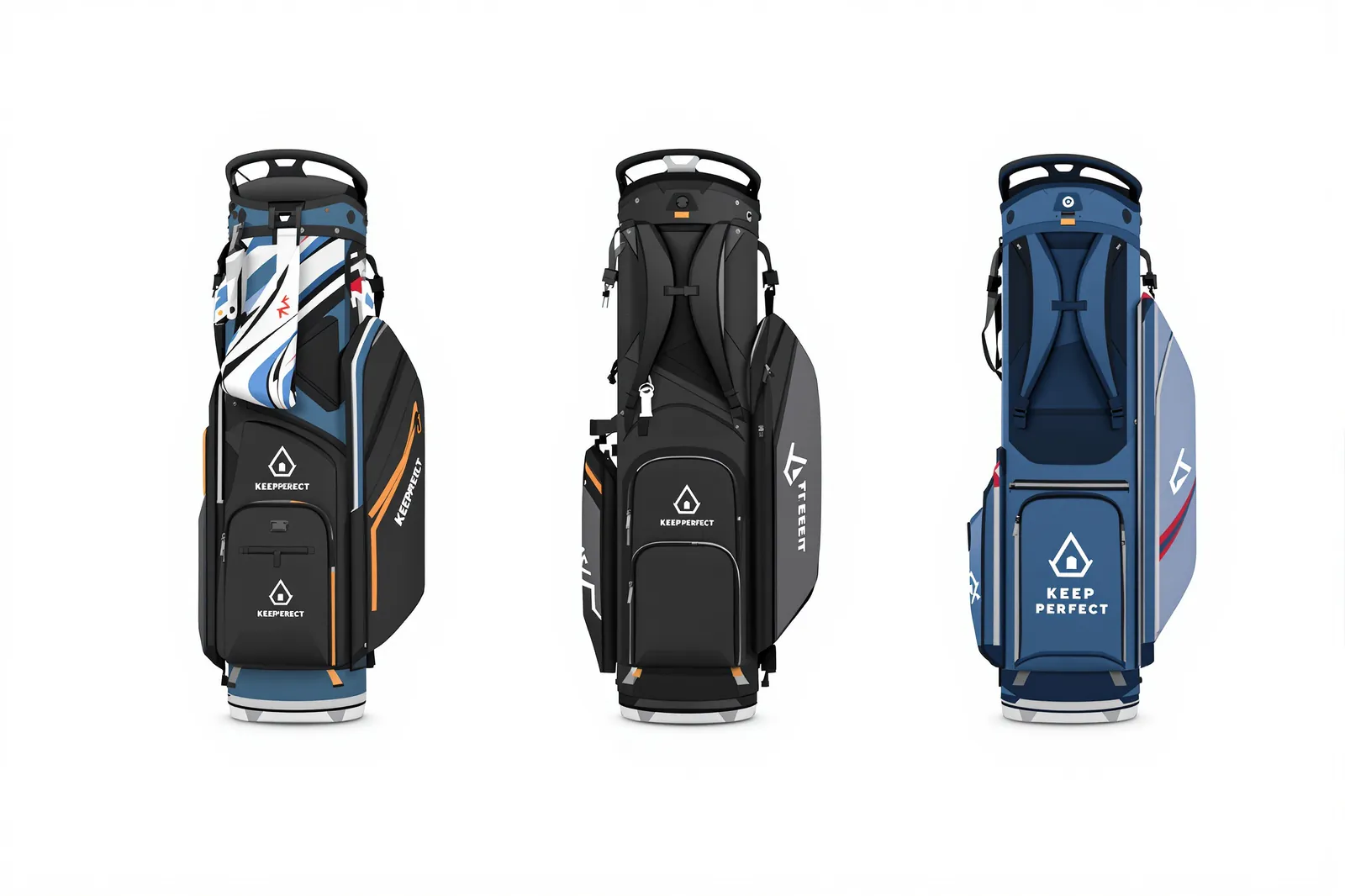
A tournament-grade golf staff bag must resist 40,000+ zipper cycles, 200+ kg base compression without collapse, 1,000+ N strap/pull-out, full-length dividers that hold alignment for a season, and fabric with 800-2,000 N tear/burst strength, all verified under a written QC protocol, not an on-paper claim. Tournament-grade is a component and test standard — dense fabric, a rigid moulded base, rust-resistant hardware, reinforced seams and strict inspection for divider alignment, zipper fatigue and deco adhesion. This guide, written from the production floor of QUANZHOU JUNYUAN BAGS (founded 2014, 200+ brands, 100+ countries), sets out the measurable durability standards a staff bag must meet.
What "Tournament-Grade" Ought to Mean
In the golf bag industry, tournament-grade is not a certification you can buy; it is an engineering target defined by a set of testable parameters: how the fabric performs, how the divider top holds its shape under load, how the base survives downforce and water, how zippers endure repeated cycling, how seams and bar-tacks resist pull, and how the branding survives sun, rain and abrasion. A bag that meets these on paper but is never tested is not tournament-grade — it is a claim.
The reason the distinction matters is that a tournament bag is used weekly, loaded to capacity, flown, rained on and dragged onto carts. Failures are annoying in retail and embarrassing at a tournament, where a collapsed base or a torn strap happens in front of an audience. This guide explains the standards in testable terms so buyers can ask for evidence rather than adjectives.
Fabric: The First Line of Defense
The shell fabric is the largest part of the bag and the first thing to fail if under-specified. Tournament-grade staff bags use dense woven 840D-1000D nylon or polyester, often with a PU or waterproof coating. In test terms this translates to high tear strength and burst strength and low pilling, which keep the shell looking professional under weeks of sun, carrier friction, and rough cart loading.
The lower panels and base are built heavier still, because that third of the bag takes the most abrasion and contact with cart floors, and a thin lower panel is the classic place a staff bag fails first. Our materials guide documents the fabric weights and the tear- and burst-strength targets that separate durable from decorative shells.
The durability conversation begins at selection, because the fabric a buyer chooses sets the ceiling of what testing can confirm. A 1000D-coated shell in the right construction will pass impact and abrasion tests that a 600D shell will fail, regardless of how careful the QC. So the standard and the material are chosen together, and a buyer who wants tournament-grade should expect to specify the fabric, not just to request a vague guarantee.
The Divider System: Alignment Under Load
A full-length divider top that keeps clubs separate is central to a professional staff bag, and its durability test is whether it holds alignment under load. A tournament bag's dividers must not sag, warp or let shafts cross after a season of being packed to 14-16 clubs and lifted by the top ring. The divider walls are stiffened and bonded into the top ring so the opening keeps its shape.
The top ring itself is a durability point: it is the widest, most flexed part of the bag and the one a player or caddie grabs most. A reinforced, moulded top ring resists warping, while a cheap ring warps and makes the bag look tired within months. Our divider guide and the quality standards guide cover the alignment and top-ring points we validate.
It is worth noting how durability standards translate into a buyer's acceptance checklist. When reviewing a factory, ask to see the test sheet for the specific shell fabric, the zipper cycle rating, the base compression test and the deco adhesion results, and keep a sample against which the bulk is compared. A factory that can hand over these numbers and hold a sample is far more likely to deliver tournament-grade than one that answers in adjectives.
A rigorous testing protocol also protects a buyer's budget by catching failures before they ship. Destructive testing on a sample, cycle testing on zips and stress testing on handles each cost a little in production but save a replacement run or an image failure that is far more expensive. When a factory includes these as a standard part of quality, the buyer is effectively buying insurance that is already priced into a sound build.
The Base: It Takes the Worst Punishment
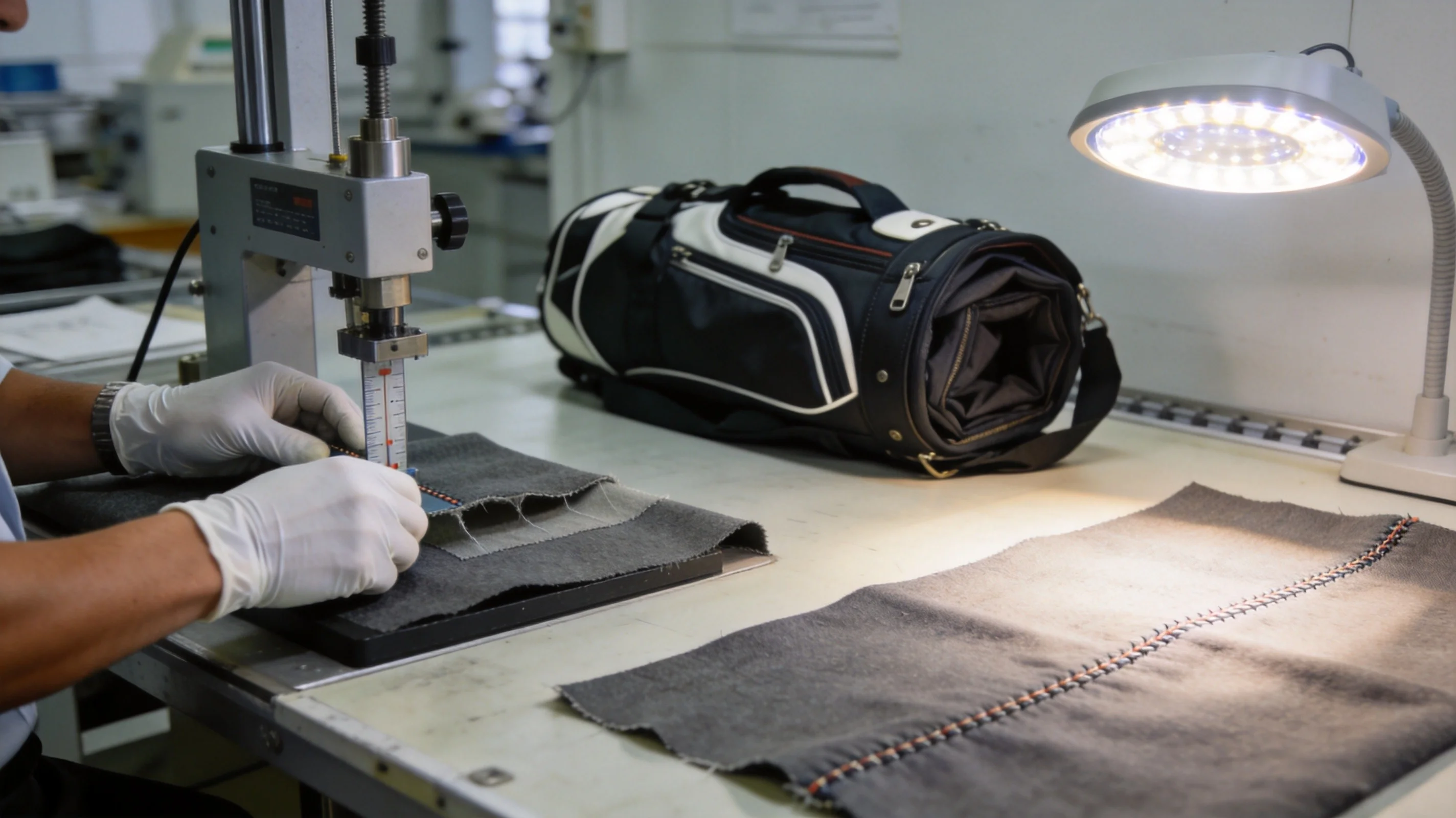
The base is the most abused surface of a staff bag, so tournament-grade bases are rigid, moulded plastic pans with feet, rated to take repeated vertical loading without flexing or cracking. In the factory we subject sample bases to a compression and drop test to confirm they hold under a fully loaded wet bag, and to a drain test so the base does not waterlog on a wet cart floor.
A rigid base also keeps the bag standing upright and flat on carts, which protects the club top from tipping. The single most common failure of a cheap staff bag is the soft base, so a tournament bag treating the base as an engineered part, not a fabric double, is a defining difference. The staff vs cart bag guide notes how the base drives cart behaviour.
Hardware and Zippers: Tested to Fatigue
Hardware is where durability standards get precise, because components either pass a cycle count or they do not. Tournament-grade staff bags use rust-resistant zippers specified to survive tens of thousands of cycles — opening and closing the main pocket hundreds of times — and heavy-duty buckles, D-rings and carabiner points reinforced at the attachments. Zippers that jam mid-tournament are an unacceptable failure for a professional bag.
We specify zipper cycle targets and test them on build samples, and we validate the pull-strength of strap and handle bar-tacks, because a strap tearing under load is a safety issue, not just an inconvenience. The quality standards guide lists the hardware and cycle-count test points we run in-house.
The base is worth calling out separately because it is the highest-stress, least-reinforced part of many bags. A rigid moulded base that takes a full set and stands firm through a season is a tournament-grade signature, and its compression and stand tests are part of the QC. A sagging base is both a durability failure and a visible embarrassment, which is why we treat it as a first-class component rather than an afterthought.
Seams and Bar-Tacks: Where Load Concentrates
A staff bag carries real weight, and load concentrates at seams, the base junction, and strap and handle attachment points. Tournament-grade construction uses reinforced seams — sometimes double or triple stitched, with bar-tacks at every high-stress point — so the bag does not blow a seam where the lower panels meet the base or where the strap pulls. Thread quality matters too, because a weak thread is a sneak failure hidden until the seam gives.
Inspection covers seam strength at these stress points, and we pull-test straps and handles to a defined Newton rating before a lot ships. That gives a buyer a number to verify rather than an impression to trust. The manufacturing QC guide documents our seam and bar-tack protocol.
Weather and Water Resistance
A tournament-grade bag rides in weather all season, so waterproofing is a durability feature, not an accessory. A coated, water-repellent shell handles drizzle; a fully waterproof build adds a laminated membrane and sealed seams so water cannot reach the clubs or the interior, plus a rain hood over the club opening. Lower panels and the base drain well so the bag does not sit in water on a wet cart floor.
The durability dimension of weather is that water is the enemy of hardware and deco: it drives rust and can peel poorly chosen logos. So a durable staff bag pairs a weather-resistant shell with colourfast, weather-tolerant branding, which is why deco and coating are specified together. The waterproof guide explains the shell and seam choices.
The durability conversation with a client usually converges on the word balance. A tournament-grade bag balances weight against strength, capacity against balance, and durability against cost, and a good factory discusses these trade-offs openly rather than promising all at once. A buyer who understands the balance is better equipped to specify a bag that genuinely fits a season of professional use without overpaying for an unnecessary extreme.
Deco Durability: Branding That Survives a Season
For a branded tournament bag, the logo is a functional component and it must meet a durability standard of its own: colourfastness against UV, and adhesion against rain and abrasion, so the sponsor's marks do not fade or peel by the end of the season. This is verified by testing the deco on the actual shell fabric, not on a sample of a different material.
Screen-printed and embroidered marks are chosen for weather exposure, and a clear overcoat protects printed logos on high-abrasion panels. A tournament bag whose branding fails defeats the whole commercial purpose of the bag, so deco durability is a first-class standard. Our quality standards guide covers colourfastness and adhesion test points.
The deco durability standard also has a weather dimension. A shell that survives a season in a dry climate can fail fast in a coastal or rainy one, so the finish must be matched to the operating weather as well as the fabric. By testing adhesion and colourfastness under the likely sun and rain exposure, we avoid the situation where a logo that looked perfect at delivery is gone by mid-season.
Measurable Durability Standard at a Glance
The table summarises the representative test and component standards a tournament-grade staff bag should meet, so a buyer can put a number to the word "durable".
There is also a trim-and-hardware standard that completes the picture. Heavyweight zips, reinforced carry handles, robust stand legs and welded or bar-tacked stress points are the details a full-season bag needs, and each is chosen to its load. Buyers who read a spec rarely notice these, but a bag that loses a handle or tears a zip mid-season is a durability failure no fabric test predicted. Matching hardware to the build is part of the standard.
How We Test Durability in the Factory
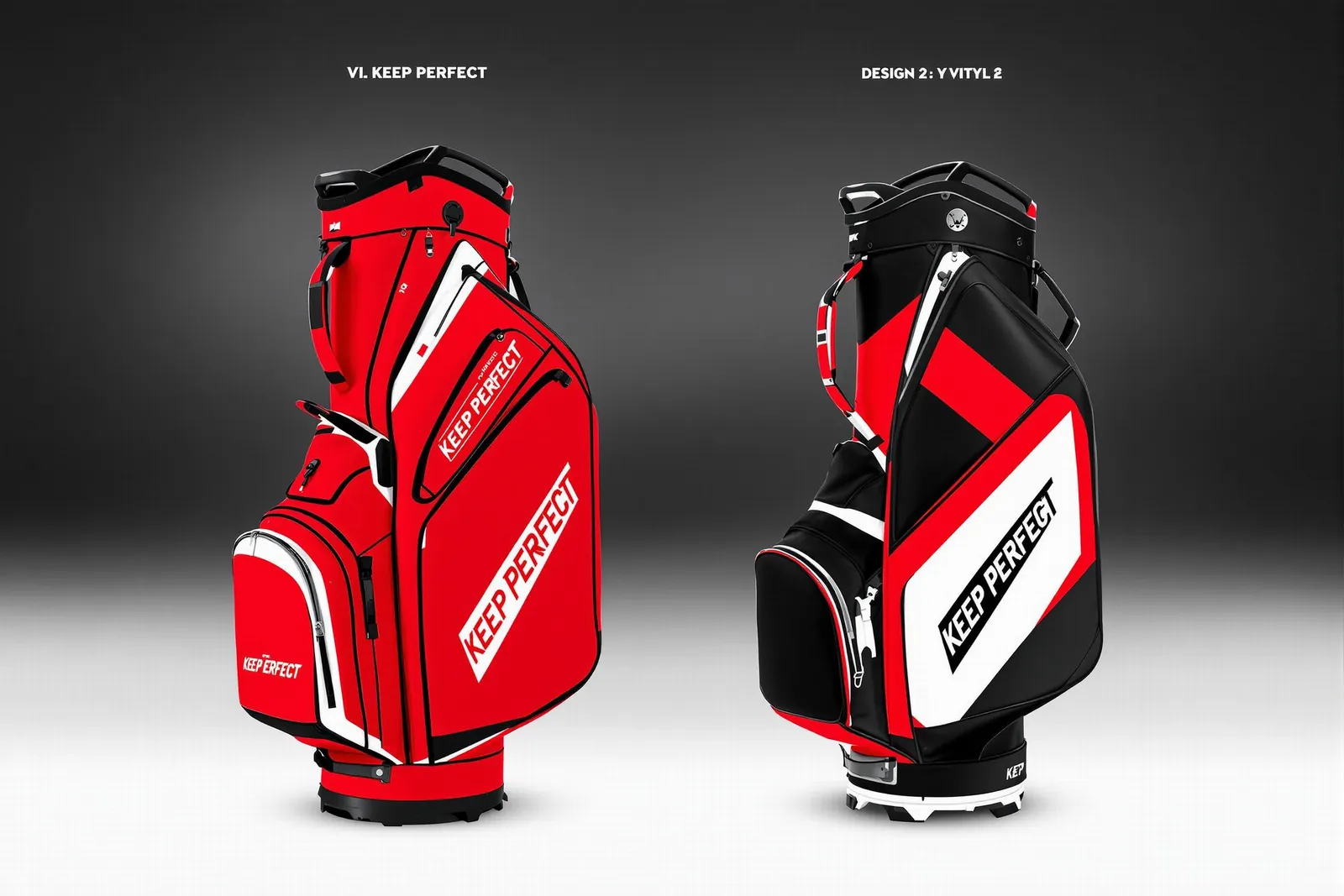
At QUANZHOU JUNYUAN BAGS, durability is verified before a bag is tournament-ready. The factory runs zipper cycle counts on every new zipper spec, compression and drop tests on base samples, pull tests on straps and handles, tear- and burst-strength checks on shell fabric, and divider-alignment checks under a representative heavy load. Deco samples are tested for colourfastness and adhesion on real fabric.
We also run random destructive testing on bulk lots to confirm the production run matches the approved sample, and we maintain a written checklist so every staff-bag lot is inspected against the same standard. Independent SGS factory verification in March 2026 provides third-party confirmation of production capability. The manufacturer selection guide lists the audit questions that let a buyer confirm this depth.
Testing is not a one-off; it is part of keeping the fleet uniform. Because a batch can drift from the approved sample, we hold every bulk lot against the master sample and run random checks through production rather than only at the end. This cadence is what converts a documented standard into a consistently delivered one, and it is the difference between a factory that says it tests and one whose batches prove it.
Pricing Durability Honestly
Durability has a price, and a tournament-grade build costs more than a retail staff bag for a reason: denser fabric, a full-length divider system, a moulded base, higher-grade hardware and hours of additional inspection. These are component and QC costs. The honest economics are that a durable bag used weekly over several seasons is cheaper per year than replacing a cheap bag annually, and it never fails visibly in front of your brand's audience.
Because the standards here are testable, we can price to a documented spec. A buyer who fixes fabric, divider, base, hardware and QC depth on paper gets a price that reflects components, and can see exactly what each upgrade buys. The wholesale pricing guide models how these levers change unit cost.
The honest cost picture is that tournament-grade is not the same as expensive: it is a discipline of specifying and verifying, and much of the value comes from the QC protocol rather than the raw material alone. A buyer who knows which tests to ask for can buy durable without overpaying for labels, and a factory that runs the tests can price to a genuine standard rather than a mark.
Sourcing Tournament-Grade Staff Bags
Tournament-grade staff bags are built to a documented spec under OEM programs. Standard MOQ is 200 pieces per design and colourway, with 100-piece test orders for a first production, sampling in 10-20 days and bulk production in 45-60 days. A test order is the right way to validate the durability build before a full tournament-season run.
QUANZHOU JUNYUAN BAGS operates 7 production lines, 126 sewing machines and 137 staff across a main 4,950 m2 affiliated factory with a 200,000-piece monthly capacity, so a durable staff-bag run sits alongside a brand's broader order. Orders are made through OEM/ODM services and custom solutions.
Buyers should also understand that the standard is verified against a sample, and the sample is the contract. We hold the master sample's fabric, deco and construction as the reference for every bulk lot, so a buyer can compare any production bag against it and know at once whether the run is on spec. This simple discipline is the backbone of consistent tournament-grade output.
Factory Verdict on Tournament-Grade Durability
Durability in a tournament-grade staff bag is a set of measurable standards — fabric strength, full-length dividers that hold alignment, a rigid drainable base, hardware that survives tens of thousands of cycles, reinforced seams, and colourfast deco — verified under a written QC protocol. When those are met and tested, the bag is genuinely tournament-ready rather than just sold as such.
Since founding in 2014, QUANZHOU JUNYUAN BAGS has built and tested tournament-grade staff bags for professional programs. To source a durable staff bag to a documented spec, reach us at contact, service@junyuanbags.com, or WhatsApp +86 17750020688.
Durability is ultimately about total cost of ownership. A tournament-grade staff bag costs more upfront but runs for several seasons under professional use, while a cheaper bag may need replacing within a season. For a club, an academy or a sponsor whose bag is seen daily, that longer, uninterrupted life is what makes the standard a value rather than an indulgence.
Finally, durability is sustained by maintenance that matches the standard. Even the toughest tournament-grade bag benefits from simple habits — rinsing sand, airing after rain, storing loosely and refreshing a coated finish — and buyers who expect multi-season life should plan for them. The factory defines the standard and the build; the user sustains it, and together they deliver the full value of a tournament-grade purchase.
Since 2014 QUANZHOU JUNYUAN BAGS has built staff and tour bags across 100+ countries for 200+ brands, running 7 production lines with 126 sewing machines and 137 staff in a main 4,950 m2 affiliated factory at a monthly capacity near 200,000 pieces; our founder has worked in the golf bag industry since 2004. Wholesale custom orders follow a standard MOQ of 200 per design and colourway (100-piece test orders), with sampling of 10-20 days and bulk of 45-60 days, and the facility passed independent SGS verification in March 2026. Reach us at service@junyuanbags.com or WhatsApp +86 17750020688 to source a staff bag programme.
| Component | Standard / Test Point | Tournament-Grade Target |
|---|---|---|
| Shell fabric | 600D polyester | 840D-1000D, tear/burst 800-2,000 N |
| Divider top | 5-8 way, may sag | 14-way full-length, holds alignment under load |
| Top ring | Foam / lightweight | Reinforced moulded ring, resists warping |
| Base | Foam double | Rigid moulded pan, compression + drain tested |
| Zippers / hardware | Basic | Rust-resistant, 40,000+ cycle rating |
| Seams / bar-tacks | Single stitch | Reinforced, bar-tacked, pull-tested |
| Deco / logos | - | Colourfast, adhesion-tested on real fabric |
Representative factory targets; verify with the supplier's actual test sheet before sourcing.
Looking for a Reliable Manufacturing Partner?
We build tournament-grade staff bags to a documented, testable spec and back it with third-party SGS verification. 100-piece test orders available.
Request a Bulk Quote →Frequently Asked Questions
- What does tournament-grade mean for a golf staff bag?
- It means a documented set of component and test standards: dense fabric with verified tear and burst strength, full-length dividers that hold alignment, a rigid moulded base, hardware rated for tens of thousands of zipper cycles, reinforced seams, and colourfast deco. These are verified by testing, not just claimed.
- How strong does a durable staff bag fabric need to be?
- A tournament-grade shell uses 840D-1000D nylon or polyester with tear and burst strength in the hundreds to thousands of Newtons, well above a 600D retail shell. The lower panels and base are built heavier still because they take the most abrasion.
- What is the most common point of failure in a golf staff bag?
- For cheap staff bags it is the base: a soft foam base waterlogs, sags and tips under a full wet load. Reinforced seams at the base junction and moulded rigid bases are the fixes that define a durable build.
- How are zippers durability-tested?
- Zippers are specified to a cycle count (often tens of thousands of opens/closes) and the chosen spec is cycle-tested on build samples. Rust-resistant hardware prevents the sand-and-rain failures that jam cheap zippers mid-season.
- Can you verify the durability of a staff bag before a full order?
- Yes. A 100-piece test order lets you validate the build and its test results before committing to a full run, and we run destructive testing on bulk lots to confirm production matches the approved sample.
- What is the MOQ and lead time for a tournament-grade staff bag?
- Standard MOQ is 200 pieces per design and colourway, with 100-piece test orders, sampling in 10-20 days and bulk production in 45-60 days.
Looking for a Reliable Manufacturing Partner?
Tournament-grade staff bags tested to component and QC standards, built factory-direct. Test orders from 100 pieces, sampling 10-20 days.
Request a Bulk Quote →