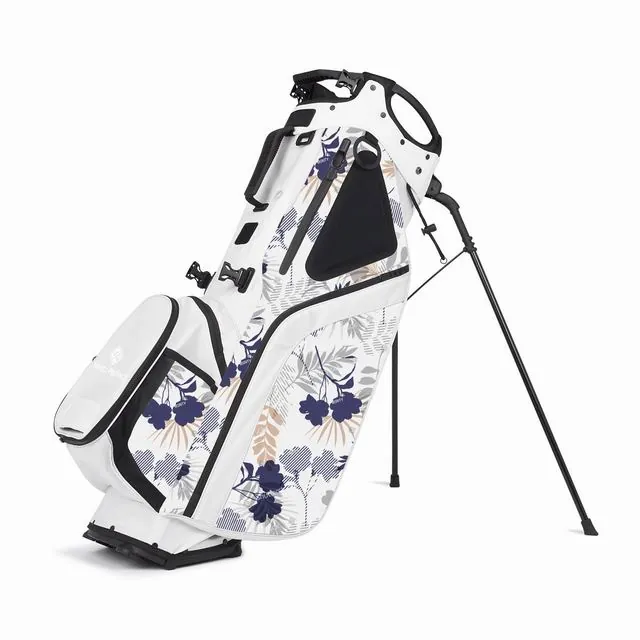
Golf Bag Brand Comparison 2025
The short answer: when comparing golf bag brands in 2025, Sun Mountain, Titleist and Ping lead on durability and brand reliability, mid-range bags from any reputable brand deliver the best value around $150-$250, and a spec-for-spec OEM bag from a specialist factory like QUANZHOU JUNYUAN BAGS can match branded quality at a meaningfully lower price. Brand names explain only part of what you are paying for; fabric denier, stand material, divider configuration, zipper grade and warranty determine most of the real durability and value. This guide compares the leading brands feature by feature, anchors the analysis in measurable specifications rather than logos, and tells you exactly when a brand premium is worth paying and when it is not.
How to Compare Golf Bag Brands on the Right Metrics
Most brand comparisons fail because they compare marketing, not specification. Two bags can carry different logos and be built to almost identical standards, or can look identical in photos and differ enormously in the materials nobody sees. To compare fairly you need to compare six measurable things, regardless of brand.
Fabric denier and finish. A 600D nylon shell over a 1680D ballistic base is a very different product from a thin 300D shell. Denier numbers are one of the few honest, comparable facts on a spec sheet. Stand frame material. Metal frames with secure hinges outlive plastic frames by a wide margin; this is the single most common early failure point. Divider configuration. Full-length, individual dividers reduce club chatter and protect graphite shafts; a 14-way full-length top is the premium config. Zipper grade. Water-resistant bonded zippers are the difference between a bag that survives rain and one that soaks your clubs. Base plate construction. A stiff, well-secured base carries all club weight and predicts multi-season survival. Warranty and support. A two- or three-year warranty tells you how much the brand trusts its own build.
Once you fix these six metrics, brand comparison becomes a spec sheet exercise. The brand that gives you the best combination at your price point is the one that wins, and the logo becomes deciding factor only when everything else is genuinely equal.
It is also worth remembering that the metric that matters most can differ by golfer, so no single brand wins for everyone. A senior golfer who rarely walks may care most about pocket access from a cart; a junior walker may care most about weight; a traveling club champion may care most about divider protection and transit toughness. The value of a structured comparison is that it forces you to state your priority in advance, then lets the specification answer rather than letting a logo answer by default.
The Leading Brands at a Glance
The golf bag market is dominated by a handful of major equipment brands plus a few bag specialists. Each has a recognisable character that shows up in the specification data.
Titleist is synonymous with premium build and tour association; its bags carry a heavy brand premium but also genuine component quality and strong resale value. Callaway casts a wide net from budget to premium with more mid-range models and aggressive pricing. Ping is known for rigorous engineering, adjustable straps and durable stands, an excellent walking-bag reputation. TaylorMade pairs bag production with strong club-market pull, producing solid mid-tier bags. Sun Mountain is a pure bag specialist with a long-standing reputation for build quality and comfort, frequently featured in durability tests. Ogio focuses on organisation and modern styling. Cobra and Wilson offer value-oriented models that pull from the same factory standards used by the majors.
What the list makes clear is that the brands cluster into two groups: majors whose bags are one product line among many, and specialists who live or die by bag quality. When durability matters most, specialist bag makers often quietly outpace majors at the same price.
| Brand | Positioning | Strength | Typical Retail | Watch Out For |
|---|---|---|---|---|
| Sun Mountain | Bag specialist | Durability, comfort | $150-$400 | Higher price |
| Titleist | Premium / tour | Components, resale | $200-$450 | Brand markup |
| Ping | Engineering | Stands, straps | $150-$400 | Weight on some |
| Callaway | Broad range | Mid-range value | $120-$350 | Varies by model |
| Ogio | Organisation | Pockets, styling | $130-$330 | Fit for carry |
Brand Premium versus Real Component Cost
The single most important finding of any honest brand comparison is how much of the price is a name and how much is components. At factory level, a well-built golf bag costs a fraction of what the same bag retails for, because retail price includes distribution, marketing, branding and the retailer margin layered on top of the factory cost.
For premium brands the markup is larger because the brand is the product. You are buying the tour endorsement, the warranty programme, the prestige and the perceived resale value. None of these is worthless, but none of them extends the physical life of the bag either. When you strip those away, the underlying build is often comparable to a mid-price OEM bagusing the same dense nylon, the same metal stand and the same zipper grade.
This is not an argument that branded bags are bad. It is an argument that you should know exactly what the premium is buying. If you value the brand experience, pay it knowingly. If you value durability per dollar, an OEM-sourced bag with the same specification sheet delivers more of the thing that actually matters for the same money.
Durability: The Metric That Separates Brands
When durability data is gathered, bag specialists like Sun Mountain and the engineering-led builds from Ping consistently rank at or near the top, while some major-brand budget lines perform below average. The pattern aligns with where each company prioritises spend: specialists reinvest in the bag, majors spread cost across a wider product portfolio.
Independent of brand, the durability predictors remain the same: fabric denier, base plate stiffness, stand frame material and zipper grade. A cheaper-brand bag carrying those four elements will routinely outlast an expensive-brand bag that traded them away for styling. The lesson is to read the spec sheet, not the logo, and to weight the four predictors above anything a brand claims about "premium" construction.
For the heavy-use golfer, durability is worth paying for. For the casual player who replaces a bag once a decade, brand and weight matter more than a few extra seasons of life, and the budget options become the rational pick.
Reinforcing the point: television and tour exposure should not be confused with durability evidence. A brand that spends enormously on sponsorship is spending on reach, not on the bag's material quality, and those budgets are recovered in the retail price. Buying on demonstrated specification and warranty rather than sponsorship weight is the consistent edge available to any informed shopper.
Value for Different Player Profiles
Brand comparison only becomes useful when attached to a player type. A walking amateur, a cart-only golfer, a frequent traveler and a tournament competitor each need different things, and the brand that wins changes with the profile.
Walking players should prioritise low weight and a reliable metal stand. Sun Mountain and Ping stand bags have the best reputations here, but a lighter build from an OEM specialist can match them at lower cost. Cart players care less about weight and can spend the budget on organisation features; here Callaway and Ogio's mid-range shine. Traveling players need strength and transit protection, favouring reinforced bases and denser shells, where specialist durability pays off. Championship players need full-length dividers and pro-grade reliability, where Titleist and premium builds justify their price.
Match the brand and model to the profile, and the value question answers itself. The golfer who buys a tour-grade bag for ten casual rounds a year is the buyer most likely to regret a premium purchase.
Warranty as a Hidden Differentiator
Warranty is a brand attribute that often outweighs price. A two- or three-year warranty against manufacturing defects signals that a brand is confident in its build and stands behind the product. It also caps your downside risk, which matters if you play hard or travel a lot.
Compare warranty length and what it actually covers before choosing between two otherwise-identical bags. A longer warranty on a marginally dearer bag is frequently better value than a cheaper bag with no cover. For OEM buying, the equivalent is the factory's quality inspection and after-sales response, which is why established, audited producers with a track record across many brands are the safer sourcing choice.
For the end customer, keeping the receipt, registering the product where required and confirming the claim process before buying avoids unpleasant surprises later. A warranty is only as useful as the ease of claiming it, so a well-known brand with an accessible support channel can be worth a small premium for that assurance alone.
When an OEM Bag Beats a Branded One on Pure Specs
The most honest comparison in golf bags is not between brands but between branded and unbranded builds with identical specification sheets. When it comes to durability, an OEM bag built to dense-nylon, metal-stand, reinforced-base, quality-zipper spec is indistinguishable from a branded bag with the same spec, because the manufacturing discipline is the same.
QUANZHOU JUNYUAN BAGS, founded in 2014 by a founder who entered the industry in 2004, is a representative example of the specialist capacity behind the market. It operates 7 production lines with 126 sewing machines and 137 employees, targets roughly 200,000 units of monthly capacity, and has served more than 200 brands across 100-plus countries as an affiliated factory audited by SGS in March 2026. Because it builds for others under OEM and ODM programs, it reaches the same standards as named brands without charging a name premium.
For a brand owner or retailer, sourcing via the OEM/ODM program means controlling the exact specification instead of buying whatever a brand decides to ship. The wholesale pricing guide sets out how that control converts into cost, and why a private-label bag can deliver branded-grade durability at a different price point.
The Cost of a Branded Bag versus Its Specification
Placing real numbers next to brand names clarifies the value picture. A $350 Titleist bag and a $160 Callaway bag can share the same fabric class and stand architecture in some models; the gap is largely brand and feature loading. Similarly, a $180 standalone-table OEM bag built to the same spec reproduces the durability at a fraction of the premium price.
The practical test for whether a premium is worth it is to price the identical specification from a factory source. When a branded bag and an OEM spec offer the same fabric class, stand architecture and zipper grade, the only real differences are brand polish, warranty programme and resale positioning. Resale may justify the premium for certain buyers, but for someone who plans to keep the bag until it wears out, the OEM route reliably returns the same durability for less money.
The discipline is not to avoid premium brands but to verify that the premium buys features you need. Compare identified key specs across the shortlist, assign each a weight for your play style, and choose on the weighted score rather than on which logo you trust more. When scores are close, pick on warranty, comfort and weight; when they diverge, let the specification decide.
Climate and Care Considerations for Any Brand
Whatever brand you choose, climate and care reshape the value. In wet climates, water resistance is a defining factor; a sealed valuables pocket and a rain cover belong in the specification. In high-UV regions, denser shells and better hardware survive longer. Care habits, storing off the base, drying after wet rounds, protecting during transit, extend any branded bag past its expected life and flatten durability differences between brands.
No brand can rescue a poorly cared-for bag, and very few premium bags justify themselves if they sit in a closet nine months a year. Brand comparison should therefore always be followed by a care plan, because the same bag looked after differently can differ in lifespan by years.
How to Source a Comparable Bag for Your Own Brand
If this comparison convinces you that specification matters more than logo, you may decide to build your own line rather than resell a named brand. The route is straightforward with a capable OEM partner. Define the exact spec, dense nylon, metal stand, reinforced base, quality zippers and the divider layout your market wants, fund a low-volume test order, and scale once the samples validate.
The factory can guide you through the customization program and the sourcing process, and the transport and packaging guides round out the plan before you commit. A private-label bag built to a disciplined spec delivers durable, brandable product at a price point that supports healthy margin, which is precisely how many of the familiar names started.
Used the right way, brand comparison saves money and produces a bag that lasts; used carelessly, it simply validates whichever badge was marketed hardest. Anchor to specification and your own play pattern, and the logo becomes one signal among several rather than the deciding one.
Before committing to build your own line, study the warranty and quality standards of the brands you respect, then hold your factory to those same thresholds. The goal is not to imitate a logo but to meet or beat the durability and finishing that the leading names are known for, at a cost structure you control. That is the most decisive way to win a brand comparison against the market itself.
Flagship Models Compared Feature by Feature
Moving beyond brand names to actual flagship models makes the trade-offs concrete. Tour-style cart bags at the top of each major line share a common architecture: full-length individual dividers, generous pocket counts between 10 and 14, reinforced base plates and premium zippers. The differences that matter are weight, stand design where present, and how the pockets are organised for access on the course.
Within stand bags, the variance in the leg mechanism is the strongest differentiator. A well-anchored metal stand with smooth deployment and a stable catch when stowed is worth seeking out on any brand, because it is the most-touched moving part on a walking golfer's gear. Bags that feel similar at first glance often separate dramatically here after fifty rounds, and it is this real-world longevity rather than the logo that should drive the choice.
Weight is the second major separator in the same price range. A 1.4 kilogram difference between two full-featured stand bags is common across the market, and for a walker that weight is carried on every round. Lighter builds usually arrive by trimming fabric panels and hardware, so the savings must be checked against the durability predictors; the goal is a light bag that keeps the first four durability elements intact.
Weight, Ergonomics and the Walking Experience
For players who carry rather than ride, weight and ergonomics can outweigh every other brand attribute. Strap quality is the quiet hero: a padded, adjustable dual-strap system distributes load across the shoulders and hips, and a well-designed carry system materially reduces fatigue over eighteen holes. Bags that win on ergonomics typically win on surveying the strap geometry first.
Balance also matters. A bag that sits correctly on the back keeps the weight centred and rides comfortably; a bag that sags loads the shoulders unevenly and encourages bad posture. Test the wearable comfort with clubs inside before committing, because the feel in the shop is one of the few data points a spec sheet cannot capture. For the brand comparison, ergonomics is where touring players and weekend walkers usually agree, and where a mistake is felt every single round.
Resale, Warranty and Lifecycle Cost Across Brands
A final layer of brand comparison is cost over the bag's whole life, including resale and warranty coverage. Some premium brands hold resale value far better than others because demand and reputation persist; a well-kept premium bag can recover a meaningful share of its cost in the used market, softening the headline price. On the other hand a budget bag that fails early has little resale value and no offset.
Warranty adds a second financial cushion. Brands that back their bags for two to three years transfer manufacturer risk to themselves, which is a real value even if the claim is never made. When you combine resale retention, warranty coverage and measured durability, the lifecycle cost of a mid-premium bag from a reputable specialist can equal or undercut a nominally cheaper bag that fails sooner and sells for nothing. This is the layer of the comparison that separates informed buyers from impulse buyers.
FAQs: Brand Comparison
- Which golf bag brands are the most reliable in 2025?
- Sun Mountain, Titleist and Ping consistently rank among the most reliable for durability. Budget-conscious buyers often find equal build quality from specialist OEM factories without brand markup.
- How much should I spend on a branded golf bag?
- Reputable brand bags range from about $120 to $400 retail. The best defensible value sits near $150-$250, where full-length dividers, quality zippers and reliable stands appear.
- Is a premium brand worth the price premium?
- Only if the features you need justify it. Brand markup can exceed the physical cost of the bag, so compare the spec sheet rather than the logo.
- Can a generic factory bag match a branded one?
- Often yes. An established OEM builds to the same fabric, hardware and stitching standards used by brands, at a lower price because no name markup is applied.
- What should I compare between brands?
- Compare fabric denier, stand material, divider configuration, zipper grade, base plate construction and warranty. These determine durability and value more than the logo.
- Which bag is better for walking, any brand?
- For walking, prioritise low weight and a reliable metal stand frame over brand. Sun Mountain and Ping stand bags are known for ergonomics, but a lighter specialist build can outperform a heavy premium bag.
Sources
- MyGolfSpy Bag Durability and Lab Testing
- GOLF.com Equipment and Bag Reviews
- PGA Tour Equipment Coverage
Choosing between golf bag brands comes down to construction, materials, storage layout and brand fit — compared here across the leading OEM vendors.
Author: QUANZHOU JUNYUAN BAGS. Brand observations reflect 2025 market reading and OEM manufacturing experience. For OEM, ODM or private-label questions contact service@junyuanbags.com or +86 17750020688.