How to Design a Full Collection of Golf Bags for Your Brand
Design a full golf bag collection as a coherent system rather than a set of unrelated bags: define a core silhouette, a consistent colour and material language, and a tiering logic that gives every player a reason into your range. A disciplined collection typically spans a stand bag for walkers, a cart bag for riders and a travel bag for those who fly, unified by branding and colourways. Produced at a facility like QUANZHOU JUNYUAN BAGS — 7 lines, 126 sewing machines (149 machines total), 137 staff, up to 200,000 units a month, sampling 10–20 days and bulk 45–60 days, with a 200-unit MOQ — a full collection becomes a scalable, repeatable brand asset rather than a one-off experiment.
Think of the Collection as a System, Not a Set
The strongest golf bag collections read as a family: customers see one line and immediately know it is the same brand across every bag. That coherence comes from repeating a limited set of design elements — a signature colour pair, a distinctive fabric, a recurring panel shape or a consistent hardware finish — across each category. Instead of designing each bag in isolation, you design a visual language once and translate it into stand bags, cart bags and travel covers so the range looks intentional.
A system philosophy also simplifies production and marketing. Fewer unique material choices and colourways mean easier sourcing, more efficient cutting across the factory's 126 sewing machines, and lower risk of errors. For your team, one consistent design story is far easier to communicate than a dozen disconnected products. Start by naming the design pillars of your collection, then apply them to every SKU.
Map the Categories Your Collection Must Cover
A complete brand collection covers the ways players actually use and carry bags. Include a stand bag for walking golfers (the most visible, everyday SKU), a cart bag for riding players, and, where your market flies, a travel bag to protect clubs in transit. Depending on your audience you may also consider waterproof lines for wet-climate regions. Each category answers a different need, but all should wear the same design language.
Mapping categories before designing also guides production planning. Because each bag type uses common materials and hardware, you can consolidate sourcing and build volume across SKUs. Reviewing the bag types guide helps you match categories to players, while our products pages show the range a capable factory produces. A focused, well-mapped collection serves more customers and manufactures more efficiently than a scattered one.

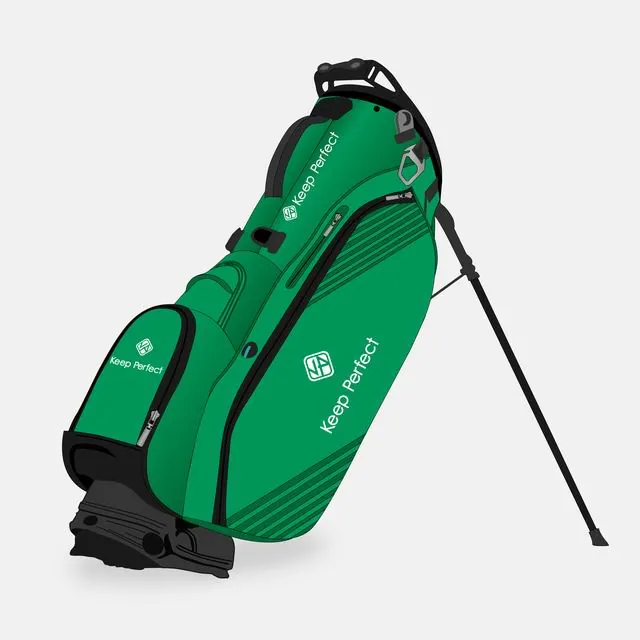
Core Everyday SKU
The stand bag carries a brand's identity for walking players and anchors the collection's everyday signature.
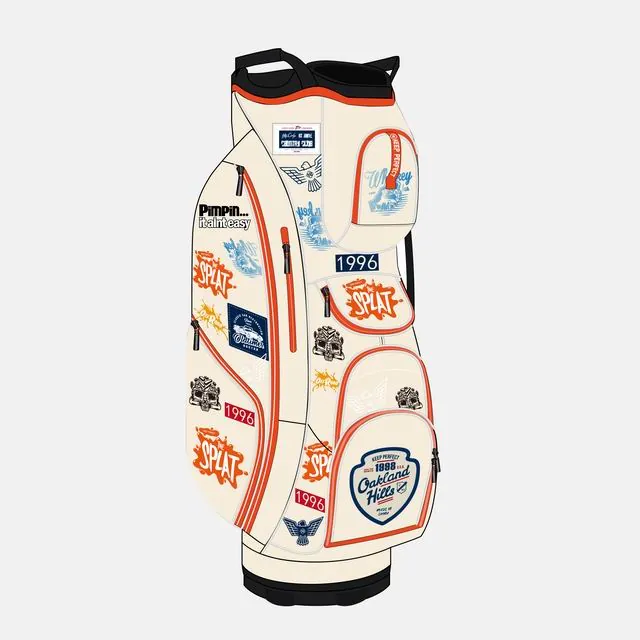
Rider-Focused SKU
The cart bag extends the same design language to players who ride, broadening your range's appeal.
Define a Consistent Colour and Material Language
Colour is the fastest way to make a collection recognisable. Choose a primary and secondary colour scheme plus one accent, and apply it consistently across stand, cart and travel bags. Use approved Pantone references so sampling and bulk runs match exactly. Balanced colourways — a strong identity without over-reliance on a single trend — keep the range timeless across seasons and resilient to taste shifts.
Materials tie the line together technically. Select a signature fabric and hardware finish and use them across the range to unify feel and construction. Repeating a proven material also streamlines sourcing and keeps cost predictable, which matters when you are building several SKUs at once. Discussing material and finish options with your factory, as covered in the materials guide, protects both the collection's identity and its margin.
Build Tiering Logic Into the Range
| Tier | Customer | Design Strategy |
|---|---|---|
| Entry | Casual / new players | Affordable core models, single colourway |
| Mid / core | Regular players | Main lineup with a few colourway options |
| Premium | Enthusiasts / clubs | Enhanced materials, finishes and features |
Tiering gives customers a path into your brand while protecting margin. An entry model captures casual buyers, a core lineup serves regular players, and a premium tier rewards enthusiasts and club customers. Because tiers share the same design pillars and materials, you can scale production efficiently and offer aspirational upgrades without redesigning everything. This logic turns a collection into a durable sales structure.
Plan for a Cohesive Brand Identity Across SKUs
Your logo, naming and packaging should be as consistent as the bags themselves. Define logo placement that reads clearly across stand, cart and travel shapes, and reuse the same tagline and colour on every product and carton. A cohesive identity in packaging, hang tags and photography makes the range instantly recognisable on shelves and online, multiplying the value of each SKU's exposure.
Consistency also protects your retail story. When a customer recognises your visual language in a stand bag and associates it with your cart bag and travel cover, each sale reinforces the others. Use the approved sample as the photography hero so imagery matches the product exactly. The design discipline that made the bags coherent should extend to every touchpoint where your brand is seen.
Designing a Full Collection? Keep It Coherent.
Build a system of categories, colours and tiers, then source several SKUs from one verified factory. Our Quanzhou team can help you run sampling (10–20 days) and consolidate a range across stand, cart and travel bags.
Plan Your Collection →Production and Sourcing Across the Collection
A full collection is only as good as its production plan. Because several SKUs share materials and hardware, consolidate sourcing with a single verified partner to spread fixed setup costs and improve pricing. With sampling at 10–20 days and bulk at 45–60 days across 7 lines, planning the collection's schedule in stages lets you launch coherently while managing capital across the range.
Start with a test batch of the hero SKU at 100 units, validate the market, then scale toward the 200-unit MOQ and beyond across categories. Consolidating SKUs into a container order strengthens your position, as the wholesale pricing guide explains. A phased approach lets you build a complete, coherent collection without betting your whole budget on a single release.
Related Guides to Read Next
Build your collection on our structured resources. The bag types guide maps categories, the materials guide helps with fabric and finish, and the OEM/ODM process guide covers development. Review the OEM/ODM services and custom solutions pages to configure several SKUs, and read creating unique designs for differentiation guidance.
Balance Coherence With Category-Specific Function
While the collection must look unified, each category must still perform its job. A stand bag needs a functioning stand mechanism and comfortable straps; a cart bag needs clean cart fit and organisation; a travel cover needs impact protection. Define the functional spec of each category separately even as you apply the same visual language, so the range is beautiful and genuinely useful across every way of playing.
Functional detail is also where you earn a brand advantage. Thoughtful organisation, durable reinforcement at stress points and reliable hardware differentiate a professional collection from a generic one. Balancing design coherence with category-specific function is the mark of a serious brand, and it is achievable when you design each SKU against its own spec while holding the collection's shared pillars and quality bar.
Common Collection-Design Mistakes to Avoid
A few missteps dilute a range's impact. Designing unrelated bags with no shared visual language weakens brand recognition. Launching too many SKUs before proving any of them sells ties up capital and complicates production. Over-relying on a short-lived trend makes the collection date quickly. And ignoring category-specific function produces bags that look unified but fail players in daily use.
The reliable sequence is narrow first: define design pillars, map a focused category set, build tiering, then validate a hero SKU before expanding. Keep materials and colourways consistent to simplify production and control cost, and check every SKU against its functional spec. When a collection is both coherent and purposeful, it earns recognition and repeat purchases across the whole range.
Develop a Collection Strategy Before Sampling
A cohesive collection is designed on paper before a single panel is sewn. Start by defining your brand story and the precise line-up that expresses it — which categories, which tiering and which colour story — and write a brief that the factory can execute. Fixing this strategy first prevents the drift and inconsistency that come from designing SKU by SKU in reaction to feedback. A clear plan is the foundation of a range that feels intentional and installs confidence in buyers.
Translate the strategy into a technical footprint: shared materials, common hardware and a repeating construction idea that keeps every piece on-brand while staying efficient to produce. Because a well-planned line repeats materials and colours, it simplifies sourcing and cutting across the factory's production lines, which is exactly how you keep several SKUs affordable without sacrificing identity. A documented collection plan functions as both a creative compass and a manufacturing roadmap.
Finally, sequence the launch so each SKU earns its place. Design the hero of the range first, validate it through sampling and a 100-unit test order, then expand toward the 200-unit MOQ and beyond using the same pillars. This staged approach proves the concept, protects capital and lets each new piece strengthen rather than fragment the line. Strategy first, sampling second — that order is what turns a promising idea into a lasting, scalable collection.
Set Quality and Consistency Benchmarks
A full collection rises or falls on its consistency, so set explicit quality benchmarks before production. Freeze the approved sample as the reference and document measurements, materials, stitching tolerances and finish standards across every SKU. Agree the inspection gates and the rejection tolerance with the factory so any variation is caught during the run rather than at the port. Consistent benchmarks are what make a range look and feel premium rather than loosely assembled.
Because a collection spans several models, benchmark consistency across SKUs matters as much as within each one. Keep colourways visually coherent, hardware matched and brand placement aligned so the range reads as one family. Part of this is guiding the factory on shared details and part is verifying each bulk delivery against the same yardstick. Our quality standards guide provides the framework for the measuring points you should pin down before scaling any collection.
Communicate the benchmarks clearly and invite the factory to flag anything that risks them early, whether a material constraint or a construction challenge. A partner that absorbs your quality expectations and raises concerns before they become defects is exactly what protects a multi-SKU line. With clear, shared benchmarks, your collection scales quickly without the drift in quality that quietly devalues many brand launches.
Plan the Marketing and Retail Story
Design and production only account for part of a collection's success; the retail story carries it to the customer. Build a simple, repeatable narrative around the collection's key benefit — for example, a range engineered for organised, consistent performance — and apply it consistently across photography, packaging and sales materials. A clear story gives retailers an easy message and gives customers a reason to choose your line over a shelf of lookalikes.
Invest in photography that matches the product exactly, using the approved sample as the hero so imagery and reality never diverge. Coherent visual assets across the full range reinforce the family feel you designed into the bags, and consistent presentation across your site and wholesale materials multiplies the value of each SKU's exposure. The discipline that made the collection cohesive should carry through every marketing touchpoint.
Finally, align the launch with your production reality. Sequence your retail release to follow the manufacturing and shipping timeline so you are not marketing a product that has not arrived, and manage inventory across SKUs to avoid overstock of slow colours and stock-outs of fast ones. A collection succeeds when great product, consistent quality and a clear story arrive together. Planning the retail story alongside design puts the entire range on a path to sell through.
Maintaining the Collection as It Grows
A full collection is a living asset, and maintaining it well keeps it consistent and commercially healthy across seasons. Review each SKU's performance regularly, and retire lines that underperform, refresh those that stale, and promote the winners with new colourways or updates built on the same pillars. This pruning discipline prevents a once-cohesive range from becoming a cluttered set of orphans, and it keeps category and tier logic clear for both your team and your retailers.
Protect consistency as you refresh by holding every new colourway or update to the approved sample and quality benchmark, and source improvements through the same sampling and reporting discipline. Because the collection shares materials and construction, a change to one SKU can echo across the range, so validate any update against the family rather than in isolation. Our quality standards guide keeps those benchmarks consistent, ensuring the refreshed line still reads as one brand.
Finally, manage inventory and requirements observationally. Balance production volume against sell-through so fast-moving colours are reordered in time and slow ones are not overbuilt, and align the collection's launch rhythm with your manufacturing schedule across the 45–60 day window. A collection that is maintained — reviewed, pruned, refreshed and restocked in sync — earns its place on shelves and online season after season, converting an initial design effort into a durable commercial asset.
Planning the Collection Pipeline End to End
Managing a collection requires a clear end-to-end pipeline that connects design, sampling, production and launch. Begin by freezing the collection plan — categories, tiering, colours and shared materials — and translating it into a technical brief the factory can execute. Sequence the sampling so the hero SKU is made and approved first, using the 10–20 day window, then expand the remaining SKUs batch by batch to manage workload and cost. Knowing which SKUs arrive first lets you stage the launch to keep capital and attention focused.
Align the pipeline with your production reality. Because bulk runs take 45–60 days, back-time your manufacturing from your desired launch dates, and coordinate reorders and expansion so the earliest-selling models are replenished before they run out. Break the overall plan into clear milestones — strategy, hero sampling, full sampling, test order, bulk release — each with an owner and a decision point, so the collection advances with momentum rather than waiting on a single bottleneck.
Finally, keep the pipeline fed with feedback. After each launch, review sell-through, returns and customer input, and feed the lessons back into the next sampling cycle so improvements compound across the range. A collection run as a disciplined pipeline — planned, staged, aligned to production and continuously improved — is one that arrives on time and sells through, converting your design vision into a dependable commercial engine.
Launching the Collection With Discipline
A full collection only succeeds when it is launched as deliberately as it was designed. Confirm the range breadth matches your retail or e-commerce plan, and stage the initial release so you can learn before you scale — a focused launch SKU list beats a sprawling one you cannot yet support. Use the confirmed brand identity to keep every product and its packaging coherent, so the collection reads as one intentional range rather than a set of independent bags. Structured launch staging protects both quality and marketing momentum.
Coordinate your collection calendar with production so designs turn into finished goods on a predictable schedule. Fund the full range realistically, confirming the MOQ, testing and bulk lead times within the 45–60 day window for each style, and keep pace with a design-to-production review before each style advances. This discipline keeps the collection moving toward market as a cohesive whole rather than releasing piecemeal or late.
Finally, treat the launch as a feedback engine for the next collection. Track which models, colours and price points perform on shelf, measure sell-through by style, and record buyer and consumer reactions. Feed those signals back into the next design cycle so each subsequent collection is sharper than the last. A disciplined, data-informed launch is what turns a well-designed collection into a durable and growing brand asset.
Beyond the products themselves, a well-run collection strengthens the story your customers trust. Consistent materials, coherent styling and dependable quality across the range signal a brand that knows what it stands for, and that confidence carries into retail relationships and repeat purchases. Because each style is built to the same verified standard, your retailers can describe the range as one system rather than a set of one-offs. This coherence, built deliberately in the design phase, is a quiet but powerful driver of brand equity and long-term margin.
Frequently Asked Questions
- What categories should a full golf bag collection include?
- A complete range typically spans a stand bag for walkers, a cart bag for riders and a travel bag for those who fly, unified by the same design language.
- How do I make a collection look like a family?
- Repeat a limited set of design elements — signature colours, fabric, panels or hardware finish — across every SKU so each bag clearly belongs to the same brand.
- How should I tier pricing within a collection?
- Offer an entry tier for casual players, a core lineup for regular players and a premium tier for enthusiasts and clubs, sharing design pillars across all three.
- What production timeline should I plan for a collection?
- Budget 10–20 days for sampling and 45–60 days for bulk production, and phase the launch — hero SKU first, then the wider range — to manage capital.
- Should I source the whole collection from one factory?
- Consolidating SKUs with one verified factory spreads setup costs, simplifies management and strengthens your pricing position across the range.
- Can I validate a collection before a full launch?
- Yes. A 100-unit test order of the hero SKU lets you confirm quality and demand before scaling toward the 200-unit MOQ and beyond.
Sources
- USGA — golf equipment and playing standards supporting coherent, function-led product design.
- ISO — international quality-management standards informing production consistency across a range.
- SGS — independent testing and verification for consistent product quality.
- Alibaba — supplier verification supporting consolidated, reliable multi-SKU sourcing.