What to Look for in a Women's Golf Bag: The Golf Bag for Women Checklist
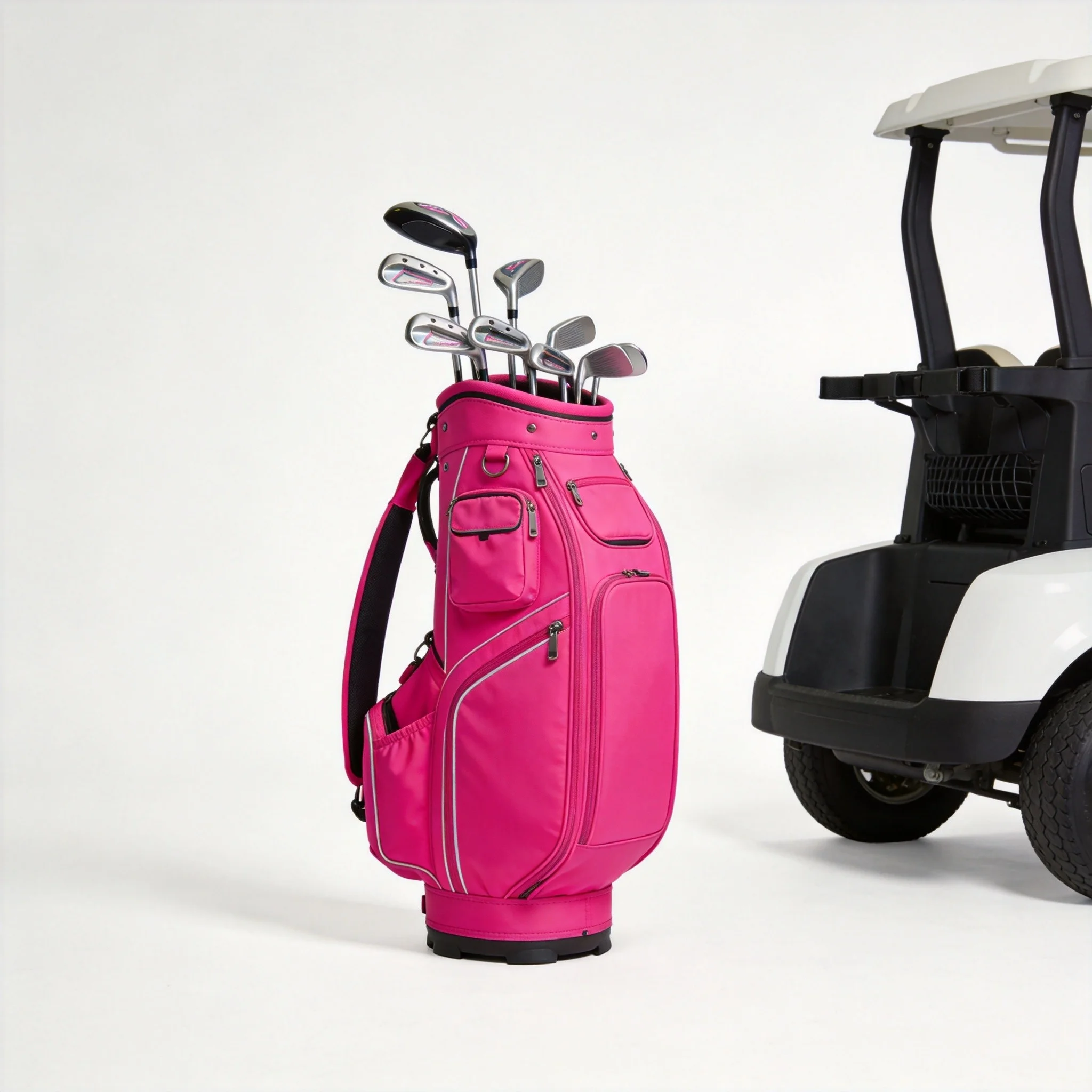
What to look for in a women's golf bag comes down to ten checkable points — empty weight, adjustable straps, club dividers, pocket ergonomics, standing stability, colour and branding, materials, quality validation, budget, and the right questions to ask the factory — and getting even three of them wrong in the wrong combination is usually why a golf bag for women feels "almost right" all season. Most buyers pick a bag by colour and price first, then discover on the first carried round that it is too heavy, the straps sit wrong on a shorter torso, or the clubs tangle in a cramped divider. This is not subjective styling; it is geometry, weight distribution and material science, and it is fully checkable before you spend. This guide, written from the production floor of QUANZHOU JUNYUAN BAGS (founded 2014, an affiliated factory with 7 production lines serving 200+ brands in 100+ countries), turns every "it felt nice" judgement into a number or a test you can apply in ten minutes — and, if you are sourcing for a brand, into the questions that separate a real women's-bag factory from one that just shrinks a men's bag.
1. Empty Weight: The Number That Decides Everything
The most important spec on a women's bag is the empty weight, because it decides whether the bag is used the way it was designed. If you walk even some rounds, aim for a stand bag around 1.5-2.3 kg empty. Add a typical 12-14 club set where individual clubs average about 0.40-0.45 kg (many drivers, hybrids and fairway woods lighter), and your total carry load lands near 7-9 kg before balls, tees and a layer. On a smaller frame that is a significant weight, which is why every 200 g saved on the shell is worth real comfort.
Cart bags carry no such penalty and routinely run 2.5-3.5 kg+ because the cart takes the load, so match the weight band to your habits rather than a generic "light is best." A factory should publish empty weight on the spec; if a listing refuses to state it, treat that as a red flag. When we engineer a women's stand bag we hold the weight target without cutting reinforcement at the seams, base and strap points — the silent performance users feel as years of comfortable use.
How to check weight before you buy or specify: if you are shopping, compare empty weights across shortlisted bags and ask how the figure changes between the base fabric and any waterproof upgrade, because a laminated shell and sealed seams can add 300-500 g. If you are sourcing, ask the factory for the weight on a filled, ready-to-ship spec, not a stripped sample. Weight is also the number that scales with your routine — a walker who plays twice a week feels every 200 g far more than a rider ever will, so let the weight band always be the first gate a candidate bag must pass.
2. Straps and Fit: Where a Women's Bag Diverges Most
This is the point where a women's bag genuinely differs from a men's, and where most "almost right" feelings originate. Look for dual padded, fully adjustable straps that cinch down to a smaller torso, with the anchor height set so the bag rides at mid-hip rather than slipping low or hanging off narrow shoulders. Pad width is a hidden variable: padding too wide slips off narrower shoulders, too thin digs in. Many premium women's models add adjustable strap-height settings to fine-tune the ride.
Why it matters: the strap junction is both the comfort control and the first failure point on a carried bag, under repeated lugging. We bar-tack and reinforce it on every women's SKU. The practical test is to load the bag, adjust the straps and walk a set of stairs — if it does not settle comfortably, no colour choice will save it. For the wider fit and biomechanics logic our ergonomic design guide digs into torso fit in detail.
3. Dividers: 5-Way, 7-Way or 14-Way
Club organisation is the feature you touch on every shot, so the divider system must match the clubs you actually own. For most women carrying a standard 12-14 club set, a 5-way full-length divider is the sweet spot: separate full-depth channels for woods, long irons, mid irons, wedges and a putter well, without the weight and rigidity of a 14-way tower. It keeps grips from tangling and shafts from clattering while staying lighter and kinder to smaller hands.
Choose 7-way for more separation between hybrids and frequently-grabbed clubs, and 14-way mostly on a cart bag for a fully filled set, where weight is no object. The failure to match divider count to set size buys clutter and weight, not benefit. Our divider comparison sets out the trade-offs in full.
4. Pocket Ergonomics: Placement Beats Count
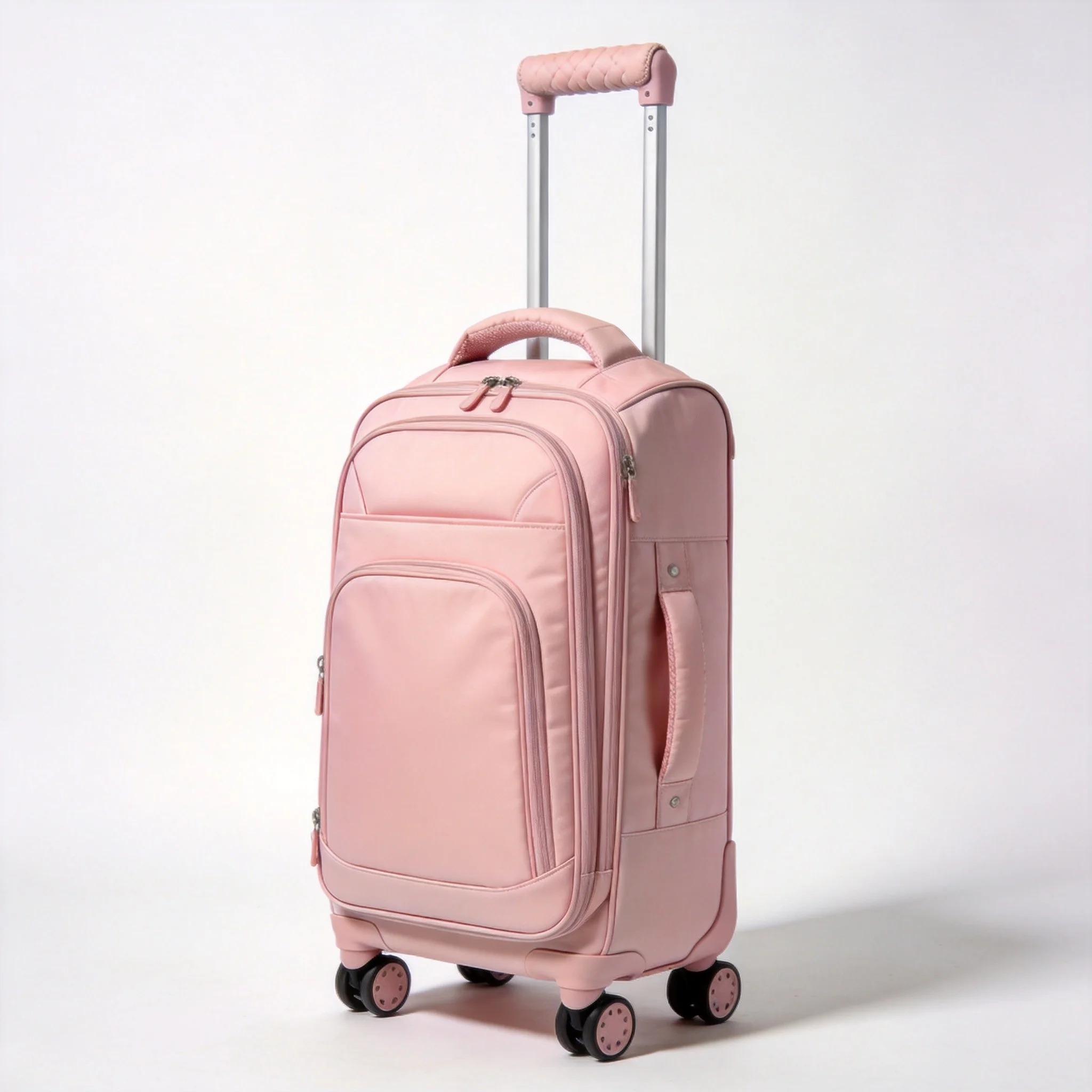
A woman's on-course kit is distinctive: phone, keys, cosmetics, sunscreen, a rangefinder, balls and tees, and a compact apparel pocket for layers. The deciding factor is not how many pockets a bag has but where they sit. The best layouts give you a valuables pocket sized for a phone and document case, a lined cosmetics/accessory pocket, a rangefinder pocket high at the front you reach without unstrapping, a ball-and-tee pocket, and one apparel pocket. Heavy items belong low and near the spine when carried, not cresting the bottom and weighting the bag awkwardly.
Why placement matters: a pocket you must unzip off the shoulder is dead weight on every round; one at hip height earns its keep. This is consistently the second-most-requested spec after weight when brands brief us on a women's SKU, which tells you exactly what players actually feel.
5. Standing Stability: Straight When Set Down
A women's bag must stand reliably upright wherever you set it — tee box, fairway, practice green — without rolling onto its face or dumping clubs. On a stand bag that is the job of the legs and base: the pair of legs deploys automatically when you tilt the bag base-first and holds it level on grass. Look for a smooth hinge, a positive lock in the open position and a base engineered to sit level, not rock. On a cart bag, check it seats securely and level on a cart or trolley.
Why it matters: a bag that tilts on a busy tee box is both an annoyance and a safety problem, and a well-engineered flat-base model lets the same bag stand on the fairway and sit flush on a cart — a genuinely useful 2026 feature. We validate leg open/close cycles and base level-stability on every lot, because legs and bases are what customers blame most when a bag feels cheap.
The practical stability test takes seconds: set the loaded bag down on level ground, let the legs deploy, and give it a light nudge — it should settle rather than tip. Then set it against a bench or cart to confirm the base does not rock on the side. On a flat-base hybrid model, also check the legs retract flush and the base is truly flat when pocket depth shifts the weight. A bag that cannot sit still is a bag you will fight every round, regardless of how good its colour looks in the shop.
6. Colour and Branding: A Working, Not Cosmetic, Choice
Colour is a real factor in women's bags, frequently the deciding one, and the factory must treat it as a technical spec. The 2026 palettes run classic pink, blush, lavender, sage, butter and soft pastel two-tone combinations, usually matched with a contrasting trim and coordinated with apparel or club-brand colourways. The caution: pastel and pink shells are prone to showing dirt, so a quality women's bag uses a coated or treated shell that repels grime and a colour-fast face that resists fading and bleeding in sun and wash.
Branding must not fight the palette, either — an embroidered or heat-transferred logo in a complementary tone reads far better on a pastel body than a hard black box. If you plan to custom brand, check the factory can develop your exact pink or pastel colourway, since dye development and coordinated trim are exactly where a "colour wants" brief succeeds or stalls. Our women's pink collection shows finished palettes and branding options.
7. Materials: Weight Versus Durability, Balanced the Right Way
Because women's bags chase lower weight, material choice is the discipline of saving grams without weakening seams. The workhorse is 600D-840D polyester: 600D shells cut weight for walkers, while 840D or a heavier base panel protects ground-contact zones where wear hits first. In wet climates, spec a PU-coated or fully waterproof laminated build with sealed seams rather than trusting generic "water-repellent" claims. Hardware must be rust-resistant and zippers top-tier, because a jammed zip on a pastel bag ruins looks and function at once.
The durability budget belongs in strap junctions, leg hinges and the base — the hotspots that decide how many seasons a walked women's bag survives. Lighter 600D shells with reinforced seams and a heavier base give walkers lightness and longevity together. For the complete fabric and hardware trade-off matrix, our materials guide compresses every option into one comparison.
8. Quality Validation and Supplier Proof
For a brand buyer — a pro shop, club, academy or retail line — the checkable point is whether the factory can prove quality, not just claim it. The three women's-specific things to validate are colour-fastness on pastel and pink shells, strap and pocket ergonomics around a smaller torso, and weight targets held without cutting reinforcement. Behind that, an independent verification adds real assurance: our affiliated factory completed SGS verification under Alibaba's on-site audit in March 2026, the kind of confirmable supplier validation a responsible brand should always request.
Capacity tells you whether a supplier can scale a growing women's program: our affiliated factory runs 7 production lines with roughly 126 sewing machines and 137 staff behind a monthly capacity of about 200,000 pieces. For the full supplier vetting checklist, our quality standards guide and manufacturer selection guide cover every checkpoint a brand should apply.
9. Budget and Value: Duration Is the Real Metric
Women's golf bags span a genuine budget range, and value is duration, not the ticket price. An entry bag offers a solid 600D shell, basic organisation and acceptable straps for casual play. A mid-tier bag adds full-length dividers, dual adjustable padded straps, better pocket ergonomics, a coated shell and a reinforced base — the tier most regular players should buy. A premium bag adds hybrid flat-base engineering for carry and cart, premium pastel-friendly fabrics, a waterproof option, a hip pad and refined branding, at higher cost.
The factory value rule is simple: spend your budget on seams, straps, the base and zippers before anything ornamental, because those decide how many seasons a women's bag survives. A well-built mid-tier bag routinely outlasts a flashier thin premium that fails in a season. For the exact cost drivers — fabric grade, divider count and decoration — our wholesale pricing guide maps how each lever moves the unit price.
10. The Questions to Ask the Factory
Whether you are buying one bag or a wholesale women's line, the right factory questions close the loop. Ask: "What is the empty weight — and in which material?"; "Can the straps adjust for a shorter torso, and what is the strap-junction reinforcement?"; "What divider count fits a 12-14 club set, full-length or not?"; "Where are the valuables and rangefinder pockets, and how are heavy items balanced?"; "Is the shell coated/waterproof, and is the pastel/pink colour-fast?"; and "What are the MOQ, test-order and lead-time terms?". Each maps to a number or a sample you can verify on the first submission.
Our terms are transparent and fixed: a 200-piece MOQ per design and colourway, 100-piece test orders for a new program, sampling in 10-20 days and bulk production in 45-60 days. That low test-order threshold is how a brand validates a women's SKU at 100 pieces before committing. For the full sourcing workflow, our OEM/ODM process guide, the wholesale overview and the women's bag collection walk every step through to delivery.
The 10-Point Checklist, Summarised
| Checkpoint | What to Verify | Typical Women's Spec |
|---|---|---|
| 1. Empty weight | Stated on spec, suited to your walking | Stand bag 1.5-2.3 kg |
| 2. Straps | Dual, padded, adjustable for shorter torso | Fully adjustable anchors |
| 3. Dividers | Full-length, matched to club count | 5-way; 7/14-way on cart bags |
| 4. Pockets | Valuables, cosmetics, rangefinder ergonomics | Front reachable pockets |
| 5. Stability | Stands level, retracts flat for cart | Reliable legs, flat base |
| 6. Colour | Pink/pastel, colour-fast, dirt-resistant | Coated/treated shell |
| 7. Materials | 600D-840D, reinforced seams and base | Polyester, rust-free hardware |
| 8. Quality proof | Colour-fast, ergonomics, independent audit | SGS/Alibaba verification |
| 9. Budget | Spend on seams/straps/base first | Mid-tier = best value |
| 10. Factory terms | MOQ, test order, lead time stated | 200 MOQ / 100 test / 45-60 days |
The checklist applies to buying one bag or sourcing a wholesale women's line.
Applying the Checklist: A Quick Decision Flow
Run the checklist in order and it points to one clear answer. Fix your play style first (walk / push cart / ride) to pick stand versus cart. Fix your weight band (1.5-2.3 kg carry, higher for cart). Confirm the straps adjust to your torso and the dividers match your club count. Check pocket placement for your daily kit, and that the bag stands level. Choose a colour you love on a colour-fast shell that stays clean, in materials that survive your climate, at a budget spent on the right parts. Then, if sourcing, ask the factory the ten questions until the answers are specific and checkable.
This order stops the two failure modes: buying for the round you wish you played, and buying for the colour while ignoring the weight. If you walk, the light stand bag wins. If you ride, the organised cart bag wins. If you split, the hybrid flat-base stand bag wins. Every other preference sits comfortably inside one of those three, and the colour, dividers and pockets are refinements on top, not the decision itself.
Why a Factory Perspective Matters Here
Most buying guides describe bags as a consumer sees them — from the shelf. A factory perspective is different because we see what a bag costs to build and where it fails, and that is exactly the information a checklist should surface. We know a lighter bag is not thinner material but smarter material and reinforcement; that a pastel shell demands a coated finish to stay pretty; that the strap junction is the first thing to fail on a carried bag; and that weight and ergonomics are the two numbers women actually ask about. A good women's bag is the one where these trade-offs were made deliberately for the player who will carry it, and a good checklist makes those trade-offs visible before you buy.
Since founding in 2014, QUANZHOU JUNYUAN BAGS has built women's bags alongside the rest of the catalogue, and we treat colour, ergonomics and weight as engineering requirements. Whether you are buying a single women's bag or launching a wholesale line, we will help you check every one of these points against a real spec. Reach us at contact, service@junyuanbags.com, or WhatsApp +86 17750020688.
Two final reminders so this checklist delivers in practice. First, a checklist is only as good as the spec it is checked against — always get the empty weight, the material grade and the divider counts in writing before you commit, and ask whether those figures apply to the exact colour and finish you want, since a pastel or waterproof build can change them. Second, let the checklist, not the label, decide: many women's bags vary far more in body construction, strap geometry and pocket ergonomics than in retail price, so an entry-priced bag that nails weight, straps and stability will beat a premium-priced bag that misses one of them. That is the whole value of a ten-point method — it spends your money on the things that actually make a golf bag for women feel right, round after round.
Need a Women's Golf Bag Built to Your Spec?
Test orders from 100 pieces, sampling 10-20 days, bulk in 45-60 days. We'll validate weight, straps, dividers and your pastel or pink palette before you commit.
Request a Bulk Quote →Frequently Asked Questions
- What should I look for in a womens golf bag?
- Check empty weight, adjustable dual straps, a divider count that matches your clubs, ergonomic pocket placement, standing stability, colour-fast materials and a budget matched to your routine.
- How is a golf bag for women different from a men's bag?
- A women's bag uses a lighter body, shorter fully adjustable straps for a smaller torso, ergonomic pocket placement, pastel and pink palettes, and a scale suited to women's carry strength.
- How heavy should a golf bag for women be?
- A carryable women's stand bag is around 1.5-2.3 kg empty; cart bags run 2.5-3.5 kg+ because the cart carries the load.
- How many dividers should a women's golf bag have?
- A 5-way full-length layout suits most women's 12-14 club sets; 7-way adds organisation, and 14-way is best on a cart bag for a full set.
- Are pastel and pink women's bags hard to keep clean?
- Quality builds use a coated or treated shell that repels grime and a colour-fast face; check these features before buying light pastels.
- Can I customize and wholesale a women's golf bag?
- Yes. Standard MOQ is 200 pieces per colourway with 100-piece test orders, sampling 10-20 days and bulk production 45-60 days.
- What is the single most important spec on a women's golf bag?
- Empty weight, because it decides whether the bag is carried and used as designed; match it to your walking habits before anything else.