Golf Bag Material Science Innovations: Advanced Fabrics and Technologies 2026
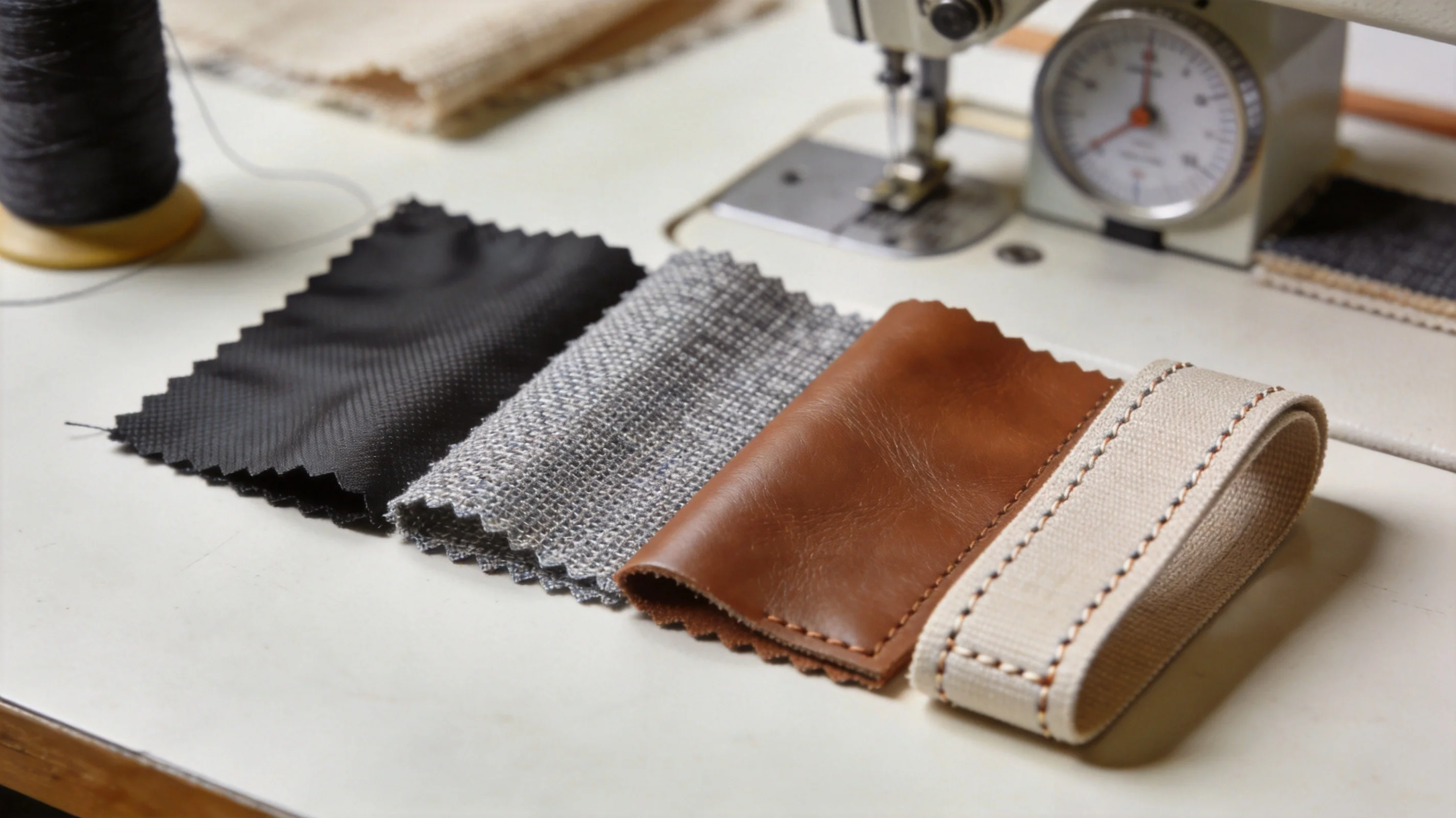
As a golf bag manufacturer that has shipped to more than 200 brands across over 100 countries since our Quanzhou facility opened operations in 2014, we can state plainly: the material innovations that actually matter in 2026 are seam-welded TPU waterproofing, graphene-strengthened coatings, mono-material rPET sustainability, and composite lightweight frames. These four threads dominate our design reviews and the requests we receive from importers looking for products that justify a premium shelf price. This long-form guide explains each innovation, separates real performance from marketing hype, and shows you how to specify the right advanced materials for your next OEM or ODM golf bag programme — whether that is a 200-piece test order or a full retail catalogue.
The 2026 Material Landscape at a Glance
Material innovation in golf bag manufacturing is accelerating because the buying conversations have changed. Retailers and distributors no longer ask only about price and colour; they ask about waterproofing standards, recycled content, weight, and documented test data. The innovations below are the ones we see requested most in real purchase conversations, and each carries a clear engineering rationale rather than a marketing slogan.
Before diving into each, it is worth stating the baseline our factory works from: a 200-piece minimum test order with a 10-20 day sampling window, followed by 45-60 days for mass production across seven production lines with 126 sewing machines and a team of 137. Our monthly capacity of 200,000 units means we can scale a proven material concept from prototype to full volume quickly, which is precisely why most of our brand partners use the first 200-piece run to validate material choice and seam engineering before scale.
TPU Lamination: The Seamless Waterproof Frontier
Thermoplastic polyurethane (TPU) is the defining material story of the current generation. Rather than painting a waterproof coating onto the back of a fabric, a TPU film is thermally or adhesively laminated to the shell so the two layers bond at the molecular level. The result is a membrane that flexes with the fabric instead of cracking, and can be seam-welded (radio-frequency or hot-air welding) into a genuinely waterproof enclosure.
Compared with traditional PU coatings, a TPU-laminated shell typically shows a hydrostatic-head figure comfortably above 3000mm, better cold-flexibility down to -20°C or lower depending on grade, and markedly better tear strength because the film carries part of the load. Compared with PVC, TPU is lighter, free of chlorine chemistry, and does not stiffen and crack as it ages in sunlight.
The practical implication is that mid-price waterproof golf bags now achieve performance that a decade ago only premium tour staff bags could claim. For OEM buyers, specifying TPU lamination plus seam-taping is the single clearest upgrade you can make when your target customer plays in a rainy climate. Our waterproof range uses this construction, and you can find more detail in our dedicated golf bag weather and waterproofing guide.
Innovation Impact Comparison Table
Use this table to quickly compare how each 2026 material innovation affects the attributes that dominate purchasing decisions.
| Innovation | Weight Impact | Waterproofing | Durability | Sustainability | Adoption Level |
|---|---|---|---|---|---|
| 1680D ballistic nylon shell | +weight (heavy) | Shower-proof via coating | Excellent | Low-moderate | Mainstream |
| TPU lamination / seam-welding | Neutral | Waterproof (3000mm+) | Excellent & flexible | Better (non-chlorine) | Growing fast |
| Graphene / nano coating | Neutral | Improved water & stain repellency | Improved abrasion | Neutral | Emerging |
| rPET recycled shell & lining | Neutral | Depends on coating | Good | High (GRS recyclable) | Mainstream for eco lines |
| Carbon / composite frame | -30-40% frame weight | N/A | Very high stiffness | Moderate | Premium |
| Aluminium alloy frame | -15-20% frame weight | N/A | High | High (recyclable) | Mainstream |
| Mono-material design | Neutral | Depends | Good | High (easier recycling) | Emerging |
Weight the columns by your market. A rain-safety-focused brand should weight waterproofing highest; a junior or walking-focused range should weight the frame-and-fabric weight column most heavily. The industry rarely demands every column to be maxed simultaneously — that combination is the most expensive end of the market.
Graphene and Nano-Additive Coatings
Nanotechnology has moved from laboratory novelty into practical coatings for textile surfaces. Graphene — a single-atom-thick lattice of carbon with extraordinary tensile strength and thermal conductivity — can be dispersed into a polymer coating that is applied to a golf bag shell. At the right loading and dispersion, the coating gains measurable hardness, reduced surface friction, superior water repellency and improved UV resistance.
It is important to set expectations. A graphene coating does not make a bag indestructible, it does not waterproof the seams for you, and its benefit is incremental rather than dramatic when the underlying construction is already sound. We treat graphene and nano-silica treatments as performance additives that lift a good bag to a very good one, priced with a modest uplift rather than a large premium. Independent lab testing (for example abrasion and water-column methods referenced under ISO and ASTM textile standards) is the honest way to verify real-world benefit, and we encourage buyers to request the report.
rPET and Mono-Material Sustainability
The clearest sustainability step available in 2026 is specifying rPET — recycled polyethylene terephthalate — for shells, linings and even webbing. rPET is spun from post-consumer bottles, carries a substantially lower carbon footprint than virgin polyester, and in most golf bag applications matches virgin material for abrasion, tear and colour-fastness. This is why GRS-certified rPET is now a standard option, not a custom request, across the eco-minded wholesale segment.
The more advanced trend is mono-material design: engineering the whole bag-body system from a single polymer family so that seams, laminates and hardware separate cleanly for recycling. This is harder than it sounds because coatings and mixed zips complicate sorting. But manufacturers who commit to it gain a real marketing story and future-proof against tightening EU and North American recycled-content regulation. For the full sustainable range picture see our eco-friendly golf bag manufacturing guide.
Composite and Carbon Fiber Lightweighting
Weight remains the most talked-about attribute in golf bags because it directly affects whether a golfer chooses to walk or ride. The dominant lever is the frame. Traditional tubes were steel; the modern default is aluminium alloy; and the premium ceiling is carbon fiber composite. A carbon fiber leg system or travel-bag rail can weigh 30-40% less than a comparable steel assembly while matching stiffness, which is why tour-oriented stand bags and high-end travel covers request it.
Lightweighting is not only about the frame. Swapping heavyweight shell fabric for 600D or 300D in non-wear areas, choosing thinner but equally strong webbing, and specifying memory-foam in the right density all trim grams. The discipline is knowing where you can lose weight without losing durability. We have analysed exactly this in our lightweight golf bag weight optimisation guide.
A fully optimised lightweight walking stand bag can realistically target 1.3-1.8 kg, compared with roughly 2.5-3.5 kg for a standard club-loaded cart bag. That gap decides the comfort of an 18-hole round, and it is why composite lightweighting is the innovation with the most direct, felt benefit to the end golfer.
Foam Cores and Impact Protection Systems
Underneath the visible shell, material science quietly protects your clubs and the frame. Closed-cell EVA foam and flexible PU foam form the padding layers that cushion clubs in dividers and protect the bag's own structure. The density and placement of that foam determines both impact absorption and the bag's empty weight.
For travel bags specifically, the padding system is the whole point: layered high-density foam plus a semi-rigid or hard frame keeps clubs safe through airline handling. A travel bag is essentially an impact-protection science product, and material choice here is more consequential than the outer shell aesthetic. This is covered in depth in our golf bag travel protection guide.
How Advanced Materials Are Verified in 2026
Innovation claims must survive measurement. Our verification battery draws on recognised international methods: abrasion resistance (Martindale, referenced by ISO 12947), tear strength (ASTM D2261 or D5034 families for textile and coated fabrics), water resistance (ISO 811 hydrostatic head and ISO 4920 spray rating for coated textiles), UV/colour fastness (ISO 105-B02), and strap/handle static load cycling. Every production line in our seven-line facility feeds a sample into this control loop, and our March 2026 SGS factory audit independently reviewed the documented methods.
When you request a specific standard name — for example an ASTM tear result or an ISO 811 water column — we can attach a corresponding test certificate to the batch. This is the difference between a material "sticker" and a defensible engineering claim, and it is exactly the evidence a professional distributor or retail QA department expects to see.
Specifying the Right Innovations for Your Range
Because every innovation adds cost, the professional approach is to match the material investment to your price point and the golfer you serve. For a value range, keep a 600D-840D shell, standard PU coating, and aluminium frame; for a mid-tier, step up to 1000D-1680D with TPU lamination in the waterproof model; for a premium tour line, add carbon fiber frame elements, graphene or nano coatings, and the tightest seam sealing available.
We recommend starting with a 200-piece test order (10-20 day sampling) so you can physically test hand-feel, wet performance and stitch behaviour before committing to mass production. During that sample window our engineers refine seam placement, coating weight and hardware choices. Once approved, the 45-60 day production cycle and monthly capacity of 200,000 units let you build inventory in confident phases.
If you would like a material recommendation tailored to your target market, the fastest route is an email to service@junyuanbags.com or a WhatsApp message to +86 17750020688. Share your price point, climate, and retail positioning, and we will map the right innovation stack.
Why Innovation Accelerated Now
It is worth asking why so much material innovation is landing at once. Three forces are converging. The first is retail expectation: distributors and the pro-shop channel now treat waterproofing ratings, recycled content and documented test certificates as baseline requirements, forcing suppliers to raise the floor across an entire catalogue rather than only in flagship lines. The second is cost movement: advanced film and fibre technologies that were once exotic are now manufactured at scale, bringing TPU lamination and carbon-composite frames into reach of mid-priced brands. The third is climate and regulation: EU and North American retailers are increasingly asking about recycled content and durability-to-end-of-life, which favours mono-material and rPET construction.
For a manufacturer, this is not a reason to chase every trend. It is a reason to build a disciplined material matrix and apply technologies where they earn their cost. Our engineering team maintains a shortlist of approved materials with known performance envelopes, so an importer specifying a rainy-region waterproof model gets a construction we have already validated rather than an experimental one. That shortlist is built on years of field data from the 200+ brands we serve and the returns we analyse.
Surface Texture, Hand-Feel and Aesthetics in Material Choice
Material science is not only about numbers; the tactile and visual identity of a bag drives a surprising share of purchase decisions. A premium 1680D shell with a subtle twill or crosshatch texture reads as quality at shelf level, while a glossy TPU panel signals weather-ready modernity. Textile finish — whether the face is coated for a matte look, brushed for softness, or embossed with a pattern — is itself a material decision with cost, weight and durability implications.
In custom-branded work, the interplay between fabric and printing matters enormously. Heat-transfer branding works best on smooth, heat-tolerant shell fabrics; embroidery integrates cleanly on dense ballistic nylon; and sublimation suits lighter polyester panels. The material you select constrains the decoration options, which is why we always align fabric choice with your branding strategy during the 200-piece sampling phase. You can read more about how material interacts with personalisation in our golf bag custom personalisation design guide.
Seam and Stitch Engineering: The Undervalued Innovation
Material innovations are frequently let down by the seams that join them. A waterproof fabric is meaningless if the stitching creates needle holes that wick water, which is why seam sealing and welding are the silent heroes of the current generation. Seam-taped constructions cover seams with a welded thermoplastic tape, while fully welded designs fuse panels without sewing.
Stitch density, thread type and needle configuration also matter. Dense locking stitches through heavyweight 1680D require industrial machines with the torque and foot pressure our production lines provide, and thread must match the fabric's stretch so seams do not pop under load. These details are invisible to the shopper but decisive for the warranty claim rate. A bag with excellent material and poor seams fails in the field exactly where a customer cannot fix it, which is why our quality control treats seam integrity as a first-class testing item on every production line.
Balancing Innovation Against Cost per Unit
Every advanced material adds to the bill of materials, and the discipline of good OEM sourcing is deciding where that spending earns a return. A sub-$20 promotional stand bag cannot carry a carbon fiber frame and a graphene coating without collapsing its target margin; a $90+ retail tour bag arguably should. The innovation stack must be sized to the shelf price you are planning.
In practice we advise clients to pick one or two hero innovations for a given model and spend the rest of the budget on fundamentals — better zips, tighter seams, higher-denier shell at the base. A bag with a modest retail price that nails waterproofing and zips will out-earn a crowded flagship that tries to claim every technology at once and delivers none convincingly. That pragmatic balance is what separates profitable product programmes from vanity projects.
When you are ready to quantify your target bill of materials, request a 200-piece sampling order (10-20 day sample lead time). We will cost the innovation stack against real suppliers and give you a landed per-unit picture before mass production commits you to the 45-60 day cycle.
Regional Differences in Material Preferences
Selling to over 100 countries teaches us that material preference is regional as much as international. In Scandinavia and the UK, where rain is frequent, waterproof TPU construction and high hydrostatic-head figures are the first question a distributor asks. In the US Sun Belt and Australia, UV resistance and colour-fastness matter more, and lighter shells are favoured for walking comfort. In Japan and parts of Asia, meticulous hand-feel, precise stitching and premium polyester finishes drive choice, while price-driven emerging markets prioritise value in 600D with honest coatings.
A single global material strategy therefore underperforms. The strongest brand programmes we manufacture deploy a regional material matrix: the same silhouette with a waterproof shell for rainy markets, a UV-optimised lighter shell for hot markets, and rPET or value options where retail positioning demands. Because our facility can run different materials through the same seven production lines, we can deliver that regional flexibility within one programme without multiplying your MOQ complexity.
Sustainability Policy and Certifications You Should Ask For
If sustainability is part of your positioning, the credible certifications matter more than any single material. Look for GRS or RCS for recycled content tracing, OEKO-TEX Standard 100 for harmful-substance testing, and, where relevant, BSCI for audited social compliance. Mature buyers ask for these certificates rather than accepting a marketing phrase such as "eco-friendly" without evidence.
Our facility maintains documented material traceability so we can report the recycled percentage of a shell or lining accurately, and our March 2026 SGS audit independently verified the manufacturing and quality systems behind those claims. When you specify an rPET range, we can attach the recycled-content documentation to each production batch, which your retail buyer and their compliance calendar will rely on. For the complete sustainability picture, including how rPET and mono-material kits work across an order, our sustainable golf bag manufacturing guide is a useful companion.
What Comes After 2026
We expect the next three to five years to consolidate today's innovations rather than replace them. Bio-based and mono-material fabrics will broaden as recycled feedstock scales; seamless welded construction will migrate downward in price; and adaptive or smart-fabric features — shells that can carry wiring, sensor mounts, or self-reporting seams — will appear in select premium programmes. The fundamentals of denier, coating and seam quality will not change, only the palette.
Manufacturers who keep testing and documenting will be the reliable partners for that future, exactly as we have worked to be since 2014.
Frequently Asked Questions
- What are the biggest golf bag material innovations in 2026?
- The most commercially significant innovations are wide adoption of TPU lamination for seam-welded waterproof shells, graphene and nano-additive surface coatings that boost abrasion and water resistance, recycled rPET fabrics as a sustainability default, and lightweight composite leg frames that cut stand-bag weight substantially without sacrificing rigidity.
- Is TPU the future standard for waterproof golf bags?
- TPU is rapidly becoming the premium standard because it is lighter and more cold-flexible than PVC, free of chlorine chemistry, and seam-weldable into truly waterproof assemblies. As TPU film costs fall, it is moving into mid-price ranges and is forecast to dominate promotional and mid-tier waterproof lines within a few seasons.
- What does rPET mean, and does it perform as well?
- rPET is recycled polyethylene terephthalate spun from post-consumer bottles. In golf bag shells it performs at parity with virgin polyester for abrasion and tear, with a meaningfully lower carbon footprint. The main caveat is that coating chemistry still limits easy recycling, which is pushing manufacturers toward mono-material designs.
- Do graphene-coated golf bags really work?
- Graphene and graphene-oxide additives genuinely improve surface hardness, water repellency and UV resistance when dispersed in a coating at the correct loading, though claims are often overstated. Performance depends on dispersion quality and the underlying fabric; a good graphene coating can measurably reduce abrasion wear but it does not replace good seams or structural construction.
- Which materials reduce golf bag weight the most?
- The biggest weight savings come from moving the frame from steel or aluminium to carbon fiber or reinforced composite, and from using lighter 300D-600D fabrics in pockets and linings. A fully optimized lightweight stand bag can weigh around 1.3-1.8 kg compared with 2.5-3.5 kg for a standard cart bag.
- Are modern golf bag materials more sustainable?
- Yes and no. Recycled rPET and bio-based polymers are now common options, but the durability-and-weight tradeoffs mean many premium shells still use virgin nylon. The clearest progress is in mono-material design, GRS-certified rPET lines, and recyclable hardware that makes end-of-life sorting practical.
Sources & Further Reading
Related Reading
- Golf Bag Material Technology Innovations — the broad 2026 fabric landscape.
- Lightweight Golf Bag Weight Optimisation — carbon fiber and weight reduction in practice.
- Eco-Friendly and Sustainable Golf Bag Materials — rPET and mono-material design.
- Golf Bag Weather Protection and Waterproofing — TPU and seam sealing in detail.