Golf Bag Weather Protection and Waterproofing
Waterproofing a golf bag is a construction system of shell, seams and closures: a TPU or laminated shell rated to 5000-15000 mm hydrostatic head (ISO 811), seam-welded or taped to remove leak paths, water-repellent zippers with storm flaps, and a hood — not a single coating. Written from the experience of our Quanzhou golf bag factory (founded 2014, seven production lines, 126 sewing machines, 137 employees, serving 200+ brands in 100+ countries, SGS audited March 2026), this guide explains how real waterproofing is engineered, tested and bought.
Waterproof Versus Water-Repellent
The first thing to understand is the difference between two terms that are used interchangeably but mean different things. A water-repellent (DWR) treatment makes water bead and roll off the surface, which is useful against light mist and morning dew but does not stop water passing through the fabric under sustained rain. Waterproof means the fabric and its seams are sealed so water cannot pass through at all, even under pressure.
A genuinely weatherproof golf bag therefore needs waterproofing, not just a DWR finish, at least on the surfaces that face the rain. This is why we guide clients to specify the intended rain condition — light shower, persistent rain, or downpour — so the right construction is chosen rather than assuming a coating alone protects the clubs.
It is also why the wording on a spec sheet matters: a water-repellent shell is honestly described as such, while a truly waterproof build is backed by a hydrostatic head figure and sealed seams. Verifying the claim protects both the buyer and the brand that sells it.
Hydrostatic Head: Reading the Rain Rating
The core measurement for a waterproof shell is hydrostatic head — the water pressure a fabric resists before leaking, reported in millimetres and measured by a standard such as ISO 811. The value is a direct, comparable number: 1500-3000 mm suits light rain and showers, while 5000-10000 mm and above is genuine storm-level protection for a bag that sits out in heavy weather.
For golf bags, a sensible waterproof shell lands between 5000 and 15000 mm. A golf bag is usually carried or loaded into a trolley rather than submerged, so extreme head values beyond that add cost without practical benefit, but the figure should still be high enough to shrug off a downpour and the pressure of rain pooling on the top panels. We recommend quoting the head rating alongside every waterproof claim so the number can be checked.
Because head measures only the fabric, it must be paired with sealed seams to mean anything for the finished bag — which is exactly why we treat waterproofing as a system.
The Waterproofing System at a Glance
A rainproof golf bag is assembled from interdependent parts:
| System Part | Waterproofing Solution | Verification | Weak Point If Missing | Cost Impact |
|---|---|---|---|---|
| Shell | TPU/PU membrane or laminate, 5000-15000 mm | ISO 811 hydrostatic head | Water passes fabric | Moderate-premium |
| Seams | Taped, welded or taped-against seams | Spray/rain simulation | Leak at stitch holes | Moderate |
| Zippers | Water-repellent or waterproof zips + storm flaps | Rain simulation | Leak at track | Moderate |
| Hood | Attached or protective coach's rain hood | Rain simulation | Top entry lets rain in | Low-moderate |
| Vent/valve | Laminated air or drain valve option | Leak check | Water pooling/trapping | Low |
| Closures | All pockets and openings sealed | Rain/leak check | Pockets fill with water | Low |
The table shows why waterproofing must be engineered, not applied. The most expensive shell in the world is ineffective if the seams, zippers or openings leak, so a capable build addresses every part of the system together. Cost is manageable when the specification targets the real rain condition rather than maximum on everything.
Seams: The Hidden Leak Path
Seams are where most rain actually gets into a golf bag. Every stitch perforates the shell, and a plain sewn seam turns a high-spec membrane into a sieve. The solution is seam-sealing or seam-welding: taping the inside of sewn seams with a waterproof tape, or welding seams without stitching on the critical panels. Taped-against seams and reinforced taping at stress points close the leaks while keeping strength.
Seam strategy is the most underestimated part of waterproofing because it is invisible until it leaks. In our construction reviews, we always specify seam-taped or welded construction on the weather-facing panels, the taping material and width, and where stress bar-tacking must be protected from water. The 200-piece sampling order is where these seams are tested across units before a 45-60 day volume run.
A buyer should always ask how the seams are sealed, not just what the shell is. The answer separates a genuinely waterproof build from a coated fabric with stitched holes in it.
TPU, PU and Lamination: Choosing the Membrane
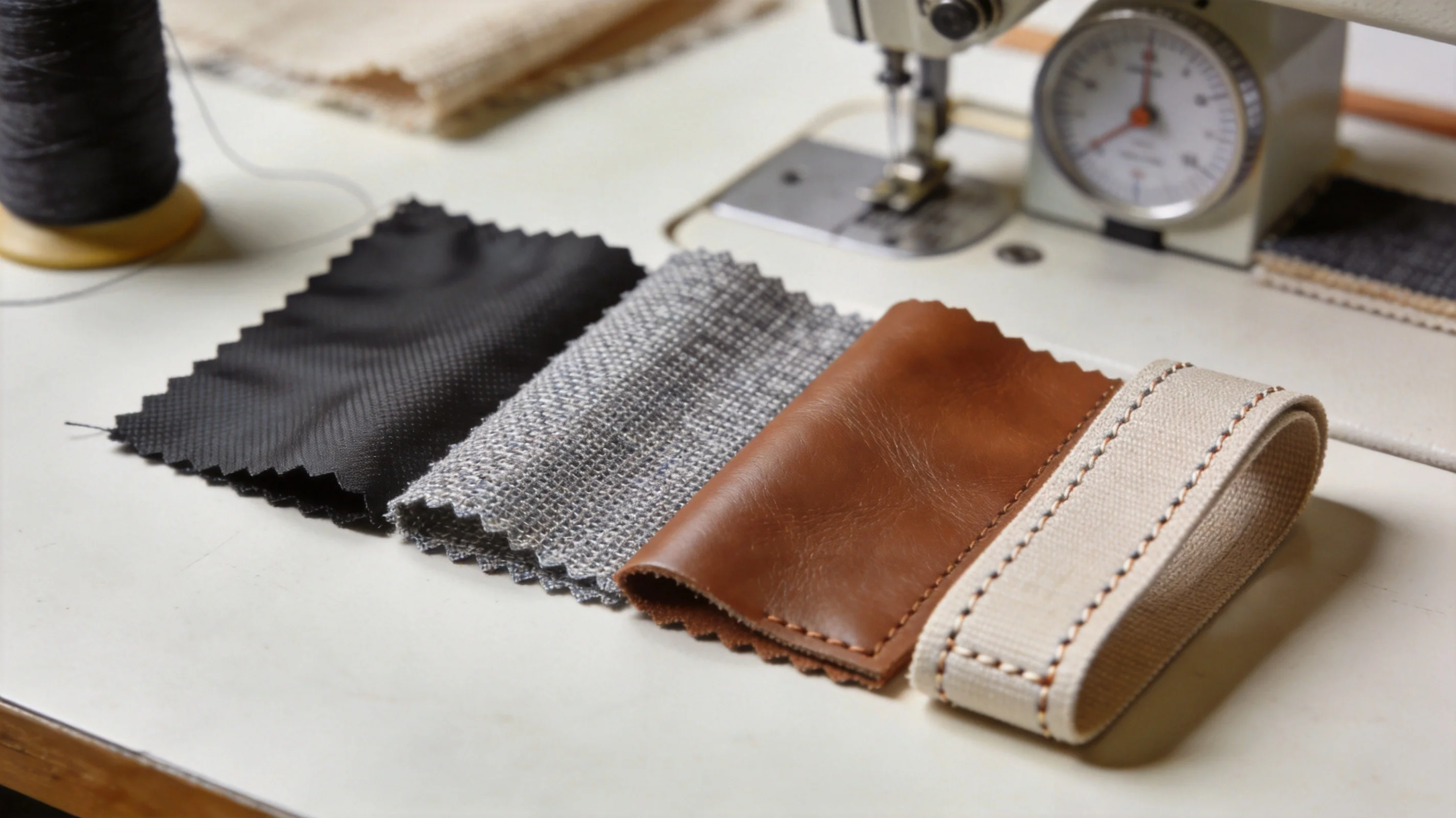
The membrane that carries the hydrostatic head comes in a few forms. A coated fabric has a PU or TPU coating applied to one side, offering solid water resistance at a moderate cost. A laminated fabric bonds a separate membrane layer to the shell, often giving higher, more consistent head values and better hand-feel, at a higher cost. TPU in particular offers strong waterproofing with good flexibility and a premium finish.
The choice between coated and laminated depends on the rain target and price point. For a mainstream "shower-proof" bag, a good-quality PU coating with sealed seams is enough. For a genuine storm-level flagship, a TPU or laminated membrane rated above 10000 mm is the honest route. We cost both so the buyer picks the level that matches the climate their product will face.
Coatings also affect hand-feel, weight and durability, so the membrane is chosen together with shell denier and the rest of the build rather than in isolation.
Zippers, Openings and the Air Valve
After seams, zippers and openings are the next leak point. Water-repellent or waterproof zippers, protected by storm flaps that lapped the rain away from the track, keep the pockets and trunk dry. Every opening intended to be weatherproof — the trunk, the valuables pocket, the side pockets — needs this treatment, or a well-shelled bag still fills with water at the closures.
A construction subtlety is the air valve. A fully sealed waterproof bag can trap air and prevent easy compression, so some builds add a small one-way or vent valve to let air escape without letting water in. This is a detail that turns a rainproof flagship into a usable one, and it is a sign of a factory that has shipped waterproof lines before.
We design the closures and the valve as part of the waterproofing system, and verify them in the rain simulation test rather than assuming they work from the part spec.
Verifying Weather Protection Before Volume
A waterproof claim should always be tested. The verification stack starts with the shell hydrostatic head test (ISO 811 or equivalent), which confirms the membrane's rating. Next is a rain or spray simulation on the assembled bag, which checks whether seams, zippers and openings survive what the fabric alone promises. Finally, seal and closure integrity is checked at stress points and after closure cycling.
The 200-piece sampling order is the right volume for these assembled-bag tests, because it checks consistency across units rather than a single optimistic sample. When the prototype passes, the build moves onto the 45-60 day volume cycle with ongoing batch sampling. This verified path is how "waterproof" becomes a certificate-backed fact rather than a slogan.
We advise buyers to ask for the head rating and the rain-simulation result on the finished bag, and to rely on tested evidence when comparing suppliers. The difference shows clearly the moment a claim has to be defended.
Weather Scenarios: From Mist to Downpour
Good weatherproofing is scoped to the actual weather a golfer will face. A light-mist or dew scenario is comfortably handled by a good DWR finish alone, because the water never forms a continuous film pressing through the fabric. A short shower test is met by a coated shell with sealed seams at a moderate head rating. It is a prolonged downpour or persistent wet conditions that demand the full storm-level system of 5000-15000 mm membrane, welded seams and waterproof zippers.
Defining the scenario up front sets the size of the build and its cost. A bag sold in a dry climate does not need to carry storm-level weight and price, while a bag sold where rain is common must be built to survive it. This is why we open every weatherproof brief with the question of climate and rain exposure rather than assuming "waterproof" always means the maximum build.
Scoping also prevents a common marketing failure: claiming storm-level protection on a bag that is only shower-proof. Honest scoping to the real weather protects the brand from returns and reputation damage once the first rain arrives.
The Rain Hood: Your First Defence
One of the most practical, and overlooked, parts of a weatherproof golf bag is the rain hood. Because the top of the bag — where the clubs sit — is the main opening through which rain can reach clubs directly, a well-designed hood is arguably the most important wet-weather feature. An attached, clipped or stowed hood that deploys quickly and covers the club tops turns a good waterproof shell into a genuinely rainproof carrying system.
The hood itself needs to be waterproof or highly repellent, fit without bunching that collects water, and survive repeated deployment without tearing at the attachment points. A hood is also a cost-effective upgrade — it is a small part, yet it does the largest share of protecting the most valuable contents from the most direct rain path.
We regard the hood as an integral part of the waterproofing system rather than an accessory. When a buyer specifies rain protection, we always confirm the hood design and its attachment as part of the build, and we test it in the rain simulation alongside the shell.
Caring for a Waterproof Golf Bag
A waterproof golf bag only stays waterproof with the right care, and a good supplier explains this clearly. The main rules are straightforward: dry a wet bag out thoroughly rather than storing it wet, which lets mould attack the lining and coating; clean with a mild cloth and water rather than harsh solvents that can break down the membrane; and periodically refresh any DWR surface treatment to keep water beading. Kit guides that cover these keep the withhold and reduce premature failure.
Seam taping and zipper sprays are also worth servicing over a bag's life, because sealed seams and water-repellent zips degrade with heavy use and weathering. We supply simple care guidance with waterproof lines and recommend the parts most worth re-treating. This is the difference between a product that works on day one and one that still works at year three.
For a buyer, care instructions are also a quality signal: a supplier confident enough in the construction to explain how to maintain it is usually shipping a real waterproof system rather than a coated shell with a hopeful label.
Building a Weather-Range Product Portfolio
Rather than making every bag at the same weather level, many of our OEM clients build a weather-range: a value shower-proof line with a good coated shell and sealed seams; a mid waterproof line in the 5000-8000 mm bracket with welded seams and protective zippers; and a premium storm line at 10000-15000 mm with a laminated TPU membrane and full seams and closures. This lets a brand serve both dry and wet markets without overbuilding the whole range.
A graded range also makes price positioning honest and clear. Shoppers understand that a storm-level bag carries a premium, and that a shower-proof value bag meets its own stated level. Clear, tested tiers reduce confusion, protect the brand from overclaims, and capture buyers at each price point rather than forcing every customer into one build.
Across our seven production lines and 126 sewing machines we can run several weather tiers in parallel, and our monthly capacity of up to 200,000 units lets a client stock the full range. Documented tiers, each to its tested claim, are how a whole range earns trust.
Weight and Cost of Weather Protection
Weather protection and lightweight can pull against each other, so they must be balanced deliberately. A full TPU or laminated waterproof build with sealed seams and protective zippers adds weight and cost relative to a shower-proof bag. However, low-denier breathable waterproof laminates can keep a rainproof bag moderately light, and the cost premium is often modest when the specification targets the real rain condition rather than maximum protection everywhere.
The costed comparison is the tool for this balance. We build a per-option bill of materials so a buyer sees how much weight and cost each level of weather protection adds, and can step to contesting shell denier or lamination if the target price demands it. Weather protection should be a decision, not an accident.
Our approach keeps climate and price aligned: a storm-proof flagship carries the premium technology, while a value line may use a well-sealed coated build. Both are engineered to their brief, and both are tested before shipping.
It is also worth remembering that weather protection adds value at the retail counter. A buyer who has owned a bag that leaked on a rainy round actively searches for proof of waterproofing, so a head rating, welded-seam note and hood on the spec convert directly into a purchasing decision. Spell out the tested numbers and the assembled rain result, and the product sells itself on the strength of engineering rather than adjectives.
Buyer's Checklist for a Rainproof Golf Bag
When commissioning or comparing weatherproof golf bags, cover the following. Confirm the shell's hydrostatic head rating and the standard used (e.g. ISO 811). Ask exactly how the seams are sealed or welded. Confirm the zippers and storm flaps on weather-facing openings, and whether there is an air valve. Get the assembled-bag rain-simulation result, not just the fabric rating. And ask for the weight and cost effect of the waterproof build so it fits your budget.
Then align the specification to the real climate. A golfer who plays in persistent wet conditions needs the full storm-level system; a temperate or dry-region buyer can save weight and money with a well-sealed shower-proof build. Specifying by climate avoids both over-spending and under-protecting.
Finally, confirm the supplier can hold quality at volume and back the claim with certificates and per-batch sampling — the documented discipline our March 2026 SGS audit verifies.
Weather Protection That Works
Golf bag weather protection is a system of shell, seams and closures, engineered and tested together. A genuinely waterproof bag pairs a 5000-15000 mm shell (ISO 811) with sealed or welded seams, water-repellent zippers, storm flaps and a protected opening, all verified by an assembled rain test. This is the difference between a claim and a product that actually keeps clubs dry.
For buyers, the path is the same discipline: specify the climate and rain target, review the waterproofing system part by part, validate with a sample, and demand test evidence. Our engineers — service@junyuanbags.com or WhatsApp +86 17750020688 — are ready to develop a 200-piece waterproof sample on a 10-20 day window and scale on the 45-60 day cycle. Let us build weather protection you and your customers can trust. This tested, honest approach to weather protection is what turns a rainy-round dread into a quiet confidence in the product you sell For the player carrying through changeable weather, that tested, honest protection means dry clubs every single round.
Frequently Asked Questions
- What makes a golf bag waterproof?
- Waterproofing is a construction system, not a coating: a waterproof shell with a high hydrostatic head rating such as 5000-15000 mm as measured by ISO 811, seam-sealed or welded to remove leak paths, water-repellent zippers, and a protected coach's rain hood. Remove any one and the bag leaks at that point.
- What is hydrostatic head and why does it matter?
- Hydrostatic head measures how much water pressure a fabric resists before leaking, reported in millimetres (ISO 811 or a similar standard). A higher value means better rain resistance — 1500-3000 mm suits light showers, while 5000-15000 mm is genuine storm-level waterproofing for a golf bag shell.
- What is the difference between waterproof and water-repellent?
- Water-repellent (DWR) makes water bead and roll off the surface; waterproof stops water passing through the fabric and its seams. DWR alone is not enough for heavy rain — a genuinely waterproof bag needs a coated or laminated membrane plus sealed seams.
- How vulnerable are zippers and seams to rain?
- Zippers and seams are the two most common leak points on a rainproof bag. Water-repellent or waterproof zips with storm flaps, and taped, welded or taped-against seams, are essential wherever the shell is meant to keep water out. Ignoring these weak points defeats a good shell.
- Is a waterproof golf bag heavier?
- Generally yes at a given shell weight, because a full TPU or laminated membrane and sealed seams add mass. But low-denier breathable waterproof laminates can keep weight moderate. The weight and durability balance should be specified together so weather protection does not wreck the budget.
- How is a waterproof golf bag verified?
- Verification combines the hydrostatic head test of the shell (e.g. ISO 811), a rain or spray simulation test of the assembled bag, and seal/seam integrity checks. Certificates from these tests, plus factory batch sampling, confirm the weather-protection claim rather than leaving it to marketing.
Sources & Further Reading
Related Reading
- Golf Bag Material Science Innovations — the advanced shells used for weatherproofing.
- Lightweight Golf Bag Weight Optimization — balancing weather protection and weight.
- Golf Bag Durability & Lifespan — how sealed construction extends life.
- Golf Bag Quality Control & Testing Standards — the testing that verifies rain claims.