Lightweight Golf Bag Weight Optimization
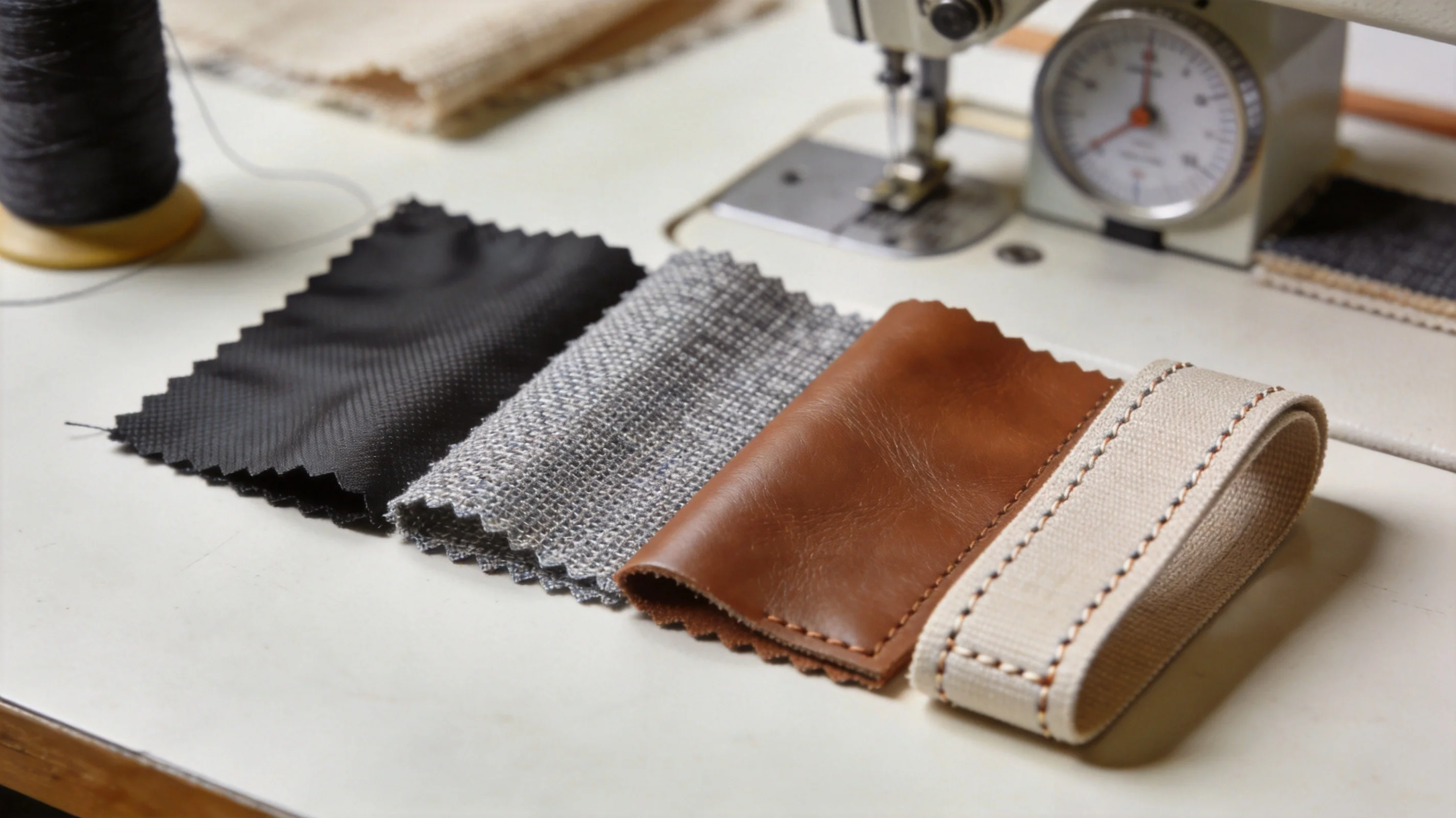
Lightweight is a product characteristic of golf bags, not a special positioning of our factory: weight optimization is engineered across the whole system — shell denier, coating, frame, hardware and seams — with a well-built lightweight stand bag typically landing at 1.3-2.0 kg empty and tested for durability before it ships. Written from the experience of our Quanzhou golf bag factory (founded 2014, seven production lines, 126 sewing machines, 137 employees, serving 200+ brands in 100+ countries, SGS audited March 2026), this guide explains how lightweight golf bags are genuinely engineered, what to check, and how to commission one that stays durable and budgetable.
What "Lightweight" Means for a Golf Bag
Lightweight is best framed as a measurable outcome rather than a marketing word. For a stand or carry bag, the practical bracket is 1.3-2.0 kg empty; most modern carry bags sit in the favourable 1.5-1.8 kg band. A light full-size cart bag, which carries more structure, typically weighs 2.2-2.8 kg. These numbers matter most to a walker who carries the bag for 18 holes, and they are meaningful only when the construction is stated alongside.
Because lightweight is a relation between materials and design rather than a single number, we always quote the empty weight together with the shell denier, frame type and feature set. A 1.6 kg bag built on a stout alloy frame is a different product from a 1.6 kg featherweight optimised to the limit — and both can be valid, depending on what you are buying.
Clarity matters for buyers because the word is used loosely. When you commission or compare, ask for the empty weight, the shell construction, the frame material, and the test that confirms durability at that weight. With those four facts you can compare honestly.
Where Weight Lives: Building a Weight Budget
Weight optimization starts with a weight budget — a line-item breakdown of where every gram goes. The shell is usually the largest single share, followed by the frame structure, then hardware such as zippers, D-rings, buckles and stand feet, then webbing, padding and trims. Coating and seam tape add small but real weight, and branding decoration counts too. A factory that cannot show you this budget is not yet optimising weight; it is guessing.
Building the budget reveals the best reduction opportunities. Shaving 60 g from the frame by switching alloy grade helps more than the same 60 g from a hardware part the user touches. It also exposes waste, like doubling-up fabric where a single layer would do, or over-speccing zipper weight for a light-use pocket. Optimization is prioritisation, and the budget is its map.
A practical output is a target empty weight and a confirmed shell-and-frame set to reach it, documented before prototype. With the target set, the 200-piece sampling stage can validate the real as-built weight against it, rather than discovering drift after volume.
Weight-Saving Materials at a Glance
The material choices that drive a lightweight build:
| Component | Weight-Saving Option | Typical Saving | Cost Impact | Trade-off | Best For |
|---|---|---|---|---|---|
| Shell | 1000D/840D ballistic nylon | 150-250 g | Moderate | Less abrasion reserve | General carry |
| Shell | Mono-material low-weight weave | 100-200 g | Lower | Limited colour layering | Eco-lite bags |
| Frame | 7075 aluminium alloy | 80-120 g | Lower | Slightly more flex | Value lightweight |
| Frame | Glass-fibre-reinforced polymer | 100-150 g | Neutral | Bulkier cross-section | Mid lightweight |
| Frame | Carbon-fibre-reinforced polymer | 120-180 g | Premium | Higher unit cost | Premium featherweight |
| Hardware | Lightweight PC/nylon buckles | 40-80 g | Neutral | Lower torque spec | Most builds |
The table shows weight is a system of choices, not one hero material. The biggest total saving usually comes from combining a moderate shell down-weight with a smarter frame and lighter hardware, rather than pushing any single component to its limit. Cost and trade-offs are shown so the optimisation stays within a real budget.
Frame Technology and the Weight-Strength Balance
The frame is where lightweight engineering is most visible, because it must be light without collapsing under a loaded bag. Three material families dominate. 7075 aluminium alloy is strong, well priced and the reliable choice for most lightweight bags. Glass-fibre-reinforced polymer offers a good stiffness-to-weight ratio at a lower cost, with a slightly bulkier cross-section. Carbon-fibre-reinforced polymer gives the best stiffness-to-weight ratio but at a genuine premium.
Beyond the material, stand geometry matters as much as the material itself. A spreader geometry that distributes load evenly, a decent-sized foot pad that prevents tip-over on uneven ground, and balanced hinge design all let a lighter frame still stand reliably. A featherweight frame that tips at the slightest slope is not a good lightweight bag; it is a bad stand.
For most buyers the alloy or well-engineered glass-fibre frame delivers the best value; carbon earns its place in a premium featherweight flagship. The right choice depends on your target price and the walking comfort you want to promise.
Shell and Coating: Lighter Without Sacrificing Durability
The shell is the biggest weight mass, so shell strategy sets the tone. Moving from a heavy 1680D shell to a well-woven 1000D or 840D ballistic nylon cuts meaningful weight while retaining strong abrasion and tear resistance when the weave and coating are right. The coating — TPU, PU or a lighter water-repellent — also balances weight against weather protection; a full TPU waterproof build is heavier than a shower-proof one, so the choice follows the climate and price target.
Seam construction is the durability gate that lets a lighter shell go further. Taped and welded seams, the right thread and stitch density, and bar-tacked stress points prevent the thin-shell failures that give lightweight bags a bad reputation. Because it is invisible on the shelf, buyers must specifically ask how the seams are built on a lightweight product.
We verify the shell-and-seam package with the standard test battery — abrasion, tear and load cycling — on the prototype so a lighter bag is also a verified bag, not a gamble.

Hardware and Webbing Micro-Optimization
Weight optimization also happens in the small parts. Choosing lightweight PC or nylon buckles over heavier metal equivalents saves tens of grams per bag, with a torque and load spec still matched to the pocket or strap's use. Trimming webbing length to the minimum that still fits a range of body sizes, using lightweight zippers on less-stressed pockets, and reducing redundant D-rings and leather patches all add up.
Micro-optimization is where a careful factory separates from a copy. None of these changes is dramatic on its own, but together they can recover 100-200 g while the bag still feels and functions identically. The weight budget makes these small wins visible and accountable rather than accidental.
The discipline is to optimise only what does not compromise function or comfort. A webbing strap trimmed too short, or a buckle two grades too light for its load, is a false economy. Every reduction is matched against a minimum functional spec.
Testing a Lightweight Bag Before Volume
A lightweight bag earns its place only if it survives testing. The relevant checks include load stability on the stand, weight-bearing of the frame, seam and tear resistance on the thin shell, abrasion on high-contact patches, and zipper and buckle durability on stressed parts. The 200-piece sampling order is exactly the volume at which these properties can be assessed across units rather than on a single hopeful sample.
Testing also validates the real as-built weight against the target, confirming the weight budget was accurate in production. When the prototype passes, the design is locked and moves onto the 45-60 day mass-production cycle, where batch sampling continues to hold the standard. This is how the lightweight promise becomes a verified product.
We advise buyers to treat the sample stage as non-negotiable for a lightweight build precisely because a failure hidden in a rushed first run is costly to correct at volume.
Weight and Carrying Comfort for 18 Holes
The point of a lightweight golf bag is carrying comfort, so weight must be thought about in the context of a full round. A walker carries the bag for roughly four to five hours and often more than nine thousand metres over 18 holes, so even a few hundred grams against the shoulders and legs is felt by the end of the round. The difference between a 1.6 kg and a 1.9 kg bag is small in kilograms and large in fatigue.
Carrying comfort is not only the raw weight, however. A bag that sits badly on the shoulders, loads the hips unevenly or feels unbalanced when loaded removes much of the benefit of a low figure. Cushioned shoulder straps, sensible strap spacing and a centre of gravity that keeps the bag stable when worn all matter as much as the gram count, which is why we design the carrying system alongside the material weight budget.
For a buyer, the practical test is to load and wear a prototype with clubs if possible. The felt result decides whether the lightweight numbers translate into the comfort you are actually paying for, and the 200-piece sample stage is the right moment to run that check before volume.
Whole-System Lightweight Design
The most successful lightweight builds treat the entire bag as one system rather than a sum of parts. A light shell is wasted if the frame is overbuilt; a light frame is vulnerable if the shell has no stiffness; and either is undone by an over-engineered pocket system adding weight where it returns no value. Whole-system design optimises mass by function, allocating weight to where it protects the user and the trunk and stripping it from where it only adds cost.
This approach also manages the behaviour of a loaded bag. A genuinely balanced lightweight build keeps the centre of gravity low and centred, so it walks well, stands without tipping and loads without distorting. A part-by-part optimisation can hit a low figure yet feel unstable, because the mass distribution was never considered. System thinking is what separates coherent lightweight engineering from a spec sheet.
Our engineers apply the weight budget as a system tool, testing how the loaded bag behaves — not just how much it weighs — so the finished product is light and usable in equal measure.
Walk-Weight Versus Cart-Weight Priorities
Where weight matters depends on how the bag is used, and optimisation should follow. A walking carry bag lives for low empty weight and carrying comfort, so shell down-weighting and a lighter frame earn their place. A bag used mostly from a trolley or cart still benefits from moderate weight reduction for lifting and travel, but can carry a sturdier shell and frame because constant carrying comfort is not the driver.
Defining the use case before specifying prevents both over-engineering and under-building. A golfer who walks every round in mixed weather will value a light durable build with weather protection. A resort or club-cart golfer might prefer value and durability over the last hundred grams. Specifying by the real carrying scenario is what makes the optimisation actually serve the buyer and the end user.
In our OEM briefs we therefore always ask how the bag will be carried. The answer changes the weight budget, the frame choice and the coating long before any sewing begins.
Lightweight and Sustainability Together
Weight optimization and sustainability increasingly overlap, and a well-designed lightweight build can serve both at once. Using less material to achieve the function reduces material use and, for shipping, cuts transport weight and carbon both at the factory and in the supply chain. A low-waste mono-material construction is both lighter and easier to recycle, so weight and eco goals reinforce each other.
This alignment matters for brands with sustainability commitments. A lightweight bag built from recycled low-denier fabrics and a mono-material shell can carry a credible lower-impact story while also being easier to carry and ship. We can document the recycled content and the construction so the claim is verifiable rather than decorative.
We treat sustainability as a design input alongside weight and cost, so a light bag does not have to choose between being light and being responsible. When you commission a build, asking for both together often returns the best value of either alone.
The Cost Reality of Lightweight Materials
Cost and weight move together, but not in one direction. Premium carbon frames and low-denier reinforced shells add cost per unit, and a fully TPU waterproof light shell carries a premium over a shower-proof one. At the same time, careful hardware downsizing and a low-waste mono-material build can cut weight and cost together. The efficient approach is a costed comparison of candidate material sets from the start.
We build a per-option bill of materials so the target retail margin stays visible while weight falls. If a buyer is 12% over target, the comparison shows which step-downs — say aluminium instead of carbon, or 1000D instead of a 840D special weave — regain the margin with the least felt difference. This keeps lightweight achievable inside real budgets rather than aspirational.
Because weight decisions are cost decisions, the sample run confirms the as-built unit cost at volume. In our OEM work for 200+ brands, this cost discipline is what lets lightweight bags reach competitive price points and still earn.
Because lightweight is a whole-system result, it is also genuinely achievable at scale without premium prices when the build is specified smartly. The alloy-frame, 1000D-shell, careful-hardware formula can reach a light and durable result at a mainstream cost, which is why lightweight is no longer reserved for flagships. A rigorous costed comparison lets you capture the carrying comfort at the price your market can support.
A Buyer's Checklist for a Lightweight Golf Bag
When commissioning or purchasing a lightweight golf bag, cover these points. Confirm the empty weight and construction. Ask which shell denier, frame material and coating are used, and how much weight each choice saved. Ask what seam construction the bag uses and how it is tested for the weight. Get a prototype or a 200-piece sample to handle the result, and ask for the test evidence and per-batch certificates.
Then align the spec to your actual user: a club golfer walking every round may value the lightest durable build, while a resort or cart golfer may not need featherweight at all and can take a stouter, value bag. Matching the light weight to the real carrying scenario is what avoids over-spending.
Finally, check the supplier's capacity to hold quality at volume — our seven lines and 126 sewing machines are specified for it, and our March 2026 SGS audit independently confirmed the documented quality system. With that, you commission lightweight with confidence.
Lightweight, Engineered and Verified
Lightweight golf bag weight optimization is a whole-system engineering discipline, not a single trick. The winning formula combines a moderately down-weighted shell, a smart frame (alloy, glass-fibre or carbon by budget), lighter hardware and webbing, and — crucially — seam construction and testing that protect durability at the lower weight. The result lands at 1.3-2.0 kg with the confidence of verified build.
For buyers, the path is simple: define the target weight and user, review a material weight budget and costed options, validate with a sample, and demand test evidence. Our engineers — service@junyuanbags.com or WhatsApp +86 17750020688 — can guide a 200-piece sample on a 10-20 day window and deliver volume on the 45-60 day cycle. That is lightweight you can carry, trust and sell. This balance of low weight and verified quality is exactly what makes a lightweight line dependable to sell again and again.
Frequently Asked Questions
- What does a lightweight golf bag actually weigh?
- A lightweight stand or carry bag typically weighs between 1.3 kg and 2.0 kg empty, with many modern carry bags landing in the 1.5-1.8 kg band; a light full-size cart bag may run 2.2-2.8 kg. The number only matters relative to walker comfort and the frame type, so we always quote empty weight plus construction.
- What makes a golf bag lightweight?
- Weight is reduced across the whole system: lighter shell deniers (1000D/840D), low-waste mono-material construction, a lighter frame (alloy, glass-reinforced or carbon), reduced hardware, and balanced swing-leg geometry. Lightweight is a product result of these material and design choices rather than a special proprietary positioning.
- Is a lightweight golf bag as durable?
- Not automatically — durability depends on the specific shell denier, seam construction and frame strength chosen. A well-engineered lightweight bag retains strong abrasion and tear resistance when the material spec is right, but extreme featherweight builds trade some durability. The balance is set by your golfing and price targets and is verified by testing.
- What materials are used for lightweight golf bag frames?
- Common lightweight frame materials are 7075 aluminium alloy, glass-fibre-reinforced polymer, and carbon-fibre-reinforced polymer. Carbon gives the best stiffness-to-weight ratio at a premium price; alloy offers a strong price-performance balance; and a well-engineered polymer is the cost-effective entry point.
- How is golf bag weight optimized in a factory?
- Weight optimization is a whole-system engineering task covering shell denier, coatings, frame, hardware, webbing and seam allowances. It is done in prototyping where candidate material sets are weighed against a baseline target, then validated with a 200-piece sample and load/durability testing before the 45-60 day volume run.
- Does lightweight construction affect cost?
- Yes, but directionally controllable. Carbon frames and premium low-denier reinforced shells add cost, while careful lowering of hardware and a low-waste mono-material build can cut both weight and cost together. A costed comparison per material set keeps the finished bag inside the target retail price.
Sources & Further Reading
Related Reading
- Golf Bag Material Science Innovations — the advanced materials a light bag can use.
- Carbon Fiber Golf Bags Performance Analysis — the premium lightweight frame material.
- Golf Bag Travel & Airline Transport — how weight interacts with travel builds.
- Golf Bag Durability & Lifespan — how lightweight and durability are balanced.