Nanotechnology Golf Bag Materials and Coatings
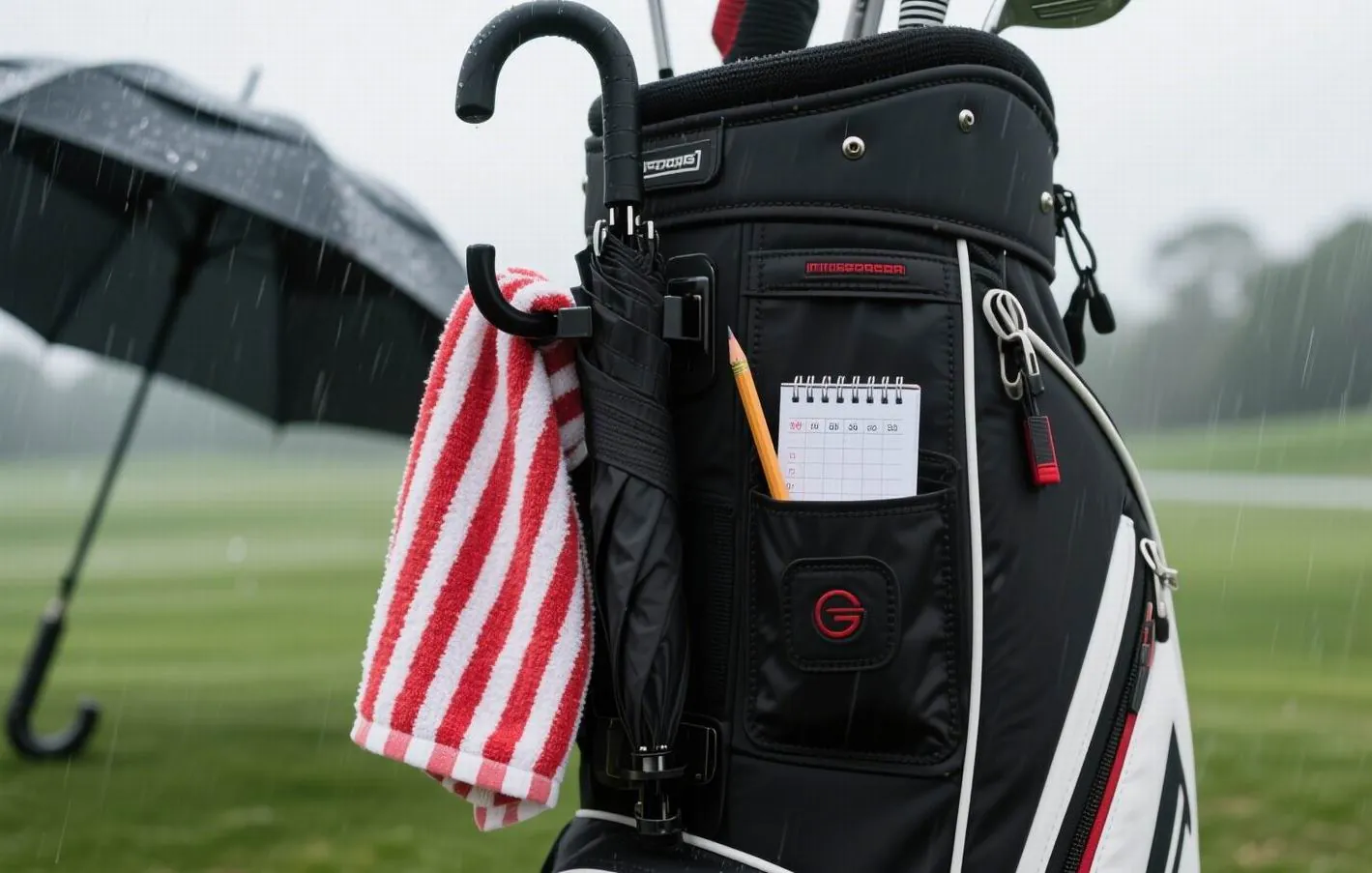
Nanotechnology improves golf bags through graphene and nano-silica coatings that measurably increase surface hardness, water repellency and UV resistance — but these are performance additives that enhance a sound shell, not replacements for a waterproof membrane or sealed seams. This guide comes from the production perspective of our Quanzhou, China golf bag factory, operating since 2014 with seven production lines, 126 sewing machines and 137 employees, serving more than 200 brands across over 100 countries and audited by SGS in March 2026. Here we separate genuine nano-material science from marketing hype, explain how the coatings work, and show buyers how to specify and verify them.
What Nanotechnology Means in a Fabric
Nanotechnology, in a textile context, refers to engineering materials at the nanometre scale — one nanometre is a billionth of a metre, roughly the width of a few atoms. In golf bag shells the two practical applications are nanoparticle-reinforced coatings and nano-structured surface treatments. Both work by altering the fabric surface at a scale far smaller than the yarn, producing properties the bulk material does not have.
The single most common nano material in coatings is graphene: a one-atom-thick sheet of carbon arranged in a honeycomb lattice. Graphene's extraordinary tensile strength, thermal conductivity and impermeability make it an ideal additive for surface hardness and barrier performance. Nano-silica (silicon dioxide nanoparticles) is the other workhorse, improving water repellency, scratch resistance and anti-staining through its hard, low-energy surface chemistry.
The key engineering subtlety is that these particles must be uniformly dispersed in a carrier polymer at the correct loading and cured so they bond to the fabric. Poor dispersion — clumps of nanoparticles — produces patchy performance. That is why we source and apply nano coatings with controlled formulations and validate the finished shell, rather than trusting a canister of promised chemistry.

How Nano Coatings Work on a Golf Bag Surface
A nano coating changes the surface energy of a fabric. By lowering the surface energy, the coating makes water droplets bead up and roll off rather than wetting and soaking in — the familiar "lotus effect." The same low-surface-energy chemistry reduces the grip of dirt and oil, so stains wipe away easily and the bag stays cleaner with less effort between washes.
In addition to hydrophobicity, the hard nano particles create a dense, micro-hard top layer that resists scuffing and light abrasion, protecting the dyestuff and the weave beneath. Graphene's two-dimensional sheet structure also acts as a barrier that slows UV-driven polymer degradation, helping the shell retain colour and resin integrity under sun exposure. Together these effects deliver a shell that looks newer, sheds light rain and dirt, and takes longer to show wear.
It is essential to be precise about limits. A nano coating improves the fabric face but does not waterproof the product: water still enters through seam needle holes unless the seams are sealed or welded, and bulk water pressure still needs a PU/TPU membrane behind hydrophobic beading. Think of nano technology as the first line of defence on the face, complementing — not replacing — the membrane and seam system underneath.
Nano Technology Options Comparison Table
Comparing the main nano coating approaches used in golf bag shells:
| Nano Technology | Primary Effect | Durability | Water Repellency | Abrasion | Cost Uplift | Best Use |
|---|---|---|---|---|---|---|
| Graphene oxide coating | Hardness + UV barrier | Good | Moderate | Improved | Medium | Premium shells |
| Nano-silica (SiO2) | Scratch resistance + stain | Good | Good | Improved | Medium | Mid-premium shells |
| Fluoropolymer nano (C8-free) | Water & oil repellency | Good | Excellent | Neutral | Medium-High | Water-repellent shells |
| Silver nano (antimicrobial) | Odour & bacteria control | Moderate | Neutral | Neutral | Medium | Linings, straps |
| Titanium dioxide nano (photocatalytic) | Self-cleaning + UV | Moderate | Improved | Neutral | Medium-High | Higher-end shells |
Choose the nano function that matches your target benefit. If your brief is water-shedding on the shell, fluoropolymer or nano-silica in a hydrophobic carrier delivers most. If your priority is scratch resistance and longevity of the colour, graphene-oxide or nano-silica hardness wins. Antimicrobial silver suits linings and straps in humid climates. Most premium shells use one nano function rather than several, to keep cost and chemistry controlled.
Graphene in Golf Bag Coatings: The Truth
Graphene is the most hyped nano material, so it deserves the most calibration. Genuine graphene-oxide coatings, properly dispersed, do add measurable surface hardness and a UV barrier to a fabric. A bag treated with a good graphene coating can show reduced scuffing and slower fading in accelerated light testing. Those are real, welcome properties.
However, a graphene coating does not make a bag indestructible, does not waterproof the seams, and its incremental benefit is easily overstated by marketing. The honest engineering position is that graphene is a valuable finishing layer on top of sound construction. We apply it where a premium brand wants that extra layer of surface performance and where the cost uplift fits the retail price — and we verify the result with controlled abrasion and light tests against the uncoated control.
For a buyer, the request that cuts through the hype is a comparative test: the same fabric coated and uncoated, under the same standard, with results on paper. A supplier who shows that evidence is doing genuine nano science; one who can only offer the word "graphene" on a spec sheet is not.
Nano Coatings vs Waterproof Membranes
A recurring confusion is conflating a nano water-repellent coating with a waterproof membrane. They are different things doing different jobs. A nano or hydrophobic coating beads water off the surface and is measured in terms of contact angle or spray rating (ISO 4920). A waterproof membrane or coated layer stops bulk water pressure and is measured in hydrostatic head (ISO 811). Neither replaces the other.
The strongest construction combines both: a hydrophobic nano face to shed water and keep the bag clean, plus a PU/TPU membrane and sealed seams to keep water out under pressure. This layered approach is exactly what we build into premium waterproof ranges. If a supplier describes a nano coating as "fully waterproof," that is a red flag; genuine waterproofing requires the membrane and seam system and should carry an ISO 811 certificate. Our golf bag weather and waterproofing guide walks through the full layered system.
Durability and Care of Nano-Treated Fabric
A nano coating is a renewable surface treatment with a finite wear life, not a permanent change to the fibres. Its effectiveness gradually reduces with heavy abrasion, repeated washing and exposure. Durability depends on the coating chemistry, how well it cured, and how the bag is cared for. Gentle cleaning, avoiding harsh detergents and abrasive sponges, and re-applying a DWR-style treatment periodically will extend the benefit.
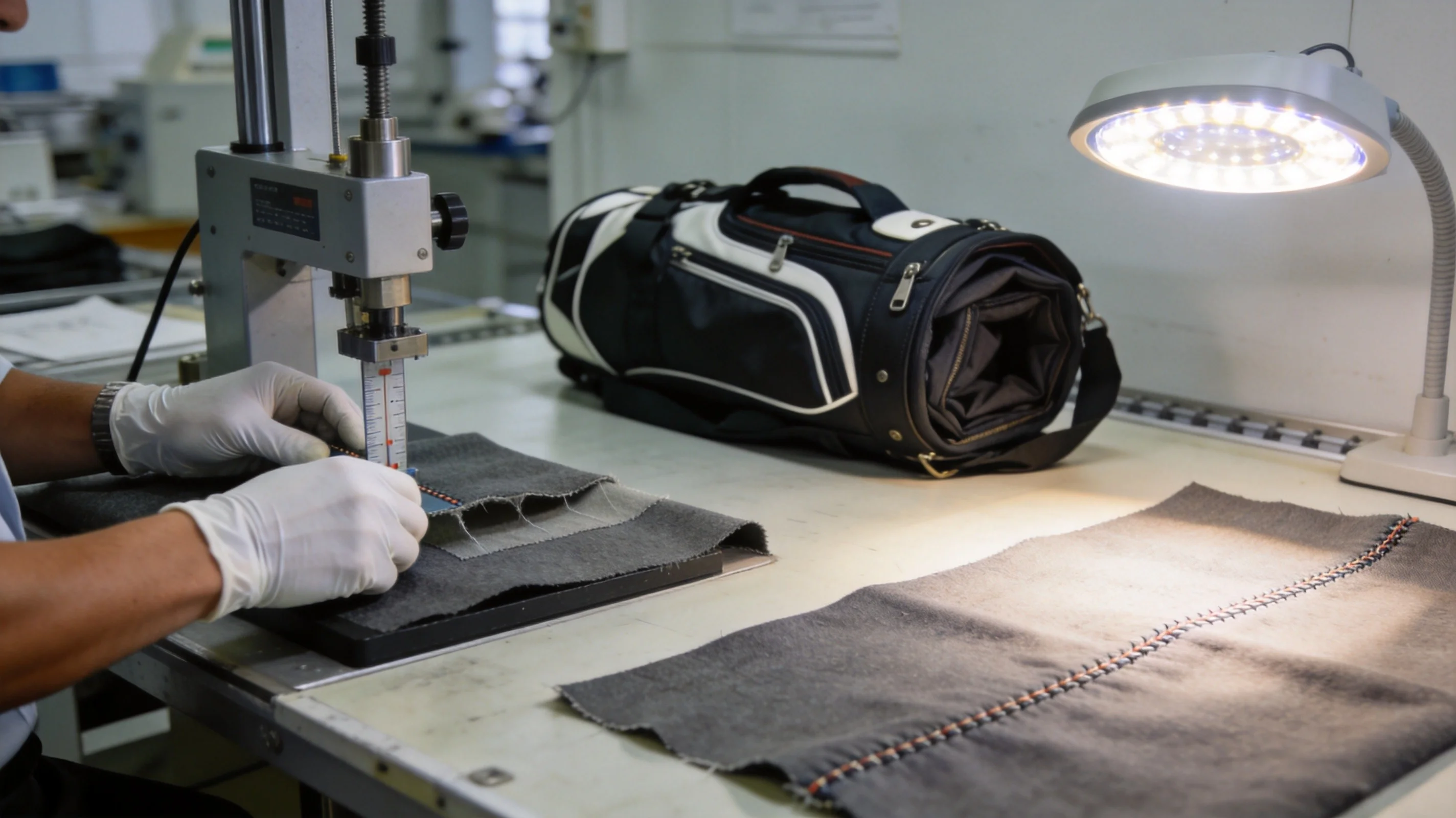
For a manufacturer, the practical implication is that nano performance should be validated on the finished shell after sewing, since stitching and handling can abrade the surface. We test treated panels for abrasion resistance and contact angle so the spec shipped matches the claim, and we share care guidance with buyers so end users maintain — rather than accidentally remove — the coating. This "expectation setting" is part of a credible product story.
Safety and Environmental Profile of Nano Coatings
Two questions accompany any nano technology: is it safe, and is it sustainable? On safety, graphene and silica nano-coatings are generally considered low-risk in textile contact applications and avoid the legacy heavy-metal chemistry of some older treatments. Reputable suppliers carry material safety data and, where appropriate, OEKO-TEX or similar compliance documentation that a buyer can review.
On sustainability, the picture is mixed. Water-based nano formulations with no harmful solvents are a genuine improvement, but some fluoropolymer chemistries raised environmental concerns, and the industry has been moving toward C8-free and PFAS-free alternatives. The responsible specification request is for PFAS-free, water-based nano finishes with safety and compliance documentation attached. That protects your brand from both a health and a regulatory perspective as recycled-content and chemical-compliance requirements tighten in the EU and North America.
How to Specify and Verify a Nano-Treated Bag
If you decide nano technology belongs in your custom bag, specify it precisely. State which nano function you want (hydrophobicity, scratch resistance, UV or antimicrobial), which standard should verify it, and whether it must be PFAS-free and water-based. Then request a comparative test of coated versus uncoated fabric under those standards, and confirm the coating survives the sewing process on the finished shell.
We support these specifications through our sample programme: a 200-piece test order with a 10-20 day sampling window lets your team evaluate the nano-treated shell in hand and under your own scrutiny before committing to the 45-60 day production cycle. Because our seven production lines handle both treated and untreated shells, you can A/B the nano version against a control in the same batch. With documentation attached, the nano claim becomes evidence your distributor can trust.
How Nano Coatings Are Applied to a Shell
Applying nanotechnology to a golf bag in manufacturing is not a single step but a controlled process. The nano particles — graphene oxide or nano-silica, usually suspended in a water-based polymer binder — are applied to the fabric face, typically by a pad-dry-cure line or a spray/roller application depending on volume and chemistry. The fabric passes through a curing oven where the binder cross-links, locking the particles into a durable surface film.
Two process variables dominate outcome quality: dispersion and cure. The nano particles must be homogenously suspended so there are no clumps; a lumpy suspension produces patchy, uneven performance. And the cure temperature, time and chemistry must match the binder so the film adheres on the first pass rather than flaking off in washing. We validate both by testing finished panels for contact angle and abrasion, because the proof is in the cured shell, not the raw chemistry.
It is also worth knowing that nano treatment interacts with the rest of the construction. A shell that is fine for heat-transfer branding may handle a nano cure differently; the coating can sit under or over decoration depending on the sequence. Integrating nano application into the full production flow, rather than treating it as an add-on, is what keeps both performance and cosmetics on target.
Hydrophobicity: Water Contact Angle and the Lotus Effect
The most visible benefit of a nano coating is hydrophobicity — water repellency — which scientists quantify as a contact angle. When a water droplet sits on a flat surface, the angle it makes with that surface measures the wettability. An untreated fabric may have a low contact angle, meaning water spreads and soaks in; a well-applied nano coating pushes the contact angle high, so droplets remain nearly spherical and roll off. The "lotus effect," named after the lotus leaf, is the natural inspiration for this design.
In day-to-day golf terms, a hydrophobic shell means morning dew, light rain and spilled drinks bead and slide away instead of darkening and staining the fabric. The bag dries faster and looks cleaner between washes. It also reduces how much water the shell carries, which slightly reduces weight gain in a wet round.
The measurement standard we commonly reference is ISO 4920, a spray-rating test that grades how well a fabric resists wetting under controlled spray contact. It is a quick, objective check that moves a hydrophobicity claim from opinion to number, and it is the kind of evidence a professional buyer can compare across suppliers.
Stain Resistance and Ease of Cleaning
A second, under-appreciated benefit of nano surface engineering is stain resistance and easy cleaning. Because the coating lowers surface energy and closes microscopic porosity, dirt, grass stains, mud and bird droppings have less to grip. Most surface contamination wipes away with a damp cloth rather than requiring a full wash. This is a genuine practical advantage for a product that lives on a golf course.
For a branded bag, cleanability protects your logo presentation. A shell that repels the heavy course grime keeps the brand graphic readable season after season, which matters to teams, academies and corporate programmes that use branded bags as moving advertisements. Pairing a nano shell with the right care guidance means the coating and the brand both stay presentable.
The flip side is that overly aggressive cleaning — harsh solvents, bleach, pressure washing — strips the coating faster. We provide buyers with care instructions so the shell's nano finish is protected, and the finished bag ships with guidance that keeps end users from accidentally removing the very technology they paid for.
UV Protection Through Nano Barriers
Ultraviolet radiation is one of the slowest but most damaging forces on a golf bag, breaking down polymer chains and fading dyestuff without the owner noticing until years later. Nano coatings contribute to UV defence in two ways. Graphene's impermeable two-dimensional sheet slows the ingress of UV-driven degradation; certain nano additives such as titanium dioxide nano-particles behave as UV absorbers or scatterers, bouncing harmful wavelengths away from the fabric polymer.
The result is a shell that retains its colour and resin flexibility longer in harsh sun. For a brand selling into the US Sun Belt, the Gulf, Australia or the Mediterranean, UV-stable materials are practically essential to avoid a faded, brittle bag after one season. We verify fade resistance with ISO 105-B02 light-fastness testing and can offer nano-enhanced UV protection on request, documented against the uncoated control.
Again, the honest caveat applies: nano UV protection extends, it does not eliminate. Combined with UV-stable dyestuff and a proper construction, a nano UV barrier delivers the kind of multi-season appearance that supports a premium price and a strong warranty story.
Antimicrobial Nano Treatments for Linings and Straps
A more specialised nano application targets hygiene rather than water or abrasion. Silver nano-particles have well-established antimicrobial properties and can be incorporated into linings, straps and padded zones, where sweat, humidity and stored moisture otherwise encourage odour and microbial growth. For golf bags used in hot, humid climates and stored damp, an antimicrobial lining keeps the interior fresher and reduces the musty smell that sometimes shortens a premium bag's perceived life.
The engineering caution is that antimicrobial nano treatments also have a wear life and must be applied to the right substrate and validated for efficacy and safety. We treat linings and strap padding where the benefit is felt, leave the outer shell untreated where it is not needed, and document the active treatment and its compliance data. For a health-conscious or sports-institution customer, this is a defensible and differentiating feature.
Because these treatments add cost and require valid regulatory and safety documentation, we recommend them for premium ranges and institutional programmes rather than economy lines, where the perceived value may not recover the added cost. As with every nano function, the brief drives the decision.
The Cost Increment of Nano Technology
Nano enhancements carry a modest but real cost uplift per unit, driven by the chemistry, the additional application processing, the cure step and the extra quality-control testing. The good news is that nano coatings are applied over an existing construction, so the incremental cost is small compared with changing the base fabric or adding a membrane. The premium is therefore recoverable at retail when the coating supports a real, felt benefit and a credible technical story.
The disciplined approach is to add nano where it is worth the uplift and skip it where it is not. A scuff-and-stain-repellent shell for a premium bag is typically worth the cost; an antimicrobial lining for a value club range may not justify itself. Because our engineers cost each finish option and we run A/B comparisons, a buyer can see exactly what the nano option adds in price per unit before committing to a 200-piece sample and the 45-60 day production cycle.
The Future of Nano Materials in Golf Bags
Looking several years ahead, nano materials are likely to expand from surface coatings into the structural and functional realm. Nano-reinforced polymers could strengthen frames and hardware at lower weight. Self-healing or self-cleaning surface chemistries, conductive coatings for smart-fabric integration, and more stable UV-barrier formulations are all under active development. As these mature, they will layer onto the same fundamentals of denier, coating and seams that define a durable bag.
For now, the professional buyer's stance is confirmed: use nano technology where its measured benefit matches your brief, verify with standards, and never let a nanotech label substitute for sound construction. That discipline is what separates a technically credible premium bag from one that merely carries buzzwords.
Developing a Nano-Coated Bag with Our Factory
Putting nano materials into a real product is best done with a factory that can test and cost every finish. Our golf bag factory in Quanzhou, in operation since 2014 with seven production lines, 126 sewing machines and 137 employees, has served more than 200 brands across over 100 countries and was audited by SGS in March 2026. That means we specify a nano finish against a standard, run the sample, verify the result and document the cost before volume.
The efficient first step is a conversation with our engineers: define the protection you want, review the costed finish options, and validate with a 200-piece sample on a 10-20 day window before scaling on the 45-60 day production cycle. Contact us at service@junyuanbags.com or WhatsApp +86 17750020688 to begin. You can also compare how these surface technologies sit alongside core and shell choices in our full material options comparison or see how they are validated in our quality control and testing standards guide.
Frequently Asked Questions
- Does nanotechnology actually improve golf bags?
- Yes, when properly applied. Graphene and nano-silica particles dispersed at the correct loading genuinely improve surface hardness, water repellency, stain resistance and UV protection. The gains are real but incremental — they enhance a well-made shell rather than repairing a poor one — and should be verified with standard abrasion and water-resistance tests.
- What is a nano coating on a golf bag?
- A nano coating is a surface layer containing particles engineered at the 1-100 nanometre scale — commonly graphene or nano-silica — suspended in a polymer. It bonds at microscopic scale to the fabric, lowering surface energy so water beads and runs off, and adding a hard, low-friction barrier that resists scuffing and dirt.
- How waterproof is a nanotech golf bag?
- A nano coating improves the water-repellent (hydrophobic) character of the fabric surface, but it is not a substitute for a waterproof membrane or seam sealing. For genuine waterproofing you still need a PU/TPU layer plus sealed seams, typically verified to ISO 811. Nano technology adds surface repellency; the membrane provides true waterproofing.
- Do graphene coatings scratch off?
- Like all thin coatings, nano layers have a finite wear life and become less effective with heavy abrasion and repeated cleaning. Properly cured and bonded, a graphene/nano-silica coating is durable for many rounds, but it is a renewable surface treatment rather than an indestructible one. Periodic re-application or care maintains performance.
- Is nano-coating safe and eco-friendly?
- Graphene and silica nano-coatings are generally considered safe in the food-and-textile contact context and free of the heavy-metal chemistry of some older treatments. However, the sustainability profile depends on manufacturing and whether the nano particles are water-based and free of harmful solvents. Ask your supplier for material safety and compliance documentation.
- How do I verify a nano-coating claim?
- Require a controlled comparison: test the coated vs uncoated fabric under the same standard — for example abrasion (ISO 12947 Martindale-style) and water contact-angle or spray rating (ISO 4920) — and request the results. A reputable supplier will show measured improvement rather than only a marketing label.
Sources & Further Reading
Related Reading
- Golf Bag Material Science and Innovation — coatings and laminates in the wider material story.
- Golf Bag Weather Protection and Waterproofing — nano vs membrane and seam sealing.
- Eco-Friendly and Sustainable Golf Bag Materials — PFAS-free and responsible finishes.
- Golf Bag Quality Control and Testing Standards — how coating claims are verified.